Kategorien
Get Construction Comparison Quote Request Sample
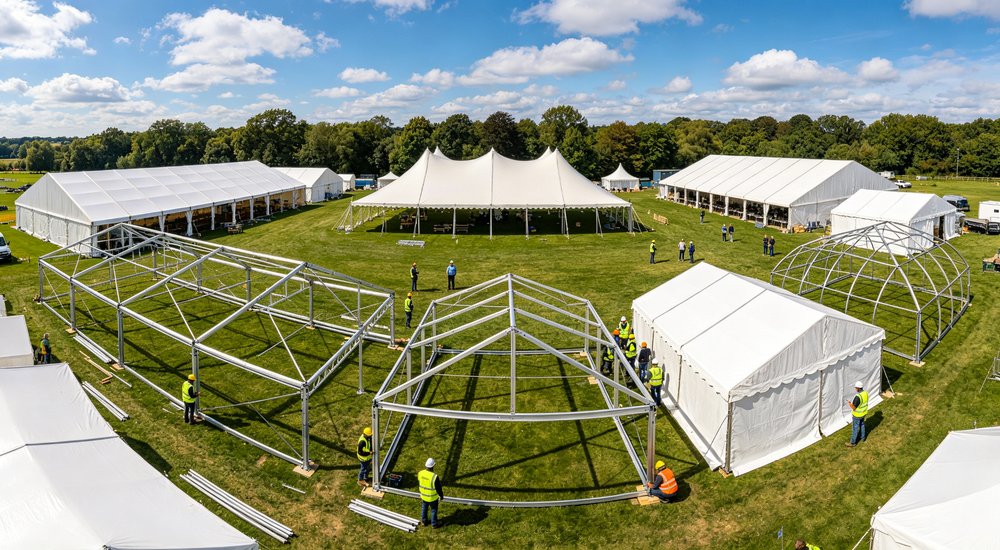
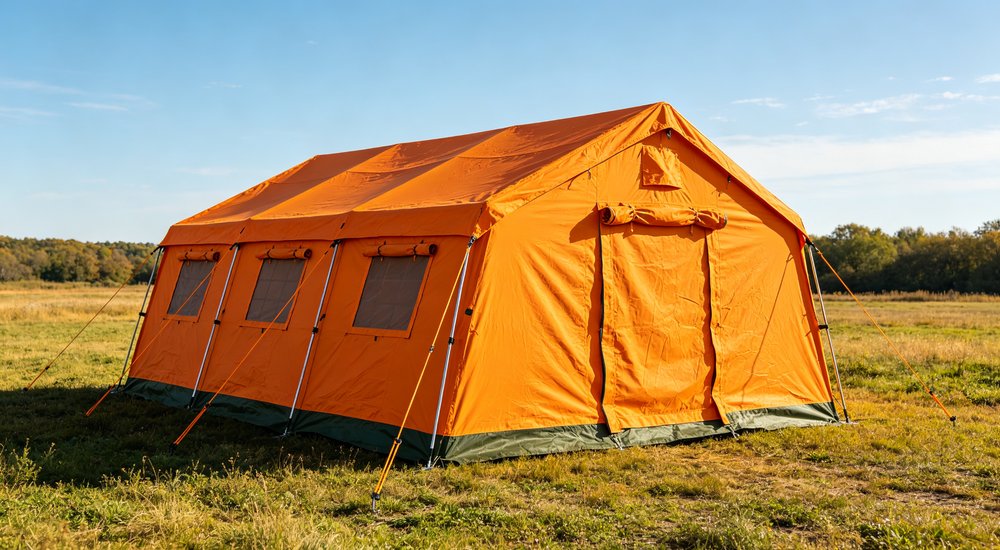
Emergency frame tents come in three distinct construction types that dramatically affect insulation, weight, price, and suitability for different climates. Whether you need an emergency tent for rapid response or a relief tent for long-term camps, construction type is the most important purchasing decision. Many buyers confuse these structures and end up with tents that are either too hot, too cold, or overpriced for their needs. This guide breaks down every difference so you can choose the right construction for your project.
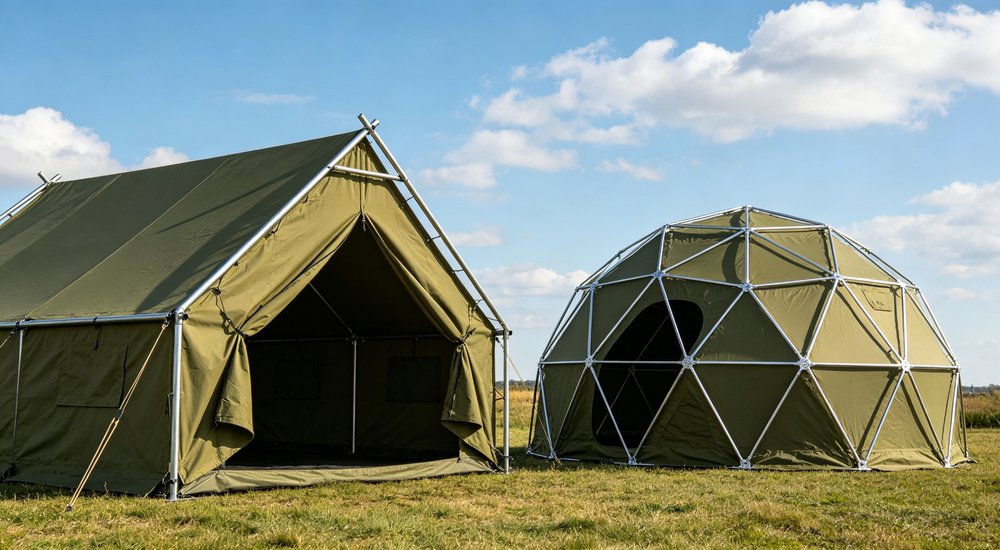
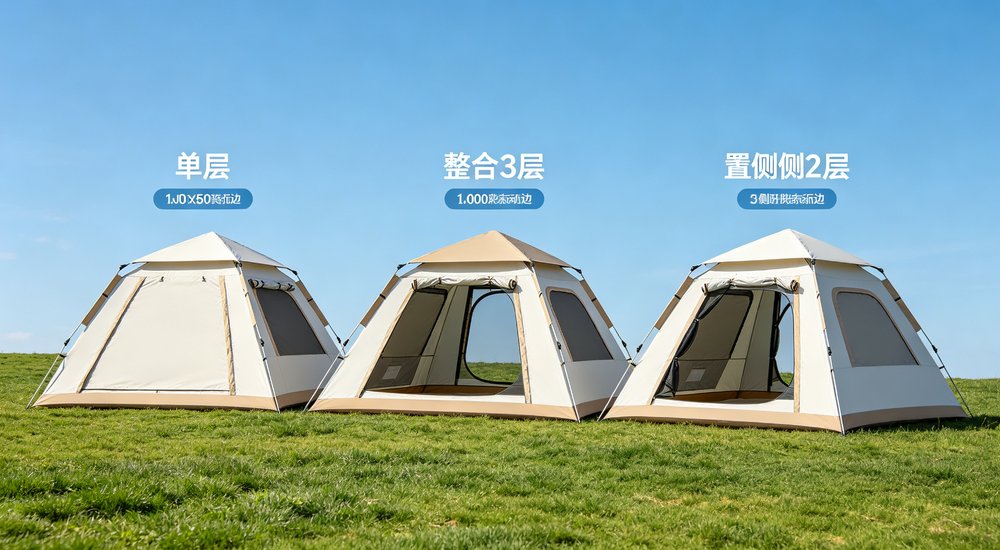
Quick answer: Single layer tents are lightweight and low-cost for warm climates; integrated 3-layer tents offer fixed insulation for cold regions; detachable 3-layer tents provide year-round versatility by allowing the insulated inner tent to be removed in summer. Detachable 3-layer is the most popular choice for organizations operating across multiple climate zones.
Setup & Maintenance
Price & Total Cost of Ownership
Climate & Scenario Recommendations
Customization Options
Procurement Decision Guide
Frequently Asked Questions
Request a Proposal
30-Second Quick Verdict
Core Difference Comparison Table
Single Layer Frame Tents
Integrated 3-Layer Frame Tents
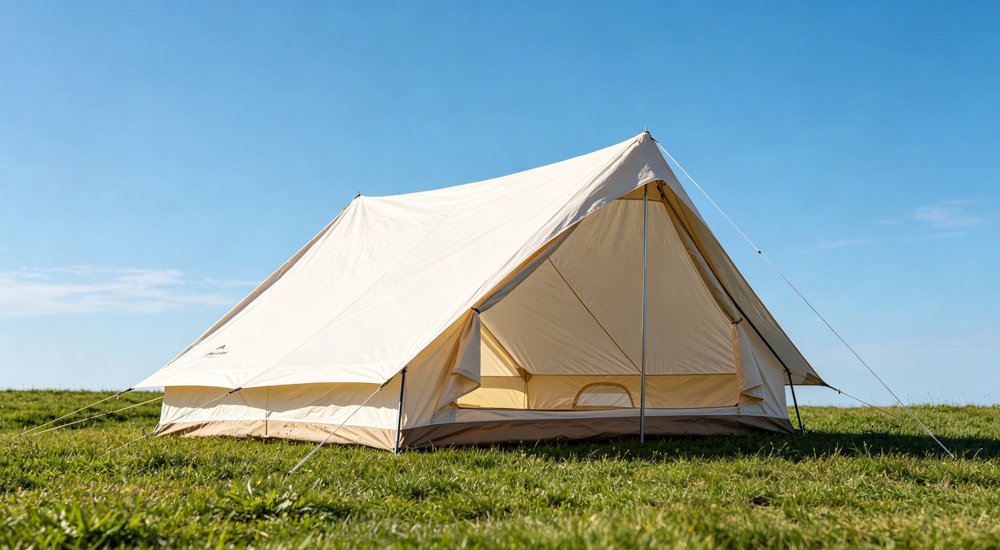
Detachable 3-Layer Frame Tents
Insulation & Thermal Performance
Weight, Shipping & Storage
Different construction types exist because different disasters demand different things. An earthquake response needs fast setup on uneven ground. A long-term refugee camp needs durability above all. This comparison breaks down which frame type handles which scenario best, so you can match the tent to the mission.
Choose Single Layer if: You operate in tropical/subtropical climates, need maximum ventilation, have limited budget, or require the lightest possible tent for rapid deployment. Best for short-term emergency response in warm regions.
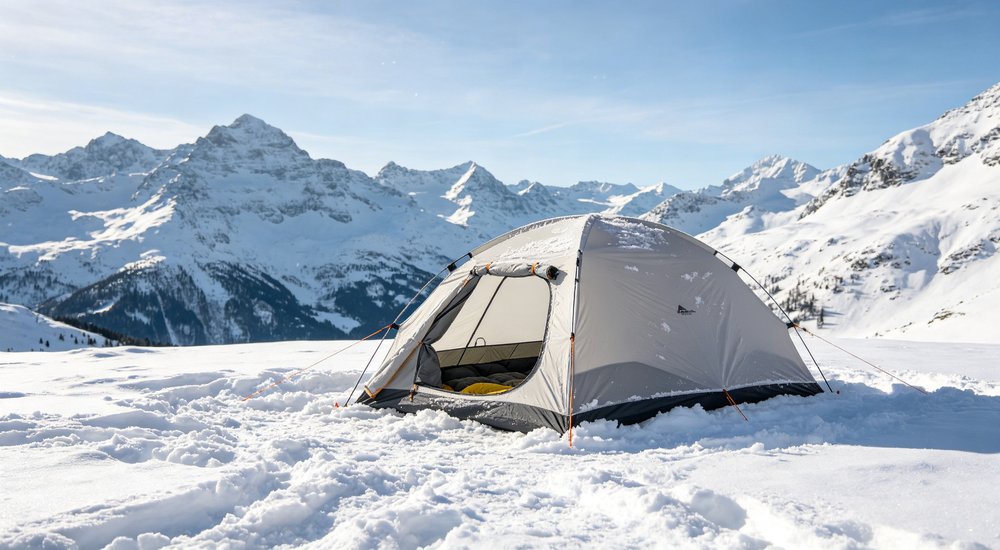
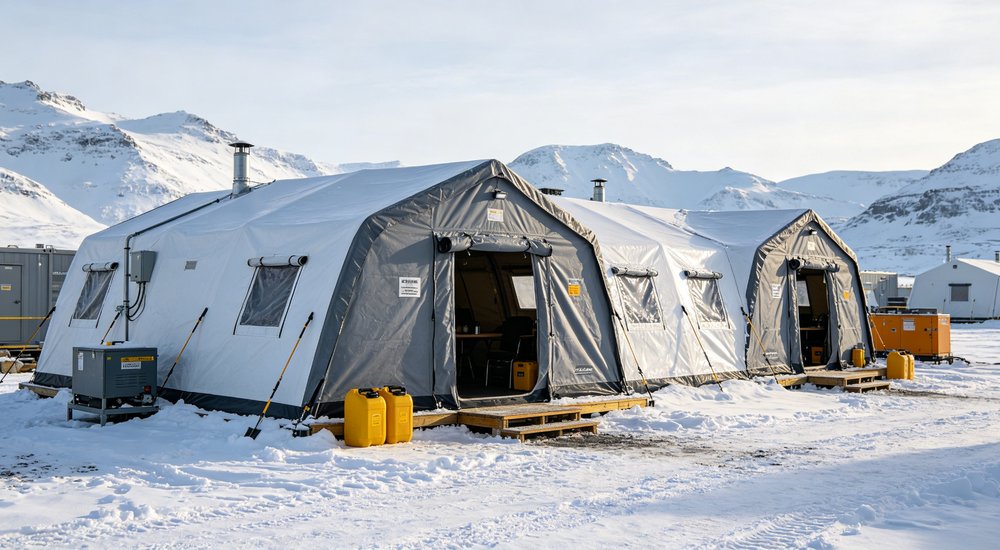
Choose Integrated 3-Layer if: You operate exclusively in cold or winter climates, need fixed insulation that cannot be misplaced, and want the simplest possible setup. Best for permanent winter camps and high-altitude locations.
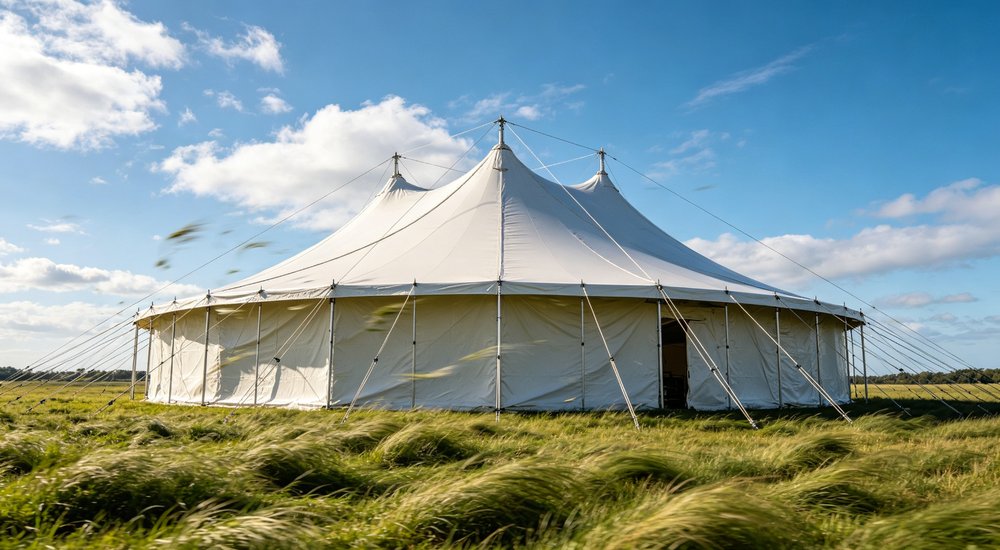
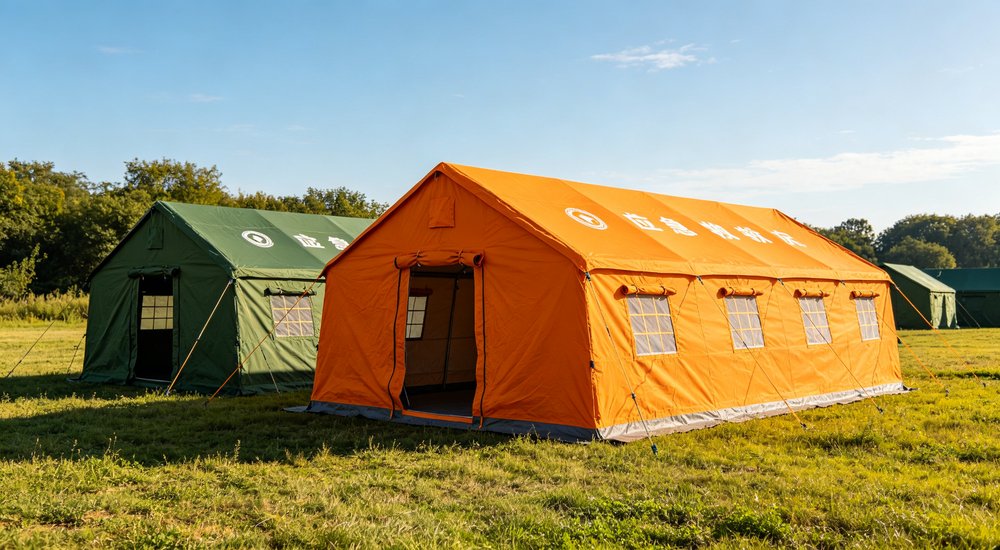
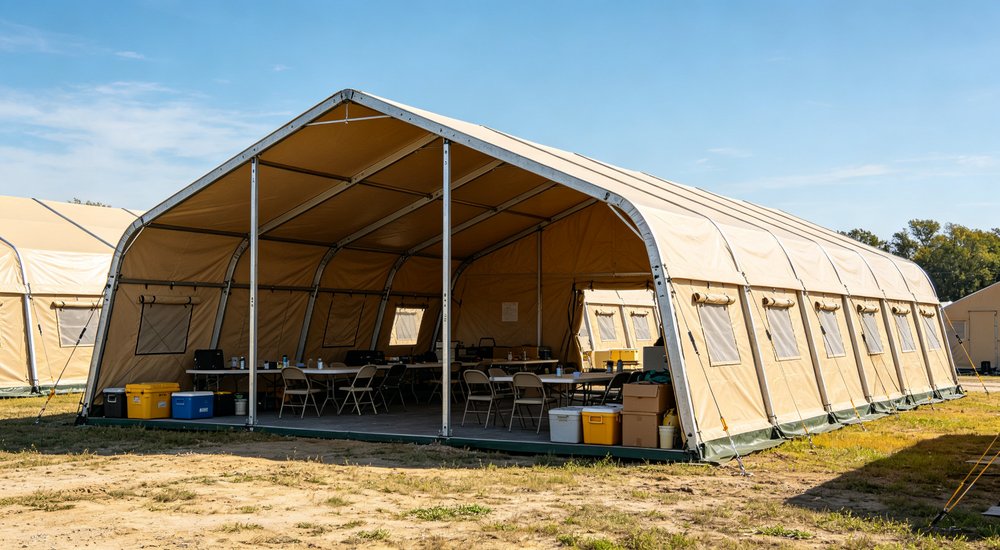
Choose Detachable 3-Layer if: You need year-round versatility across multiple climate zones, want to use the outer tent alone in summer and add the insulated inner in winter, or need to replace damaged layers independently. This is the most popular choice for NGOs, military, and disaster relief organizations.
|
Feature |
Single Layer |
Integrated 3-Layer |
Detachable 3-Layer |
|
Construction |
One fabric layer + steel frame |
Outer + insulation + inner sewn together |
Outer tent + separate insulated inner tent |
|
Layers |
1 layer (outer only) |
3 layers fixed together |
2 pieces (outer + insulated inner) |
|
Insulation |
None (fabric only) |
Fixed 5-10mm foam/cotton batting |
Removable 5-15mm insulation |
|
R-Value (approx) |
0.5-1.0 |
2.0-3.5 |
2.5-4.5 (with inner) |
|
Weight (20m²) |
35-45 kg |
70-90 kg |
80-100 kg (total) |
|
Setup Time |
15-20 min (2 people) |
25-35 min (2 people) |
30-45 min (2-3 people) |
|
Price Range (20m²) |
$250-$400 |
$450-$650 |
$500-$750 |
|
Best Climate |
Warm/tropical |
Cold/winter only |
All seasons |
|
Ventilation |
Excellent |
Limited (fixed layers) |
Good (removable inner) |
|
Layer Replacement |
N/A |
Whole tent must be replaced |
Layers replaceable independently |
|
Condensation Risk |
Low |
Medium (if not ventilated) |
Low (air gap between layers) |
|
Storage Volume |
Small |
Medium |
Large (2 separate bags) |
Reference wholesale pricing (FOB Shenzhen, 2026 guide). Actual quotation varies by raw material costs, order quantity, customization, and shipping. Contact us for firm pricing.
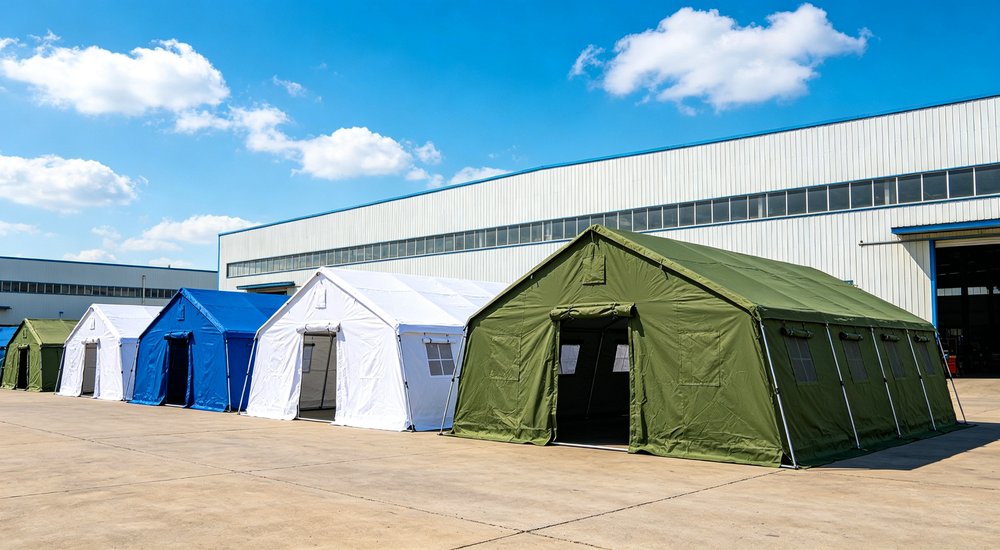
Terminology clarification: The industry uses inconsistent names for insulated tents. A single skin tent has only outer fabric with no insulation. A three layer (3-ply, "sandwich") tent means outer fabric + insulation layer + inner lining — three physical materials. Some suppliers call this "2-layer" because they treat outer-fabric-with-insulation as one composite piece, plus the inner lining as the second layer. Both terms refer to the same physical product. We use "3-layer" as it accurately describes the three material layers. "Single layer" = outer fabric only, no insulation, no inner lining.

|
Supplier Terminology |
Actual Physical Layers |
Has Insulation? |
Our Standard Name |
|
Single layer / Single skin / 1-ply |
1 (outer fabric only) |
No |
Single Layer |
|
3-layer / 3-ply / Sandwich / "2-layer insulated" |
3 (outer + insulation + inner) |
Yes (fixed) |
Integrated 3-Layer |
|
Detachable 3-layer / Removable liner / 2-piece |
3 (outer + insulated inner, separable) |
Yes (removable) |
Detachable 3-Layer |
|
Winterized / Cold-proof / Thermal |
3 (any insulated type) |
Yes |
Depends on construction |
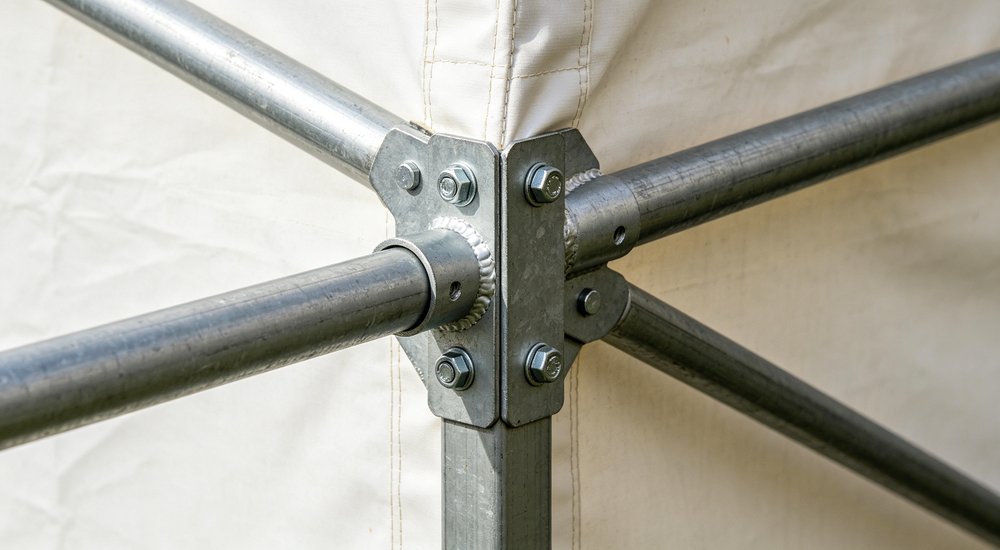
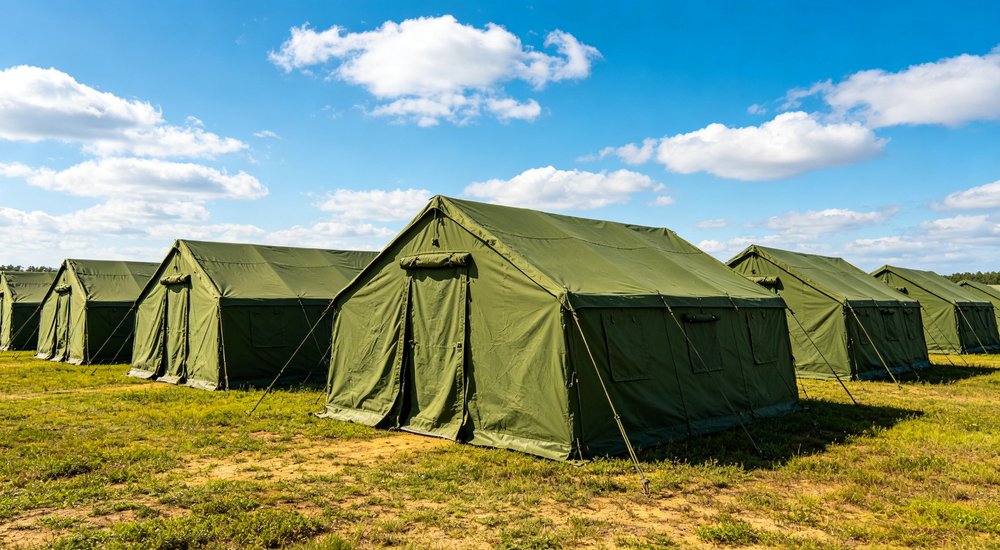
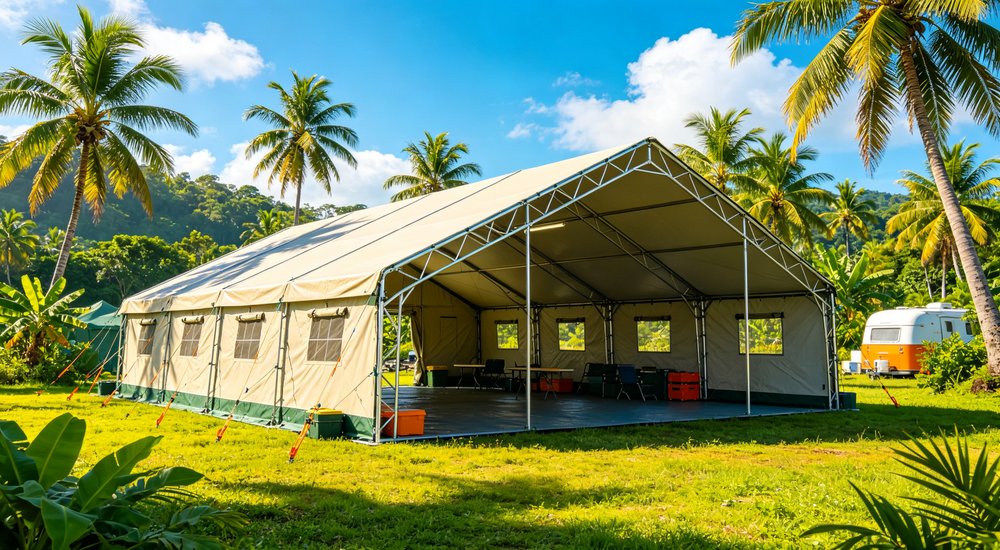
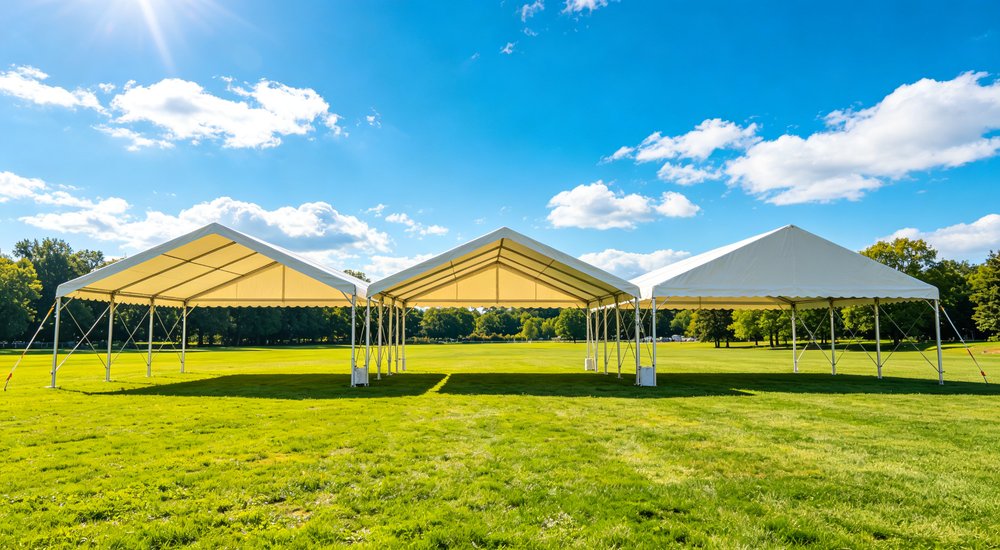
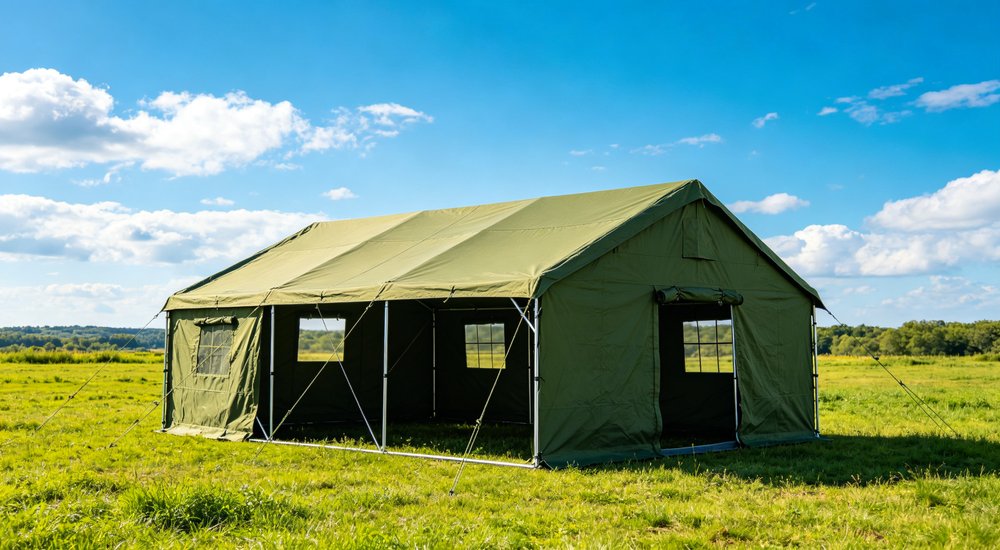
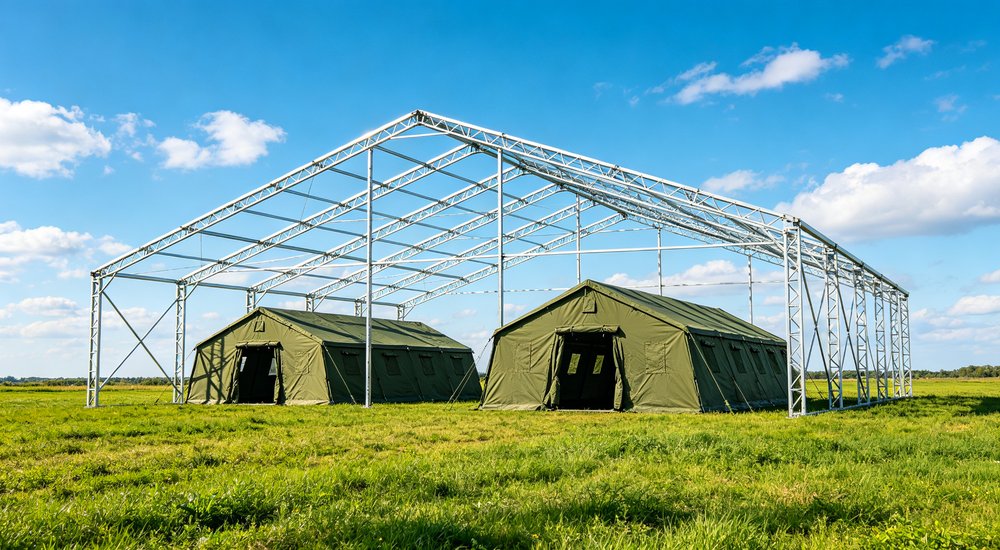
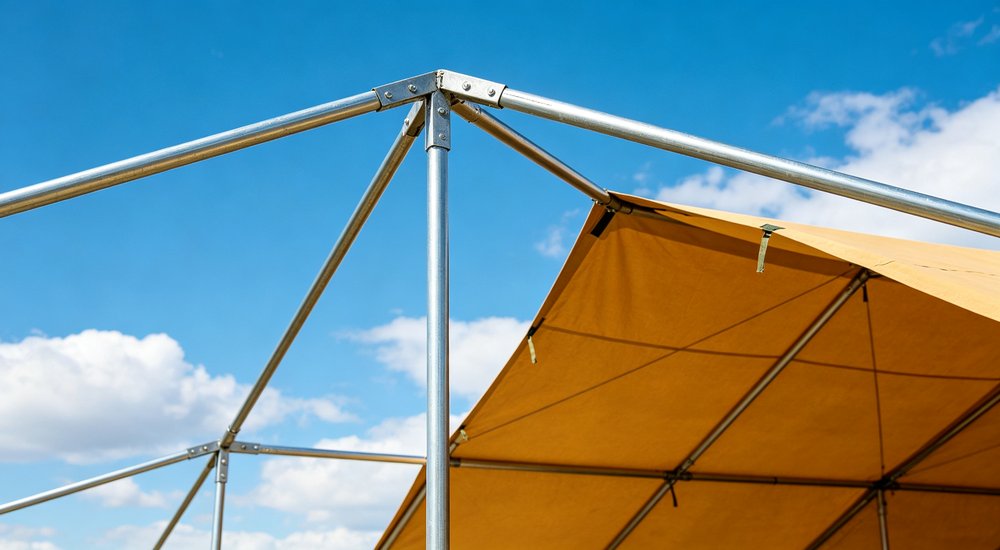
A single layer frame tent consists of one fabric outer canopy stretched over a steel or aluminum frame. There is no insulation layer and no inner lining. The fabric is typically 600D-900D polyester or PVC-coated polyester with a waterproof rating of 2000mm-3000mm. This is the simplest and most traditional emergency tent construction.

|
Size |
Weight |
Setup Time |
Reference Price |
|
12m² (3x4m) |
25-30 kg |
10-15 min |
$150-$250 |
|
20m² (4x5m) |
35-45 kg |
15-20 min |
$250-$400 |
|
30m² (5x6m) |
50-60 kg |
20-25 min |
$350-$500 |
Reference wholesale pricing (FOB Shenzhen, 2026 guide). Actual quotation varies by raw material costs, order quantity, customization, and shipping.
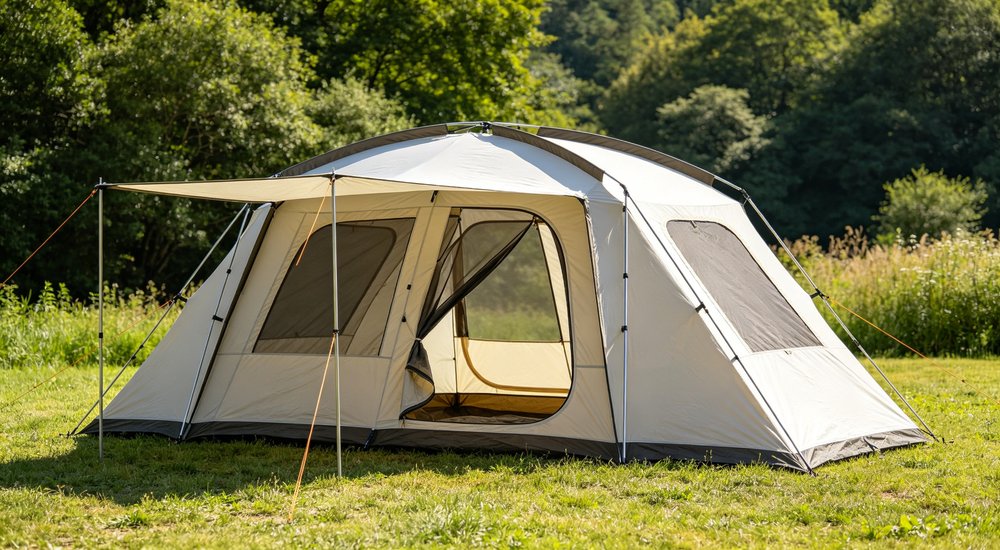
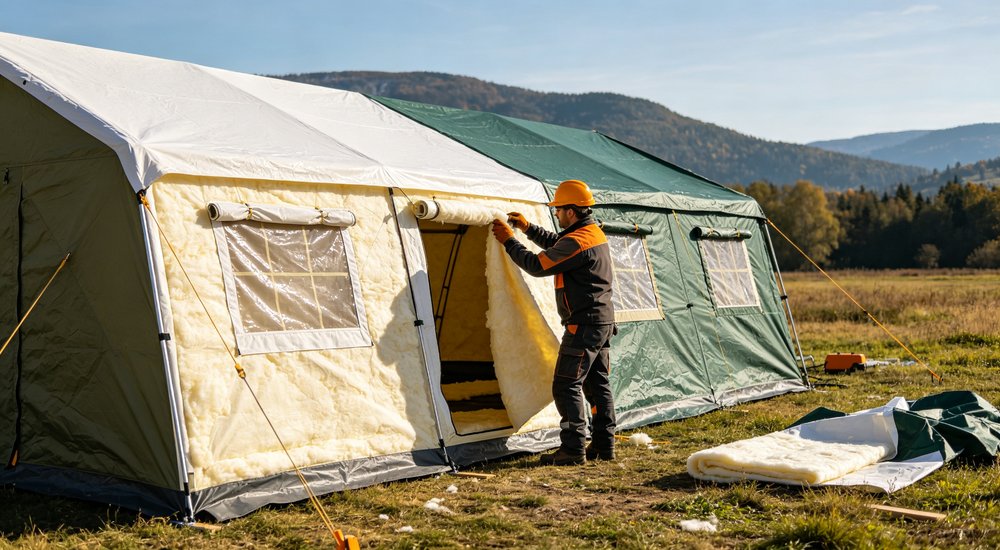
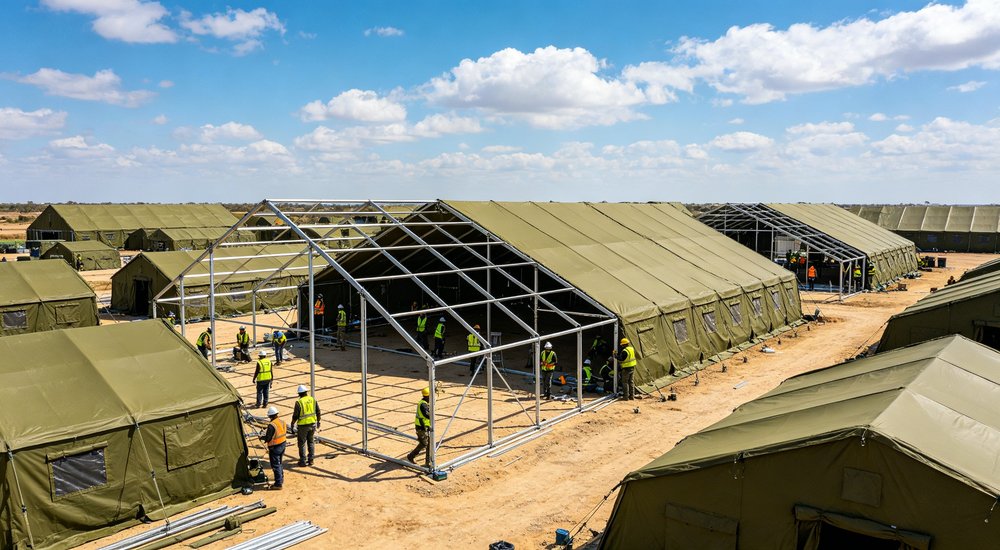
An integrated 3-layer frame tent (also called "fixed 3-layer" or "sandwich construction") has the outer fabric, insulation layer (typically 5-10mm foam or cotton batting), and inner lining fabric permanently sewn or heat-welded together as one single piece. The insulation cannot be removed. The entire canopy goes up as one unit over the frame.

|
Size |
Weight |
Setup Time |
Reference Price |
|
12m² (3x4m) |
50-60 kg |
20-25 min |
$300-$450 |
|
20m² (4x5m) |
70-90 kg |
25-35 min |
$450-$650 |
|
30m² (5x6m) |
100-120 kg |
30-40 min |
$600-$850 |
Reference wholesale pricing (FOB Shenzhen, 2026 guide). Actual quotation varies by raw material costs, order quantity, customization, and shipping.
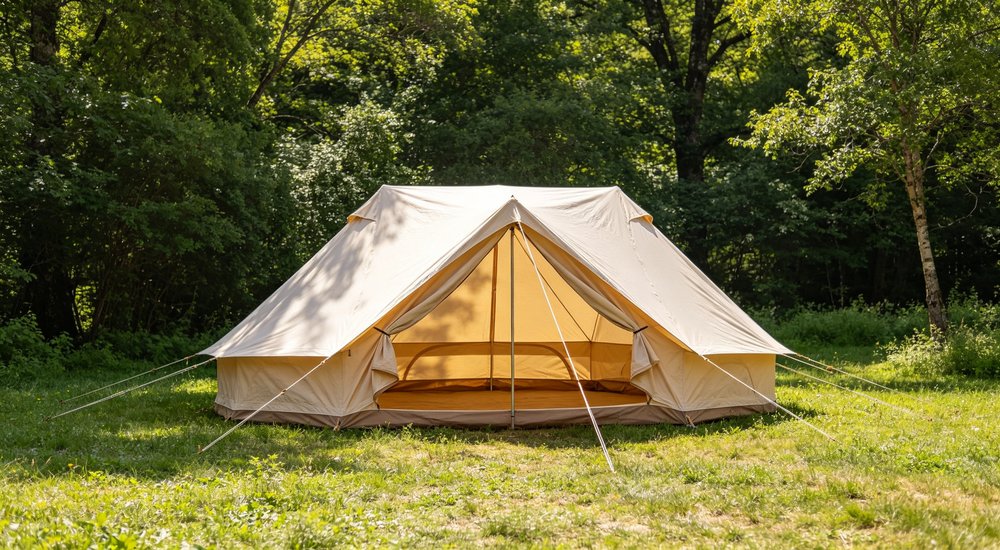
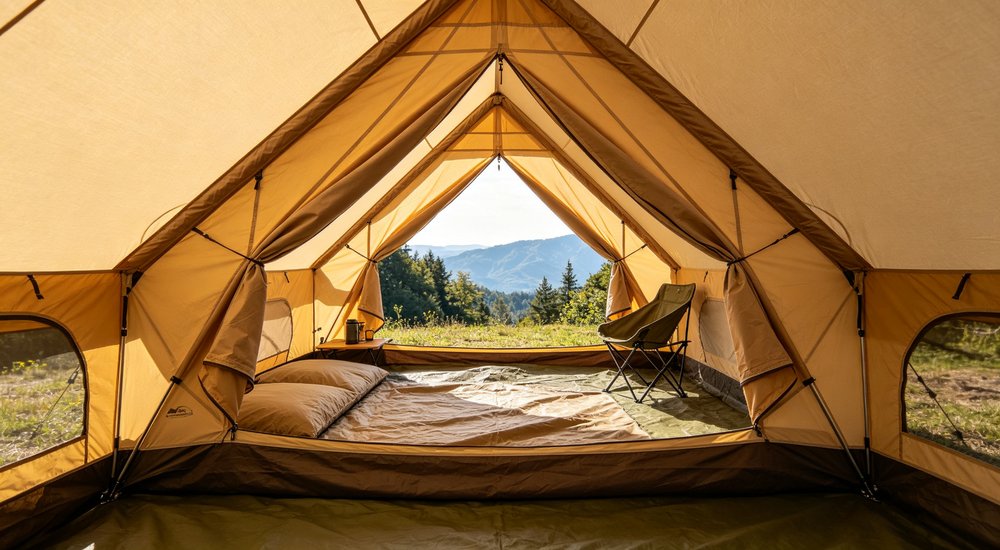
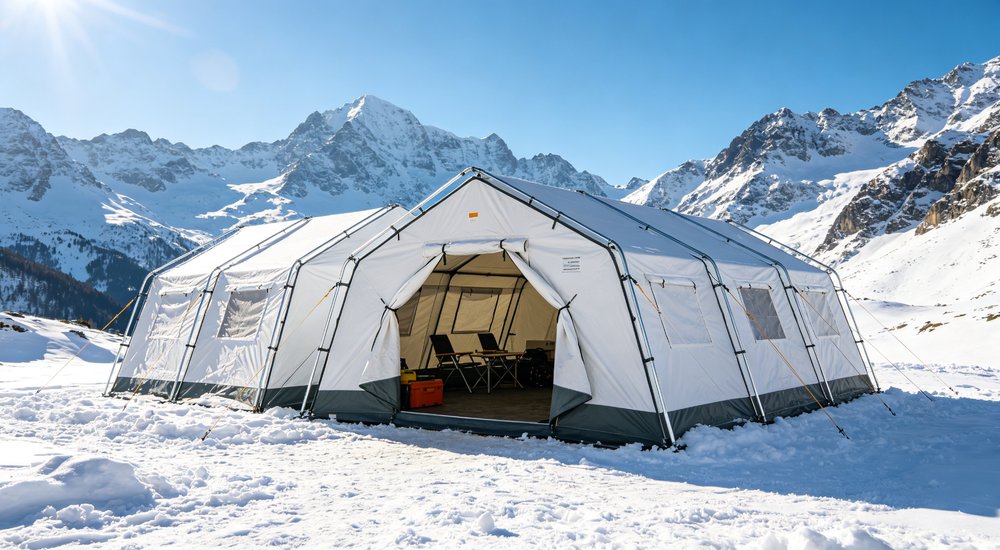
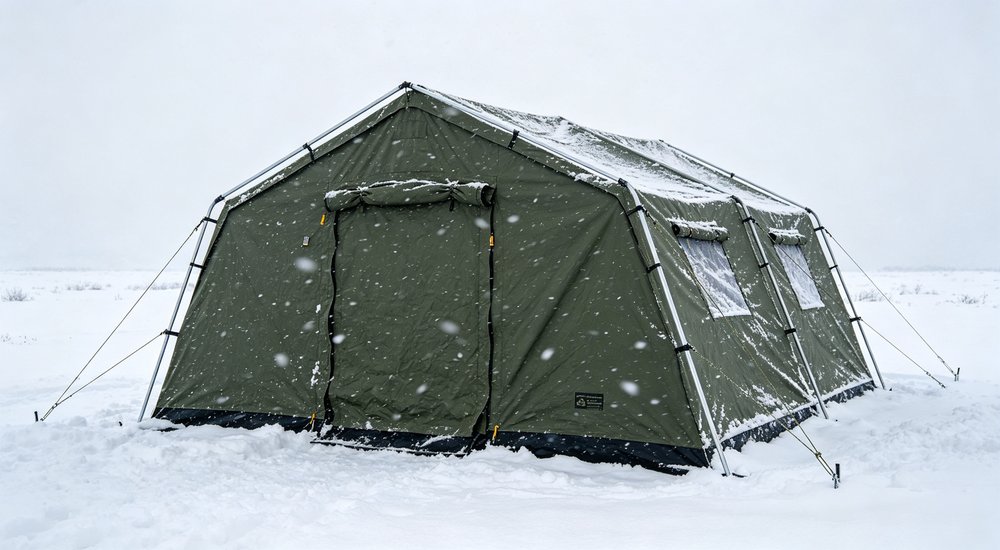
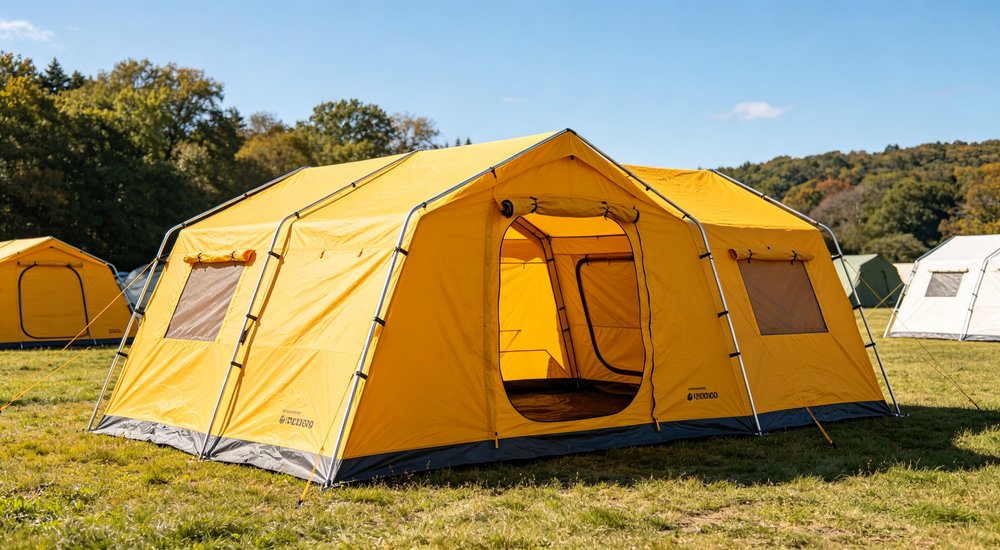
A detachable 3-layer frame tent (also called "removable liner" or "2-piece 3-layer") consists of two separate pieces: an outer tent (waterproof canopy + frame) and an insulated inner tent (insulation layer + inner lining, sewn together as one piece). The inner tent hangs inside the outer tent using hooks, Velcro, or ties, and can be completely removed when not needed. This detachable liner system is the key difference from integrated construction. This creates an air gap between the outer and inner layers for additional thermal performance.
|
Size |
Weight (Total) |
Setup Time |
Reference Price |
|
12m² (3x4m) |
55-70 kg |
25-35 min |
$350-$500 |
|
20m² (4x5m) |
80-100 kg |
30-45 min |
$500-$750 |
|
30m² (5x6m) |
110-135 kg |
40-55 min |
$650-$950 |
Reference wholesale pricing (FOB Shenzhen, 2026 guide). Actual quotation varies by raw material costs, order quantity, customization, and shipping.
Thermal performance is the most critical difference between these three construction types. The table below shows expected interior temperatures at various exterior temperatures, assuming no additional heating:
|
Exterior Temp |
Single Layer Interior |
Integrated 3-Layer Interior |
Detachable 3-Layer Interior |
|
35°C (hot summer) |
38-40°C (hot) |
40-43°C (very hot) |
36-38°C (warm, with inner removed = 35-37°C) |
|
20°C (mild) |
19-21°C |
20-22°C |
20-22°C |
|
0°C (cold) |
-2 to 2°C (freezing) |
5-8°C (cold) |
7-10°C (cool) |
|
-10°C (very cold) |
-12 to -8°C (dangerous) |
0-3°C (very cold) |
2-5°C (cold) |
|
-20°C (extreme) |
-22 to -18°C (life-threatening) |
-8 to -5°C (dangerous) |
-5 to -2°C (very cold, needs heating) |
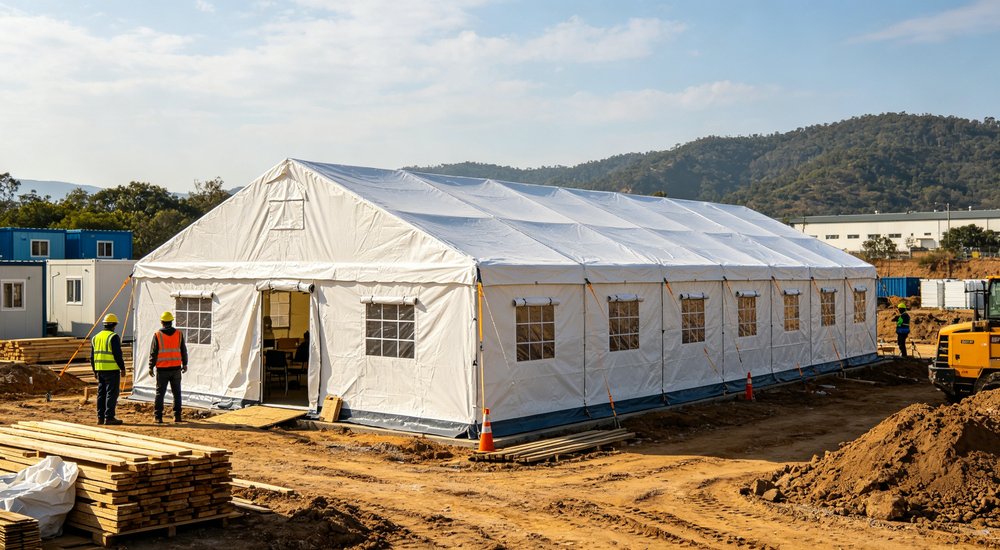
Key insight: At -10°C exterior, a single layer tent drops to -12°C inside — dangerous for human occupancy. An integrated 3-layer maintains 0-3°C, and a detachable 3-layer maintains 2-5°C. Below -15°C, all three types require additional heating, but insulated tents reduce heating fuel consumption by 50-70%.
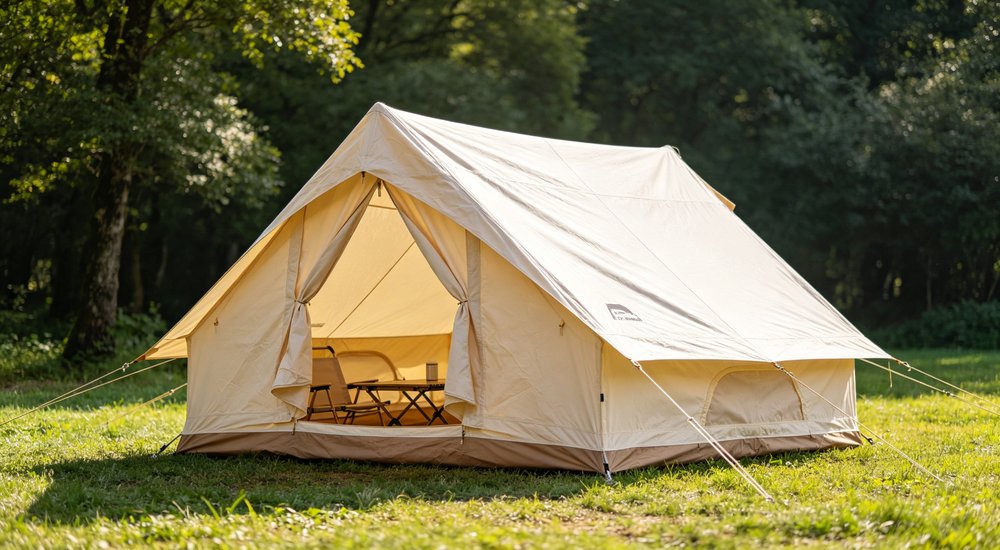
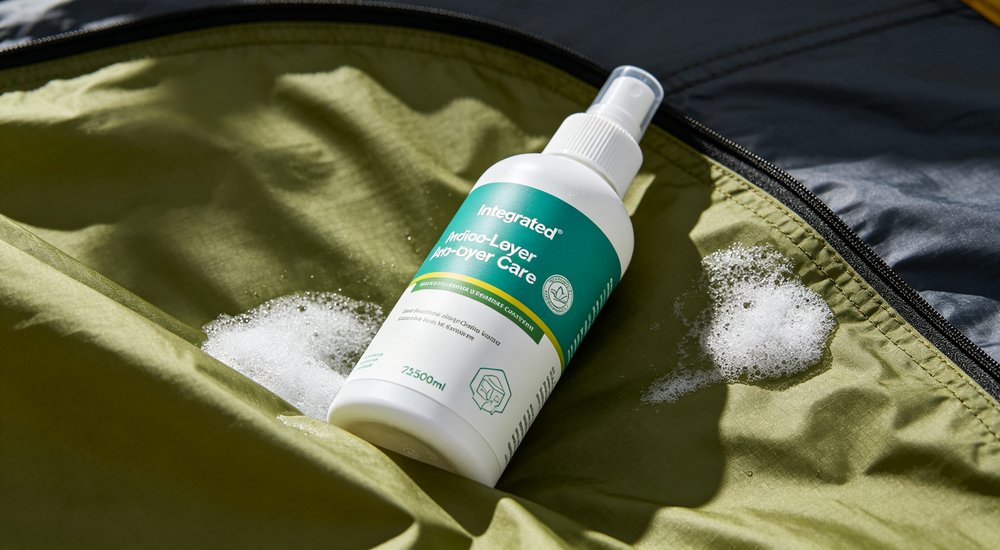
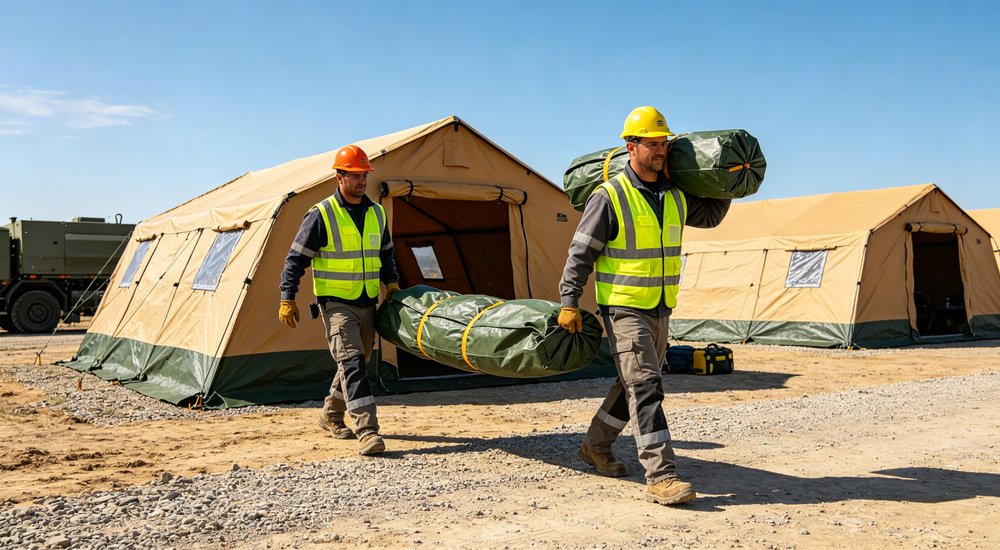
Weight directly affects shipping costs, especially for large orders. A 100-tent order can weigh 3-13 tons depending on construction type. Insulated frame tents are significantly heavier than single layer models, which impacts both freight costs and the number of tents that fit in a standard shipping container. For organizations managing global logistics, understanding these weight differences is critical for budget planning and deployment scheduling. Thermal tent constructions with thick insulation may require specialized handling equipment at warehouses and distribution centers.
|
Factor |
Single Layer |
Integrated 3-Layer |
Detachable 3-Layer |
|
20m² tent weight |
35-45 kg |
70-90 kg |
80-100 kg |
|
100 tents total weight |
3.5-4.5 tons |
7-9 tons |
8-10 tons |
|
20ft container capacity |
~300 tents |
~150 tents |
~130 tents |
|
Storage bag count |
1 bag |
1 bag |
2 bags (outer + inner) |
|
Storage volume (20m²) |
0.15 m³ |
0.25 m³ |
0.30 m³ |
|
Air freight cost index |
1.0x (baseline) |
2.0x |
2.3x |
|
Sea freight cost index |
1.0x |
1.8x |
2.0x |
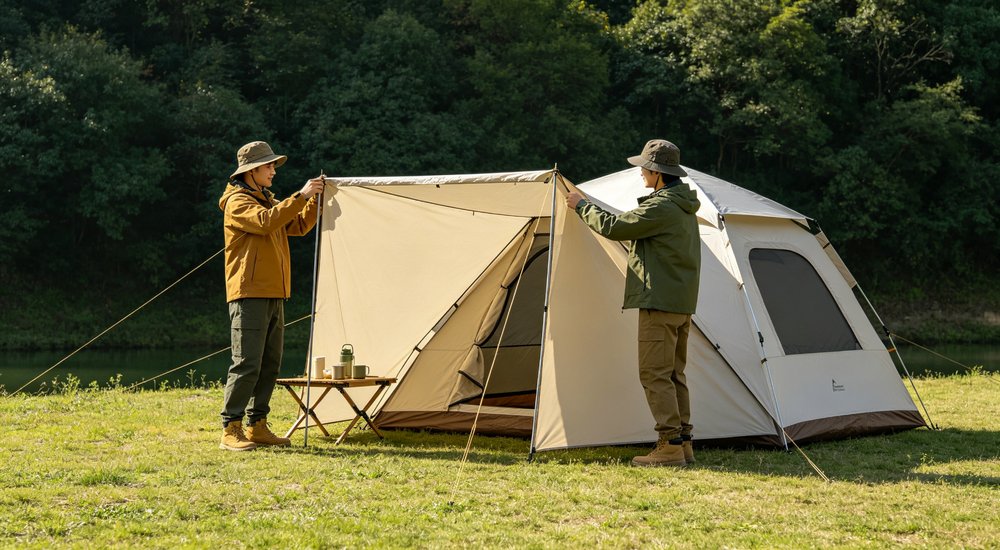
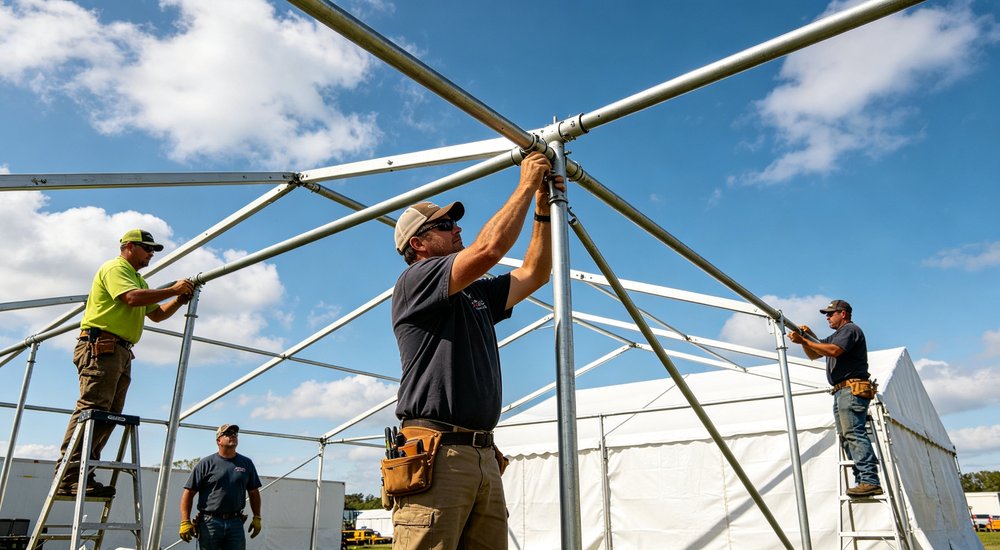
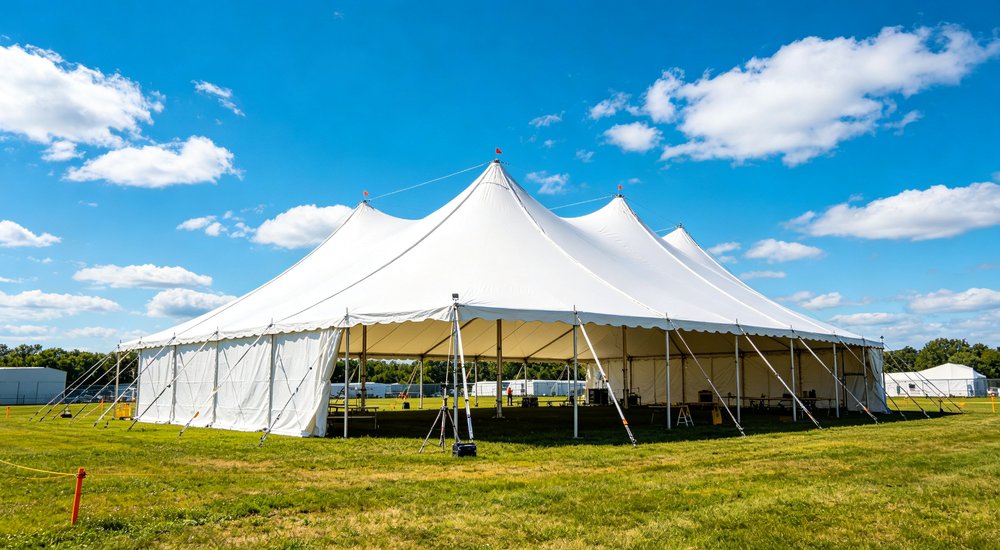
Setup time varies significantly by construction type, with single layer tents being the fastest and detachable 3-layer requiring the most time. Maintenance complexity also differs: integrated 3-layer tents require checking for delamination between bonded layers, while detachable systems allow independent layer inspection and replacement. For cold weather tent deployments, proper maintenance of insulation integrity is critical — even small gaps or tears can reduce thermal performance by 20-30%.
|
Task |
Single Layer |
Integrated 3-Layer |
Detachable 3-Layer |
|
Frame assembly |
10-15 min |
10-15 min |
10-15 min |
|
Outer canopy install |
5-10 min |
10-15 min (heavier) |
5-10 min |
|
Inner tent install |
N/A |
N/A (integrated) |
10-15 min |
|
Total setup (2 people) |
15-20 min |
25-35 min |
30-45 min |
|
Annual maintenance |
Clean + inspect |
Clean + inspect + check delamination |
Clean both layers + inspect hooks/Velcro |
|
Repair complexity |
Simple (patch kit) |
Complex (3-layer patch) |
Moderate (replace layer) |
|
Average service life |
3-5 years |
5-7 years |
7-10 years (layers replaceable) |
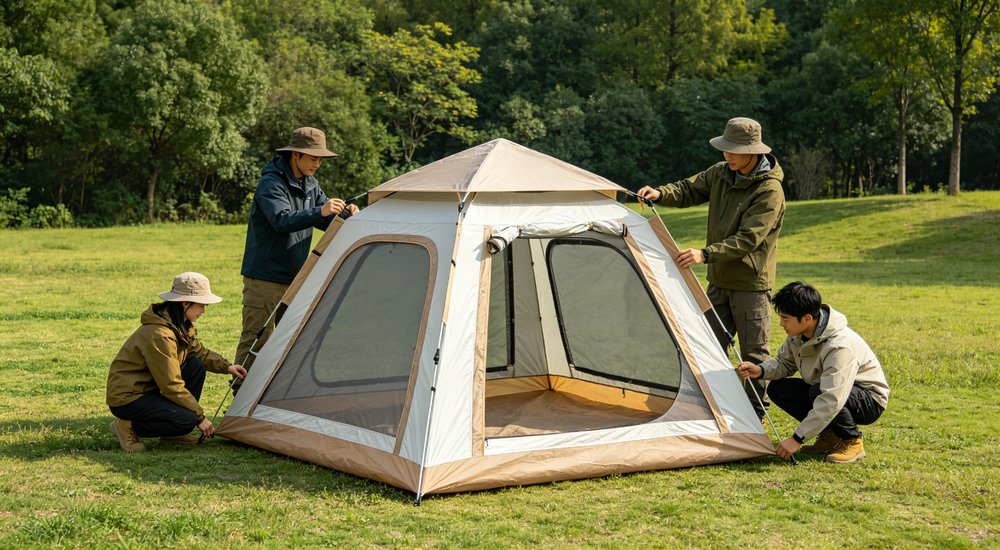
Purchase price is only part of the equation. Total Cost of Ownership (TCO) includes heating fuel, maintenance, repairs, and replacement over the tent's service life:
|
Cost Factor (20m², 5 years) |
Single Layer |
Integrated 3-Layer |
Detachable 3-Layer |
|
Purchase price |
$300 |
$550 |
$620 |
|
Heating fuel (cold climate) |
$800 (high consumption) |
$350 |
$280 |
|
Maintenance & repairs |
$100 |
$150 |
$80 (replaceable layers) |
|
Replacement (if needed) |
$300 (whole tent) |
$550 (whole tent) |
$150 (one layer only) |
|
5-Year TCO (cold climate) |
$1,500 |
$1,050 |
$950 |
|
5-Year TCO (warm climate) |
$400 |
$700 |
$700 |

Critical finding: In cold climates, detachable 3-layer tents have the LOWEST 5-year TCO despite the highest purchase price, because they save 65% on heating fuel and allow layer-by-layer replacement. In warm climates, single layer is the clear economic choice.
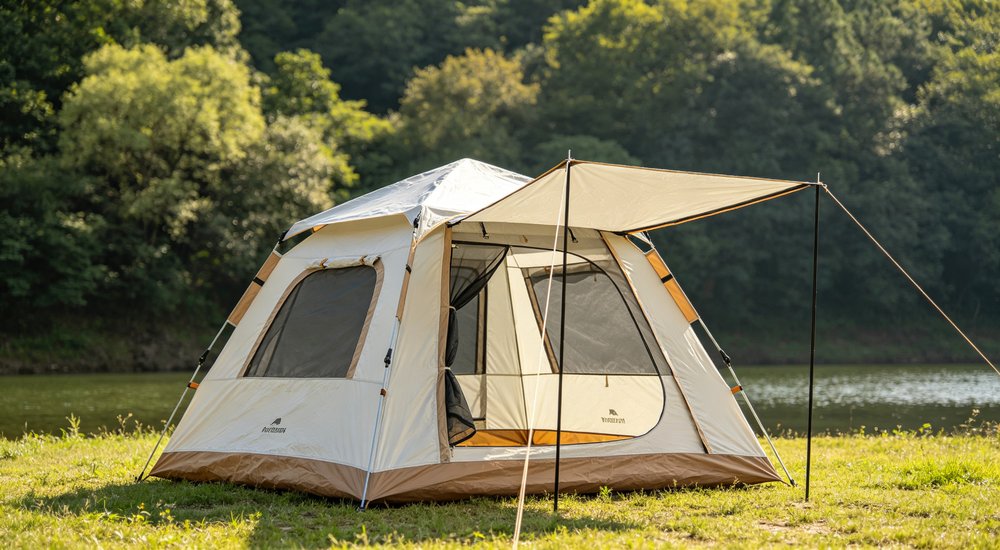
For organizations needing a winter tent for sub-zero operations, insulated constructions are essential. For year-round deployments across multiple climates, an all weather tent with detachable layers offers maximum versatility.
|
Climate / Scenario |
Recommended Construction |
Why |
|
Tropical (year-round >25°C) |
Single Layer |
Maximum ventilation, lowest cost, no insulation needed |
|
Subtropical (mild winter 10-20°C) |
Single Layer or Detachable |
Single layer sufficient; detachable if occasional cold snaps |
|
Temperate (winter 0-10°C) |
Detachable 3-Layer |
Remove inner in summer, add in winter; best versatility |
|
Cold (winterized -10 to 0°C) |
Detachable or Integrated 3-Layer |
Both work; detachable preferred for year-round use |
|
Extreme cold (winter <-10°C) |
Integrated 3-Layer (thick insulation, winterized) |
Fixed insulation cannot be misplaced; choose 10-15mm batting for winterized performance |
|
High altitude (>3000m) |
Integrated 3-Layer |
Rapid temperature drops; fixed insulation is reliable |
|
Medical facility (all climates) |
Detachable 3-Layer |
Temperature control critical; inner can be removed for sterilization |
|
Short-term response (<1 month) |
Single Layer |
Fast deployment, low cost, adequate for short periods |
|
Long-term camp (>6 months) |
Detachable 3-Layer |
Lowest TCO, layer replacement extends service life |
|
Multi-region deployment |
Detachable 3-Layer |
One tent type works globally; standardize inventory |

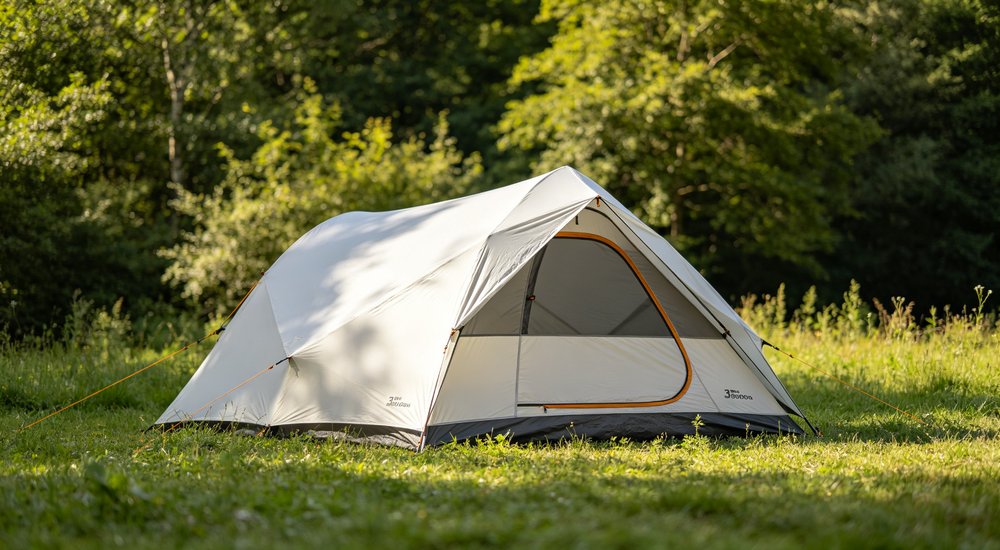
All three construction types support extensive customization, but some options are only available on specific constructions. 4 season tent configurations with reinforced frames and extra-thick insulation are typically only offered in integrated or detachable 3-layer formats. Logo printing, color choices, and window configurations are available across all types. Detachable 3-layer tents offer the unique advantage of allowing organizations to start with outer tents only, then purchase removable liner tent upgrades as budgets allow.
|
Customization |
Single Layer |
Integrated 3-Layer |
Detachable 3-Layer |
|
Logo printing |
✅ Yes |
✅ Yes (outer only) |
✅ Yes (outer only) |
|
Color choice |
✅ 20+ colors |
✅ Outer color choice |
✅ Outer + inner color choice |
|
Insulation thickness |
❌ N/A |
✅ 5-15mm fixed |
✅ 5-15mm removable |
|
Window configuration |
✅ Fully customizable |
✅ Customizable |
✅ Customizable (both layers) |
|
Connection tunnels |
✅ Yes |
✅ Yes |
✅ Yes |
|
Floor inclusion |
✅ Optional |
✅ Optional |
✅ Optional (integrated with inner) |
|
Stove jack / heating port |
✅ Optional |
✅ Reinforced |
✅ Reinforced (both layers) |
|
Inner tent only (upgrade later) |
❌ Not compatible |
❌ N/A |
✅ Purchase inner separately |
| Customization | Single Layer | Integrated 3-Layer | Detachable 3-Layer |
|---|---|---|---|
|
|
|
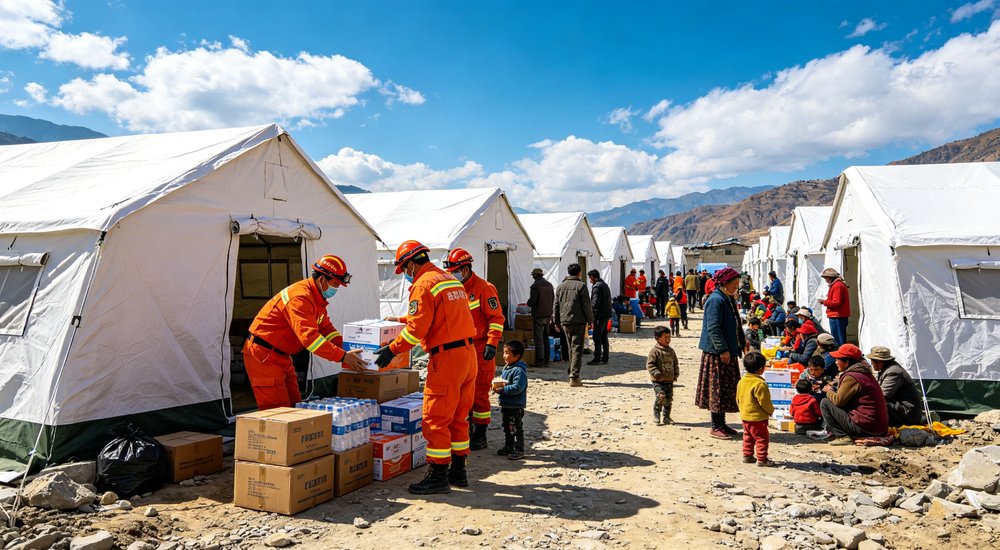
How do you decide which construction is right for your program? Follow this 5-step process:

List all regions where your organization operates. If 70%+ are warm/tropical, single layer is likely best. If you operate across both warm and cold regions, detachable 3-layer is the standard choice. If exclusively cold, integrated 3-layer is simplest.
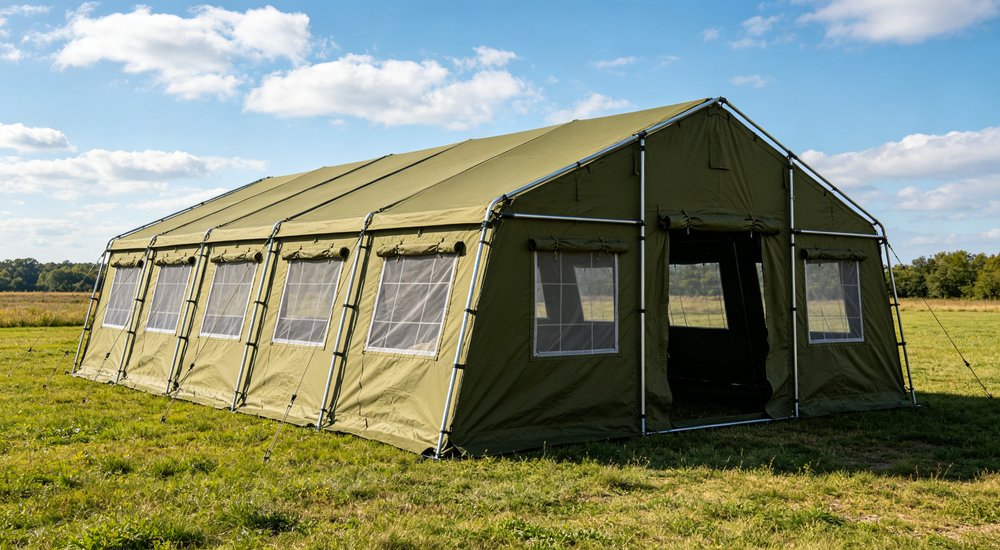
In cold climates, heating fuel is often the largest ongoing cost. A single layer tent consumes 2-3x more heating fuel than an insulated tent. Over 5 years, the fuel savings alone can pay for the upgraded tent.
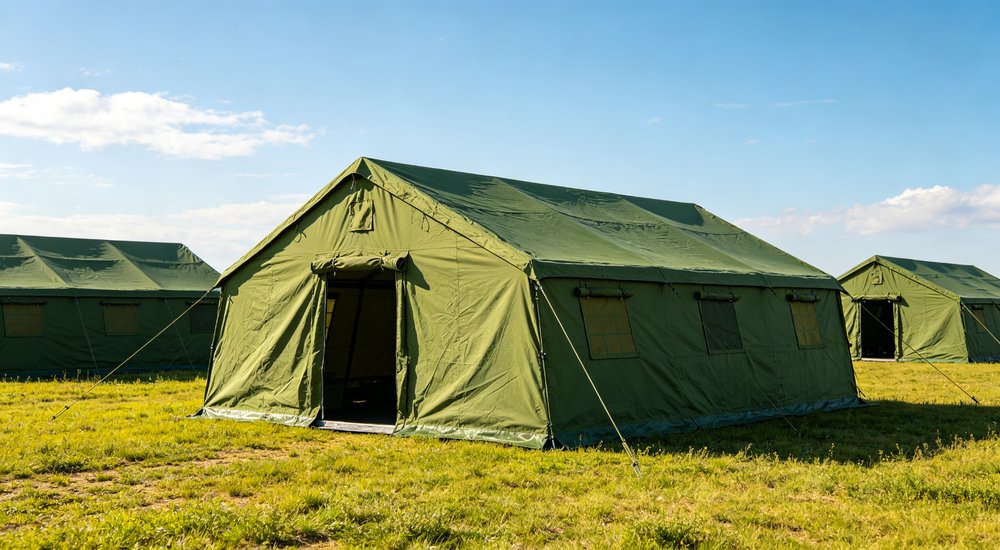
Short-term deployments (weeks to months) favor single layer for speed and cost. In rapid-onset disasters where tents are needed for 2-12 weeks, single layer can be deployed 30% faster and costs 50% less, making it the pragmatic choice. Long-term camps (6+ months) favor detachable 3-layer for comfort and low TCO. For multi-year programs, the layer-replacement capability of detachable construction extends service life to 7-10 years, compared to 3-5 years for single layer.
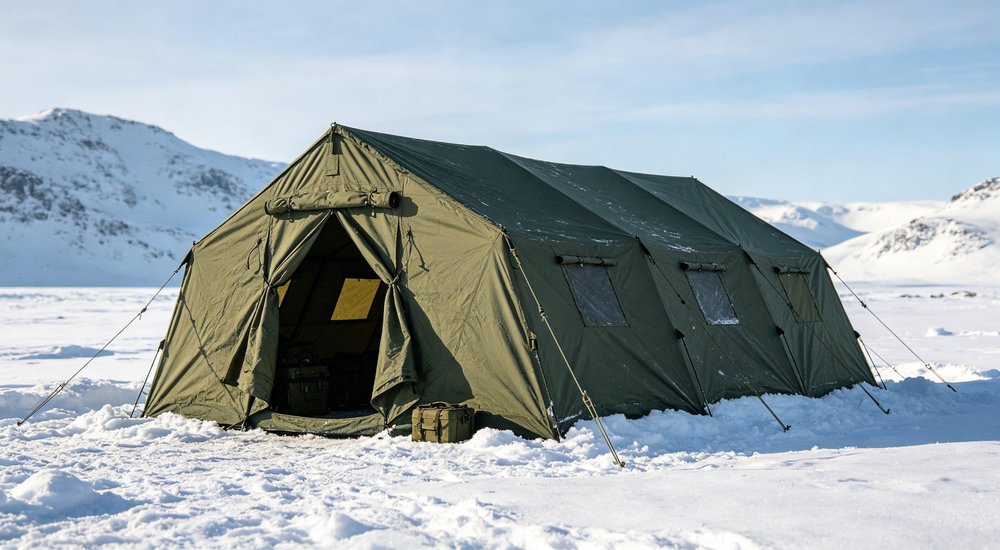
Detachable 3-layer tents are heaviest and bulkiest — a 20m² unit weighs 80-100kg in two separate bags, compared to 35-45kg for single layer. If your logistics chain is strained (remote areas, limited transport, last-mile delivery by small vehicles), single layer may be the practical choice despite climate considerations. For air freight deployments, the weight difference is critical: 100 detachable tents cost 2.3x more to ship than 100 single layer tents. Always factor total delivered cost, not just unit price.
Choosing one construction type across your entire fleet simplifies training, spare parts inventory, and maintenance. Most large organizations standardize on detachable 3-layer for global versatility.
Related products: Learn more: 12m² Standard Frame Tent | Explore: 20m² Large Frame Tent | Compare: Heavy Duty Canvas Tent | View: Medical Support Tent | See also: Field Hospital Tents — all available in single layer, integrated 3-layer, and detachable 3-layer constructions.
Scenario pages: Disaster Relief Tents | Refugee Camp Tents | Military Field Tents
Common procurement mistake: Buying single layer tents for cold climate programs to save upfront cost. The resulting heating fuel costs and occupant discomfort make this the most expensive option over time. Always calculate 5-year TCO before deciding.
|
Factor |
Single Layer |
Integrated 3-Layer |
Detachable 3-Layer |
|
Best for |
Tropical, short-term |
Cold, permanent |
All climates, long-term |
|
Weight (20m²) |
35-45 kg |
70-90 kg |
80-100 kg |
|
Setup time |
15-20 min |
25-35 min |
35-45 min |
|
Price range |
$150-$350 |
$300-$550 |
$350-$650 |
|
Service life |
3-5 years |
5-7 years |
7-10 years |
|
Winter use |
Not recommended |
Excellent |
Excellent |
|
Layer replacement |
N/A |
Cannot replace |
Independent replacement |
Understanding how humanitarian organizations and medical clinic operators actually use these constructions in the field helps clarify which choice is right for your program:
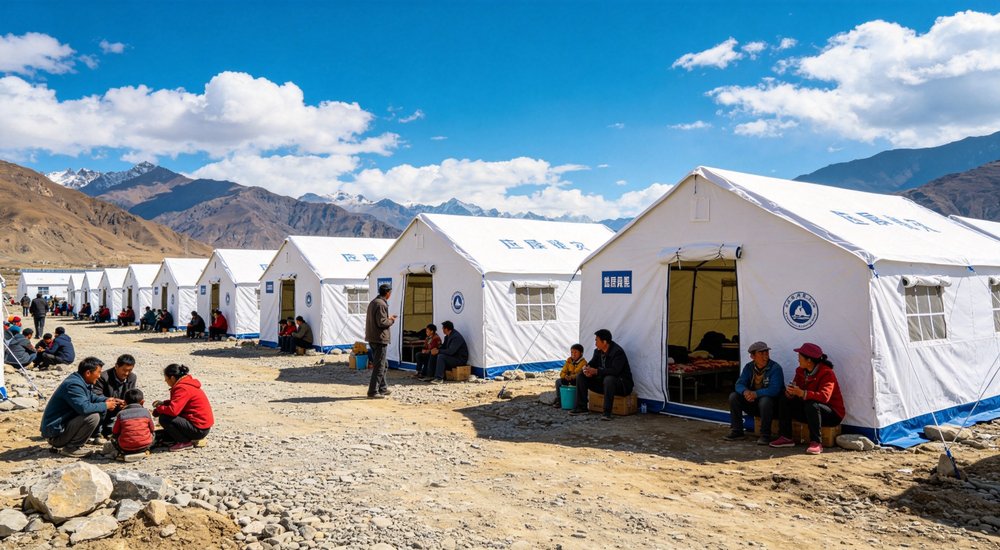
A Southeast Asian disaster response agency deployed 500 single layer 12m² tents after a major flood. The lightweight tents were airlifted within 48 hours, set up by local volunteers in 15 minutes each, and provided adequate shelter in 30°C+ temperatures. Total cost: $75,000. The same order in detachable 3-layer would have cost $250,000 and weighed 3x more, delaying deployment by a week.
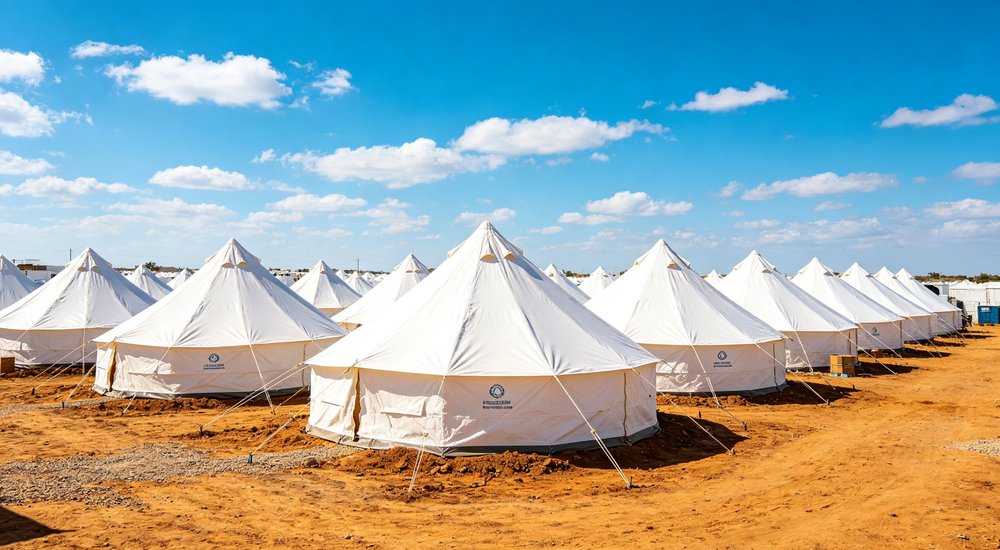
A UN agency operating a refugee camp in a mountainous region with -15°C winters chose detachable 3-layer 20m² tents. In summer, inner liners were removed for ventilation; in winter, they were reinstalled for warmth. Over 5 years, only 15% of outer tents needed replacement due to wear, while inner liners were washed and reused annually. Total 5-year cost per tent: $950, compared to $1,500 for single layer with heating fuel.
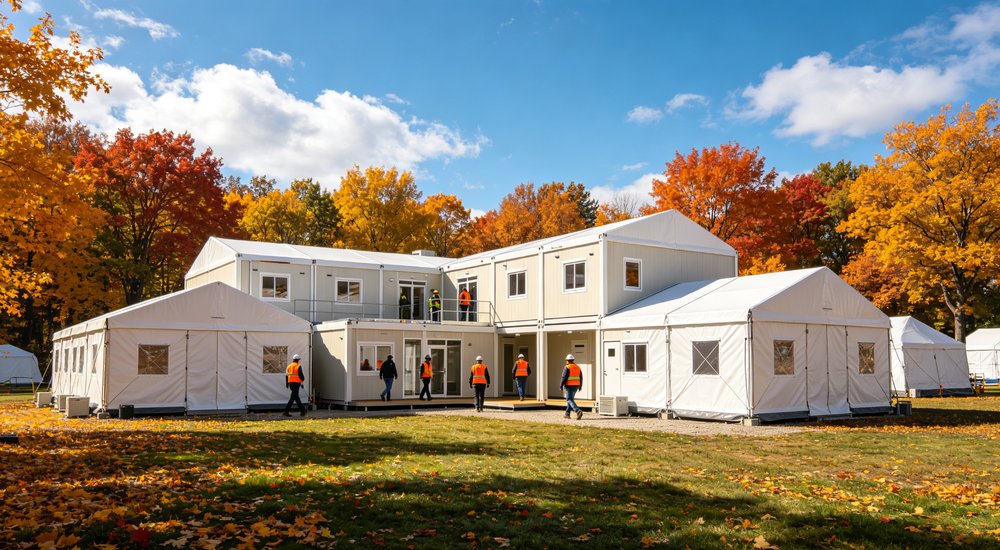
A medical NGO operating a permanent field clinic at 3,500m altitude chose integrated 3-layer tents with 15mm needle-punched cotton insulation. The fixed insulation cannot be misplaced by rotating staff, and the reinforced construction withstands 120km/h winds. Interior temperatures maintained at 18-22°C even when exterior dropped to -20°C, with only a small wood stove for supplementary heating.
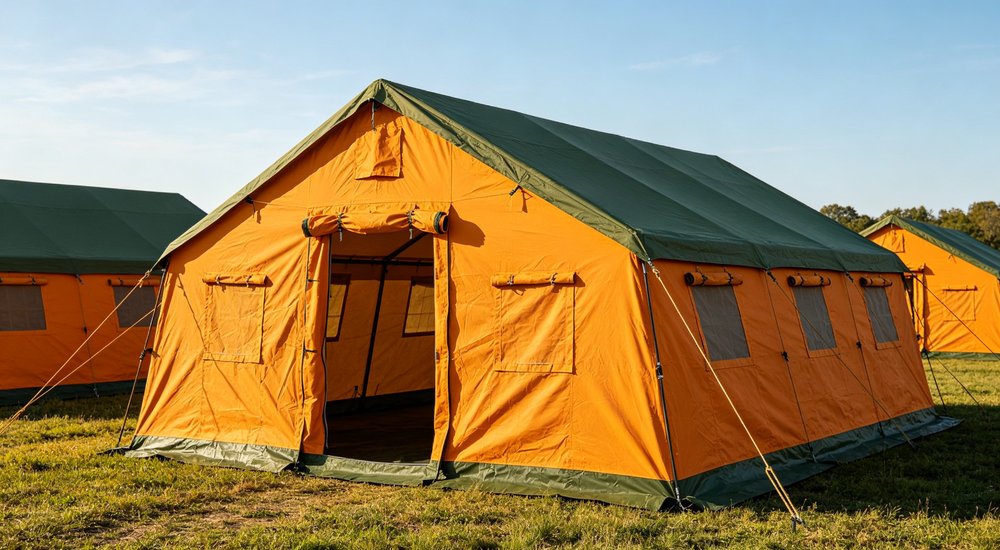
What is the difference between single layer and 3-layer tents?
Single layer tents have only one waterproof fabric layer over the frame with no insulation. 3-layer tents add an insulation layer (foam or cotton batting) and an inner lining, either sewn together (integrated) or as a separate removable piece (detachable). The insulated construction provides significantly better thermal insulation for cold climates.
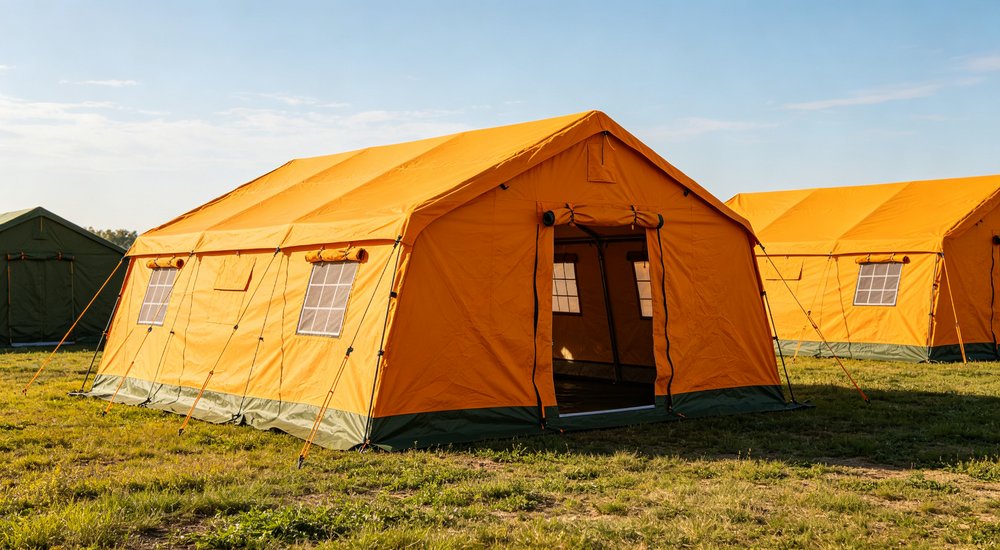
This is the most common terminology confusion in the industry. Physically, an insulated tent has three material layers: outer fabric, insulation (foam or cotton), and inner lining. Some suppliers call this "2-layer" because they treat the outer-fabric-with-insulation as one composite piece, plus the inner lining as the second layer. Both terms describe the same product. We use "3-layer" because it accurately describes the three physical material layers. Always ask for the material breakdown rather than relying on the layer count name.
Which is warmer: integrated 3-layer or detachable 3-layer?
Detachable 3-layer is typically 1-3°C warmer because the air gap between the outer and inner layers creates an additional insulation barrier. Integrated 3-layer has the insulation directly bonded to the fabric, which is slightly less thermally efficient but simpler to set up.

Generally no. Single layer tents are not designed with the attachment points (hooks, Velcro, ties) needed for an inner liner. If you might need insulation later, purchase detachable 3-layer tents from the start — you can always use just the outer tent in warm weather.
How much more does a 3-layer tent cost compared to single layer?
Integrated 3-layer costs approximately 60-80% more than single layer. Detachable 3-layer costs approximately 80-100% more. However, in cold climates, the heating fuel savings over 3-5 years typically offset the higher purchase price.
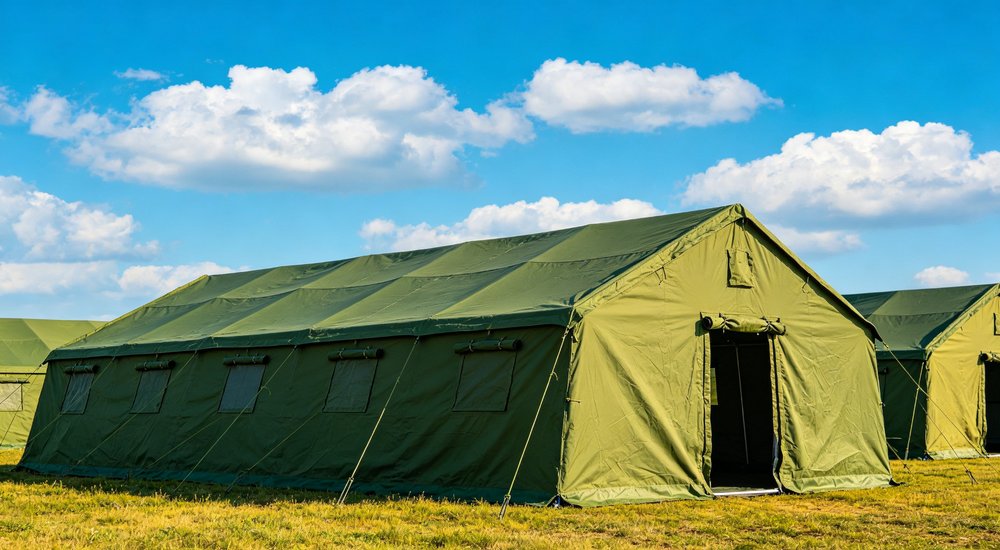
Integrated 3-layer tents can have condensation issues if not properly ventilated, because moisture can become trapped between the bonded layers. Detachable 3-layer tents have fewer condensation problems because the air gap allows moisture to circulate and escape. All tent types require proper ventilation management.
Most UNHCR, IFRC, MSF, and ICRC standardize on detachable 3-layer tents for global deployment. This allows them to use one tent type across all climate zones, removing the inner in summer and adding it in winter. Single layer is used for specific tropical programs.

Single layer: 3-5 years with proper maintenance. Integrated 3-layer: 5-7 years (delamination of bonded layers is the main failure mode). Detachable 3-layer: 7-10 years because individual layers can be replaced, extending the overall service life significantly.
Yes. The insulated inner tent can be removed and cleaned separately, which is a major advantage for medical facilities and long-term camps where hygiene is critical. Integrated 3-layer tents cannot be disassembled for thorough cleaning.
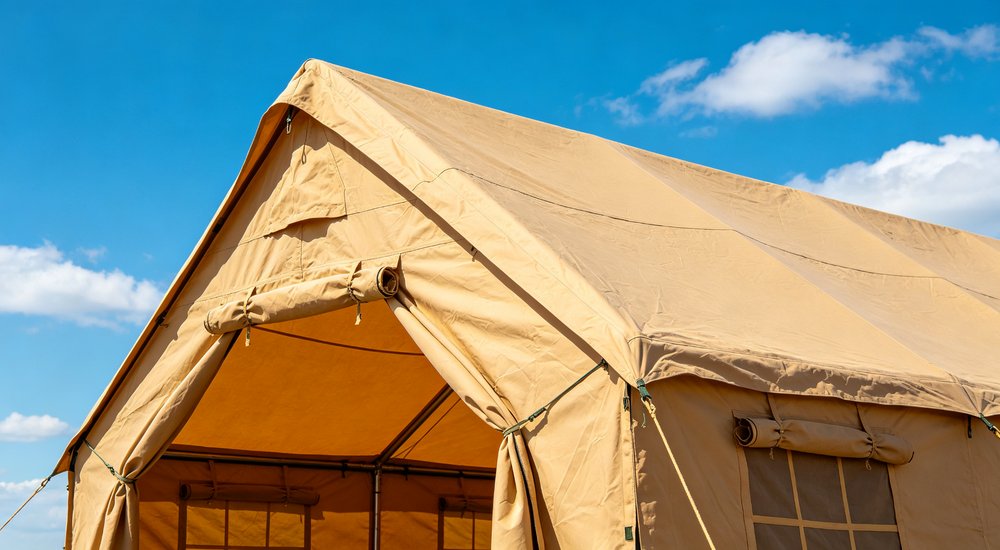
For temperatures below -15°C, choose 10-15mm needle-punched cotton insulation with an optional aluminum foil reflective layer. This combination provides the highest R-value (3.5-5.0) and is used in Arctic and high-altitude programs. EPE foam is a good mid-range option for -5 to -15°C.
Integrated 3-layer tents can become uncomfortably hot in summer because the fixed insulation traps heat. Detachable 3-layer tents solve this by allowing the inner tent to be completely removed, converting it into a single layer tent with excellent ventilation. This is the primary advantage of detachable construction.
A 20m² integrated 3-layer tent weighs approximately 70-90kg vs 35-45kg for single layer — about double. Detachable 3-layer weighs 80-100kg. For a 100-tent order, this means 7-10 tons vs 3.5-4.5 tons, significantly affecting sea and air freight costs.
Can I mix construction types in one order?
Yes. Many organizations order a mix: single layer for tropical programs and detachable 3-layer for cold climate programs. However, standardizing on one type simplifies training, spare parts, and maintenance. We can advise on the optimal mix based on your deployment map.
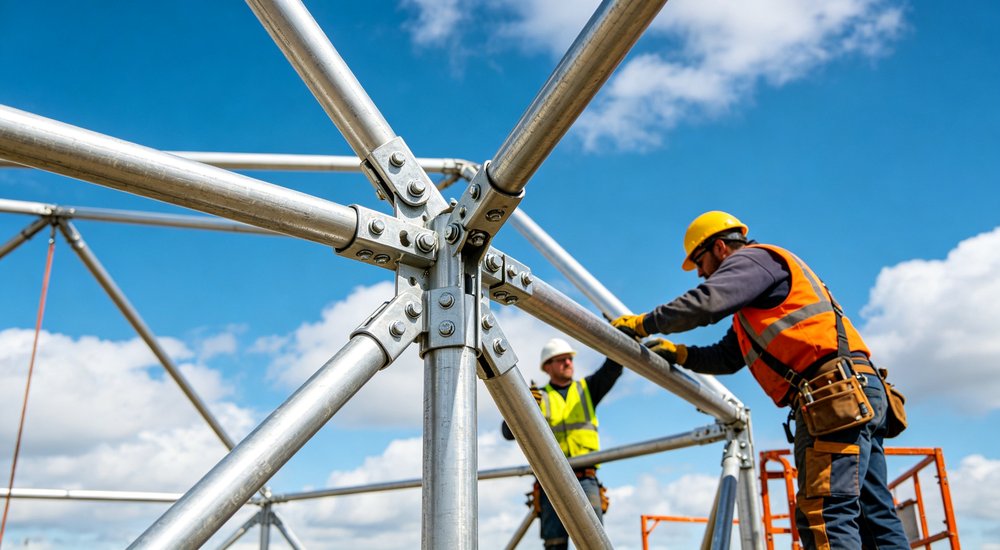
You can replace only the outer tent canopy while keeping the insulated inner tent, saving 40-50% compared to replacing the entire tent. This is a major long-term cost advantage of detachable construction. On integrated 3-layer, a tear in the outer fabric requires replacing the entire 3-layer canopy.
Yes, all three construction types use the same steel or aluminum frame system. The difference is only in the canopy construction. This means you can potentially upgrade from single layer to detachable 3-layer by purchasing new canopies if your frames are compatible (frame dimensions must match).
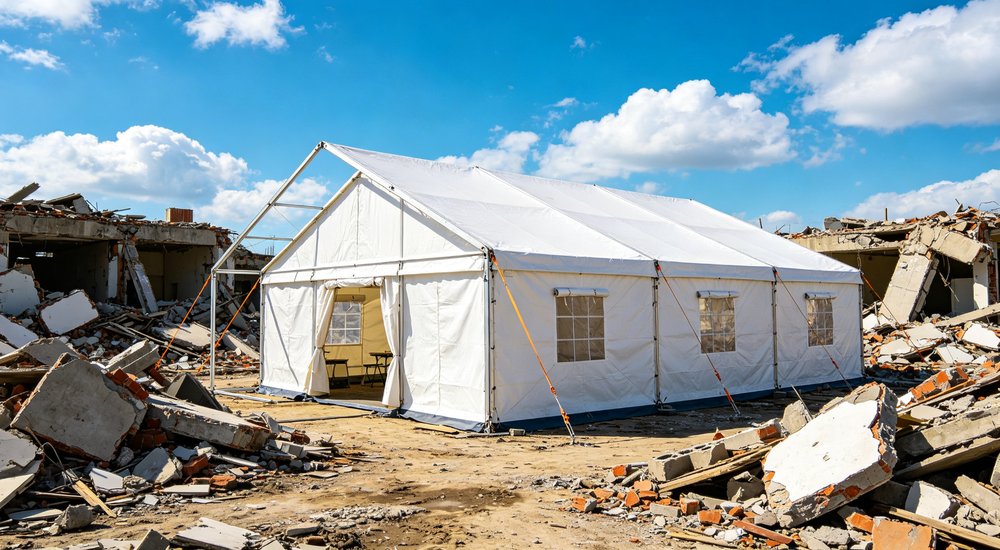
Detachable 3-layer is preferred for medical facilities because:
(1) temperature can be regulated by adding/removing the inner,
(2) the inner lining can be removed for cleaning and sterilization,
(3) individual layers can be replaced if contaminated, and
(4) the air gap reduces condensation that could compromise sterile environments.
Minimum order is typically 50 tents for single layer and 30 tents for 3-layer constructions. However, we can accommodate smaller trial orders for evaluation purposes. Larger orders (500+ tents) qualify for volume discounts of 10-20%.
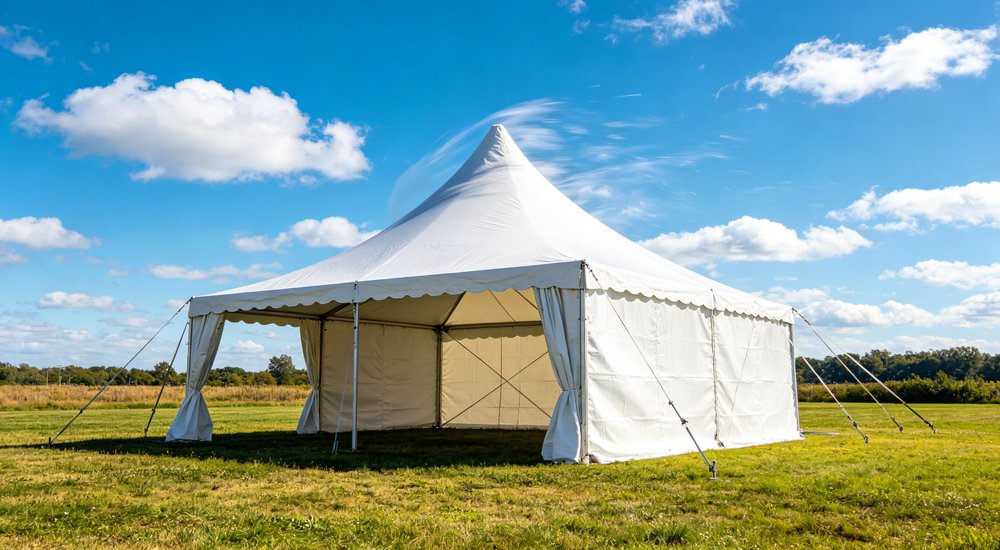
Yes, we recommend ordering 1-2 sample tents of each construction type you are considering. Test them in your actual deployment climate for 2-4 weeks before committing to a large order. Sample costs are typically credited toward bulk orders.
All three construction types can be certified to ISO 9001 (quality management), CE (European safety), and flame retardant standards (BS 5438 / CPAI-84). 3-layer tents can additionally be certified for thermal performance (R-value testing) and cold climate performance. We provide test reports with all shipments.
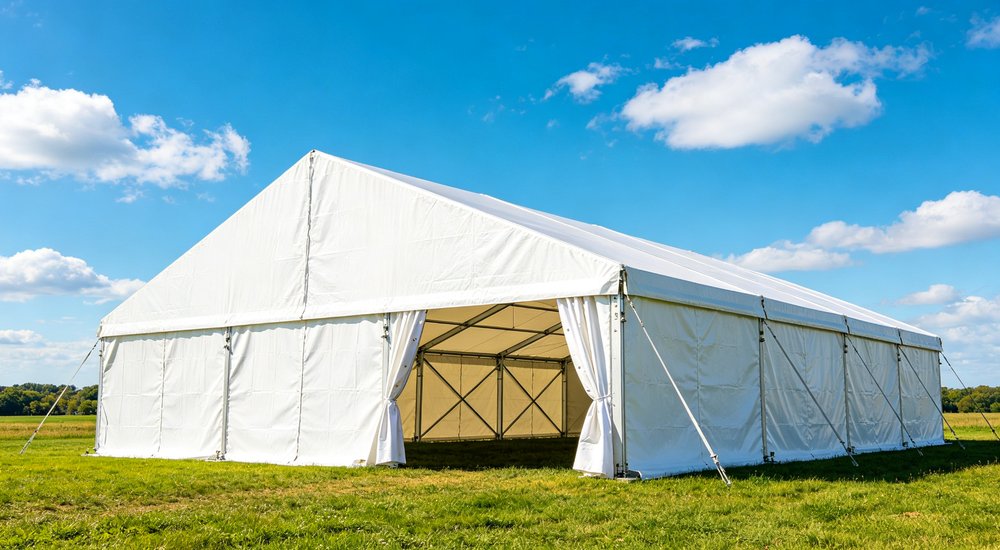
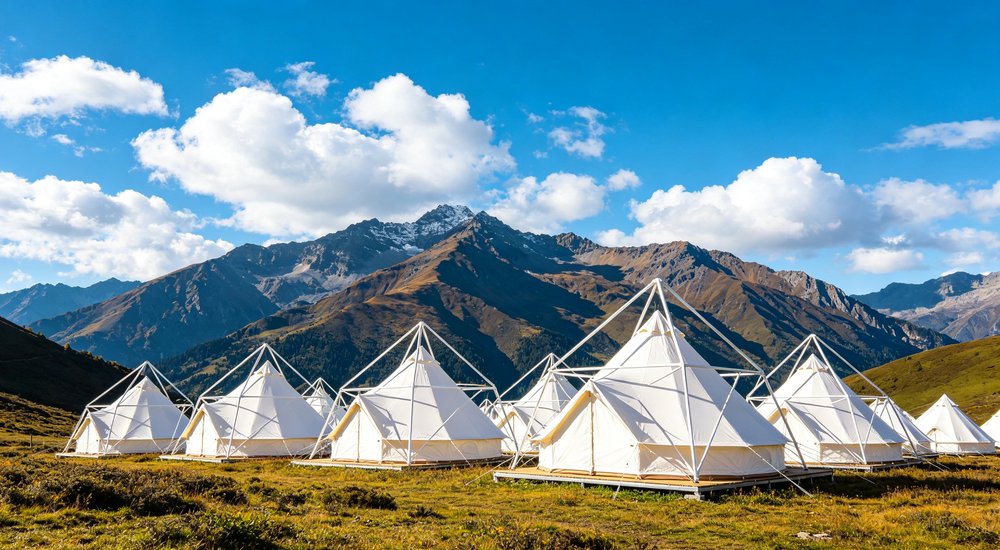
Whether you need humanitarian tent supplies for refugee camps, medical shelters for disaster response, or operational shelters for military deployments, choosing the right construction type ensures occupant comfort and long-term cost efficiency. As a direct factory with OEM capability, we offer flexible MOQ starting from 50 units. Our team can provide side-by-side samples of all three constructions for evaluation before you commit to a large order.
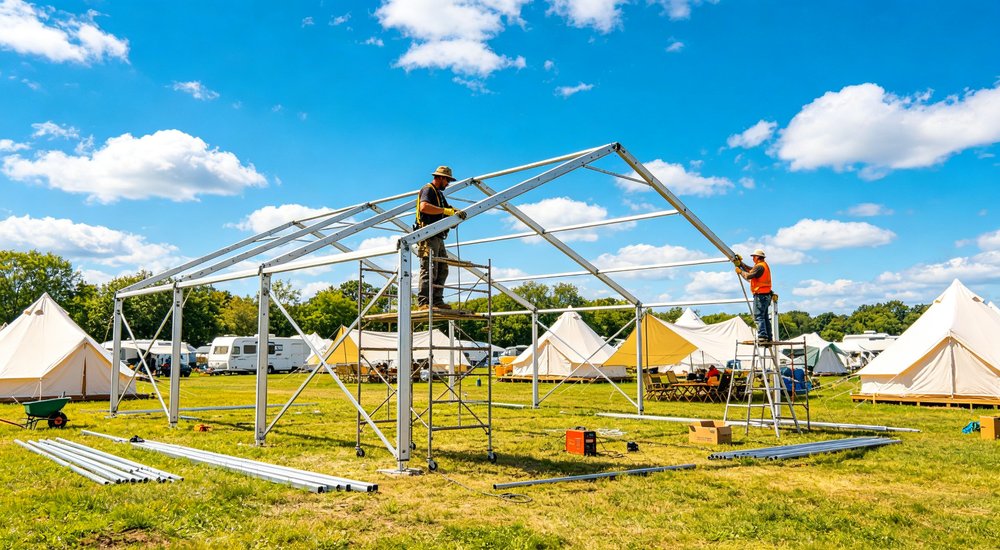
Not sure which construction type is right for your program? Share your deployment regions, expected duration, and budget, and we will recommend the optimal construction mix with detailed pricing. As a China-based tent manufacturer with 20+ years of emergency shelter experience, we supply all three construction types at wholesale tent pricing to UN agencies, NGOs, and military organizations worldwide.
Response time: 24 hours | Emergency delivery: 7-10 days (buffer stock) | Production capacity: 2,000+ tents/month
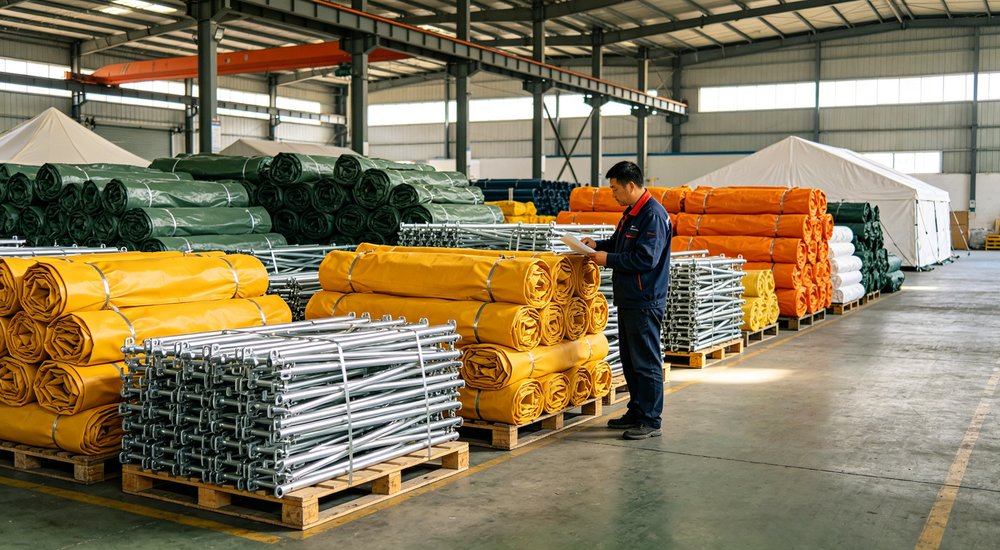
After-sales support: 2-year warranty on frames, 1-year warranty on fabric, free replacement parts for first year, and dedicated technical support for setup and maintenance. Spare parts kits (zippers, poles, patches) available for all tent models
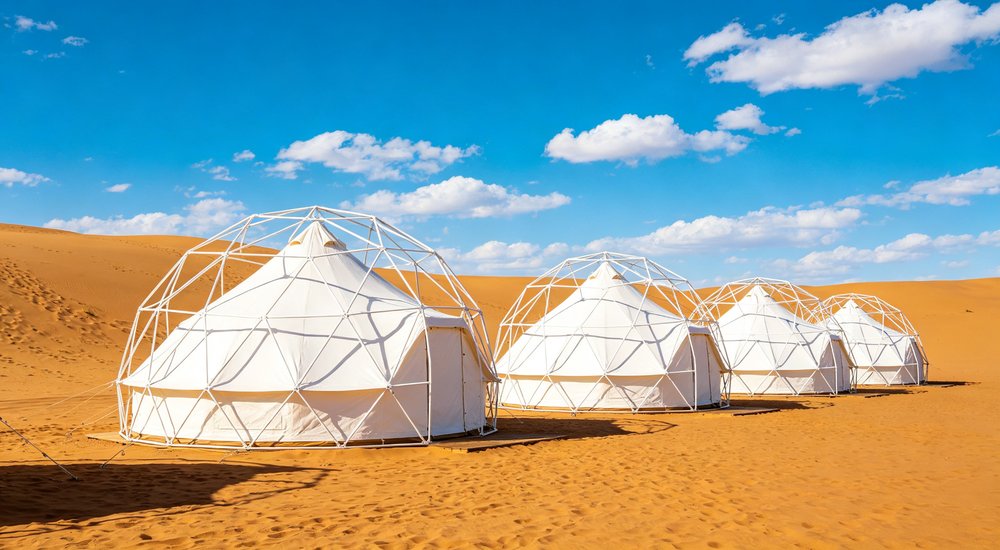
If you operate in one warm climate zone, choose single layer. If you operate exclusively in cold regions, choose integrated 3-layer. If you deploy across multiple climates or need the best long-term value, choose detachable 3-layer — it is the most versatile, has the lowest total cost of ownership in cold climates, and is the standard choice for the world's leading emergency response organizations. With 20+ years of manufacturing experience as a direct tent manufacturer, we supply wholesale emergency shelters to organizations in 40+ countries. We can help you select the right construction for every program in your portfolio.
 |

|
Freundliche Links :
Urheberrechte © © Custom Disaster - Relief Bedding: Tents, Sleeping Bags, Blankets Alle Rechte vorbehalten
das professionelle Team zum Service !