Published: October 12, 2026 | Last Updated: October 12, 2026
Wholesale 72-Hour Family Emergency Kit with Food & Water | China
We are a China-based emergency kit manufacturer and wholesale supplier serving households, schools, government reserves, NGOs and retail distributors worldwide. Each two-person 72-hour family emergency kit packs three days of food and water, a 26-piece first aid kit, tools, lighting, warmth, hygiene and communication supplies in one durable backpack, with OEM private label and bulk pricing available.
|
72 Hour Kit Contents |
Shelf Life and Rotation |
|
Five Bag Styles |
Storage Recommendations |
|
30-Second Checklist |
Bulk and Wholesale |
|
Contents and Quantity Table |
Quality and Certifications |
|
Scenario Guide |
Key Procurement Points |
|
Customization and OEM |
Related Products |
|
|
FAQ |
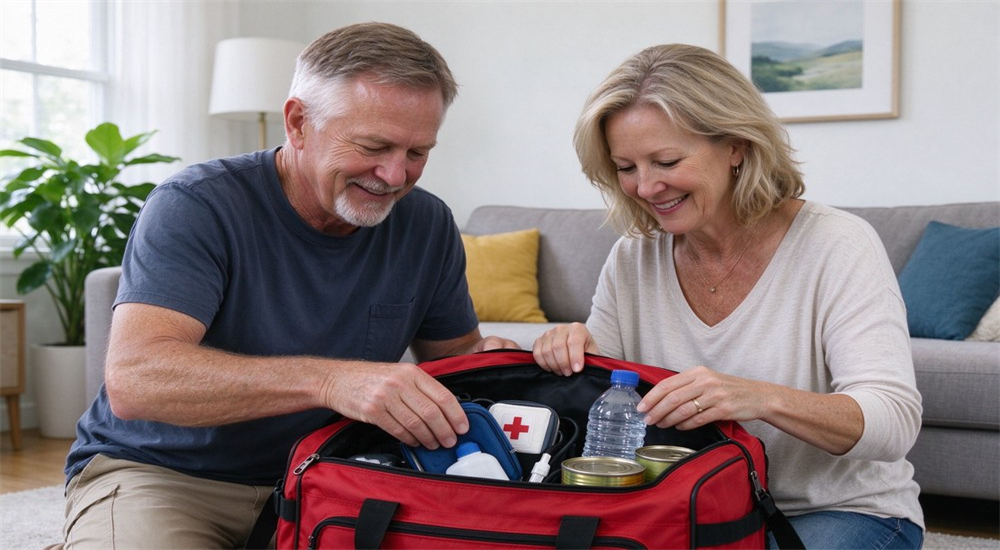
Whether you need a bug out bag for evacuation, a shelter in place kit for lockdown, or a 2 person emergency kit wholesale order for distribution, our emergency kit with food and water configuration covers the first critical 72 hours, and the contents list, bag comparison and quantity table below give buyers the full specification in one page, with the exact pack counts, weights and customization options they need to plan a first order. Each kit contains 26 item categories with 53 pieces, packed in a durable 600D Oxford backpack with a total weight of approximately 3.9kg.
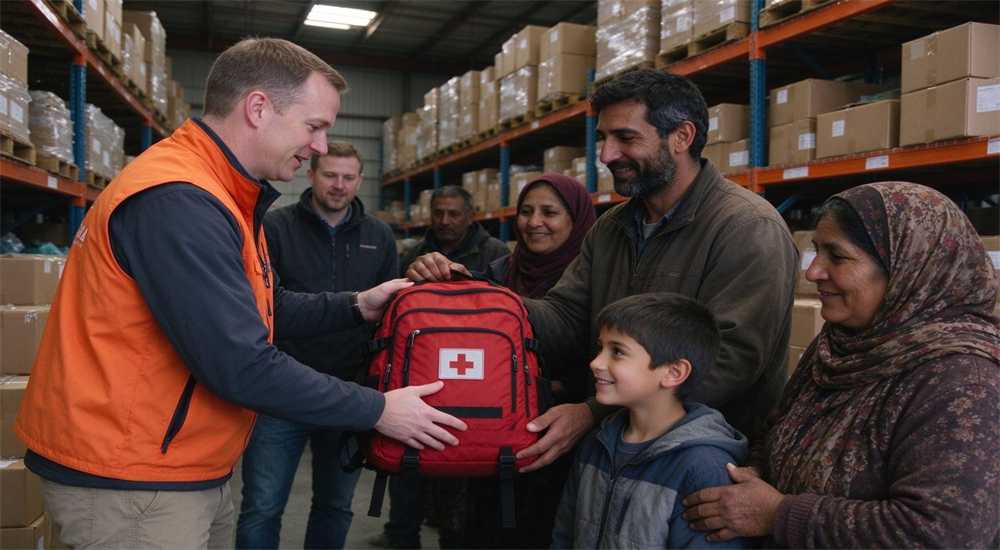
For government reserves, NGO programs, private-label retailers and distributors, our two-person configuration covers food and water for two adults plus shared tools and equipment. Larger households can add individual food and water packs or combine multiple kits. All items are selected for long shelf life, compact storage and ease of use by untrained family members.
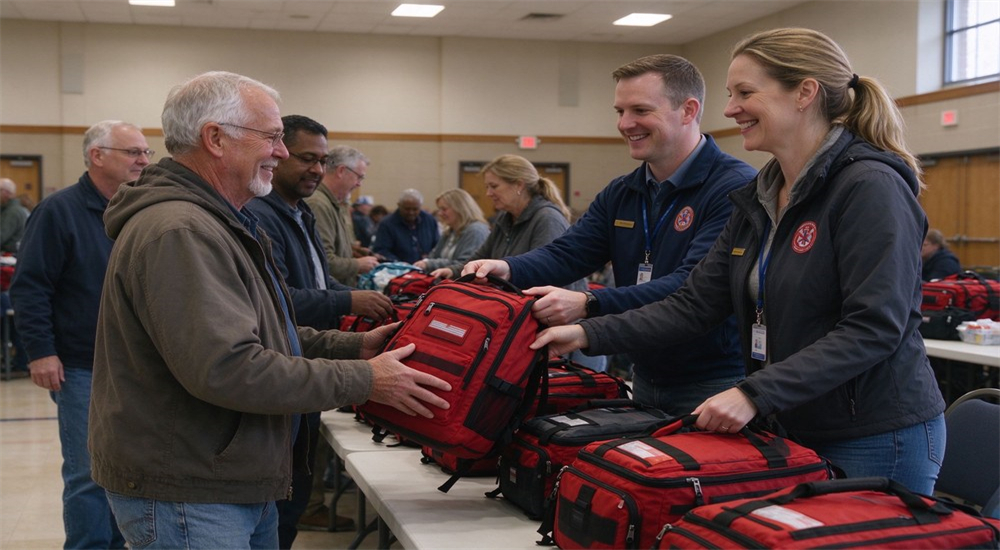
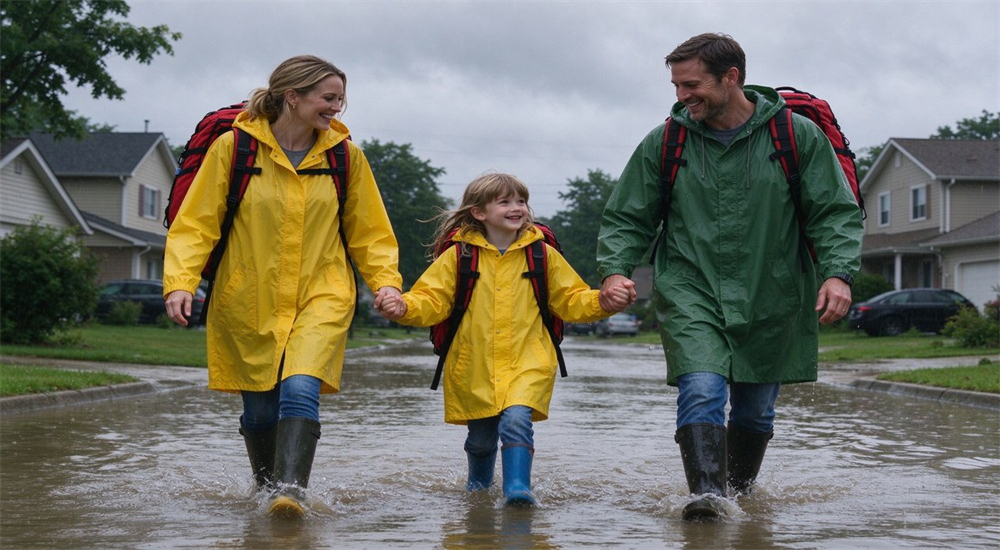
A 72-hour emergency kit is designed to support a household for the first three days after a disaster, when rescue services may be delayed and basic services disrupted. Standard configurations are suitable for earthquakes, floods, hurricanes, power outages and other household emergencies, and every kit is available with OEM private label. The food and water ration follows international preparedness guidance, and the whole kit fits under one bed or in a closet so it can be grabbed in seconds during an evacuation.
This page explains what is inside each kit, how to choose bag styles, how to plan for different hazards, and what to confirm when procuring in bulk. Buyers sourcing earthquake survival kit wholesale or flood emergency supplies bulk can configure contents based on regional hazard profiles. Read the contents list, the bag-style comparison and the quantity table before requesting a quotation, so your specification matches the delivered kit the first time.
Every configuration is assembled to verified specifications and packed so that two adults can find and use every item quickly during an emergency. The sections below cover contents, quantity planning, scenario add-ons, shelf life, storage, bulk ordering, quality and procurement, and each section ends with the practical questions that first-time importers and program buyers ask before placing an order.
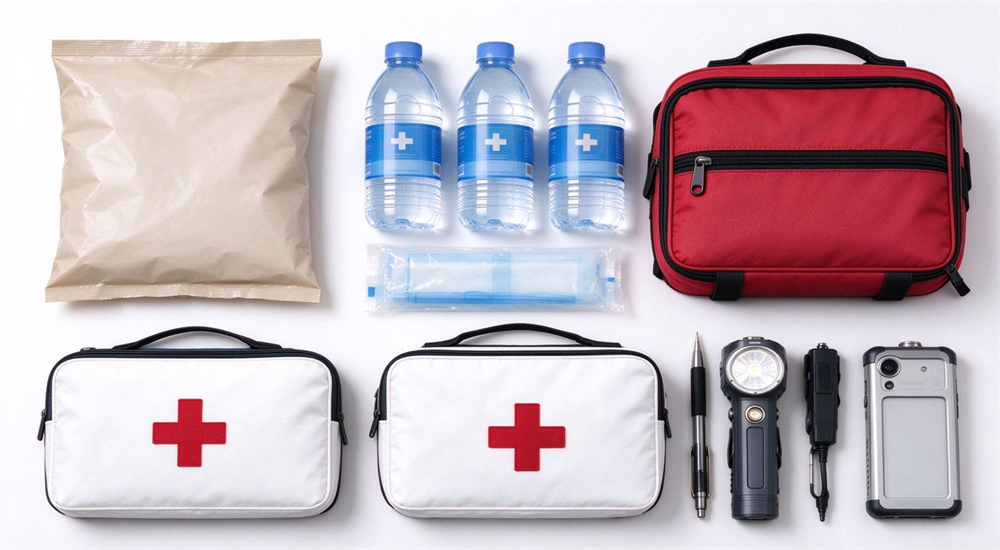
Each two-person kit contains 26 item categories and 53 pieces, organized into eight functional groups. The kit is designed so that two adults can find and use every item quickly during an emergency, and each group is packed in a labeled internal pouch so nothing gets lost during rotation checks. The groups are food, water, first aid, tools, lighting, warmth, hygiene and communication, and every component is selected against a written bill of materials so replacement parts and refills are always available.
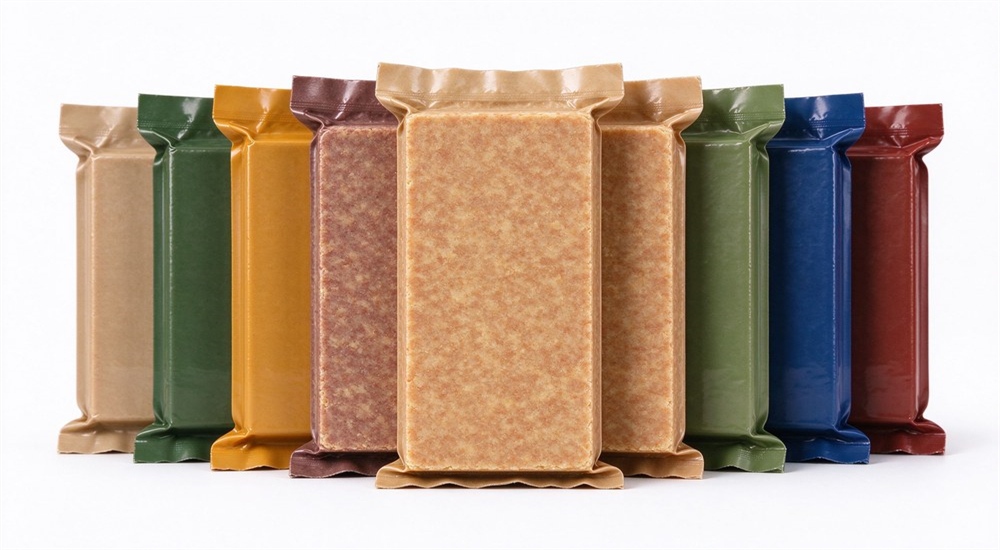
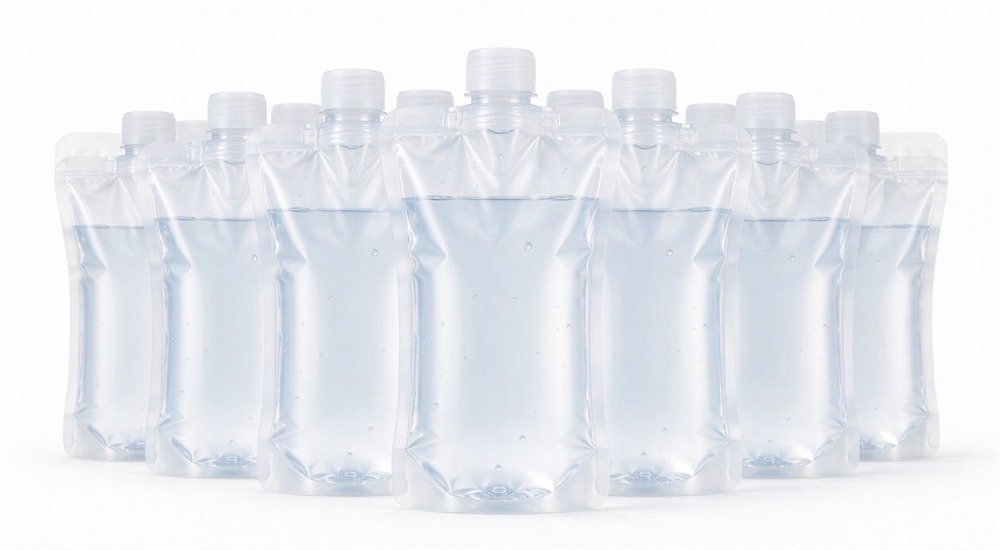
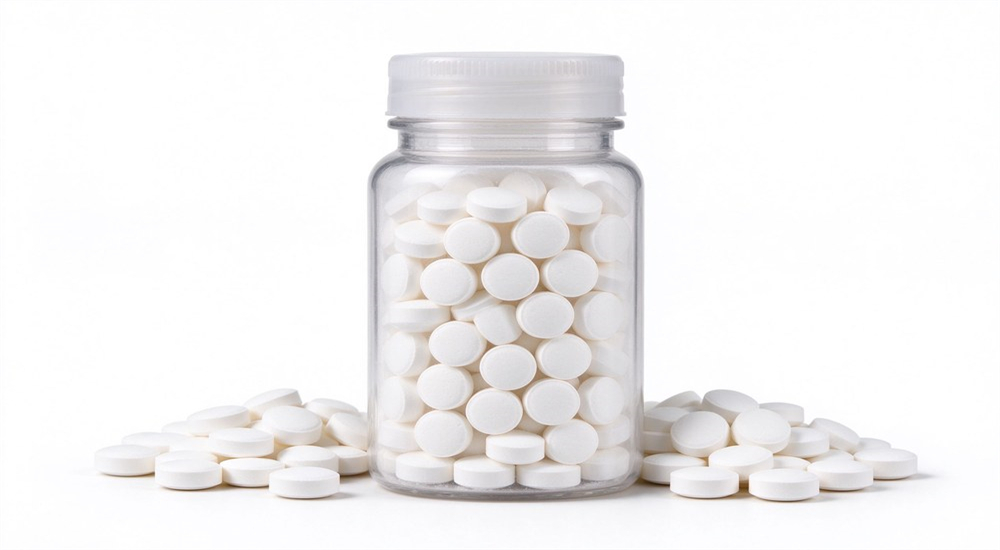
Emergency food rations provide approximately 2000 calories per person per day. Options include compressed biscuits with a 5-year shelf life, energy bars and high-calorie survival bars. Drinking water is supplied in sealed pouches or bottles with a 2-5 year shelf life, at 3 liters per person per day. Each kit includes 6 food packs and 24 water pouches for two adults, and water purification tablets are included as a backup supply.
Ration packs are vacuum-sealed to protect against moisture and temperature changes during storage, and each pouch carries a printed expiration date so household members can rotate stock on a simple schedule. For warmer climates, buyers can replace part of the food ration with higher-salt snacks; for colder regions, high-calorie bars provide more energy per gram. The entire food and water group fits inside the main compartment of the backpack, with water pouches laid flat along the bottom to distribute weight evenly.
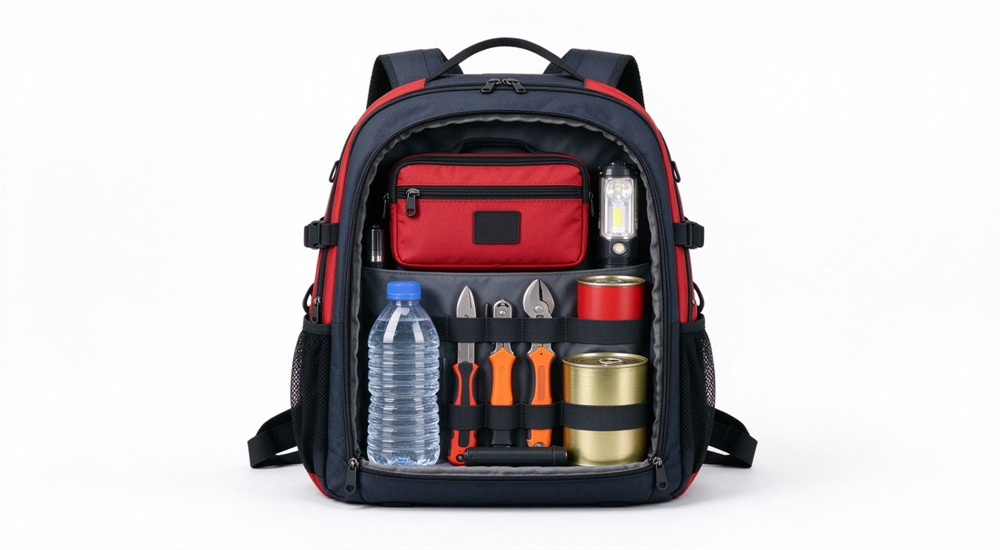
Water pouches are chosen over bottles for two reasons: they take less space when flat, and they are easier to distribute in bulk programs. Each pouch holds 500ml, so the daily 3-liter ration is reached with six pouches per person. In flood-prone regions, the quantity of purification tablets can be increased, because local water sources may be contaminated for days after a storm. For tropical destinations where heat accelerates degradation, buyers can specify higher-turnover packaging with shorter shelf life but lower cost per unit; for cold climates, insulated pouches prevent freezing and cracking during winter storage. The food and water combination is the heaviest part of the kit, so it is packed at the bottom of the backpack with the first aid group on top for fast access.
A compact first aid kit contains adhesive bandages, sterile gauze pads, medical tape, antiseptic wipes, triangular bandages, disposable gloves, a CPR face shield, an emergency blanket and scissors. Over-the-counter medications can be added based on destination regulations. The kit is organized into clear internal pouches so a family member with basic training can find wound dressing, burn care and splinting materials without unpacking everything.
A printed first aid guide inside the lid walks users through bleeding control, burn cooling and CPR steps. For institutional buyers, component lists can be adjusted to meet workplace first aid requirements, and refill packs are available separately so the main kit never goes out of stock. Medical items are sourced with CE markings where applicable and checked during final quality control against the bill of materials.
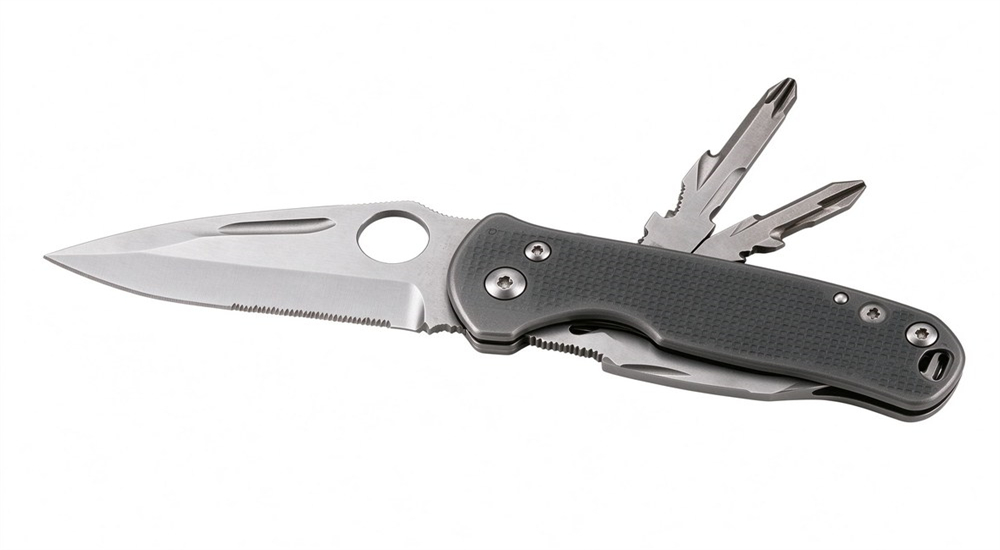
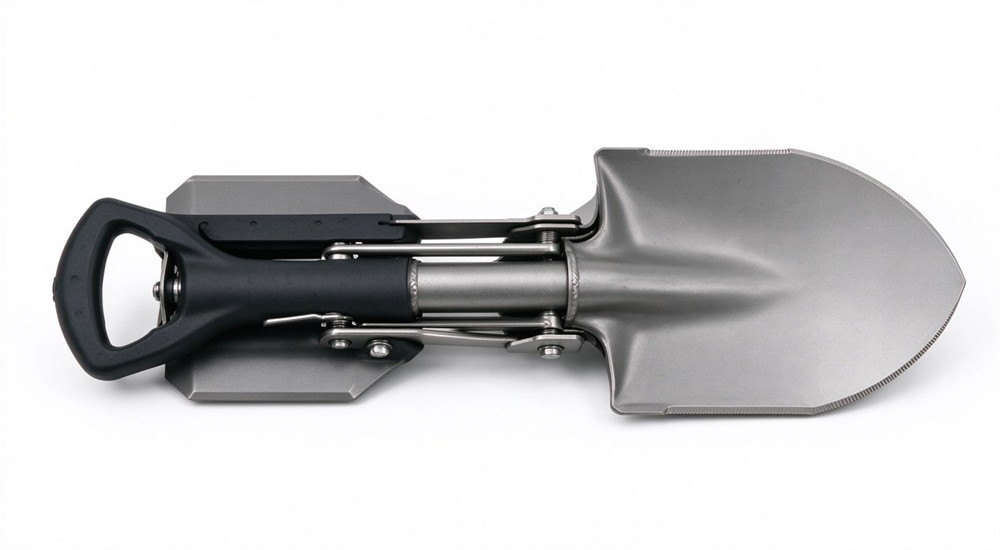
A multi-function tool with knife, pliers, screwdriver and can opener supports shelter building, equipment repair and food preparation. Additional tools include a folding shovel, duct tape, paracord rope, an emergency whistle and safety pins. The multi-tool is coated to resist corrosion and fits in a dedicated sleeve inside the backpack so it does not scratch other items.
Duct tape and paracord cover the most common repair and securing tasks: taping broken windows, lashing a tarp shelter, or binding a splint. The folding shovel handles digging, debris clearing and snow removal in winter configurations. All tool edges are blunted or sheathed where appropriate, and the complete tool set is verified during assembly so nothing is missing when the kit reaches the end user.
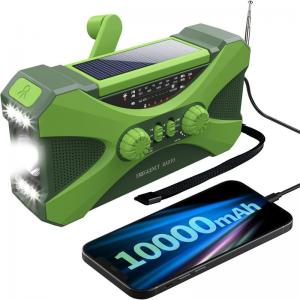
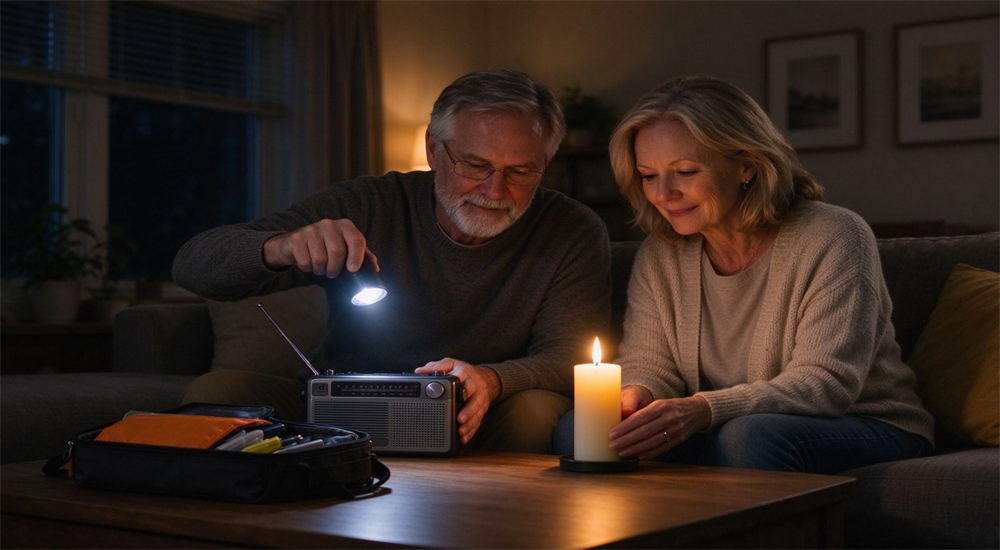
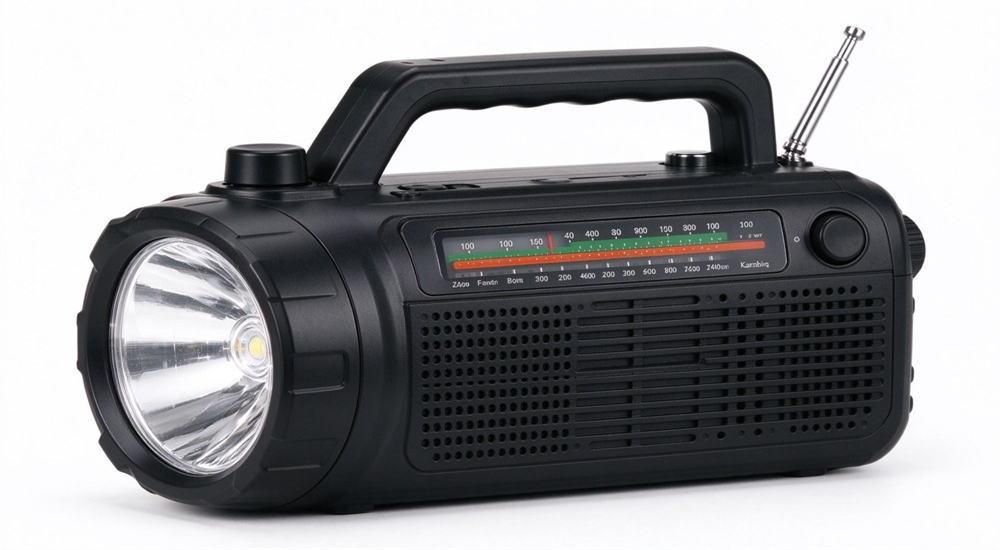
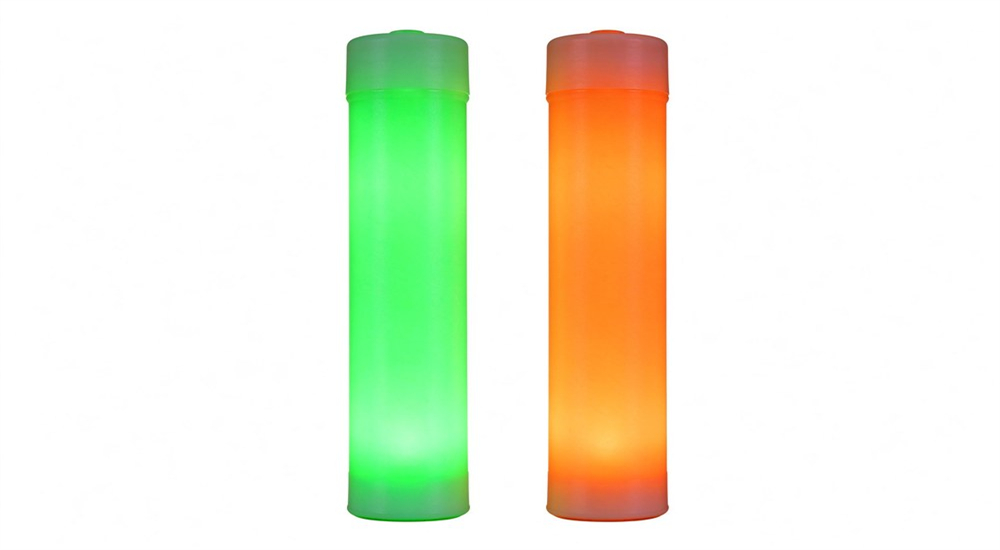
A hand-crank flashlight with built-in radio and USB charging port provides emergency broadcasts when power and cell service are down. Chemical light sticks and a headlamp with extra batteries complete the lighting kit. The crank radio stores energy so no batteries are required, and the built-in USB port can charge a phone enough for a short emergency call.
The crank radio doubles as a flashlight and phone charger, so a household stays informed and connected when the grid is down. Its storage battery means it never relies on disposable cells, and the antenna pulls in AM and FM weather broadcasts that local stations transmit during disasters. Radio broadcasts are often the only reliable source of official instructions after a storm, which is why every configuration keeps this unit accessible at the top of the bag.
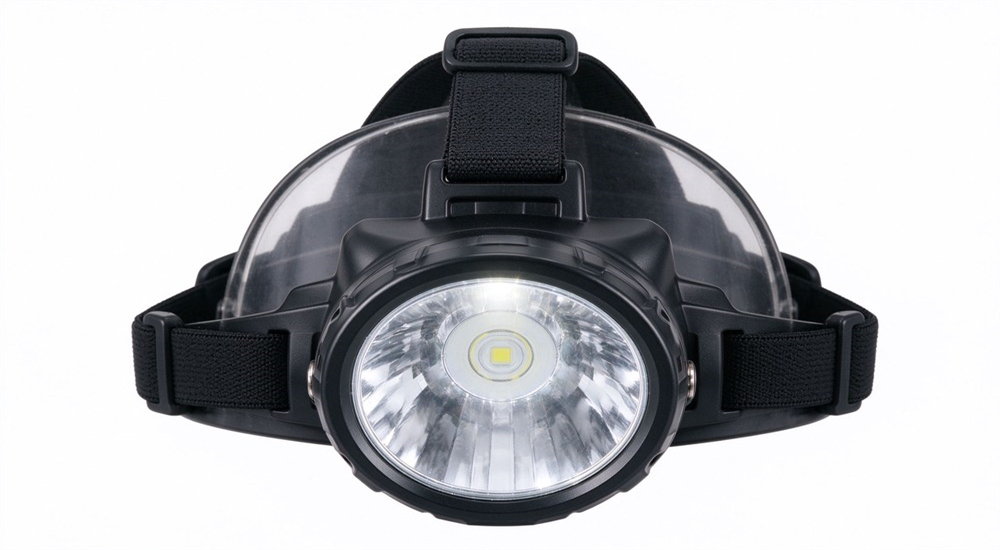
Two headlamps with spare batteries give both adults hands-free light for cooking, carrying a child or clearing debris after dark. Chemical light sticks add long-duration marking without heat or sparks, which is safer around fuel lines, and they are visible enough to mark an exit route for rescuers. The two-person layout means one adult can keep working while the other monitors children, and every light source is reachable without emptying the main compartment.
Light sticks last for several hours without power and are safe to use around spilled fuel or gas lines because they produce no heat or sparks. Two headlamps let both adults work hands-free, whether cooking by lantern light, carrying a child, or clearing debris. Batteries are packed separately with a tester card so households can confirm spares are still usable at each six-month check.
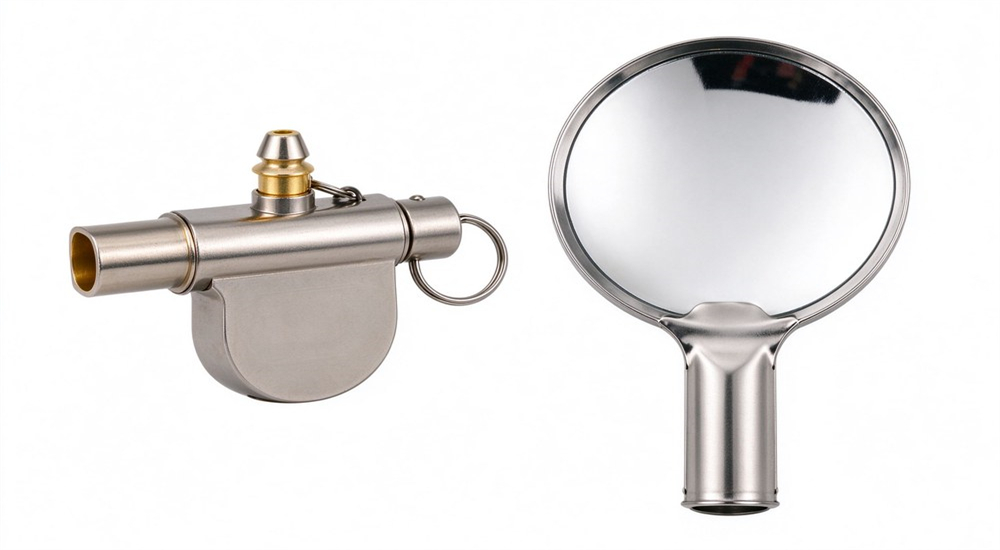
A whistle and signal mirror are included for attracting rescue attention, and a spare whistle is available as an add-on for households with children. A printed lighting plan inside the lid explains which light to use first in each situation: the headlamp for hands-free work, the flashlight for scanning, the radio for information and the light sticks for long-duration marking such as a safe room or an exit route at night.
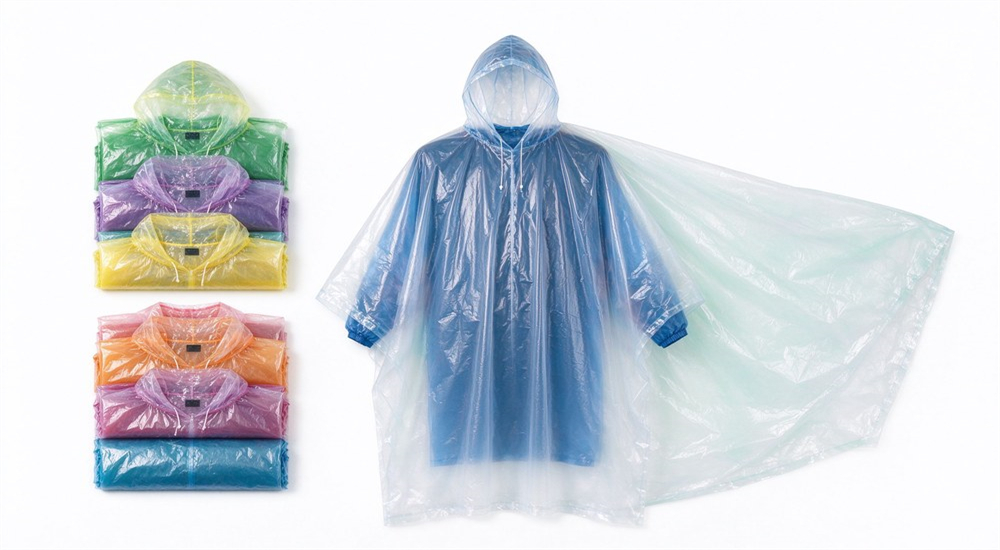
Thermal blankets hold in body heat during cold nights or after a vehicle breakdown, and the reflective side doubles as a signaling surface. The ponchos fit over backpacks so a family keeps moving in the rain without stopping to unpack. Mylar fabric stays compact at roughly the size of a phone, so the full warmth set adds almost no weight to the pack.
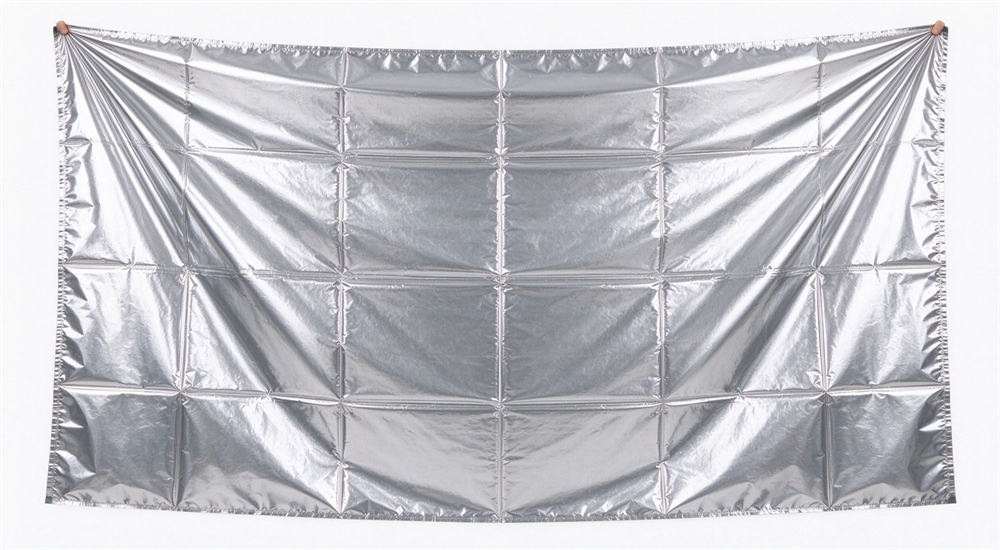
Two emergency thermal blankets retain 90% of body heat, and two disposable rain ponchos provide weather protection. A lightweight emergency tarp can be used as shelter, ground cover or sun shade. Mylar blankets are compact enough to fit in a side pocket yet large enough to wrap a full adult, and they double as a signaling surface because the reflective side is visible from the air.
Rain ponchos are sized to fit over a backpack, so a family can keep moving during evacuation without unpacking. In winter configurations the tarp is upgraded to a thicker polyethylene sheet and additional hand warmers are added. These warmth items are the highest-priority group for cold-climate buyers and are also recommended for vehicle kits where a stranded driver may wait several hours for help.
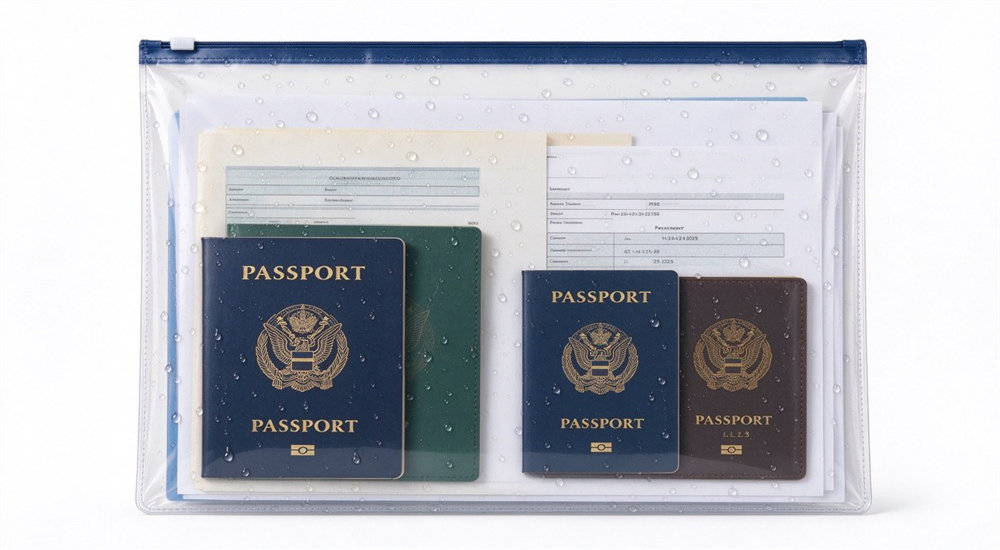
Wet wipes, face masks, garbage bags, hand sanitizer and a small towel prevent disease during extended emergencies. A waterproof document pouch protects ID copies, cash, insurance papers, emergency contacts and family photos. Hygiene supplies are often the first items used after a water system fails, so they are packed at the top of the backpack for quick access.
Masks filter smoke and dust during fires and aftershocks, and garbage bags double as waterproofing for electronics or as an improvised rain cover. The document pouch is transparent, so users can check contents without opening it, and it floats if dropped in floodwater. A pen and notepad are included for recording information, and a spare set of house and car keys can be added by the user. For households with infants, a small hygiene bundle with baby wipes and diaper bags can be added as a separate pouch so adult and baby supplies never mix inside the kit.
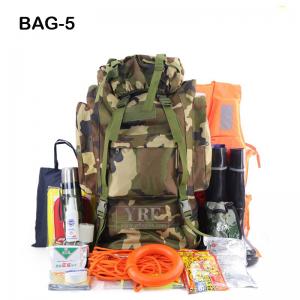
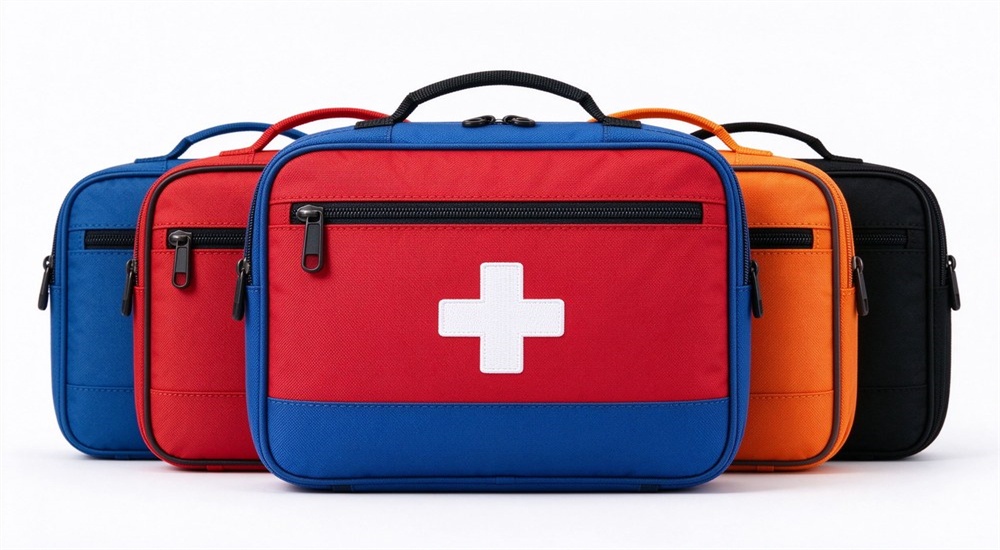
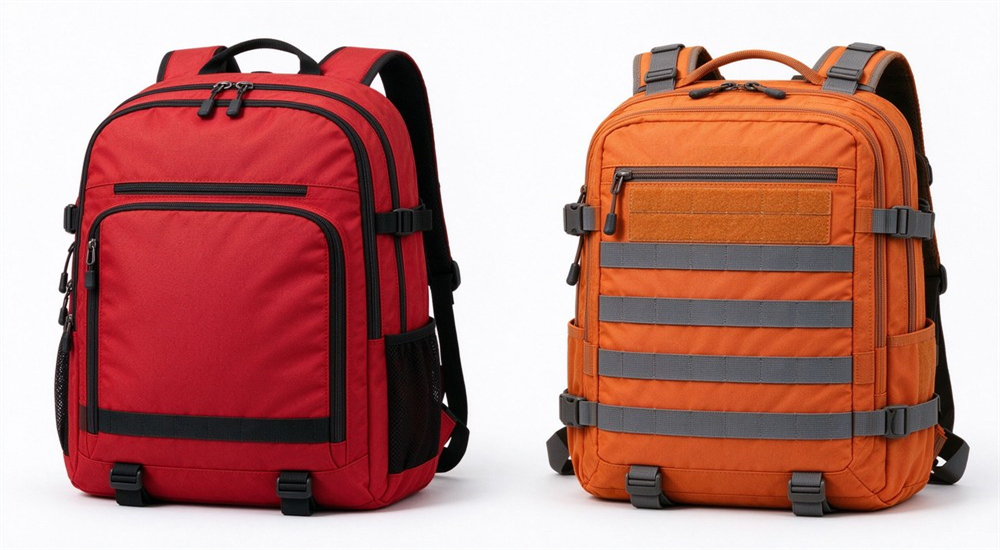
We offer five bag styles for the same 72-hour kit contents, allowing buyers to match the bag to their distribution channel and end user. For North American buyers, our waterproof emergency backpack also functions as a bug out bag or go bag for rapid evacuation. Each style keeps the same 26-category, 53-piece configuration, so switching from one bag to another does not change the kit contents or the packing list
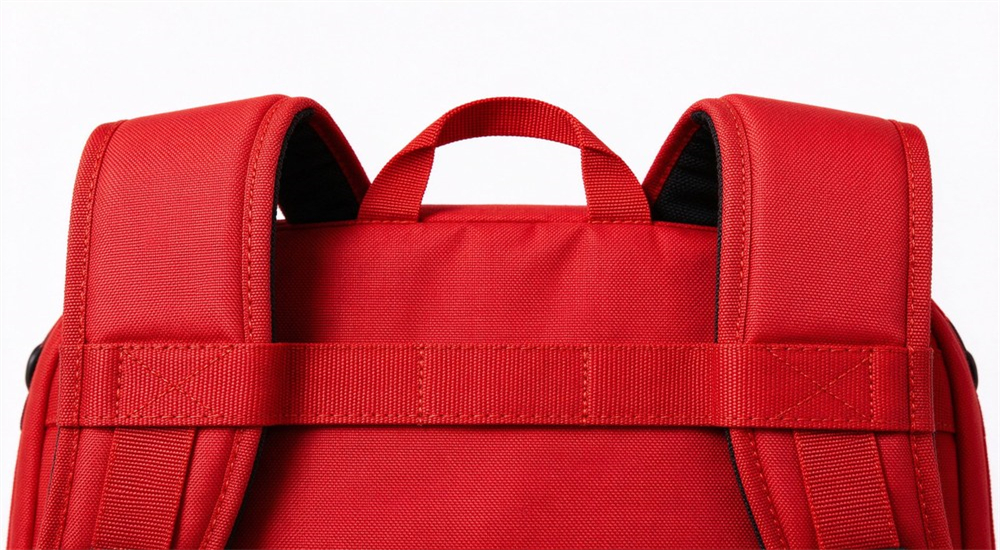
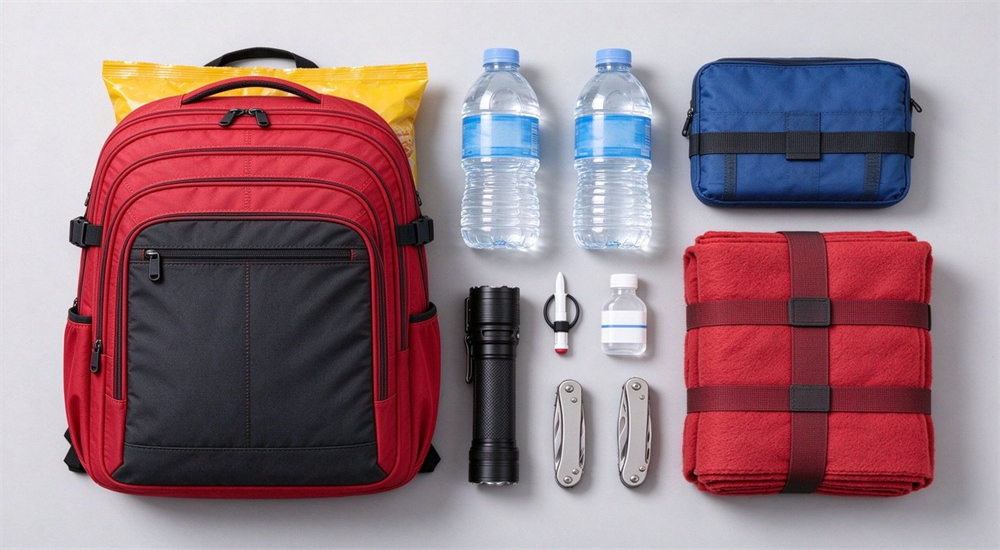
The red backpack is the standard home configuration with reinforced straps, waterproof zippers and multiple compartments. It stores flat in a closet and stands upright for quick grab-and-go. The silver-grey flap backpack and yellow open-top backpack are the two distribution-oriented styles: the flap closure keeps documents dry, while the wide open-top opening speeds up pack-out and item counting during large relief operations.
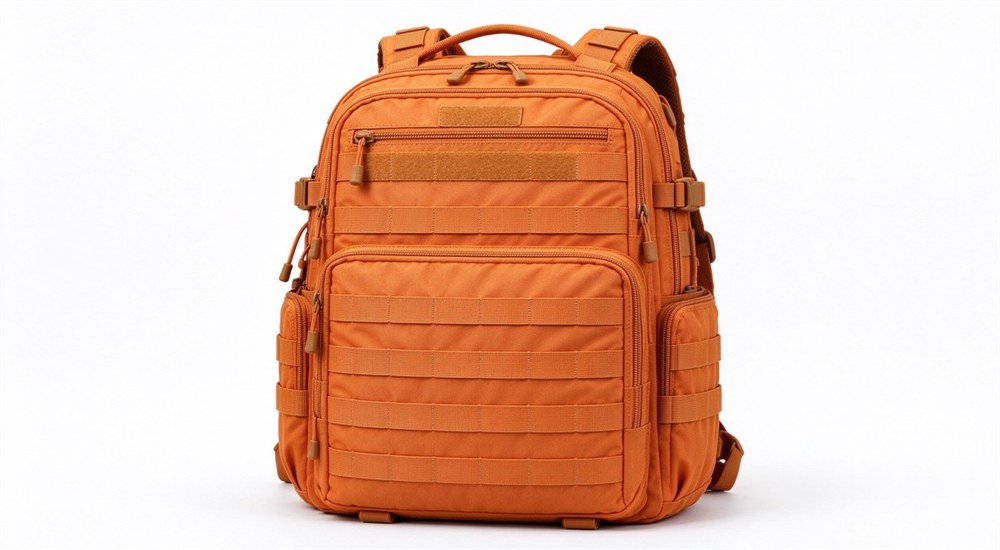
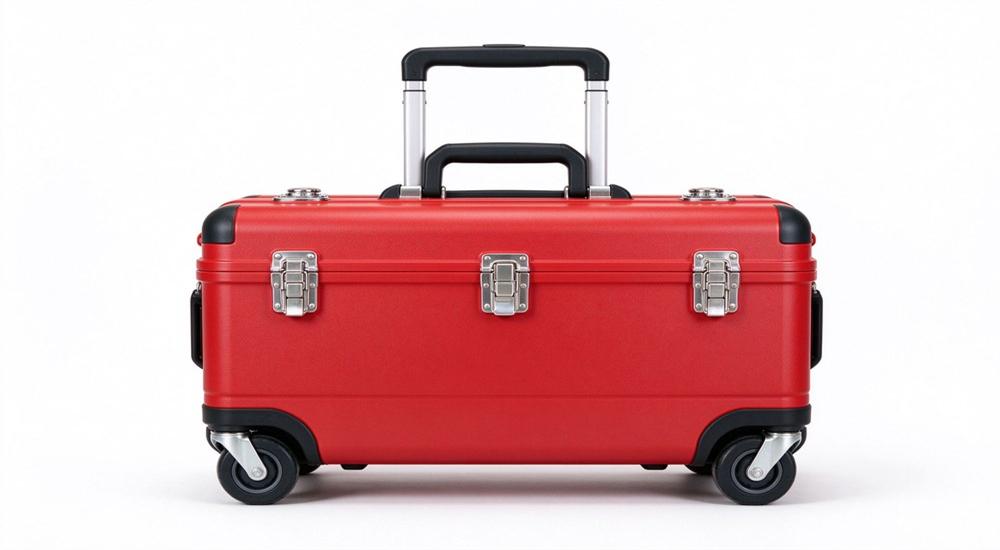
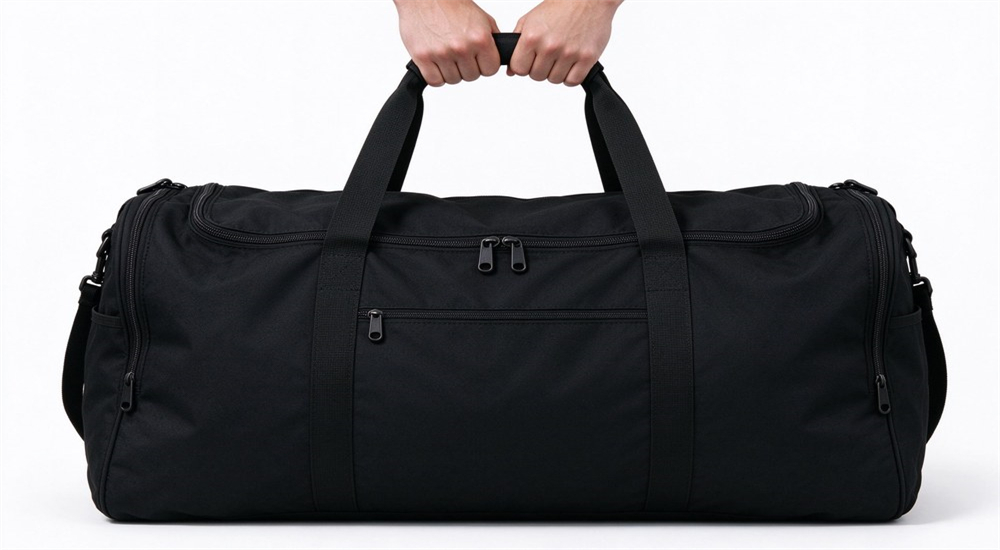
The orange tactical backpack offers MOLLE-compatible webbing for attaching additional gear, making it popular with outdoor and survival retailers. The black duffel bag suits vehicle storage with a wide zipper opening and carry handles, while the red wheeled case suits premium retail and elderly users with wheels and a telescoping handle.
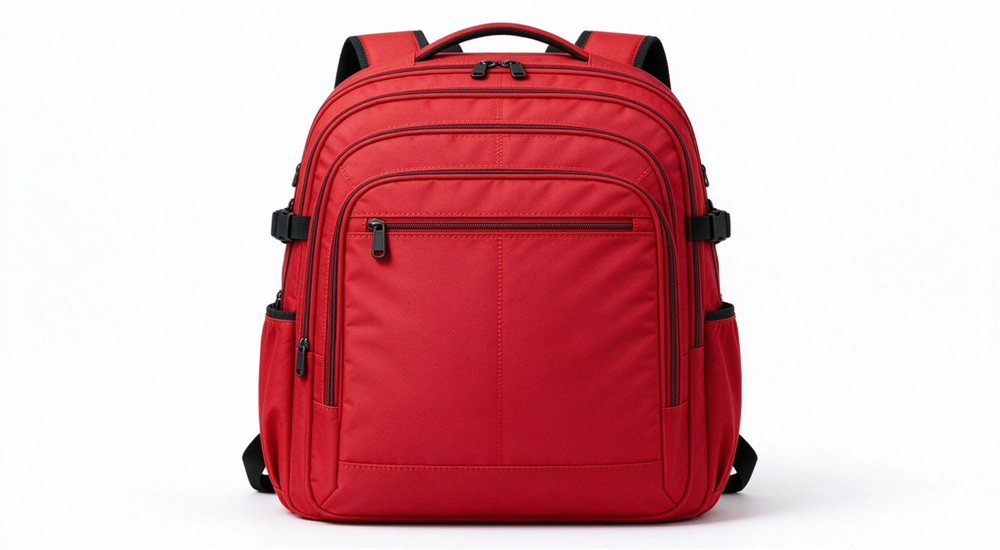
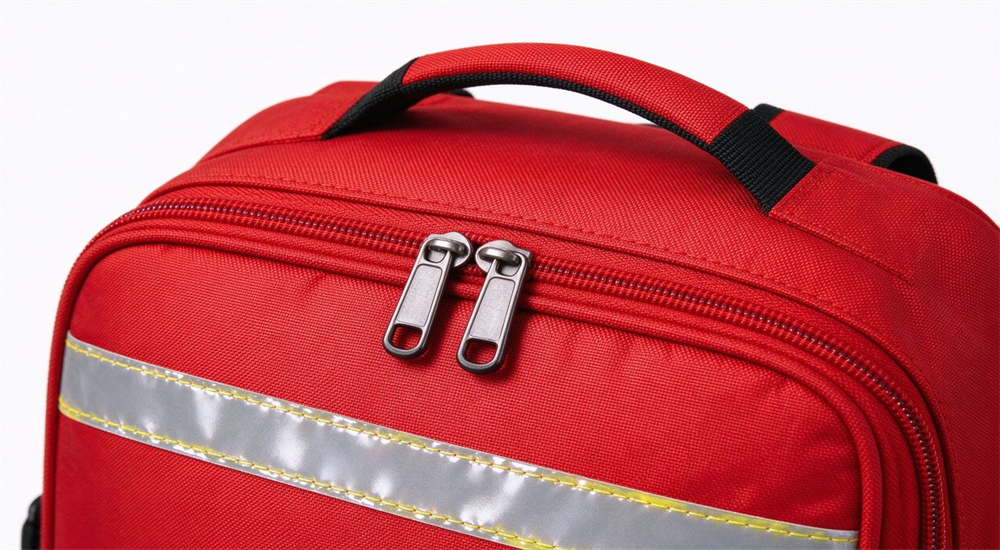
All styles are made from 600D Oxford cloth with PVC coating for water resistance. Custom colors and logo printing are available for orders above standard quantities, and bag material, zipper quality and strap reinforcement can be upgraded. Reinforced stitching and padded shoulder straps survive repeated packing and evacuation use; reflective strips improve visibility at night, and waterproof zippers protect contents from rain.
For vehicle storage, the duffel bag fits flat in a trunk alongside jumper cables and tools; for office use, the wheeled case moves easily between desks. Wholesale buyers order a mix of styles in one container, with style codes on the packing list. Bag colors can match program branding so distribution teams identify kits at a glance, and every style is tested for handle pull strength, zipper cycle and strap seam load before assembly. Buyers planning to reorder the same configuration can keep the same bag style and simply change printed colors, which avoids re-qualification of the whole kit.
Reinforced shoulder straps and reflective zipper strips are standard on all kit bags, so the pack holds up to repeated use and stays visible at night. The same hardware is used across backpack, duffel, wheeled and open-top styles.
Answer these four questions before requesting a quotation. This quick guide helps wholesale buyers match kit configuration to their target users and distribution plan. The same four questions apply whether the buyer is a government agency building a city reserve, an NGO planning a distribution program, or a retailer selecting a retail line.
Once the answers are confirmed, the configuration, packing and pricing can be quoted accurately on the first round. Buyers who are unsure about a hazard profile can request a standard kit plus add-on options and adjust the order after reviewing a sample. This four-question method is also used internally by our sales team, so a quotation request containing these four answers can be answered with a complete specification sheet on the same day.
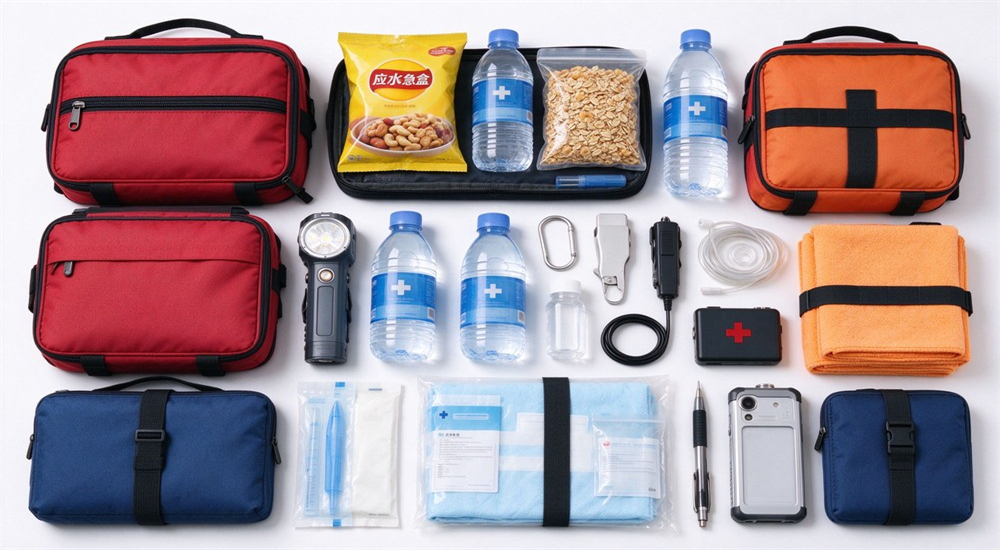
The table shows the standard two-person configuration; quantities adjust for household size and hazard profile.
|
Kit Group |
Emergency Kit Items |
Quantity |
Purpose |
|
Food |
Food rations |
6 packs |
3 days calories, 2 adults |
|
Water |
Water pouches |
24 pouches |
3L per person per day |
|
First Aid |
First aid + CPR |
1 kit + 2 |
Wound care, rescue breathing |
|
Tools |
Tools + rope |
1 + 15m rope |
Repair, shelter, clearing |
|
Lighting |
Radio, lamps, sticks |
1+2+6 |
Light, radio, signal |
|
Warmth |
Warmth items |
2 + 1 tarp |
Prevent hypothermia |
|
Hygiene |
Hygiene items |
2+10+5+2 |
Sanitation, no water |
|
Communication |
Whistle + mirror |
2 + 1 |
Rescue signaling |
|
Documents |
Pouch + pen |
1 + 1 set |
Protect papers |
The standard kit totals about 3.9kg and fits under one bed, so it is practical for apartments and dorm rooms as well as houses, and the totalsals 26 categories and 53 pieces at approximately 3.9kg, light enough for one adult to carry. Quantity adjustments and custom component selections are confirmed in the contract based on your project requirements. Each add-on is listed separately on the packing list so inventory teams can track what each batch actually contains.
Optional add-ons: compass, fire starter, solar charger, larger radio. Multi-year reserves can add lot tracking with printed expiration dates, and program managers can request a quarterly stock check service from the supplier for large warehouses.
Different hazards require different priorities. Configure the standard kit with regional add-ons so every household is prepared for the risks they actually face. The add-ons below are grouped by hazard type, and buyers can combine groups for multi-hazard regions such as earthquake plus winter storm. When ordering for a large program, specify the primary hazard for each delivery zone so the distribution team can route the correct configuration to each site without unpacking and re-packing cartons.
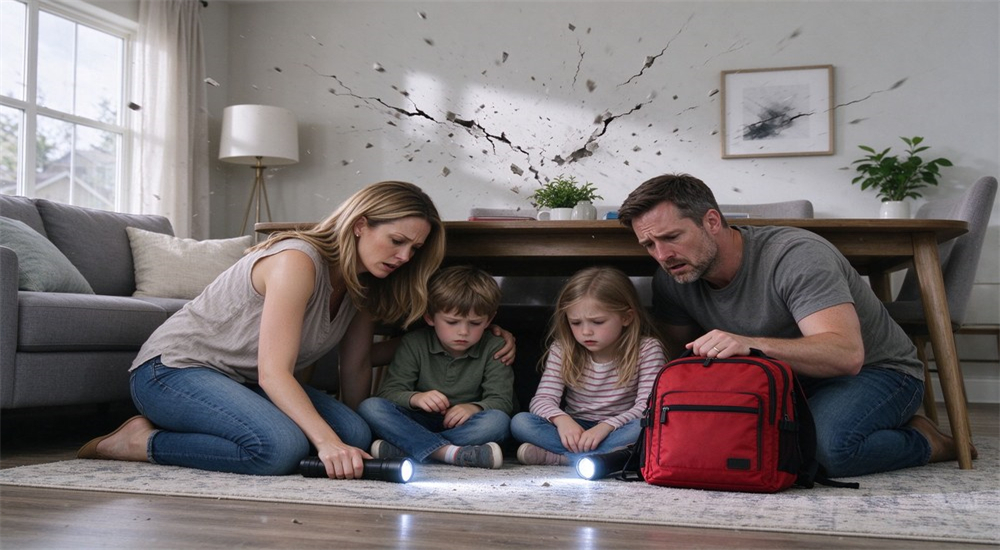
Earthquake kits prioritize rescue tools, shelter and first aid. Add work gloves for debris clearing, dust masks for aftershock protection, a pry bar and sturdy shoes. Store the kit near an exit and include a family reunion plan. Food and water should be rotated every 2-3 years. After the main shock, families often need to clear broken glass and debris to reach exits, so the folding shovel and work gloves are placed on top of the backpack in earthquake configurations. A whistle helps rescuers locate trapped family members, and the flashlight provides light in damaged buildings where power is out.

Flood kits prioritize water safety and waterproof storage: add purification tablets, life vests, dry bags and rope, and store on an upper floor. The document pouch is essential because floodwater can destroy IDs and cash within minutes; ponchos protect the family during evacuation, and the whistle and mirror support rescue signaling. Hurricane-prone regions add a tarp and rope for roof repairs and extra purification tablets; coastal programs plan evacuation on foot or by boat, so a low-profile backpack fits better than a wheeled case.
Power outage kits prioritize lighting, communication and warmth: add spare batteries, a larger hand-crank radio, hand warmers and a portable stove where regulations allow. Multiple lighting options keep households lit through long blackouts, the radio delivers weather alerts when cell networks are down, and a solar or battery phone charger keeps one phone alive. Cold-season blackouts add extra thermal blankets, with an emergency contact list taped inside the lid.
Winter storm kits add thermal blankets, hand warmers, insulated gloves and no-cook food. Tornado and severe wind kits add a helmet, sturdy shoes, a whistle and a battery-powered radio. Wildfire zones add N95 masks, eye protection and a fire-resistant document pouch. Pandemic configurations include surgical masks, disposable gloves, hand sanitizer and a digital thermometer, a variant popular with schools, offices and community organizations. Multi-hazard regions such as earthquake plus winter storm can combine two add-on groups in one kit, and the packing list simply extends with the additional items.
The standard two-person kit is designed for healthy adults. Households with infants, elderly members, pets or medical conditions should add the following items. Pre-production samples are available for all custom configurations, and sample costs are fully deductible from bulk orders above a confirmed quantity so buyers can verify quality before committing.
Each special-need add-on is a separate SKU so it can be tracked and rotated independently. Buyers serving schools, clinics or assisted-living programs can therefore order one base kit and mix add-ons per location, without maintaining a different master kit for every site. Sample policy, minimum order quantities and lead times are confirmed in the contract based on configuration complexity. For programs serving mixed populations, a base kit plus a small add-on menu lets each household build the right combination without the supplier managing hundreds of unique SKUs, which keeps unit costs low and warehouse operations simple. English, Spanish, French and Arabic instruction booklets are available, and Arabic booklets are recommended for Gulf and Middle East programs. Custom configurations follow the same 66-point packing verification as standard kits, so a mixed order never mixes up components between SKUs even when they share the same carton.
Proper rotation ensures all items are usable when needed. Check the kit every 6 months and replace expired items. Mark each item with the purchase date using a permanent marker, and keep a rotation schedule taped to the kit lid so every family member knows what to check. When rotating food and water, use the expired items for camping or training and replace with fresh stock.
|
Emergency Kit Item |
Typical Shelf Life |
Check Frequency |
Storage Tip |
|
Emergency food rations |
5 years |
Annually |
Cool, dry place |
|
Bottled or pouched water |
2-5 years |
Annually |
Check seals for leaks |
|
Water purification tablets |
5 years |
Annually |
Keep original container sealed |
|
First aid supplies |
2-3 years |
Every 6 months |
Check expiration dates |
|
Batteries |
1-2 years |
Every 6 months |
Store separately and test |
|
Chemical light sticks |
3-4 years |
Annually |
Do not activate until needed |
|
Tools and equipment |
Indefinite |
Annually |
Check for rust and damage |
A maintenance log card is included with every kit for tracking rotation dates. Bulk buyers can request lot tracking with expiration dates on each carton, so rotation teams can manage large reserves by date. This table is also provided as a printable card for household use.
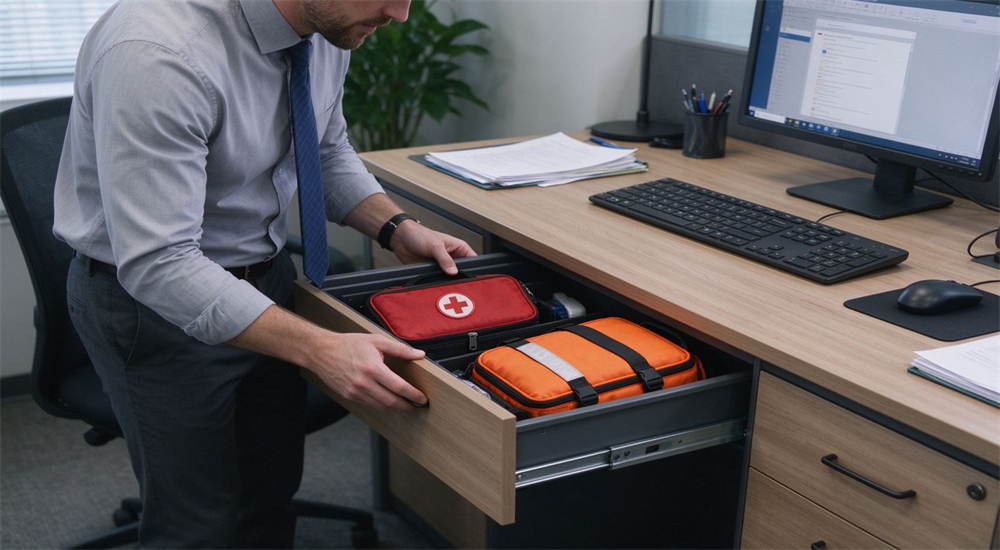
Where you store your emergency kit affects how quickly you can access it during an emergency. Ideally, maintain three kits: one at home, one in the car and one at work. The home kit is the most comprehensive; the car and office kits can be smaller and focused on immediate needs. Every household member should know where each kit is kept, and children should be shown how to find the kit and what the whistle is for.
Apartment dwellers should keep the kit near the front door for quick evacuation, with a shelter-in-place variant holding extra water and food for high-rise buildings. Schools and offices benefit from bulk configurations with student- or employee-focused components, and the radio and headlamp should stay within easy reach. In freezing climates, keep vehicle kits in the cabin rather than the trunk, since cold affects batteries and water pouches. Families with children should practice a quick grab drill once a year, and communal housing can share one cabinet per floor with several kits and a posted floor plan.
For government reserves, NGO distribution and large-scale programs, we offer bulk packaging, custom configurations and full documentation. Each kit is individually packed in a polybag, then 10-20 kits per export carton depending on configuration. A standard 20GP container loads approximately 800-1200 units and a 40HQ loads 1800-2500 units, with detailed packing lists, carton markings and loading photos provided for every shipment.
|
Wholesale Order Size |
Typical Use |
Packing |
Lead Time |
|
Trial orders |
Community programs, sample evaluation |
Individual bags |
Confirmed in contract |
|
Medium programs |
City-wide reserves, regional NGOs |
Individual bags, palletized |
Confirmed in contract |
|
Large programs |
National reserves, humanitarian programs |
Custom packing, sequential numbering |
Confirmed in contract |
Disposable ponchos protect families during evacuation in rain, and the waterproof document pouch keeps passports, insurance papers and cash dry when floodwater enters the home. Both items are packed on top in flood and hurricane configurations.
Bulk orders can include custom logo printing, multilingual booklets, regional item adjustments and sequential numbering. We provide master packing lists, specifications and expiration tracking per batch. Consolidation with tents, blankets and sleeping bags optimizes container usage, and we ship from Guangzhou and Shenzhen ports worldwide.
Our 72-hour family emergency kits meet relevant international standards for emergency preparedness products, and third-party test reports can be arranged based on project requirements. Reference standards include ISO 22000 and HACCP for food, FDA food-grade packaging for water, CE marked first aid components, BSCI factory audit, REACH compliant materials and OEKO-TEX Standard 100 for textiles.
All raw materials are inspected on arrival, food items are verified for expiration dates and nutritional labeling, and textile components are checked for fabric weight, stitching and color fastness. During assembly each workstation performs periodic checks on packing accuracy, and every kit passes through a weight verification station to confirm all listed items are included. Finished kits undergo AQL 2.5 sampling for general appearance plus functional testing of critical items such as flashlights, radios and whistles, and third-party inspection by SGS, BV or Intertek is available at the buyer's request. Our production facility maintains dedicated zones for food-grade component handling and sterile first aid assembly, and workers follow documented procedures for packing, labeling and lot coding. Certification documents and test reports are provided with each bulk shipment, and buyers can request factory audit records during supplier qualification.
The headlamp and thermal blanket are functional-tested during final quality control: the lamp runs its rated runtime on fresh batteries, and the Mylar blanket is checked for reflective coating and tear resistance before packing.
When procuring family emergency kits, confirm these key points before ordering. Addressing all eight points in your request for quotation avoids the most common mismatches between buyer expectations and delivered kits, and helps the supplier quote accurately the first time.
Buyers who follow these eight points typically receive kits that match their specification on the first shipment, and avoid the most common causes of rework in emergency supply programs. This keeps program timelines on track and budgets predictable. The same checklist applies to repeat orders: because shelf life, destination regulations and distribution channels may change between programs, confirming these points at each order keeps the supply chain consistent. For organizations managing multiple sites, a master specification sheet per program helps procurement teams compare quotes from different suppliers on the same basis. A pre-production sample with the final packing list is recommended before the first container, and the sample lead time is confirmed in the order confirmation after specification approval, so the review cycle stays short.
Reinforced straps, padded cushioning and reflective zipper strips are standard on every bag style, so the kit survives repeated handling during drills, evacuation and field distribution. The reflective strips also make the carrier visible at night when crossing roads or waiting at assembly points, and the shoulder padding keeps weight comfortable during long walks to shelter.
Explore related categories: earthquake rescue supplies, fire and rescue equipment, government civil defense reserves, military textiles and bedding. Multiple kit configurations can be combined into one shipment, and first-aid refills, replacement tools and spare bags are kept in stock for after-sales support.
All configurations above can be mixed in a single container, and the warehouse team packs each destination separately with labeled cartons so field staff can distribute the right variant without unpacking. If your program covers more than one hazard zone, request a mixed configuration quotation instead of separate orders.
Reference sources for emergency preparedness recommendations: Ready.gov emergency kit guidance, American Red Cross preparedness kit checklist and CDC disaster preparedness resources.
Food and water for three days, a 26-piece first aid kit, tools, lighting, warmth, hygiene and communication supplies — 53 pieces in one backpack.
2000 calories and 3 liters per day is standard: 6 food packs and 24 water pouches for two people.
Yes. Add individual food and water packs per extra person; 3-person and 4-person configurations are available.
Food about 5 years, water 2-5 years, first aid 2-3 years, batteries 1-2 years, tools indefinite. Check every 6 months.
The 600D Oxford bag has PVC coating for rain and splash resistance; keep documents in the waterproof pouch.
Cool, dry, near an exit, in a closet or under a bed. Avoid attics and basements. Rotate food and water every 6 months.
Yes, include a 7-day supply in the document pouch and check expiration every 6 months.
Standard rations are typically vegetarian without common allergens; ingredient lists are available on request.
About 3.9kg for an adult; children should carry a smaller 1-2kg personal kit with a whistle, snack and water.
Yes — logo printing, custom colors, multilingual booklets and custom packaging with vector logo files.
Standard kits have a low minimum for small retailers and community groups; custom configurations are confirmed in the contract.
Grab the kit and evacuate if instructed. Use the whistle and signal mirror, ration supplies and follow the printed guide.
The standard kit is for humans; pet add-ons include food, bowls, leash and first aid supplies for bulk orders.
Copies of ID, passports, insurance policies, emergency contacts, small cash, keys and a medication list.
Terms are confirmed in the contract based on order size and destination, with full export documentation.
Yes — warranty on bag, zippers and hardware, plus replacement components at cost within 24 hours.
YRF Textile — Emergency Kit Manufacturer and Supplier, China
We work with government agencies, NGOs, distributors and retailers worldwide. Contact us for a quotation tailored to your project.
Freundliche Links :
Urheberrechte © © Custom Disaster - Relief Bedding: Tents, Sleeping Bags, Blankets Alle Rechte vorbehalten
das professionelle Team zum Service !