A lifebuoy may look simple, yet procurement failures usually appear at deployment: a ring does not fit the holder, the retrieval line was not ordered, site variants are mixed in transit, exposed equipment is not inspected, or delivered marking differs from the approved sample. Government buyers, humanitarian programmes, wholesalers and distributors should first confirm where the unit is placed, who deploys it, how it is recovered and how it is inspected, then choose a fixed-station or mobile deployment route.

Dimensions, weight, buoyancy, material and applicable standards must correspond to the selected product and valid documents. Put required values into the written specification and confirm them against applicable documentation, the approved sample or an agreed test.
For boats, response vehicles and mobile teams. Check available space, restraint, retrieval accessories, issue quantity and transport packing.

View mobile-deployment lifebuoy details
|
Field |
Fixed station |
Boat/mobile |
Acceptance action |
|
Location |
bank, quay, entrance or watch point |
boat, vehicle or mobile team |
check the site allocation list |
|
Accessories |
holder, line and marking |
restraint, retrieval and storage |
receive the approved combination |
|
User action |
locate, remove, throw and retrieve |
rapid removal, throw and recovery |
trial in the real space |
|
Exposure |
sun, rain, dirt and impact |
vibration, crushing, salt or moisture |
define inspection and replacement |
|
Packing |
split by location or project |
group by boat or vehicle |
match cartons to allocation sheet |
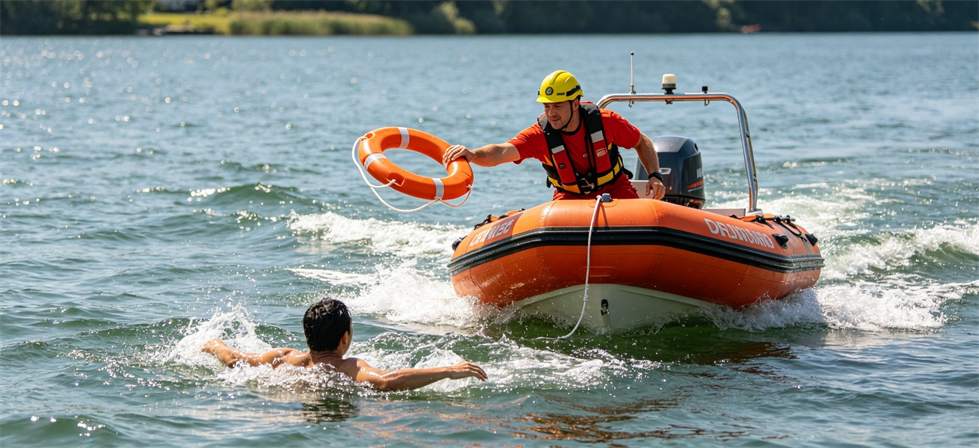
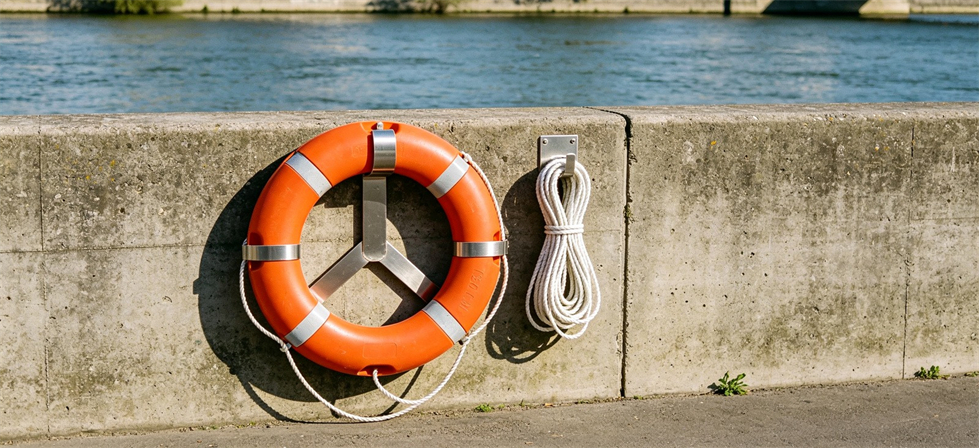
List every bank, quay, gate, boat or vehicle position with its mounting space, access path, expected throw direction, retrieval method, outdoor exposure and responsible person. Total quantity alone cannot show whether a product can be installed and reached. Even similar rings may interact differently with holders and confined spaces.
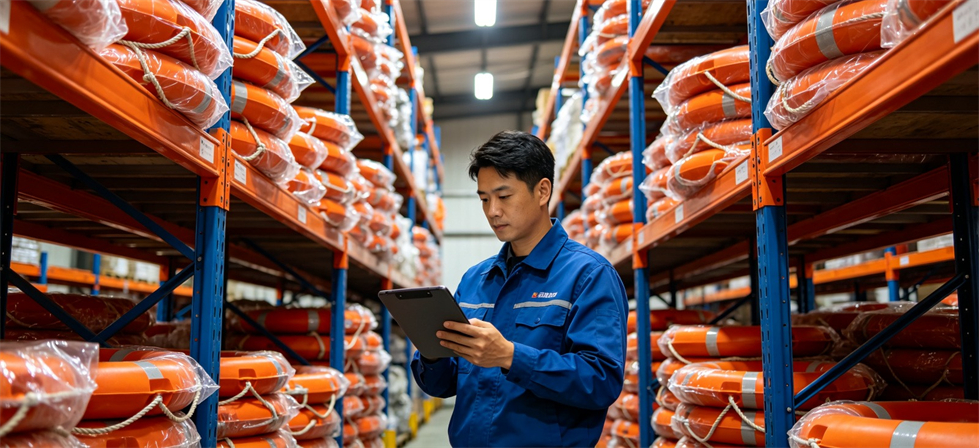
Assign a location code to each point and carry it through unit identification, outer-carton shipping identification and the distribution schedule. Receiving teams can then issue equipment directly without re-sorting rings, lines and accessories at the deployment site.

State whether the order is for a bare ring or a set with retrieval accessories, and list the required line, connection and holding arrangement. Do not assume every product automatically includes the same line, hook or holder. Boat installations also check whether the stored unit obstructs movement or can entangle other equipment during removal.
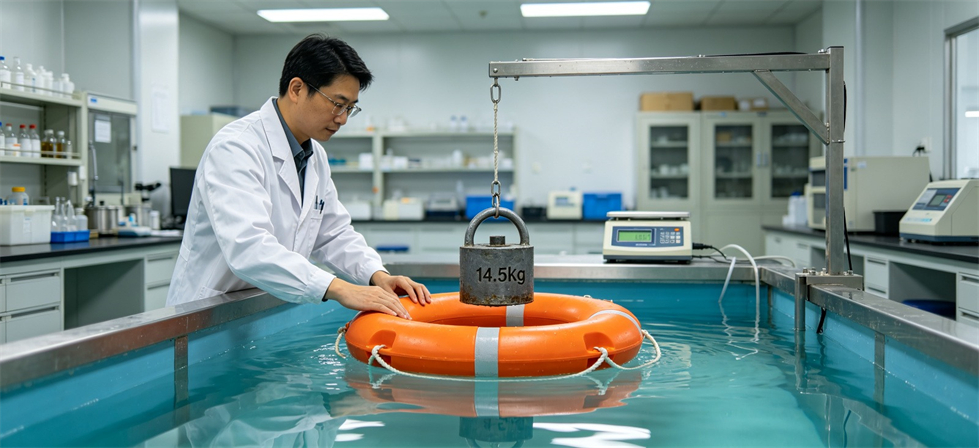
Use the selected sample to test hanging, removal, throwing, retrieval and replacement in the real or equivalent location, confirming that the space, accessories and operating method fit. Put required performance values into the written specification and support them with applicable documentation or an agreed test.
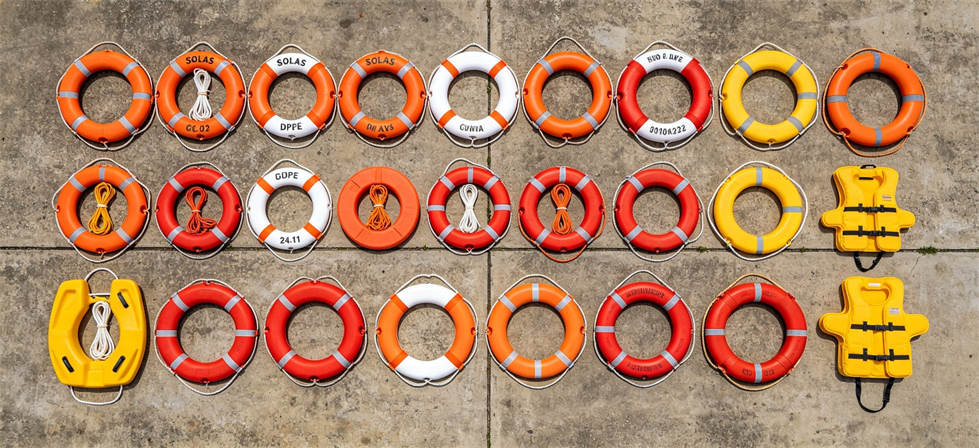
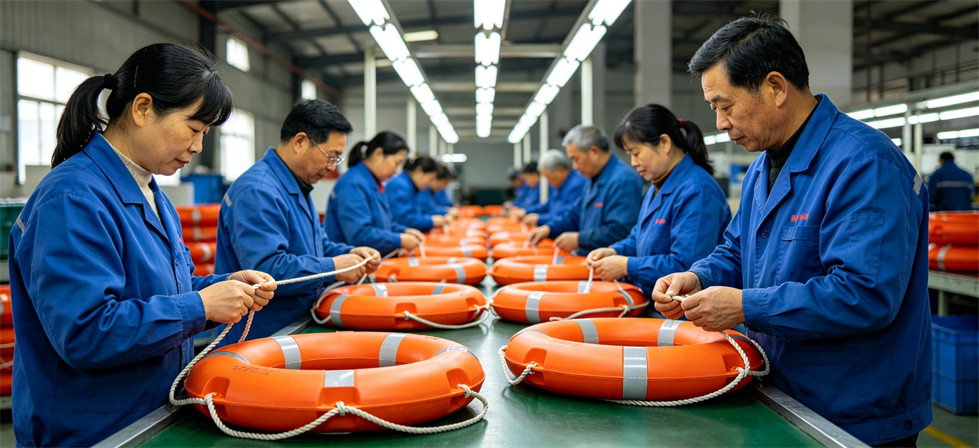
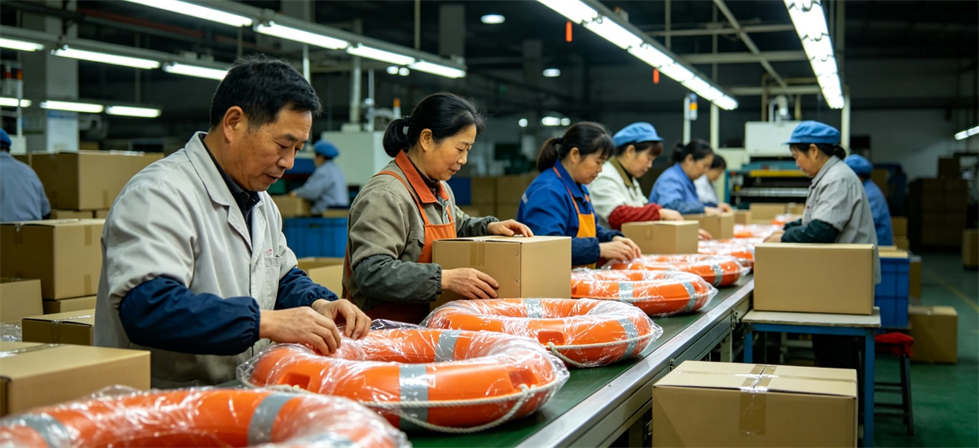
Receiving checks the selected style, visible dimensions, colour, reflective or identification details, surface condition, line holes or attachment points, accessories, unit packing and carton grouping. Where several variants are used, clear names and location codes prevent similar-looking products from being mixed.
Any buoyancy, weathering, tensile or material requirement belongs in the selected product specification and needs applicable documentation or an agreed test. A listing title or another model cannot serve as acceptance proof.
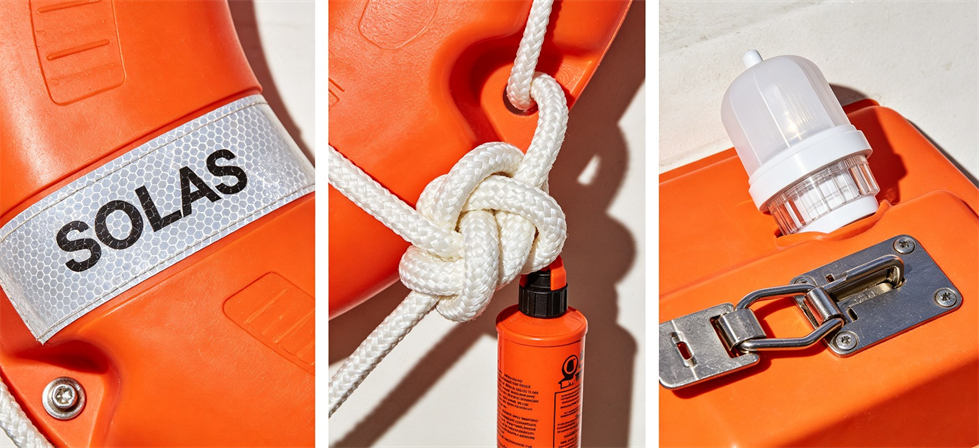
Outdoor and frequently used points need checks for damage, contamination, ageing signs, reflective or identification condition, retrieval accessories, mounting and clear access. Separate used, awaiting cleaning, awaiting replacement and ready stock.

For replenishment, provide the original product image, location code, missing ring or accessory, quantity, marking and packing requirement. This creates a more accurate quotation than a generic request for lifebuoys.
For each deployment point, place the ring, retrieval accessories, mounting or storage method, marking and quantity on one quotation line. Once the buyer confirms the selected sample, convert that combination into packing and receiving schedules. The buyer can then see whether a missing item is the ring or an accessory and prevent one site from receiving another site's components.
If the holder, location or accessory changes, recheck the selected sample instead of changing only total quantity. The receiving schedule can continue as the basis for inspection, use records and replenishment.

Commercial basis: No single price, MOQ or lead time applies to every lifebuoy and accessory combination. Standard and customized orders use T/T, normally with a 50% deposit and balance before shipment. Price and shipment arrangements are confirmed from the selected product, quantity, customization, packing, destination and current schedule.
Choose against the existing holder, line and connection. If these are absent, evaluate the complete deployment set.
Total quantity can support an initial quotation, but it is not enough for final configuration or site allocation. Complete the location schedule before order confirmation to reduce holder mismatch, omitted accessories and destination mixing.
Provide holder and available-space information and verify it with the selected sample.
Hanging, removal, throw, retrieval, replacement, marking and packing.
This can be evaluated when each station's style, accessories, quantity, label and language are provided.
Put them in the selected specification and support them with applicable documents or an agreed test.
Samples usually cost USD 30–50. The buyer prepays the sample fee and freight, and the sample fee is non-refundable. When one order reaches 1,000 units or USD 50,000, it may be credited as stated in the relevant quotation. Normal sample preparation is about 5–15 days, subject to the product and customisation.
Yes. Agree the scope and buyer-borne cost before inspection.
No. These depend on product set, quantity, customization, packing and current schedule.
Send locations, deployment method, accessories, quantity, marking, packing, destination and acceptance needs.
Submit the inputs above so the quotation, sample review and packing confirmation can follow the selected product.
✅ Outfitting residence halls for the new term? School Dormitory Bedding Sets - Wholesale Student University Bedding delivers consistent, easy-care dorm bedding sets tailored for student housing and boarding schools. As a reliable bedding supplier, we support universities with cost-efficient wholesale bedding programs timed around move-in seasons and bulk dorm rollouts. Browse options.
 |
|
YRF Textile · Water Rescue Lifebuoys for Bulk Deployment
Freundliche Links :
Urheberrechte © © Custom Disaster - Relief Bedding: Tents, Sleeping Bags, Blankets Alle Rechte vorbehalten
das professionelle Team zum Service !