Mobile Light Tower Guide: Solar vs Diesel Tower
Models Compared
Buyers searching for a solar powered emergency light usually ask one thing: run the next tower on sunlight, diesel, or a swappable battery? This page compares the families side by side, following the US DOE solar buying guide logic for solar versus fuel trade-offs.
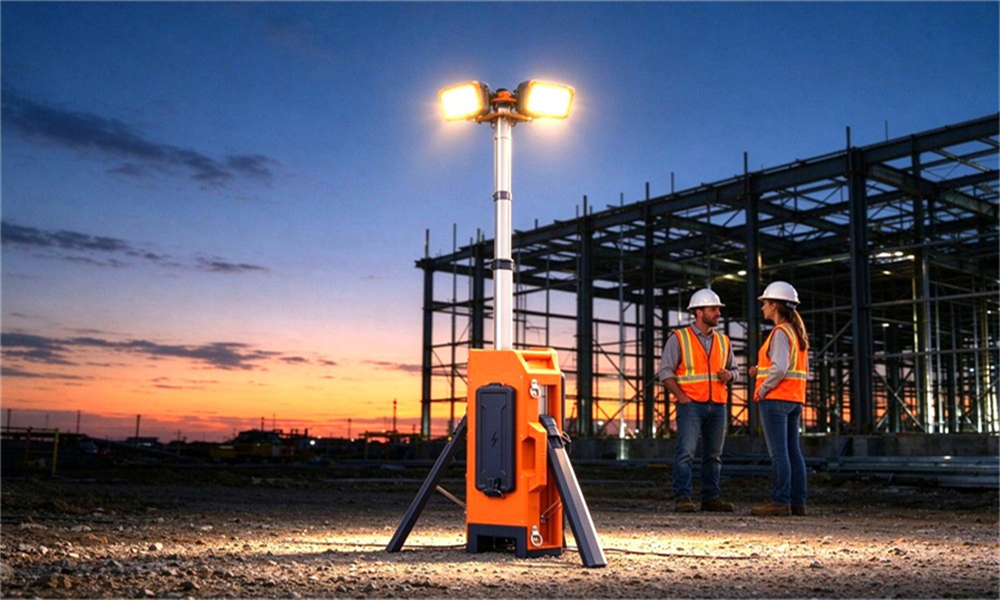
Whether you need a silent solar tower for a residential subdivision, a rugged diesel unit for a highway job, or a compact portable light tower for an event crew, the logic follows four questions: runtime, weather, noise and budget. As an experienced mobile light tower supplier, we match each fleet to the family that pays back fastest, balancing overnight runtime against fuel cost and site noise limits.
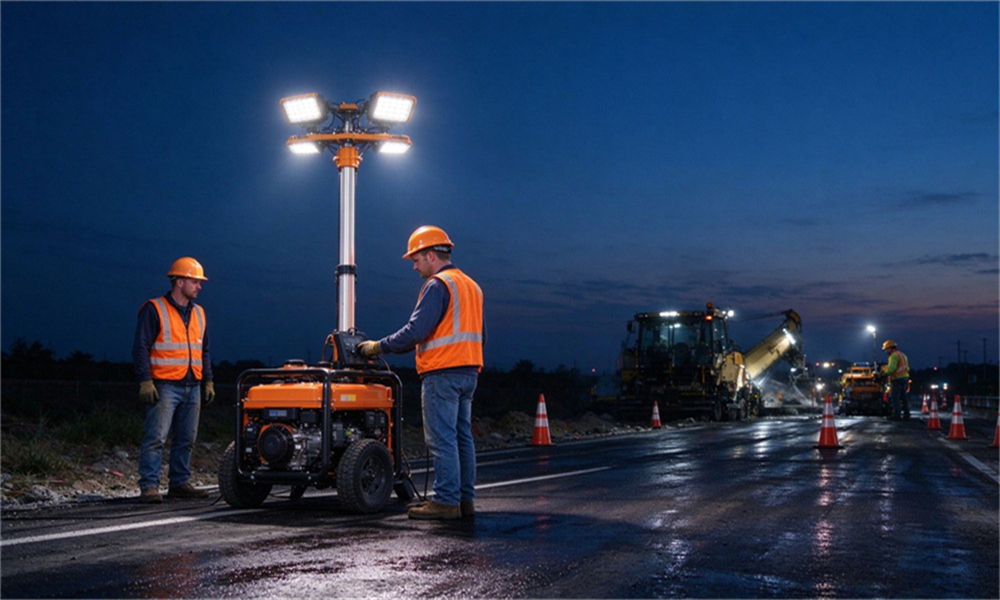
A solar powered emergency light stack turns daylight into stored electricity and lifts LED heads high enough to clear machinery and crowds. It runs silent with no fuel deliveries on quiet night sites.
A diesel light tower buys all-night output through cloudy weeks and freezing mornings, where solar battery banks slow down. The trade off is engine upkeep and exhaust.
Match your answers to the model table near the end. Mixing two or three families in one fleet covers construction, rescue, events and municipal repair without gaps.
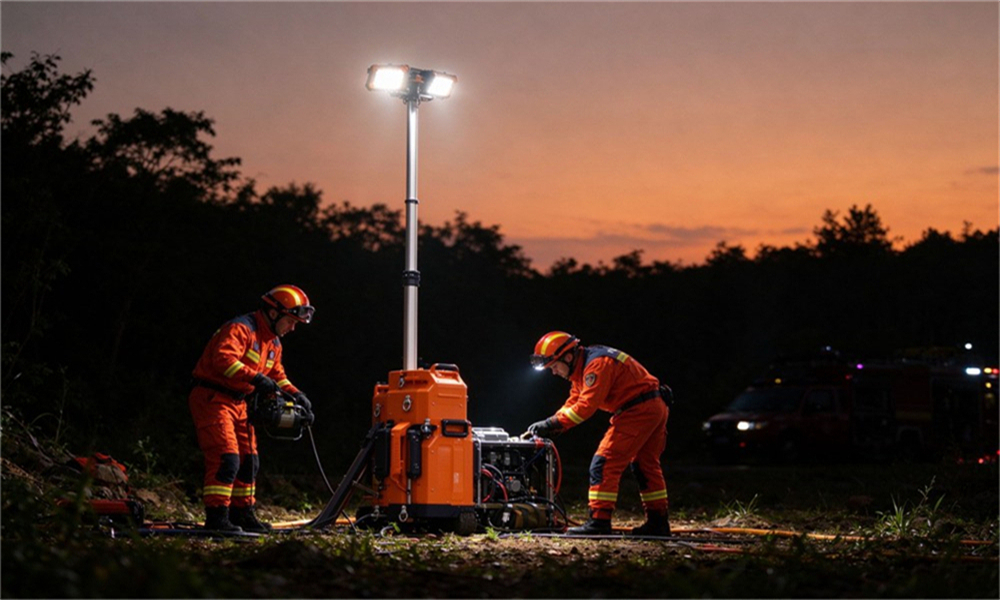
Table of Contents
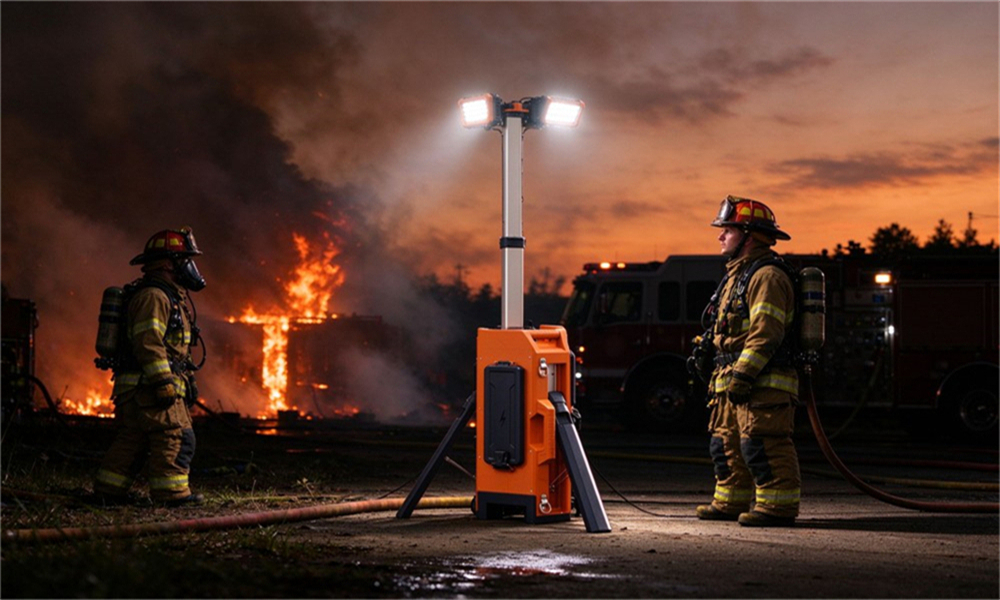
A mobile light tower is a self-contained lighting rig on wheels, skids or folding legs. It combines a power source, a battery or fuel tank, a telescopic mast and LED flood heads into one unit that two workers can move, deploy and switch on within minutes.
Unlike fixed stadium floodlights, it follows the work face from trench to highway to disaster zone.
Construction contractors buy towers to keep night shifts moving. Rescue teams buy them because grid power is exactly what fails during an emergency. Event organizers rent them for outdoor stages and parking fields. Municipal crews deploy them for overnight road cuts. Equipment rental companies stock them because every rainy weekend and every night shift creates demand.
The category splits into four power philosophies. Solar units store sun in lithium batteries. Diesel units burn fuel for raw wattage. Hand-crank and small-battery units cover short tasks. Hybrid units blend a small engine with panels. The job conditions decide which philosophy wins, not the brochure price.
When site plans call for silent operation, a solar powered emergency light is usually the first unit shortlisted. When weather blocks the sun for weeks, diesel becomes the safe default. When crews move every hour, a portable unit beats a fixed tower. Identify the dominant constraint on your site and the family choice becomes obvious.
One number matters more than any spec sheet: how many hours per night the light must stay on. A tower that runs eight silent hours off sunlight changes site planning entirely from one that burns twenty liters of fuel every night. Start your selection from runtime, then work backwards through power source, mast height and brightness.
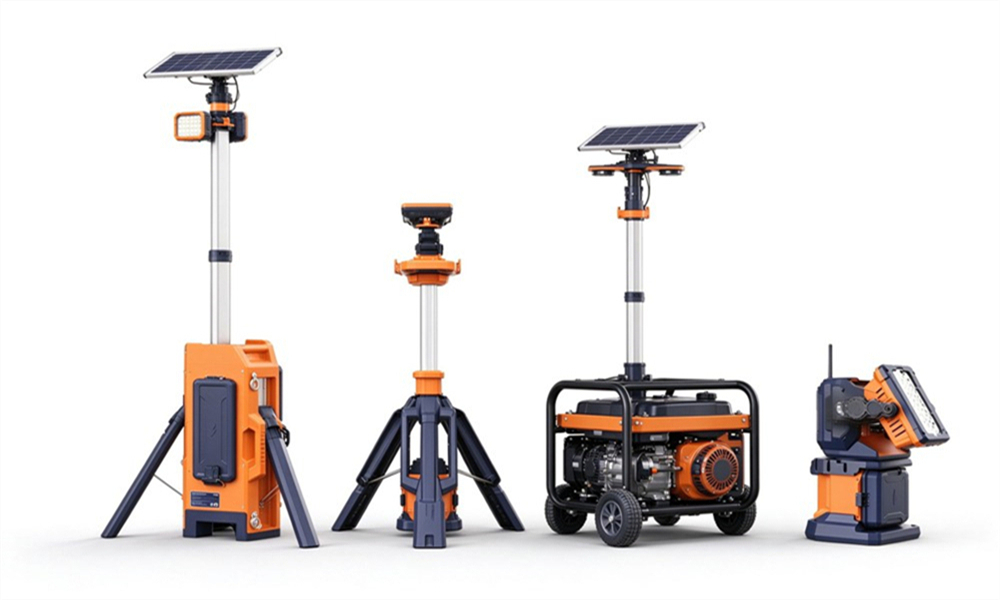
Before diving into each family, here is the short map. A solar powered emergency light wins on fuel cost, noise and emissions. A diesel light tower wins on continuous output in bad weather. A portable light tower wins on mobility. A battery-only hand-carried unit wins on setup speed for short tasks.
Fleets usually end up owning two or three types. A relief agency might ship solar towers for camp perimeter lighting, portable units for medical tents and handheld floods for individual crews. A rental yard stocks diesel towers for long highway jobs, solar units for residential subdivisions where noise complaints matter, and portable towers for weekend concerts.
Do not buy all of one type. A site that only owns diesel towers fights noise and fuel logistics on every quiet night job. A fleet that only owns solar towers stalls when a three-week rain season blocks the panels. Mixing families is how buyers cover a full season of work without turning down calls.
Power Type
Typical Runtime
Noise
Fuel Needed
Typical User
Solar + battery
All night, silent
None
No
Rescue, camps, noise sites
Diesel generator
24/7 with refuel
High
Diesel
Mining, highways, big sites
Battery only
3 to 8 hours
None
No
Short tasks, events, inspection
Hand-crank / hybrid
1 to 4 hours
None
No
Remote backup, emergency kits
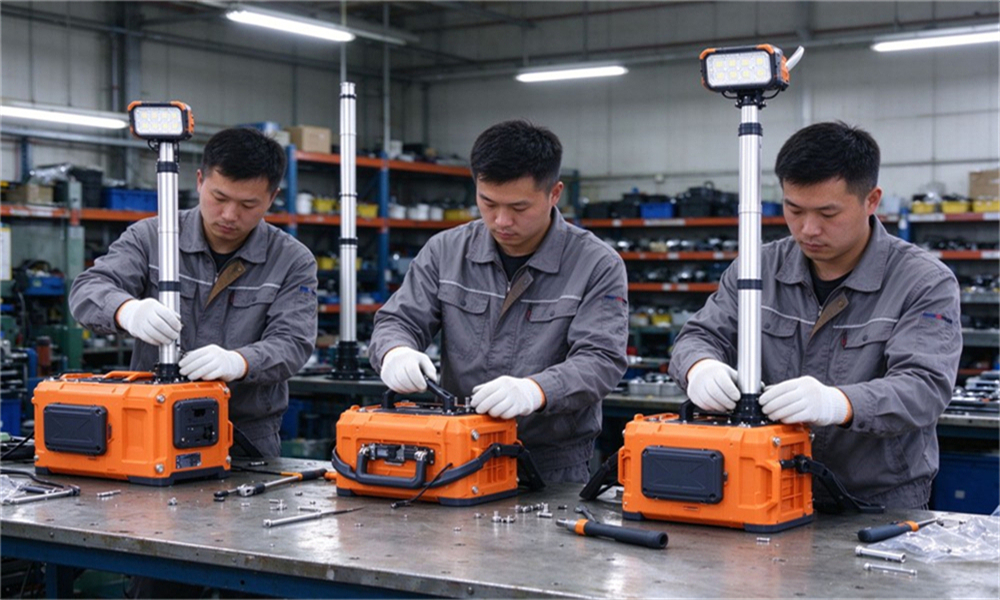
A solar powered emergency light tower stacks four modules on a trailer or folding chassis: photovoltaic panels on the roof, a lithium battery bank in the cabinet, a charge controller and LED flood heads on a telescopic mast. During the day the panels charge the battery. After sunset the battery drives the LEDs silently.
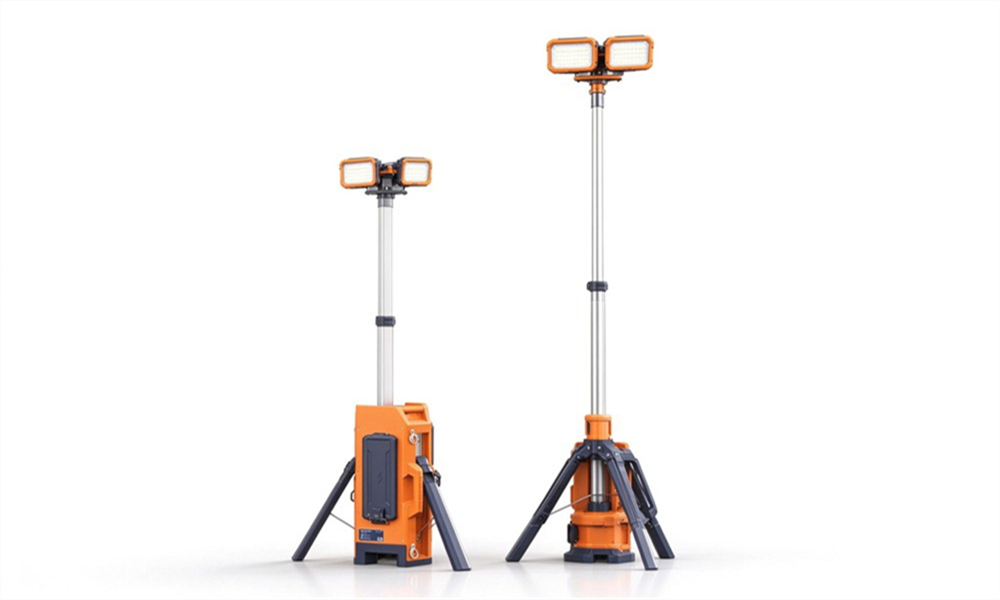
Two common trailer models sit in this range. The smaller unit folds into a road-towable trailer with a few hundred watts of panels and a battery sized for eight to twelve hours of LED output.
The larger unit doubles the panel area and battery capacity, adding USB output, a 12V DC outlet and an optional small grid charger for cloudy weeks. Both units raise the mast manually or electrically.
Panel area is the spec buyers underestimate. A tower that looks identical can carry half the panel wattage, which means it needs three sunny days to recover from one long night. A
sk for the actual panel wattage and the usable battery Ah rating, not the peak wattage marketing number. Real charging, not peak charging, decides how many cloudy nights the tower survives.
Runtime on solar is honest when stated in LED-hours. A typical setup runs all four heads on medium brightness for a full night, then recharges by mid-afternoon the next day. On low brightness it runs two nights on one charge.
In winter at high latitudes, add a small grid charger or a gasoline generator to top up. The unit itself has no engine to maintain, no oil to change and no exhaust vent.
Noise is the hidden selling point. A solar tower runs silent, so crews can sleep nearby, hospitals can keep wards quiet and residential streets do not complain. It also emits no fumes, which matters inside tunnels, near tents, at refugee camps and anywhere ventilation is poor.
For buyers shipping to noise-sensitive or ecologically regulated regions, this alone justifies the higher purchase price of every solar powered emergency light unit in the fleet. Hospitals, schools, residential subdivisions and film sets all fall in this category, and a solar powered emergency light becomes the default rather than the premium choice.
Setup is equally simple. Park the trailer, lower the outriggers, raise the mast and flip the switch. There is no engine warm-up, no choke, no fuel spill to clean up.
A solar powered emergency light turns on the moment the sun goes down, every night, without a crew member walking out to start it. Automatic dusk-to-dawn control is standard. Once deployed, it runs itself, which is why remote sites prefer it.
Maintenance is limited to wiping panel dust, checking battery voltage once a season and inspecting mast cables. There is no oil change, no fuel filter and no engine-hour schedule. After a long storage winter, charge the battery fully before first use. Spare parts are the LED drivers and the charge controller, both modular and swap-out.
Follow the dedicated long-form page for full mast heights, panel wattage options and battery chemistry choices on the solar mobile light tower lineup, which covers every configuration of solar powered emergency light we build.
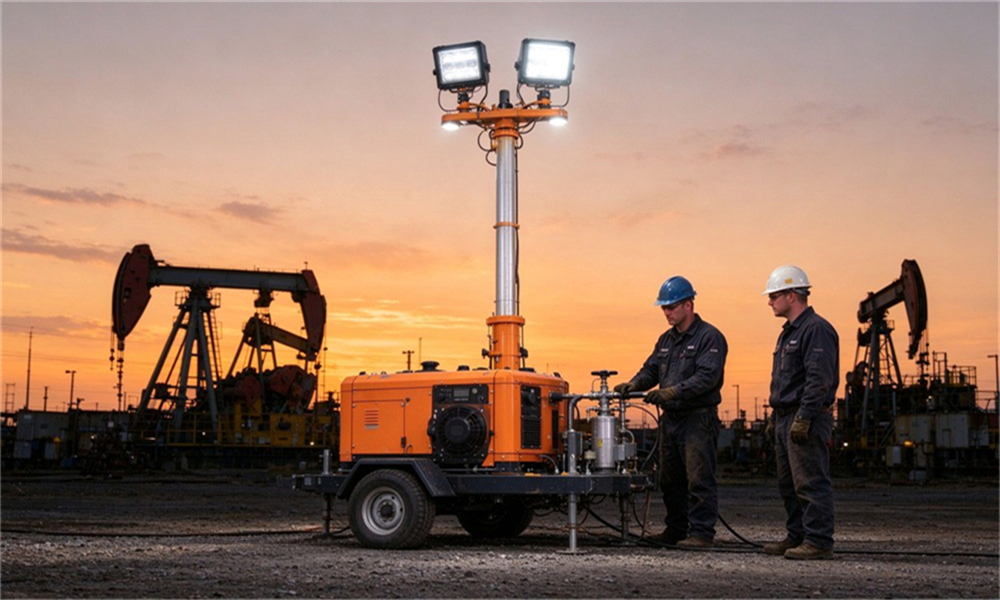
A diesel light tower pairs a small liquid-cooled diesel engine with a steel mast and four LED or metal-halide heads. The engine drives a generator that powers the lights directly, and a fuel tank lets the unit run for many hours between fills. These are the workhorses of highway, mining and large-pour concrete jobs.
Typical units push a few thousand watts of lighting output, raise the mast to around nine meters on three or four telescopic stages, and carry a fuel tank sized for long shifts. Outriggers lock the trailer against wind. A small canopy baffles some noise, but the engine is always audible. That is the trade for all-night, all-weather output.
Fuel burn is the operating number to track. A typical LED-equipped diesel tower sips a few liters per hour at light load. Metal-halide heads burn more. Over a long project, fuel cost often exceeds the tower itself.
Buyers who run towers more than six months a year usually upgrade the engine to a lower-consumption model and specify LED heads from day one.
Diesel towers win when sunlight is unreliable. Northern winter construction, cloud-covered monsoon seasons, tunnel portals and deep-cut mines are poor solar sites. In those places a tower that burns fuel is the predictable choice. Crews already trained on generators maintain it with familiar oil and filter routines.
Cold weather is another diesel advantage. Solar batteries lose capacity in freezing temperatures, but a warmed diesel engine starts reliably well below zero. For Arctic road crews, winter highway maintenance and mountain rescue depots, a diesel unit is the default. Pair it with an engine block heater if winter duty is expected.
The trade-off is upkeep. Engine-hour schedules, oil changes, fuel filters, water jacket checks and exhaust system inspection all belong on a maintenance log. A tower neglected for two seasons often needs a starter motor or fuel pump. Rental companies absorb this with full-time mechanics. Small contractors should price that labor before choosing diesel.
See the diesel generator mobile light tower page for full generator specs, fuel tank options and LED head configurations across the diesel light tower range.
This table is the core comparison. Read it with your project length and fuel cost in mind. Short jobs favor rental. Long jobs favor whichever fuel source fits the site. Quiet sites favor solar. Bad-weather sites favor diesel.
Payback math depends on local fuel price. In many markets a solar tower pays back the price gap within one or two seasons of nightly use, because fuel and engine service bills stop.
In markets where diesel is cheap and jobs are short, diesel stays the economical choice. Run the math on your own fuel price and annual operating hours before deciding. A solar powered emergency light that runs every night for two years is almost always cheaper than diesel once fuel is counted.
Hybrid units blur the line. They pair panels with a small diesel engine that starts only when the battery drops low. The engine runs a few hours a week instead of all night.
Hybrid towers suit buyers who want silent operation many nights but need backup for long cloudy spells. They cost more than either pure type but remove the weather risk.
Winter behavior deserves a specific note. Lead-acid batteries lose capacity in cold. Lithium batteries hold up better but still slow down below freezing. A solar tower rated for ten summer hours might deliver six winter hours.
Diesel towers barely notice cold beyond needing a block heater. If your site sits far from the sun belt, bias the decision toward diesel or hybrid.
Factor
Solar Tower
Diesel Tower
Purchase price
Higher upfront
Lower upfront
Fuel cost per night
Zero
Continuous diesel spend
Noise level
Silent
Engine audible nearby
Emissions
None on site
Exhaust fumes
Maintenance
Minimal, battery and panels
Oil, filters, engine hours
Cloudy / winter
Reduced runtime
Unaffected
Setup time
Park and extend
Park, outriggers, warm-up
Suited for
Camps, residential, rescue
Mining, highway, big pours
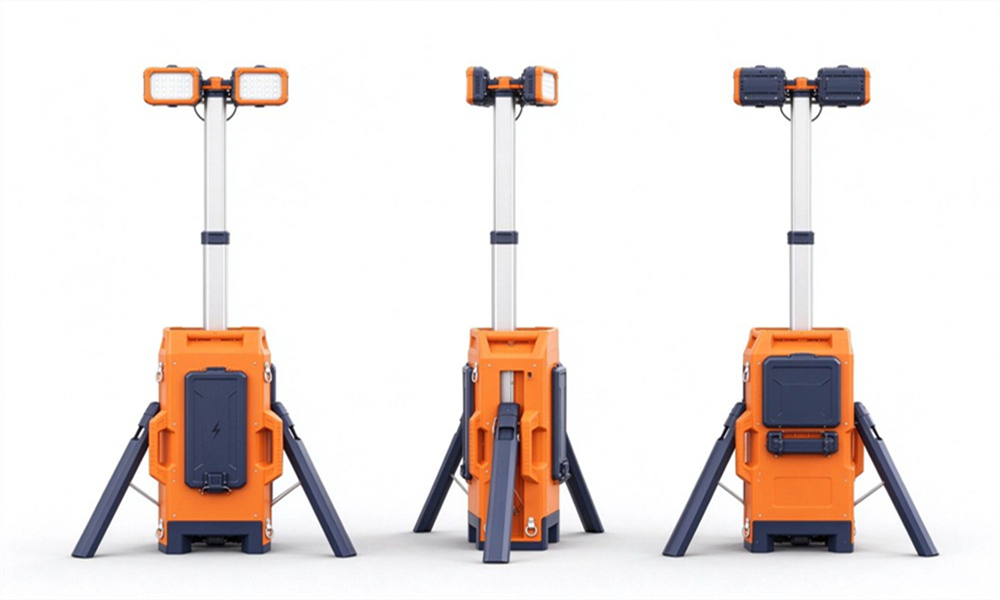
The mast decides how far the light throws. A higher mast spreads light over a wider area with less glare. Three drive styles are common. Manual masts use a hand crank and lock pins. Electric masts raise at the push of a button. Pneumatic masts inflate with a small compressor or shop air.
Manual masts are simple, cheap and robust. No motor, no air line, no circuit board. A crank raises a few sections to around four to seven meters. They suit portable towers that one or two people deploy on small jobs. The trade-off is time: raising eight meters by hand takes a few minutes.
Electric masts raise in seconds with a gear motor on the cabinet. One button extends and retracts. They suit rental fleets where setup speed matters, and sites where one operator handles multiple towers. The motor draws from the battery or generator, so a solar tower needs enough reserve to lift the mast without draining the night lights.
Pneumatic masts inflate from an onboard compressor or a shop air line. They are fast, smooth and have no gear teeth to strip. Common on high-end broadcast and security rigs. They suit buyers who already run compressed air on site, or who want the fastest possible deployment in rescue response.
Mast height ranges from around three meters on compact portable units to nine meters on trailer diesel towers. Three meters lights a trench. Six meters lights a house foundation. Nine meters covers a large lot or a sports field. Taller masts need stronger outriggers and care in wind. Always lower the mast before towing or during a storm warning.
Section material matters. Aluminum sections are light and non-corrosive. Steel sections are stiffer in wind but heavier. Locking collars should be brass or stainless, not painted cast zinc that snaps after a season. Inspect the mast cables or chain every year on electric units, since frayed cables drop heads unexpectedly.
Criterion
Solar powered emergency light tower
Diesel light tower
Portable battery light tower
Run time
All night, if panels charge by day
8 to 12 hours per tank, refuel on site
4 to 8 hours per charge
Noise
Silent, no generator
70 to 85 dB generator noise
Silent, no generator
Fuel supply
Sunlight only, no fuel logistics
Diesel or petrol needed on site
Grid or solar charging between jobs
Light output
200 to 400 W LED, steady
400 to 1000 W LED, highest output
100 to 300 W LED, task scale
Setup
One person, unfold and raise mast
Two people, outriggers and fuel check
One person, tripod or folding stand
Best site
Remote base camp, residential subdivision, rescue camp
Open pit mine, highway job, large construction
Event, workshop, hands free task lighting
Fleet cost
No fuel cost, higher unit price
Fuel and service cost, lower unit price
Lowest capital, limited runtime
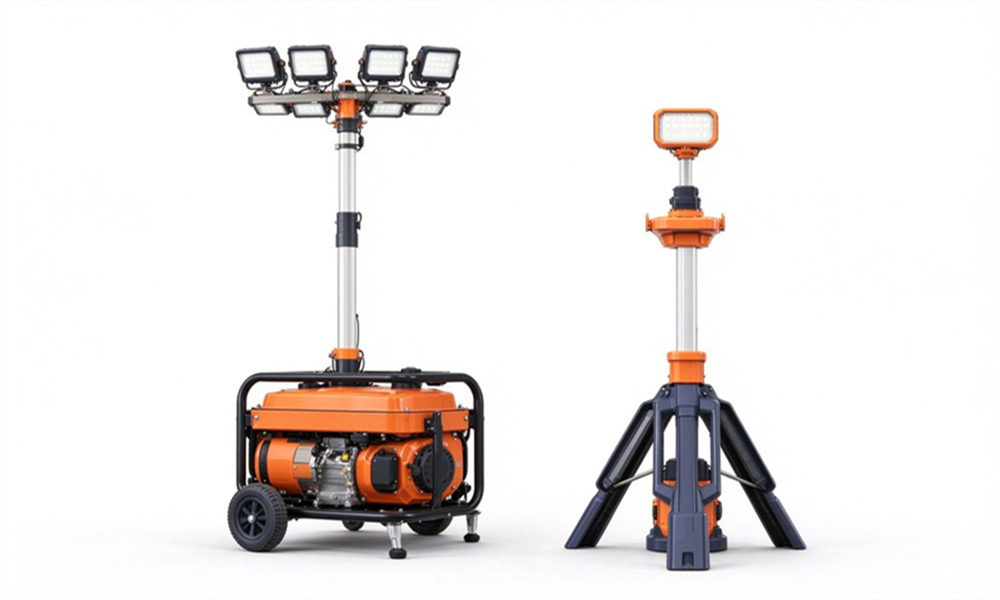
Flood lights spread light wide. Searchlights throw it far. A remote-controlled PTZ searchlight mounts on a pole or tower and pans and tilts by radio remote, sending a narrow beam hundreds of meters. It pairs with a secondary flood so the operator can both scan a perimeter and light a close work area.
Typical units pan around a full circle and tilt through a wide vertical arc. The remote works from inside a truck cab or a control room. LED or HID lamp options trade lumen output against power draw.
Rugged housings survive rain, dust and coastal salt. These are the units you see at ports, construction perimeter fences and rescue helicopter landing zones.
Searchlight use cases cluster in three directions. Perimeter security sweeps a beam along a fence line. Rescue searchlights scan rubble fields and river banks. Marine and port units track ships and loaders at night.
For wide area work, pair a searchlight on a tower corner with flood lights on the other corners, so the site has both broad light and long reach.
Mounting options include a fixed pole flange, a trailer mast top, a vehicle roof rack or a portable tripod. Buyers who move the light between trucks prefer the tripod version. Buyers who mount it permanently prefer the fixed flange. See the remote control rescue searchlight page for pan angles, remote range and lamp options.
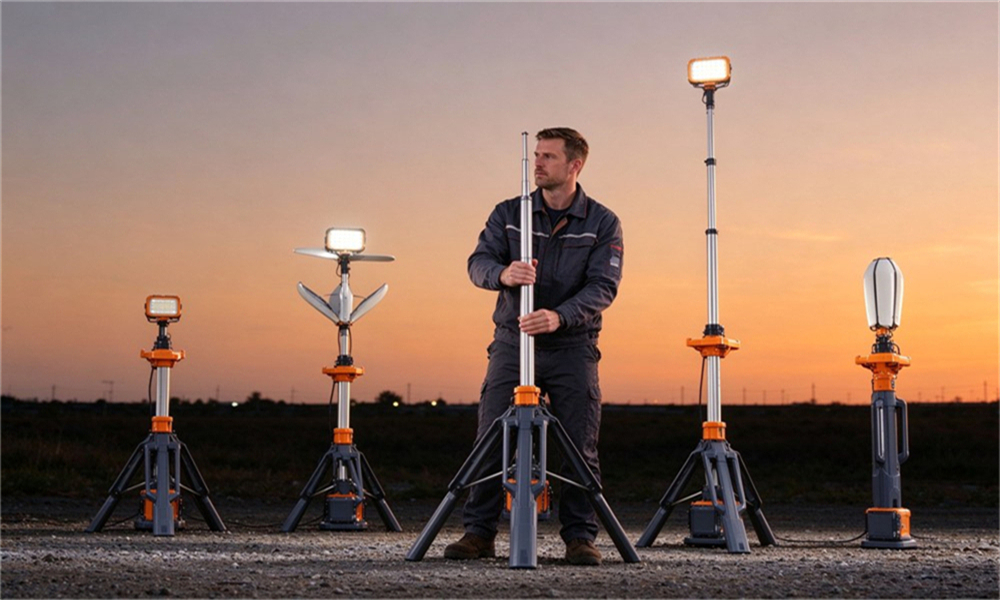
A 360 degree panoramic flood light wraps LED panels around a central hub, so light goes out in every direction at once. Set it in the middle of a work area and no corner sits dark. These units sit on tripods or fold into carry cases and bridge the gap between a handheld light and a full tower.
Common configurations use four to six LED panels on swivel brackets, so the operator can tilt each panel independently. The base is a rechargeable battery pack, often with USB output for phones. On low brightness the unit runs all night. On high brightness it covers a few hours of intense close work.
Panoramic floods suit tradespeople and inspection crews. An electrician working in a switchgear room gets light from every side. A rescue medic in a tent does not fight shadows. A crew wiring an event stage sees the whole platform. They replace the old single-sided work light that always left one side dark.
For hazardous area use, choose an explosion-proof housing. Yellow cast-aluminium units with sealed lens assemblies carry ratings for gas and dust zones. They look heavier and cost more, but they are the legal choice near refineries, paint shops and grain silos. See the rechargeable 360 work light page for battery chemistry and tripod options.
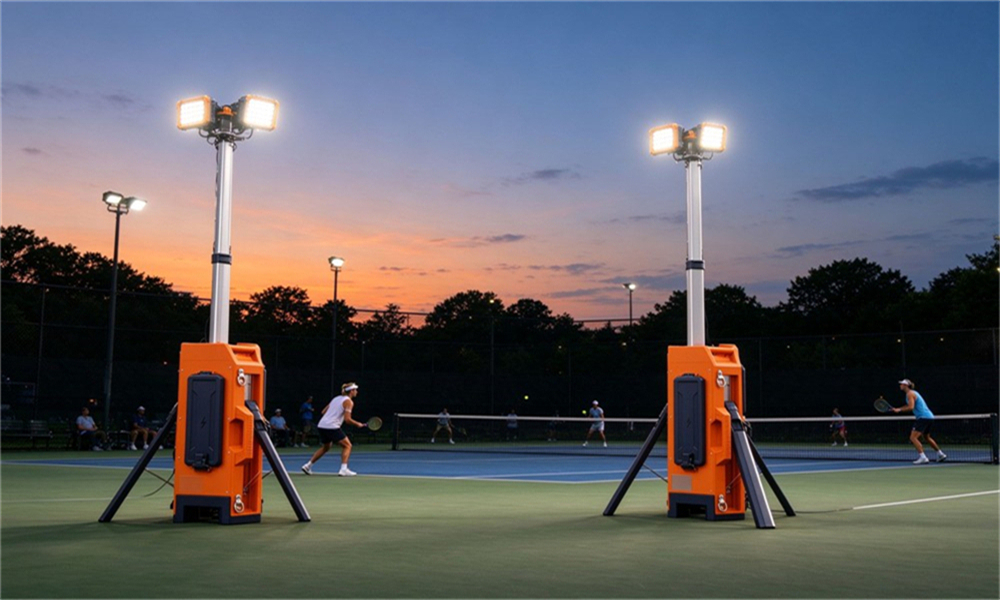
Answer four questions and the shortlist shrinks fast. First, how many hours per night must the light run? Under six hours favors a battery portable. Over ten hours every night favors solar or diesel.
Second, does the site see sun many days? Three cloudy weeks in a row kills solar economics, so choose diesel or hybrid. Third, is noise a complaint risk? Residential, hospital and camp sites demand silent solar. Fourth, what is the annual operating budget? Short seasonal jobs favor rental. Multi-year jobs favor purchase.
If you run a contractor fleet, start with one solar tower and one diesel tower side by side. Run each on real jobs for a month. The crews will tell you which one they actually want to move at midnight. That hands-on evidence beats any spec sheet. Then buy more of the winner.
If you supply a relief agency, bias toward solar and portable. Convoys cannot stop for fuel. Silent operation protects patient areas. Units fold into cases that fit in a shipping container. A
dd a few handheld floods for individual team kits. The whole shipment should run for a week without resupply, and a solar powered emergency light is the backbone of that shipment because it never needs a fuel drop.
If you run an event rental catalog, stock portable towers and battery floods. Events move from field to field. Setup is fast. Storage between weekends matters. A few diesel towers cover the large stage shows. Solar units attract eco-conscious organizers. Keep accessories like spare batteries and tripods in the same ratio as the units.
If you supply a municipal repair team, buy compact portable towers. Sidewalk cuts happen on city streets where a trailer tower blocks traffic. A unit two people carry fits in a van and deploys in five minutes. Add one larger trailer tower for big road projects. City crews value the small unit more than the big one.
When in doubt, order a sample. A short trial on your actual site reveals whether a beam is wide enough, whether the mast holds in wind and whether the battery lasts a full shift.
The cost of one sample is small next to a mis-fleet of twenty units. Suppliers usually support sample orders before volume. For a quiet site, send the solar powered emergency light sample first.
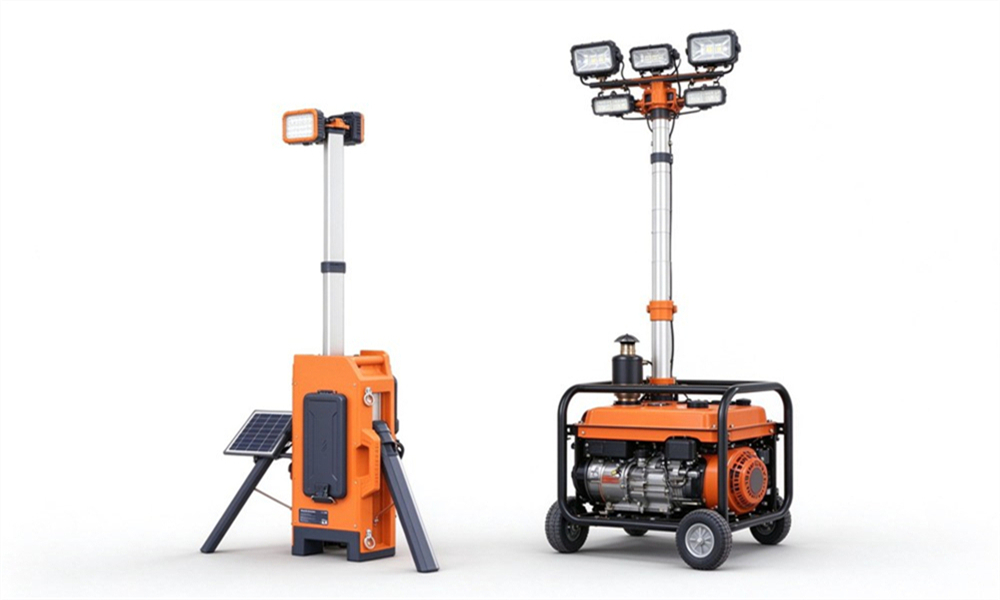
Rental wins for short projects. A two-week road job does not justify buying, storing, insuring and maintaining a tower for eleven months of the year. Rental includes maintenance, delivery and swap-out if a unit fails. You pay a weekly rate and hand it back. Contractors rent when work is seasonal or scattered.
Purchase wins for steady use. If a tower runs forty nights a month every month, rental rates add up fast. Within a year or two the rental bill equals a purchase price. Ownership also means the unit is available when you need it, not when the rental yard has stock. Fleets, relief agencies and event companies usually own.
Mixed strategy is common. Own the towers you use every week. Rent the extra units for the peak season surge. Own a couple of solar units for quiet permanent sites. Rent diesel towers for the big pours. This keeps capital spent on the units that earn money every month.
Spare parts factor into ownership. Batteries last a few years. LED drivers fail. Masts bend on rough sites. A fleet owner stocks a shelf of spares. A renter never thinks about this. When calculating ownership, add 10 to 15 percent per year for maintenance and spares on top of the purchase price.
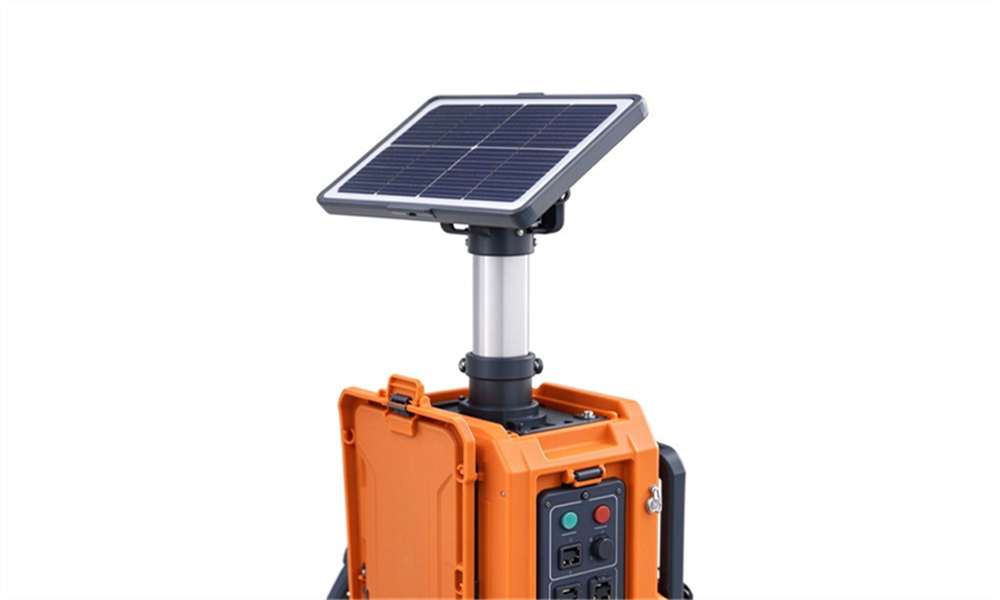
The table below summarizes the main families we build. Full spec sheets live on each product page. This table is the starting point for narrowing down which line matches your duty cycle. Values are typical ranges; final configuration is subject to contract.
Pick the row that matches your longest nightly runtime and your loudness tolerance. If two rows fit, choose the smaller one first. You can always add another tower; you cannot return one that was too big for the access road.
When in doubt between a solar row and a diesel row, send one solar powered emergency light sample to the site for a week before committing to volume.
Model Family
Power
Mast Height
LED Heads
Runtime
Suited For
Solar TL-200
Solar + battery
4 to 5 m
2 heads
8 to 12 h
Small sites, camps
Solar TL-400
Solar + battery
6 to 7 m
4 heads
10 to 16 h
Large yards, rescue
PT-200 portable
Battery
1.5 to 3 m
2 heads
4 to 8 h
Trenches, events
PS-200 mobile
Battery + solar
3 to 5 m
2 to 4 heads
6 to 10 h
Street repair
Diesel DT-600
Diesel gen
6 to 8 m
4 heads
Fuel dependent
Highway, mining
Diesel DT-900
Diesel gen
8 to 9 m
4 heads
Fuel dependent
Big pours, plants
Hybrid H-700
Solar + small engine
6 to 8 m
4 heads
Mostly silent
Cloudy climates
PTZ searchlight
Battery or mains
Mounted
1 spotlight
Battery dependent
Perimeter, rescue
SLW6110 panoramic
Battery
Tripod 1.5 m
6 panels
4 to 10 h
Tents, trades
FW6125 expl-proof
Battery
Tripod 1.5 m
1 to 2 heads
6 to 12 h
Refinery, paint booth
FW6129 expl-proof
Battery
Telescopic 2 m
4 heads
5 to 10 h
Chemical plants
Hand-crank kit
Manual / battery
1 m
1 head
1 to 3 h
Emergency backup
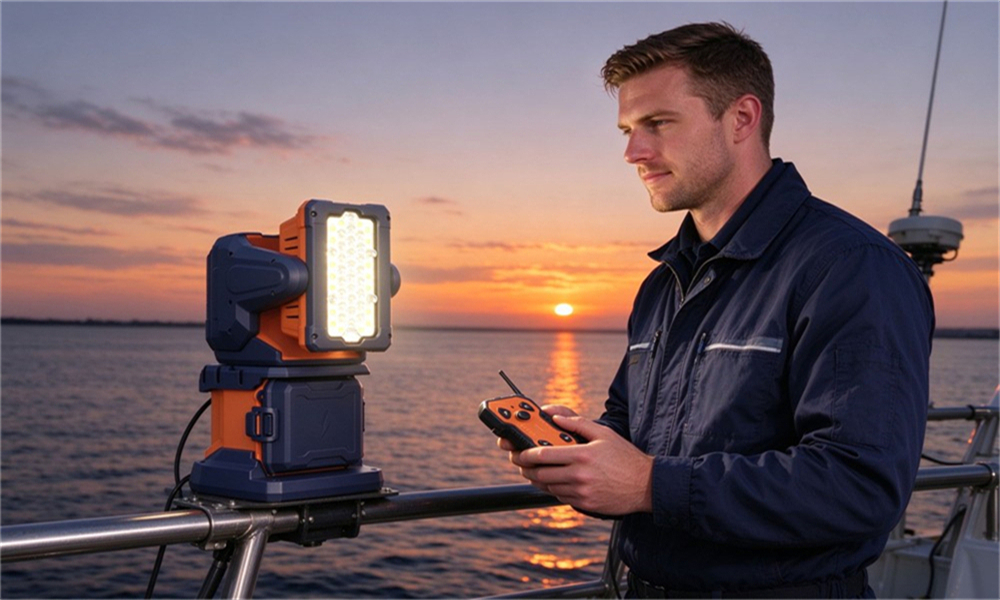
Every family of mobile light tower ends up in a handful of recurring jobs. Construction night shifts anchor the demand. Rescue operations pull units into collapsed buildings, flood zones and wilderness searches.
Outdoor events need temporary lighting for stages, parking and vendor areas. For all of these jobs, a solar powered emergency light is the quiet option that crews ask for by name.
Municipal repair crews work overnight on water mains, sewer cuts and road resurfacing. They prefer compact units that do not block traffic. Mining and quarry sites run towers 24/7 and burn through diesel.
Agriculture uses solar units for grain drying yards and remote security after harvest. Film and TV crews rent silent solar towers so the generator does not ruin the audio track.
Disaster response is the emotional use case for every solar powered emergency light. When a hurricane, flood or earthquake knocks out grid power, a solar powered emergency light arrives on a truck and starts lighting within minutes.
No fuel supply chain is needed. The towers become the camp square, the triage area and the helipad marker at once. Because a solar powered emergency light needs no resupply, it keeps working through the first critical week when roads are cut. Every relief shipment should include at least one solar powered emergency light per camp zone.
Rental catalogs bundle towers with generators, traffic cones and portable toilets into job-site packages. Event organizers rent lighting per weekend. Contractors rent per project. Relief agencies buy in bulk and keep units ready in warehouses.
Whatever the channel, the selection logic stays the same: match runtime, noise and weather to the site. A solar powered emergency light ships anywhere a container reaches, and starts working the night it arrives.
Related reading for the rest of your fleet: the full solar mobile light tower line, the diesel generator light tower line, the portable flood light tower line, the remote control searchlight line and the rechargeable work light line cover each family in depth. Every solar powered emergency light listed on those pages shares the same battery and charger platform.
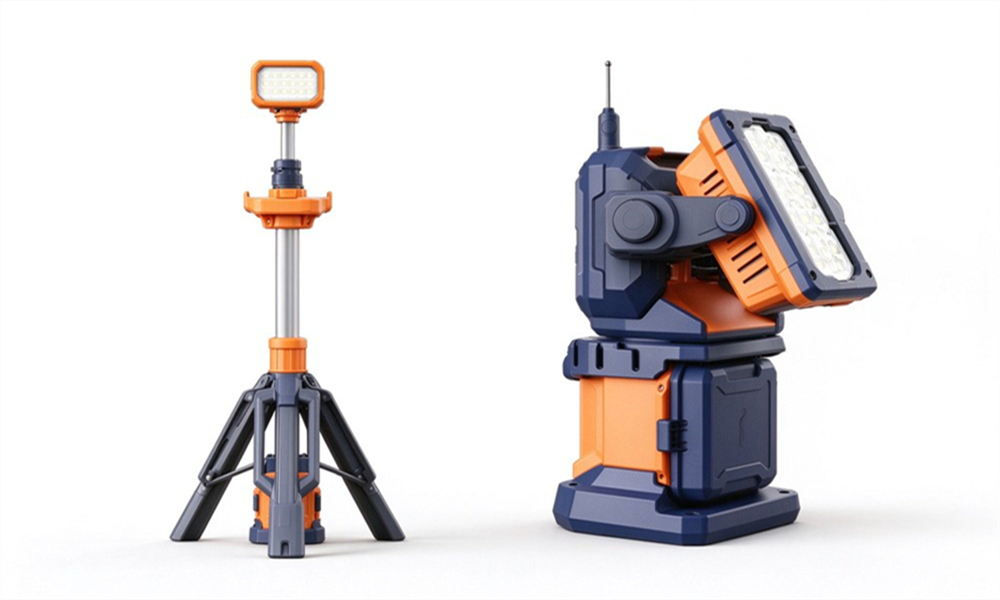
As a mobile light tower supplier, we ship flat-packed solar towers in standard containers. The container math decides landed cost. Below is how we build the quotation step by step.
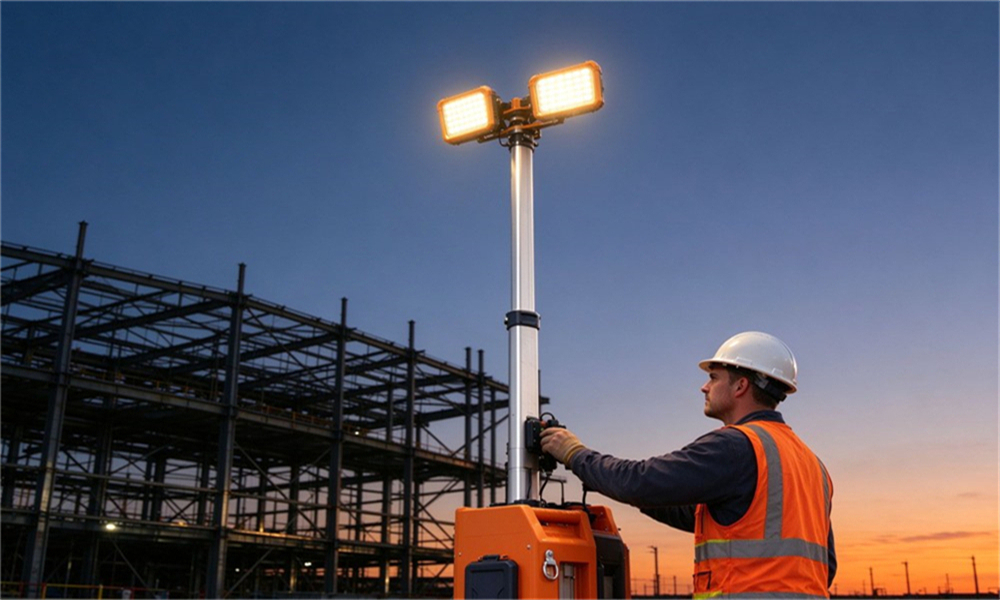
A 20GP holds about 33 CBM. A 40HQ holds about 67 CBM. One flat-packed 400 W solar tower takes roughly 1.8 CBM. That means about 18 units fit in a 20GP and about 38 units in a 40HQ, at 58% loading utilization.
|
Cost line |
20GP (18 units) |
40HQ (38 units) |
Per-unit impact |
|
Ex-work factory unit price |
$1,200 |
$1,200 |
Flat per unit |
|
Ocean freight Shanghai |
$3,500 |
$5,800 |
$194 vs $153 per unit |
|
Marine insurance (0.3%) |
$65 |
$137 |
Small |
|
Dubai duty (5% CIF) |
$1,145 |
$2,420 |
$64 vs $64 per unit |
|
Europe duty (4.7%) |
$1,080 |
$2,280 |
$60 vs $60 per unit |
|
EU VAT (19% on CIF+duty) |
$4,500 |
$9,500 |
$250 vs $250 per unit |
FOB Shanghai means the buyer takes risk at the Chinese dock. CIF Dubai adds ocean freight and insurance, but duty and import clearance sit with the buyer. DDP Europe lands the unit at the buyer's gate, with duty and VAT prepaid by the seller.
The gap between FOB and DDP Europe on one 400 W solar tower is roughly $500-600 per unit. That gap shrinks to about $350 when the buyer consolidates 38 units in a 40HQ. Terms follow ICC Incoterms 2020.
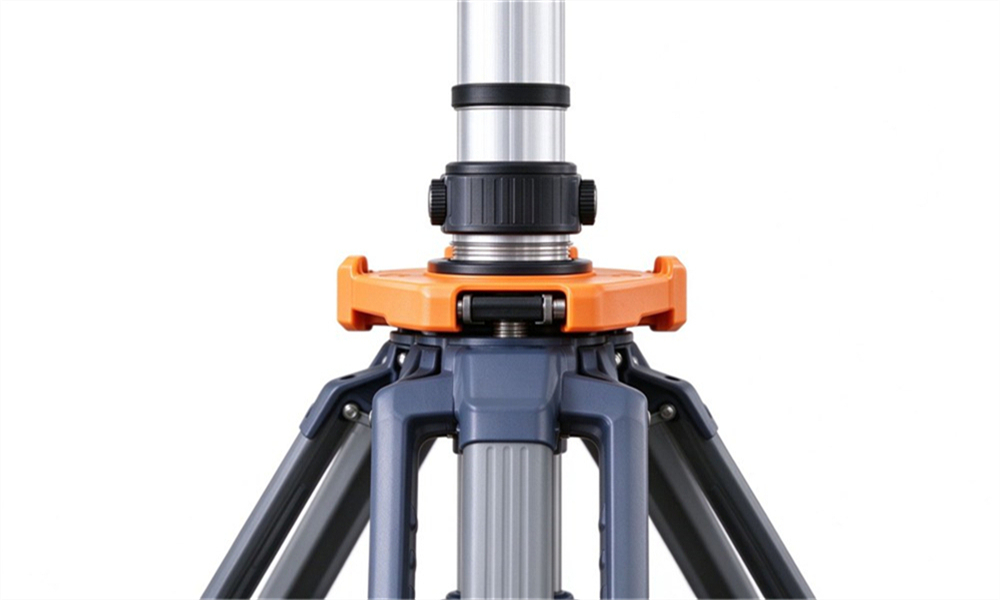
A solar tower costs more upfront. It wins on fuel. Below is the simplified payback math, using diesel at $0.9 per litre and eight operating hours per day.
A diesel light tower burns about 2.5 litres per hour under LED load. Eight hours times 2.5 litres times $0.9 equals $18 of fuel per day. Add maintenance, oil change and filter service at roughly $4 per day. Total diesel opex is about $22 per day.
A solar tower burns no fuel. Battery replacement runs about $200 every three years, which is about $0.18 per day. Panel washing and inspection add another $1 per day. Total solar opex is about $1.2 per day.
The diesel tower costs about $8,500 ex-work. The equivalent 400 W solar tower costs about $12,000. The capital gap is $3,500. Daily saving is $22 minus $1.2, about $20.8 per day.
Break-even in days is the gap divided by daily saving: $3,500 / $20.8 = 168 days. At 26 operating days per month, that is about 6.5 months. After that, the solar tower is pure savings. The diesel generator standard behind the comparison is ISO 8528-1.
Payback speeds up where diesel is expensive. At $1.2 per litre in Europe, break-even drops to about 5 months. At $0.6 per litre in the Gulf, it stretches to about 9 months. Off-grid market context sits in the IEA off-grid lighting data and the light tower market size report.
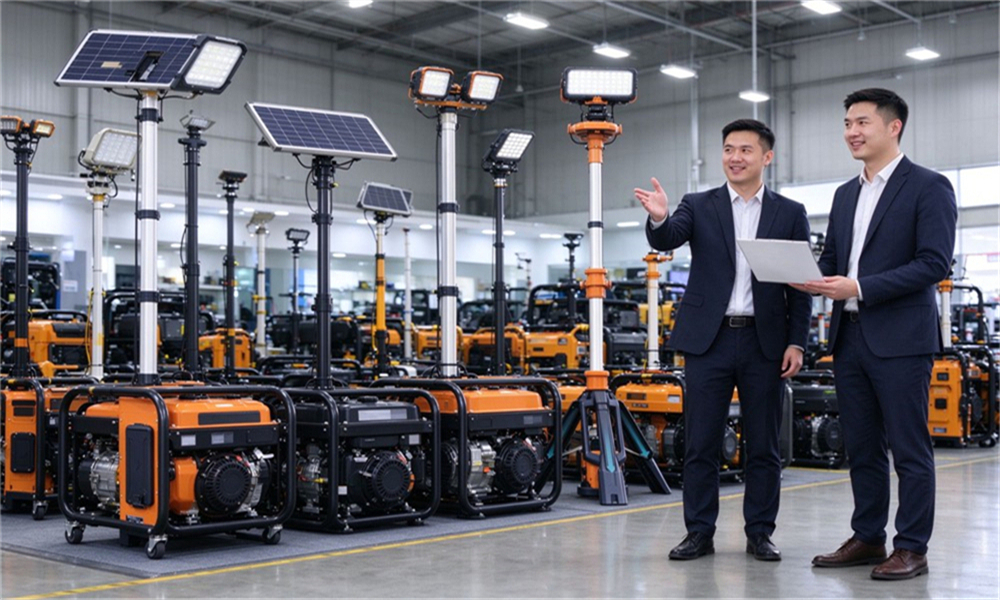
Rental fleets live or die by utilization. The industry average runs about 65% occupancy. The top quartile runs 85%. The gap looks small, but the monthly revenue difference is not.
A solar tower rents for $80-120 per day. A diesel tower rents for $120-180 per day. Depreciation on a $12,000 solar unit over five-year straight line is about $200 per month. At 65% utilization, net margin is thin. At 85%, it is healthy.
Utilization
Rental rate/day
Days/month billed
Monthly revenue
After maintenance ($400)
65% (industry mean)
$100
19.5
$1,950
$1,550
75% (mid-fleet)
$100
22.5
$2,250
$1,850
85% (top quartile)
$100
25.5
$2,550
$2,150
The 85% fleets keep a narrow product range, turn units around in 24 hours between jobs, and pre-position solar units near construction hubs. They also accept longer fuel-cost exposure on diesel backup. Benchmarks come from the American Rental Association fleet data.
Buyers planning a rental fleet should size the first order to 20-30 units. That gives enough density to cover a region without tying capital up in idle stock. Below that density, delivery cost eats the margin.
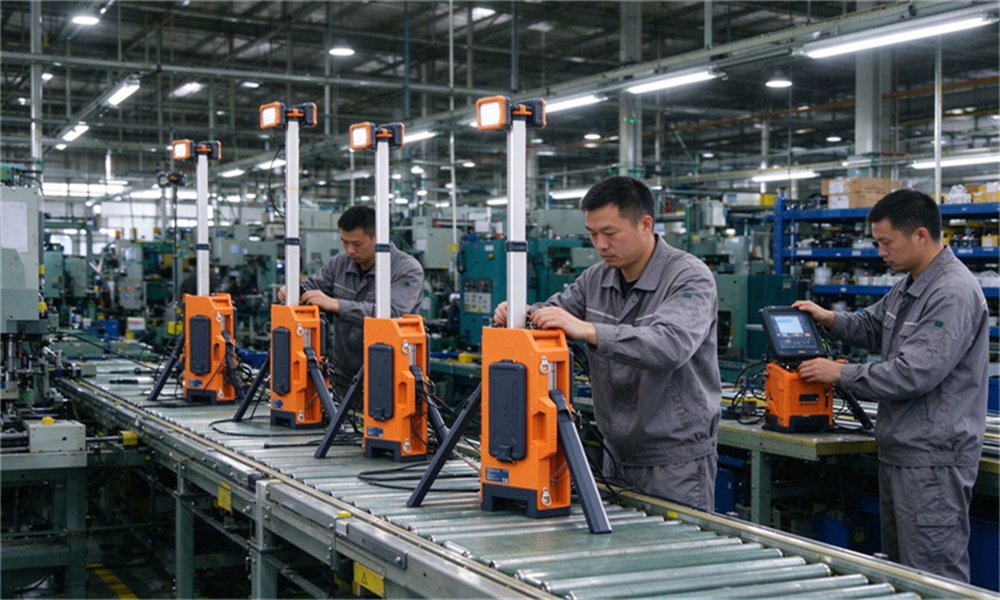
The first order from a new buyer is usually a sample unit. We accept a one-unit sample for quality validation. Sample lead time is about 15 days. Mass production lead time is 25-30 days after deposit.
MOQ for mass orders is 10 units per SKU. Below that, the line changeover cost hurts both sides. Mixed SKUs inside one 40HQ are welcome. Solar, diesel and portable towers can share a container, as long as the CBM math works.
Sample units ship by express courier for small parcels, or LCL sea freight for trailer-mounted towers. A sample mobile light tower delivered to Dubai takes about 18 days by sea. To Hamburg it takes about 28 days.
Payment terms are 30% deposit against PO, 70% balance against copy of B/L. Trade Assurance on Alibaba is accepted. For government and UN tenders, we provide full compliance dossiers: test reports, ISO 9001, factory audit video.
As a long-established mobile light tower supplier, we treat the sample order as a partnership test. Buyers who place a sample today often become fleet customers within two quarters. The sample proves the unit, the packing and the paperwork all survive export.
Serious rental fleets fit a GPS telematics box on every mobile light tower. The box reports location, battery voltage and runtime hours to a dashboard. Fleet managers plan dispatch without phone calls.
A solar mobile light tower with telematics logs daily charge cycles. That data predicts battery failure before it happens. A diesel tower with telematics logs engine hours and fuel burn. Both cut unexpected downtime.
When you buy from a mobile light tower supplier, ask for the telematics option. It adds about $150 per unit. It pays back in the first avoided breakdown on a remote site.
When you compare quotes for a mobile light tower, look past the sticker price. The real cost of ownership includes freight, insurance, duty, VAT, maintenance and battery replacement. A cheaper mobile light tower from a no-name workshop often fails on certification paperwork before it ever reaches the site. As your mobile light tower supplier of record, we quote the landed DDP price up front, so there are no surprises at customs.
Seasonal buyers should plan orders six weeks ahead of peak season. Chinese New Year in January and the summer shipping rush in July both stretch lead times. A mobile light tower order placed in mid-November ships before the holiday. The same order placed in mid-January waits until March.
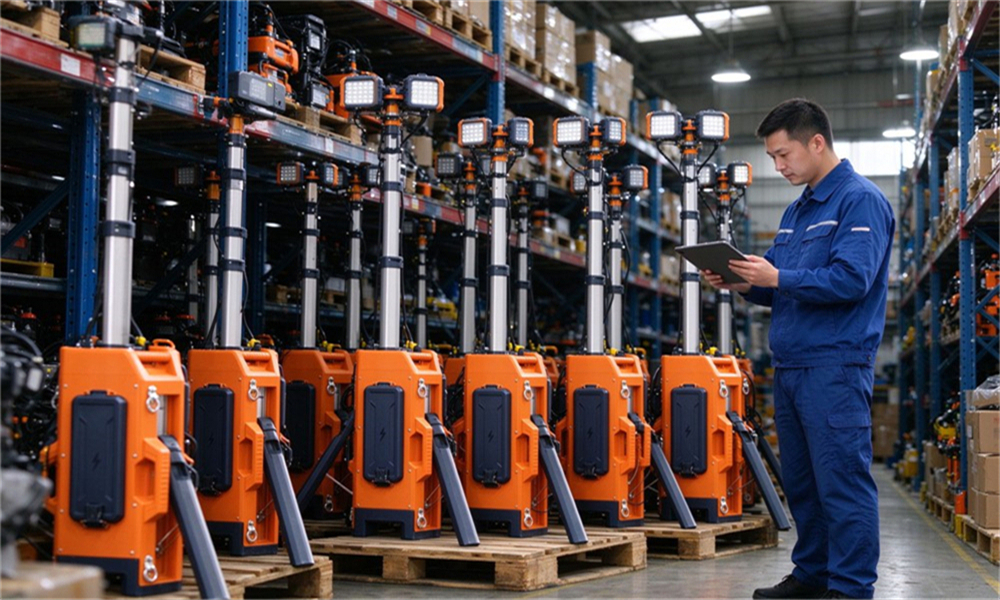
A solar tower runs silently from panels and a battery, with no fuel cost on site. A diesel tower burns fuel for continuous high output in any weather, but needs engine maintenance, refueling and produces noise and exhaust. Choose solar for quiet sunny sites, diesel for all-weather heavy duty. Ask any mobile light tower supplier for a runtime curve in writing.
Typical solar towers run eight to sixteen hours on a full battery, depending on LED brightness mode and battery size. A sunny day recharges by mid-afternoon. Three cloudy days in a row reduce runtime, so buyers in cloudy climates often choose a hybrid or diesel backup. A reputable mobile light tower supplier lists the mast wind rating.
LED-equipped diesel towers typically burn a few liters per hour at light load. Metal-halide heads consume more. Exact figures depend on engine size, head count and ambient temperature, and are confirmed in the spec sheet for each model. Compare generator hours from each mobile light tower supplier quoted.
A battery-only portable tower runs four to eight hours depending on brightness. A solar-assisted portable tower can run all night if it charges during the day. For a full eight-hour shift, choose a solar model or plug into a generator. This mobile light tower supplier ships knocked down or assembled.
Three meters covers a trench. Six meters covers a house foundation. Nine meters covers a large lot or sports field. Taller masts spread light wider but need stronger outriggers and care in wind. Match mast height to the area you must light. Confirm service intervals with your mobile light tower supplier up front.
On a site used many nights per year, solar towers pay back the price gap through saved fuel and maintenance within one to two seasons. On short seasonal jobs, diesel or rental stays cheaper. Run the math on your local fuel price and annual operating hours. A good mobile light tower supplier includes spare lamps in the deal.
A portable tower folds into a case and deploys by one person in minutes. A trailer diesel tower needs two people to lower outriggers safely. Electric and pneumatic masts reduce the physical effort. Always anchor outriggers on soft ground. Request test reports from the mobile light tower supplier before order.
Manual masts use a hand crank and lock pins, low cost and no power. Electric masts raise by push button with a gear motor. Pneumatic masts inflate with compressed air, fastest and smoothest but need an air source. Each mobile light tower supplier prices by mast height and fuel type.
Outdoor towers carry an IP-rated housing for rain and dust. LED heads turn on instantly. Lower the mast in heavy wind or storms. Solar panels work in rain but charge slowly; diesel towers handle weather without issue beyond a block heater in extreme cold. This mobile light tower supplier offers solar and diesel lines.
Flood lights spread wide light over a work area. A searchlight throws a narrow beam hundreds of meters for perimeter scanning or rescue search. Many sites run both: floods for the work face, a searchlight on a corner tower for long reach. Check parts availability with the mobile light tower supplier first.
Order spare batteries, a charger, spare LED lenses and outrigger pads in the same ratio as the main units. Add a remote control for PTZ searchlights and a carry case for portable towers. List spares on the same order so they ship together. A reliable mobile light tower supplier supports rental fleets long term.
Yes. Rental and contractor fleets usually own both. Solar units handle quiet sunny sites, diesel units handle cloudy or all-weather jobs. Crews learn to move between platforms quickly, and the fleet covers more call types. This mobile light tower supplier loads eight units in a 40HQ.
Need light for a hazardous site? Pair a tower with the explosion proof light range for refinery work, review site setups in the hazardous area lighting scenarios, and confirm ratings through the ATEX IECEx certification guide. Keep towers running with spares from the emergency light accessories and battery packs range.
What should a buyer ask a mobile light tower supplier before ordering?
Ask any mobile light tower supplier for runtime, fuel consumption and mast height. Request the CE test report and container loading plan. Compare warranty and spare parts lead time before you commit. Each mobile light tower supplier lists its lead time in the offer.
Can a mobile light tower supply mix solar and diesel in one fleet?
Yes. A mobile light tower supply strategy mixes quiet solar towers for night sites with diesel for heavy weather. Standardize on one supplier for parts. This cuts maintenance and training cost. A mobile light tower supplier that stocks spares reduces downtime.
How does a mobile light tower supplier price a 40HQ container?
A mobile light tower supplier prices by units, mast type and generator brand. A 40HQ holds about 8 to 12 assembled towers. FOB, CIF or DDP terms change the landed cost. Confirm Incoterms in the quote. Compare the warranty terms of each mobile light tower supplier quoted.
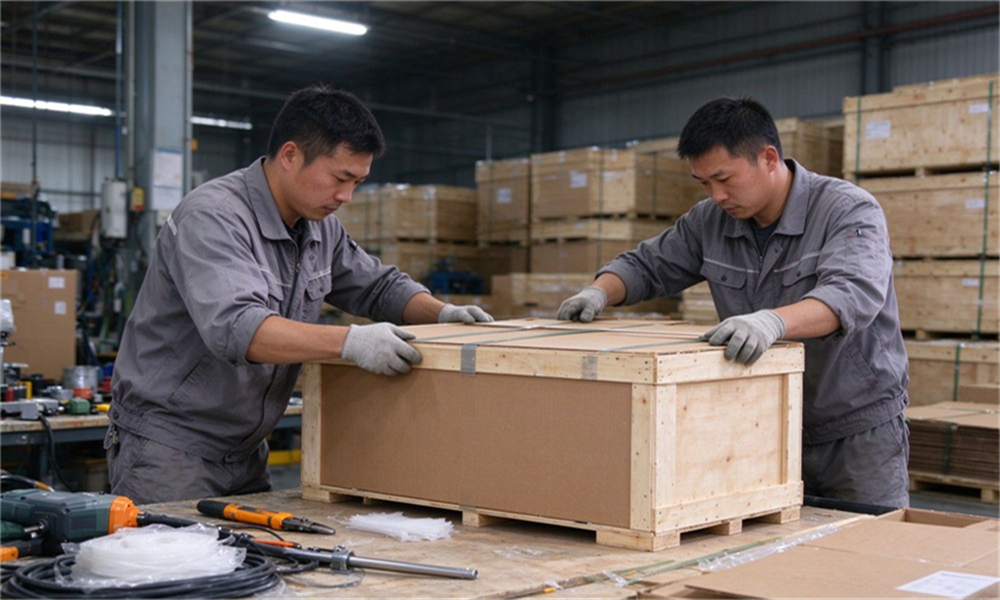
Require CE, ISO 9001 and a test report from any mobile light tower supplier. For the EU, add EN 60598 luminaire safety. Keep the CO and packing list inside the container. This mobile light tower supplier supports both solar and diesel fleets.
Comparing quotes? A reputable mobile light tower supplier should bundle runtime, mast height and container loading in one sheet. The right mobile light tower supplier also lists CE and EN 60598 test reports with the offer.
Before you sign, ask any mobile light tower supplier for a runtime curve and a noise sheet. A transparent mobile light tower supplier also lists the mast wind rating and the generator service interval. Use these facts to compare every mobile light tower supplier on equal terms.
When comparing quotes, choose a mobile light tower supplier that publishes runtime and mast specs. A transparent mobile light tower supplier also lists CE test reports and container loading before you book.
Whether you buy or rent, a capable mobile light tower supplier in China ships on FOB, CIF or DDP terms. Confirm Incoterms with your mobile light tower supplier in the quotation.
For a long rental fleet, partner with one mobile light tower supplier to keep spare parts and service manuals consistent.
Request a sample from any mobile light tower supplier before the bulk order.
Freundliche Links :
Urheberrechte © © Custom Disaster - Relief Bedding: Tents, Sleeping Bags, Blankets Alle Rechte vorbehalten
das professionelle Team zum Service !