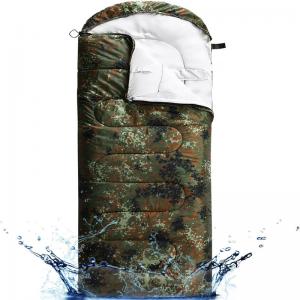
I. Product Positioning and Scene Adaptation
The Key Difference Between Professional Relief Blankets and Consumer Products
A relief blanket deployed in a post-disaster settlement camp is not the same product as a household blanket sold in a retail store.
Relief blankets designed for emergency response must support bulk storage, standardized distribution, repeated disinfection cycles, and meet safety requirements such as flame retardancy and restricted substance compliance. Even if a consumer home textile product looks similar on the surface, it typically cannot pass the acceptance inspections of government agencies or international aid organizations — due to gaps in flame retardancy treatment, labeling language, engineering durability, and distribution logistics compatibility.
Three Primary Use Scenarios:
(1)Post-disaster temporary settlement sites require rapid deployment and unified management. Blankets must be easy to fold and stack, capable of withstanding multiple disinfection rounds, and color-coded with clear labeling for efficient counting and distribution. In multilingual environments, pictogram-based labels are more practical than text-only identification.
(2)Government emergency stockpile warehouses focus on long-term storage stability — specifically mold and moisture resistance, stacking load-bearing capacity, and the ability to maintain functional performance throughout the intended rotation cycle.
(3)NGO humanitarian distribution projects place greater emphasis on cross-border transport efficiency (compressed volume and weight), adaptation to local conditions in recipient countries, appropriate labeling language, and alignment with international humanitarian aid standards.
Different procurement stakeholders have different priorities. Government procurement departments focus first on standards compliance and completeness of inspection documentation. NGO logistics officers focus on per-unit cost against the overall aid budget. Trading companies, once compliance is ensured, care more about continuity of supply and packaging customization flexibility. The recommendation is to start from your own core priority and work outward toward technical specifications and service details — rather than jumping straight to unit price comparisons.
II. Materials and Safety Standards
Choosing the Wrong Material Means Failing Inspection
Relief blanket material selection directly affects whether a project passes acceptance. You cannot judge compliance by feel alone.
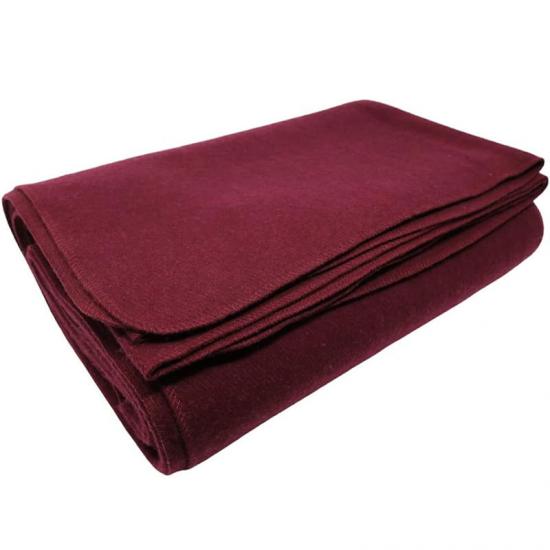
Pure Cotton offers good breathability and natural tactile comfort. Its flame retardancy is inherently better than synthetic fiber, making it particularly suitable for children and elderly populations. However, it is heavier and less compressible than synthetic alternatives, which increases cross-border freight costs.
Polyester Blend is lightweight, highly compressible, and has good mold resistance. It is currently one of the most widely used specifications in international aid project relief blankets. Products with a higher polyester content require additional flame retardancy verification to ensure they do not create fire hazards in enclosed settlement spaces.
Waterproof Composite (Oxford Fabric Laminate) is commonly used for outdoor settlement or high-humidity climate zones. The waterproof coating must meet the hydrostatic pressure threshold agreed upon in the project specifications, and it is essential to confirm that the surface treatment does not contain substances harmful to children, in compliance with relevant restricted substance safety standards.
Safety Standards Verification: The relief blanket flame retardancy standard applied in international aid projects typically requires a third-party test report issued in accordance with the destination country or an accepted international testing method. Products used with children or vulnerable populations should also meet restricted substance requirements. OEKO-TEX certification is currently one of the most widely recognized standards for textile harmful substance control; ISO quality management system certification serves as a fundamental indicator of a supplier's overall management capability.
In enclosed or semi-enclosed settlement environments, if a blanket's material emits an irritating odor or does not meet flame retardancy standards, it will not only fail project acceptance but may directly affect the health of occupants. This is the first item to test on any sample — not something to discover during final delivery inspection.
III. Scene-Specific Functions and Details
What Actually Matters on the Ground Is Not How It Looks
Whether a batch of relief blankets can actually be put to use in a settlement site depends on several details that are easy to overlook.
Distribution compatibility in terms of volume and weight: Ideally, each folded blanket fits into a standard distribution bag, enabling batch allocation by tent unit or bed unit, reducing on-site confusion. Distribution efficiency in large-scale settlement camps has a direct impact on overall operational flow.
Durability under disinfection and repeated use: Settlement populations rotate frequently, and blankets typically need to be disinfected before re-entry into circulation. If the fabric loses significant color fastness after repeated treatment with alkaline disinfectant, or if the textile structure visibly thins, the effective service life is significantly shortened — creating urgent mid-project restocking needs that are difficult to fulfill on short notice.
Customs clearance compatibility of packaging and labeling: For relief blanket cross-border shipments, outer packaging labels must include both English and the locally required language, stating the product name, specification, quantity, and batch number. Labeling non-compliance is a documented recurring customs clearance bottleneck in international aid projects — not a rare occurrence. This should be negotiated and confirmed at the contract stage, not during container loading.

IV. Specification Classification and Selection Guide
Different Scenarios Call for Different Selection Logic
Heavier is not always better. Lighter is not always more economical. The key is matching the specification to the target climate, settlement duration, and population profile.
By warmth level and weight:
(1)Standard single-person size (approximately 150×200 cm, mid-range gram weight common in aid projects) is suitable for temperate climate temporary settlement and is the most widely configured specification in government-stockpiled relief blankets.
(2)Thick insulated version (for low-temperature environments, gram weight noticeably higher than the standard specification) is appropriate for high-altitude or winter disaster settlement. Warmth performance is stronger, but per-unit weight and compressed volume increase accordingly — transport cost implications should be assessed in advance.
(3)Lightweight compressed version (ultra-light design, suitable for air freight or urgent road transport) is suited for the initial rapid-response phase, commonly used as a first-wave distribution in warm-climate regions or as a supplement to the main specification.
Selection Priority Recommendation: First confirm the climate and season of the target settlement location. Then determine the warmth level based on settlement duration (temporary days vs. months-long). Finally, weigh the trade-off between package weight and compressed volume based on the transport mode.
For aid projects spanning multiple climate zones, a single uniform specification is not recommended. The more reliable approach is typically a relief blanket combination strategy of approximately 70% standard-weight and 30% insulated — providing broad baseline coverage while reserving enhanced capacity for high-risk zones or special population groups.
V. Price and Total Cost
A Low Unit Price Is Not the Same as a Lower Project Cost
The unit price in a bulk relief blanket procurement quotation is the starting point of project cost — not the end point.
The complete cost structure for a cross-border China-origin shipment includes: unit product price, factory packaging and labeling costs, international freight, destination country customs duties and agency fees, arrival inspection costs, and additional costs from handling non-conforming goods or reordering.
A batch with the lowest quoted price, if the gram weight is misrepresented and the delivery fails acceptance inspection, typically requires several additional weeks for restocking. That timeline impact on disaster settlement projects cannot be offset by any unit price difference.
For two blankets of equivalent quality where the folded package volume differs by 20%, the full-container sea freight efficiency difference produces a quantifiable cost variance. This dimension is worth listing as a separate comparison item when evaluating multiple supplier quotations — not absorbed into a single per-unit figure.
A more rational evaluation framework combines: unit price + acceptance pass rate + delivery reliability + customs total cost — assessed together before final ranking.
VI. Storage and Maintenance
Most Losses Happen After the Goods Are Warehoused
Improper emergency supply storage typically surfaces only when supplies are activated — when remediation costs are highest and time pressure is most acute.
Special storage risks in cross-border projects: Warehouse conditions in destination countries vary greatly. In some recipient regions there are no temperature or humidity control facilities. Cotton or low-density polyester blankets stored for several months in a hot, humid warehouse without moisture-barrier packaging may develop localized mold, making them unsuitable for distribution.
General storage requirements: maintain dry, ventilated conditions; avoid prolonged moisture exposure and direct sunlight; clearly label each batch with the warehousing date and projected rotation schedule. For high-humidity regions, it is advisable to specify in the contract that the supplier provide individual moisture-barrier inner bags — warehouse environment alone cannot be relied upon for protection.
For government stockpile projects, establishing a material ledger recording batch numbers, warehousing dates, and inspection results supports audit traceability. Directing a portion of the stockpile toward training exercises or small-scale distribution is an effective strategy for managing inventory aging without waste.
VII. Supplier Screening Standards and Six-Step Procurement Process
How Do You Identify the Actually Reliable Supplier Among a Field of Similar-Priced Competitors?
Six-Step Procurement Process:
Step 1: Prepare a needs summary. Document the aid region climate, settlement population size and duration, special population proportions (children, elderly, etc.), and budget ceiling. A one-page written summary becomes the baseline for all subsequent supplier conversations.
Step 2: Draft a technical specification sheet. Specify material type, gram weight range, dimensions, flame retardancy requirement, and packaging language and labeling requirements. Attach this to the tender or inquiry document to prevent suppliers from interpreting vague requirements to the minimum standard.
Step 3: Screen and shortlist candidate suppliers. Verify whether each holds relevant emergency supply production credentials, third-party flame retardancy test reports, and certifications such as OEKO-TEX. Assess production capacity scale and cross-border aid project supply experience. Prioritize factories that proactively provide complete documentation.
Step 4: Sample confirmation and testing. Request samples and test each item against the technical specification sheet: actual gram weight measurement, color fastness check, preliminary flame retardancy test, seam durability check. Record results against the acceptance checklist as the technical basis for contract negotiation.
Step 5: Contract term finalization. Specify technical parameters and permissible tolerances, phased delivery schedule, inspection sampling ratio, and non-conforming goods handling procedure. Confirm which party is responsible for customs document preparation. Agree on both standard and emergency lead times. All commitments must enter the written contract — not remain as verbal understandings.
Step 6: Arrival inspection and archiving. Conduct arrival inspection per contract terms. Retain test reports and acceptance records matched to the contract reference number, providing a complete foundation for subsequent audits, reorders, or project reviews.
Arrival Inspection Checklist
(1)Appearance and workmanship: Inspect a random sample for damage, significant color discrepancies, excess loose threads, or split seams
(2)Dimensions and weight: Measure pre-fold dimensions against contract specifications; weigh to verify gram weight falls within the agreed range
(3)Flame retardancy: Review the corresponding third-party test report; where project requirements dictate, re-verification by a destination-country laboratory may be arranged
(4)Color fastness and wash durability: Check for visible color bleed; priority testing applies when blankets will be subjected to multiple disinfection cycles
(5)Packaging and labeling: Packaging intact; batch labels in correct language; label content consistent with contract requirements
(6)Quantity verification: Actual received quantity matches packing list and contract; any shortfall or surplus to be confirmed with the supplier immediately
Problems identified at the inspection stage can still be remedied. Once goods have been distributed and used, the cost and time involved in pursuing accountability or reordering multiplies significantly.
Common Procurement Questions
What documents are typically required for relief blanket customs clearance?
Commercial invoice (stating product name, specification, quantity, and unit price), packing list, certificate of origin, and quality inspection report. International aid projects sometimes also require a donation certificate or tax exemption application. The full document checklist should be confirmed at the contract signing stage — not during container loading — to avoid clearance delays from incomplete documentation.
How can cross-border shipping timeline risks be reduced?
Move critical checks upstream: document review before loading; include a pre-shipment inspection clause in the contract. Also build reasonable buffer into the procurement schedule — generally, target factory delivery 4–6 weeks ahead of the project requirements date rather than calculating backward from door-to-door transit estimates, to absorb uncertainty in customs clearance and transhipment.
Can suppliers be trusted when they promise expedited production?
Expedited capability depends on current production capacity, raw material inventory, and shift scheduling at the time of the order. The prudent approach is to specify both standard and emergency lead times in the contract, and to confirm the supplier's actual production ceiling for a given time window during the inquiry stage. Verbal commitments not captured in the contract carry essentially no binding force during execution.
VIII. Common Procurement Pitfalls
Error Type 1: Substituting consumer products for purpose-specific relief blankets
Potential consequence: Flame retardancy or restricted substance test failure causes a whole-batch acceptance rejection; restocking lead time extends by several weeks.
Preventive measure: Specify in the technical requirements that a third-party flame retardancy test report for emergency aid end use is required, and obtain it before contract signing.
Error Type 2: Focusing on unit price while ignoring cross-border freight cost structure
Potential consequence: Selecting the heaviest, thickest specification reduces the number of units per container, resulting in a higher per-unit landed cost at the destination port.
Preventive measure: Calculate the per-unit total cost to destination port including freight in parallel with unit price comparison before finalizing the supplier ranking.
Error Type 3: Vague technical terms in the contract
Potential consequence: Delivered goods differ noticeably from expectations; responsibility is difficult to assign; the claims process is prolonged.
Preventive measure: Attach the technical specification sheet as a contract annex — making it the sole written reference for acceptance — signed and confirmed by both parties.
Error Type 4: Failing to account for destination warehouse condition variability
Potential consequence: Blankets stored in a high-humidity warehouse for several months develop widespread mold and cannot be distributed.
Preventive measure: Confirm temperature and humidity conditions with the destination warehouse in advance; for high-risk locations, specify in the contract that the supplier provides individual moisture-barrier inner bag packaging.
IX. One-Stop Supply Package and China Sourcing Advantages
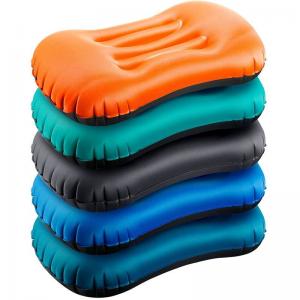
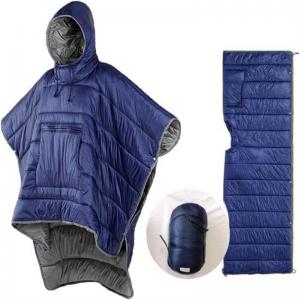
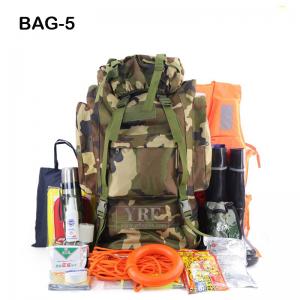
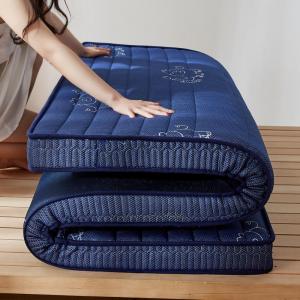
Cross-border humanitarian projects rarely require relief blankets as the only supply category. They typically also need emergency tents, moisture-proof sleeping pads, basic hygiene kits, emergency lighting equipment, and first aid supplies as part of the settlement package.
Sourcing these from multiple separate factories — negotiating prices individually, loading separate containers, and preparing independent customs documentation for each — usually generates coordination costs that far exceed any price savings, while introducing compatibility risks between specifications.
Choosing a Chinese source factory with one-stop relief supply capabilities offers primary benefits in consolidated container loading to reduce per-unit freight cost, unified customs document preparation to reduce communication interfaces, and more reliably managed multi-category supply compatibility under a single supplier.
China's supply chain advantages in bulk emergency relief supply procurement derive from a fully integrated industry cluster — from raw materials through finished goods and export services — concentrated in geographically proximate locations. Large-volume lead times are relatively manageable, and suppliers generally have experience working with NGO project and government procurement processes, providing compliant inspection documentation and customs paperwork suited to the specific requirements of aid projects globally.
For a deeper discussion of the overall supply chain rationale for sourcing relief blankets and complementary supplies from China, refer to our companion article Why Should Large-Scale Emergency Relief Blanket Procurement Prioritize Chinese Suppliers? | 2026 Procurement Decision Guide.

X. YRF Recommended Solution
YRF Emergency Relief Supplies is a China-based one-stop source factory specializing in emergency relief supplies. Across the relief blanketproduct line, YRF offers a full range of material configurations — cotton, polyester blend, and composite waterproof — with customizable dimensions, colors, and packaging label languages to meet distribution requirements across different regions and cultural contexts.
On quality control, the factory operates over 100 modern production units and holds both OEKO-TEX certification (textile harmful substance safety) and ISO certification (quality management system). Third-party flame retardancy test reports and factory inspection documents can be provided to satisfy international NGO aid procurement and government emergency stockpile project acceptance requirements. If a project has specific additional certification requirements, coordination with third-party certification bodies can be arranged.
On delivery, the standard production lead time for mid-size orders is typically within 2–3 weeks; urgent projects can be supported through priority scheduling under legally compliant conditions, with specific lead times confirmed in the signed contract. On export service, YRF can assist in preparing bilingual packaging labels and destination-country customs document packages. Complementary supply categories — including emergency tents, folding beds, and moisture-proof sleeping pads — can be supplied concurrently to reduce the number of supplier contacts the procurement team must manage.
For teams planning large-volume relief blanket procurement or government emergency stockpile projects, YRF is worth including as a candidate one-stop long-term supply partner. Reliability can be validated progressively through sample testing and phased delivery — without committing the full volume in a single transaction.
XI. Conclusion and Next Steps
The core path to selecting a reliable batch of relief blankets for post-disaster settlement is: define the scenario → match material and specification → verify safety standards → assess total cost → screen suppliers and finalize contract terms → conduct arrival inspection and archive documentation. This article has systematically covered actionable checkpoints for each stage.
Immediate next steps you can take:
(1)Prepare a one-page needs summary — document the aid region climate, settlement population size and duration, special population proportion, and budget ceiling. This is the prerequisite for any productive conversation with a supplier.
(2)Draft a technical specification sheet — using the indicator framework from Sections II and IV of this article, list the gram weight range, flame retardancy level requirement, and packaging label language requirement. Attach it to your tender or inquiry document.
(3)Request samples from 2–3 candidate suppliers — test each against this article's arrival inspection checklist. Advance factories that proactively provide complete inspection documentation into the next evaluation round.
(4)During contract negotiation, confirm customs document responsibility — lock in technical parameter tolerances and non-conforming goods handling clauses, and agree on both standard and emergency lead times. All key commitments must enter the written contract.
If you need a technical clause template suitable for a tender document, or a standardized acceptance checklist sample, you may submit a brief project background note through the contact form on this website. A general-purpose template will be provided for reference — for internal discussion use only — with all final terms subject to the formal contract signed by both parties.
Primary Keyword: Relief Blankets
Long-Tail Keywords: cross-border relief blanket procurement、post-disaster settlement relief blankets、relief blanket material selection、relief blanket flame retardancy standard、bulk relief blanket procurement quotation、international aid project relief blankets、one-stop relief supply、bulk emergency relief supply procurement、international NGO aid procurement、government-stockpiled relief blankets、relief blanket combination strategy、government emergency stockpile project、relief blanket cross-border shipments
Urheberrechte © © Custom Disaster - Relief Bedding: Tents, Sleeping Bags, Blankets Alle Rechte vorbehalten
das professionelle Team zum Service !