If you would like a broader overview of how extreme cold emergency relief blankets fit into the overall emergency supplies ecosystem, we recommend reading the companion article on this site, Complete Guide to Emergency Relief Blankets | 2026 Selection Standards · Stockpile Configuration · Procurement Practice Guide, for a complete pathway from foundational knowledge to detailed selection criteria.
I. Product Positioning and Procurement Focus Areas
Extreme cold emergency relief blanketsare not interchangeable with ordinary household warming blankets — and this distinction must be established before the selection process begins.
The design logic behind professional extreme cold relief blankets centers on four factors: stability in bulk storage over time, low-temperature thermal performance verified through accredited third-party testing rather than self-declaration, durability through repeated use in harsh conditions without measurable performance loss, and complete compliance documentation suitable for government or NGO project acceptance review.
Different roles in the same procurement process naturally focus on different priorities when evaluating sub-zero emergency warming blankets:
Government emergency and disaster preparedness departments prioritize standards compliance and completeness of testing documentation, by batch rotation management under extreme cold storage conditions, and whether supplies can be confirmed on-site before the onset of winter.
NGO and international aid organizations place greater emphasis on climate adaptability for the recipient country, complete cross-border clearance documentation, delivery lead times under extreme weather conditions, and whether the product meets the humanitarian aid acceptance frameworks of the recipient party.
Overseas distributors and systems integrators are primarily concerned with bulk pricing structures, the breadth of one-stop complementary product availability, and continuity of supply.
II. Materials and Safety Standards: What Makes an Extreme Cold Blanket Genuinely Compliant?
The Core Material Logic for Extreme Cold Applications
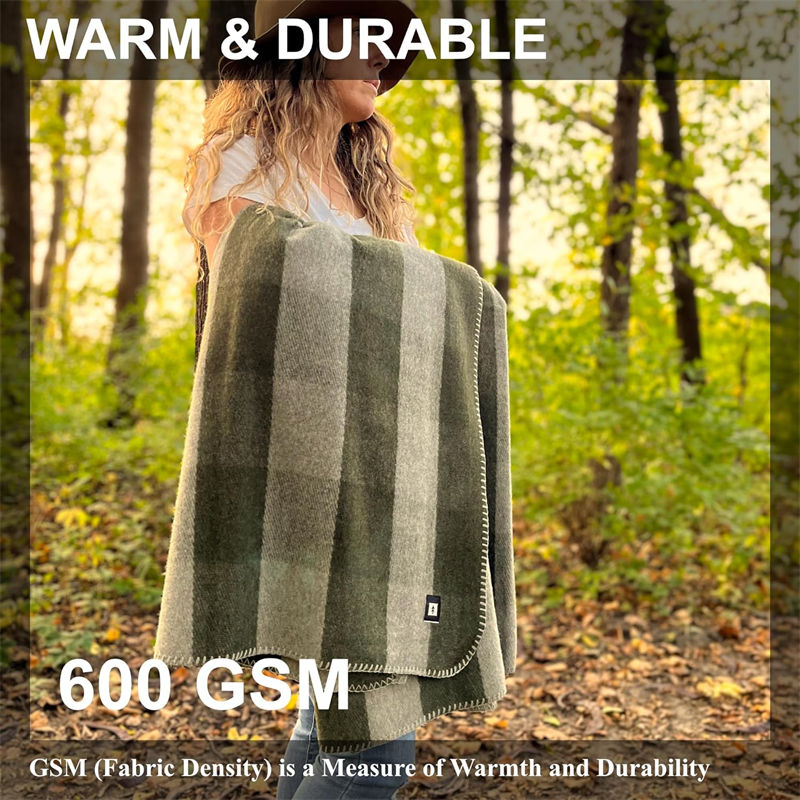
Low-temperature disaster relief blankets follow a specific material logic that cannot simply be derived from standard relief blanket specifications. High-GSM composite fabric is the primary structural approach for extreme cold applications — the outer layer typically uses a high-density windproof and waterproof coating, while the inner layer incorporates insulating materials with low thermal conductivity. The overall thermal resistance value (CLO value) must meet the demands of sustained low-temperature field use. One widely validated configuration in active field projects uses a 350gsm heavyweight composite construction. The specific GSM and thermal resistance targets for any given project should be explicitly defined in the technical specification and confirmed in the supply contract — procurement decisions should not be based on manufacturer-stated values alone.
Flame retardant fabric is particularly critical in concentrated cold-weather settlement environments. These sites typically involve high densities of heating equipment and occupants in confined spaces. If the material ignites easily or sustains combustion when exposed to a heat source, the resulting safety risk is severe. Suppliers must be able to provide flame retardancy test reports that clearly identify the testing standard and method applied.
Moisture-resistant and anti-mold surface treatment cannot be overlooked. High-altitude regions typically experience large diurnal temperature swings, and tents or temporary shelters are prone to condensation. Higher-GSM blankets face substantially greater risk of internal layer mold growth in sustained humid conditions — a deterioration that may not be visible on the outer surface but results in a measurable reduction in thermal resistance value (CLO value).
Temperature Ratings: Self-Declared Claims and Third-Party Testing Are Two Very Different Things
This is one of the most commonly overlooked critical points in extreme cold emergency relief blanket procurement.
A large proportion of products available in the market will indicate "suitable for use at -15°C" or "rated for -25°C and below" on packaging or quotation documents. However, these figures may represent only the manufacturer's own assertions, without any third-party verification conducted under controlled test conditions. A product that has undergone third-party verified temperature rating testing requires documentation issued by a named testing institution, identifying the test standard and method used, reporting the measured thermal resistance results, and presented as an original or certified copy — not an informal explanation from a sales representative or a product specification sheet.
When reviewing documentation, procurement teams should clearly distinguish between these two categories: a "temperature range" notation in a product brochure is a manufacturer's declaration; a low-temperature thermal performance test report issued by an accredited third-party testing institution is verified physical evidence. In government procurement and United Nations agency sourcing, the latter is a core requirement for compliance acceptance. The two are categorically different and cannot substitute for each other.
One additional point is frequently missed: extreme cold blanket third-party test reports have defined validity periods. In some cases, reports issued by testing institutions must be renewed after a defined timeframe. Whether a report can remain valid when the production process has not changed is a question that must be confirmed with both the supplier and the testing institution during the procurement design phase — not discovered during project acceptance or audit review.
Documentation Review Checklist:
(1)Extreme cold blanket third-party test report — Must identify the testing institution, test standard and method, thermal resistance value, and report date; confirm the report remains within its stated validity period
(2)Flame retardancy test report — Standard number must be clearly stated; verbal assurances of "flame retardant" status without supporting documentation are not acceptable
(3)OEKO-TEX certification — Confirms textile harmful substance safety compliance
(4)ISO quality management system certification — Important note: this certifies the enterprise's production management processes against international standards; it does not constitute tested evidence of the product's low-temperature thermal performance or flame retardancy rating. The two documents serve entirely different verification purposes and cannot substitute for each other. Both product-level test reports and management system certifications must be obtained independently during procurement
(5)Destination country special customs clearance documentation confirmation — High-latitude countries typically impose additional label language requirements, composition declaration requirements, or phytosanitary requirements on imported textiles; these must be confirmed in advance, and responsibility for document preparation should be defined in the procurement agreement
III. Scene-Specific Functional Requirements for Extreme Cold Applications
In an extreme cold settlement site, the primary concern is not how the blanket looks — it is whether it can reliably maintain thermal performance through consecutive low-temperature nights. Thermal resistance stability and disaster relief blanket anti-compression deformation are two performance characteristics most frequently overlooked in this operational context.
Standard relief blankets perform adequately in temperate climates, but in sustained low-temperature environments, if the composite layer has insufficient resilience after compression, the thermal resistance value (CLO value) can degrade progressively with each use cycle. Extreme cold shelter warming supplies configuration requires blankets to maintain thermal efficiency close to their initial factory condition even after repeated folding and unfolding and multiple consecutive nights of use — not merely pass testing at the point of manufacture.
Disaster relief blanket anti-compression deformation is another issue frequently overlooked during high-altitude region blanket reserve plan implementation. Heavier-GSM extreme cold blankets are susceptible to permanent structural deformation of the composite insulating layer when subjected to continuous pressure during long-distance shipping or extended periods on upper warehouse shelving. Acceptance inspection at delivery cannot rely on visual examination of the outer surface alone — thickness measurement and rebound testing of sampled units is required to confirm that delivered condition is consistent with factory-certified condition.
Sanitization compatibility and reusability are equally important in settlement operations. Population turnover in settlement sites is frequent, and extreme cold emergency relief blankets typically require disinfection treatment between distribution cycles before being reissued. Materials must be able to withstand common disinfection methods without discoloration or embrittlement, and must dry quickly after treatment. If the rotation cycle is extended due to material limitations, total project cost rises substantially.
Uniform color coding and batch labeling serve a concrete operational function in complex extreme cold settlement environments. Uniform color facilitates rapid collection and batch identification, while clear batch labels — including production date and batch number — support issue traceability. Extreme cold project material attrition rates are typically higher than in standard deployments; batch traceability capability has direct value for project acceptance documentation and audit records.
IV. Specification Classification and Selection: How to Determine the Right Specifications for Extreme Cold Scenarios?
Disaster relief blanket GSM selection is not a matter of maximizing weight — it requires finding the right balance between thermal performance, transport logistics, and total project cost, based on the destination climate zone, intended duration of use, and mode of transport.
Size selection: Standard single-person sizes typically accommodate the adult body size range. In extreme cold region tents or temporary shelter units, available floor space is often constrained, so actual tent model dimensions and bed layout must be confirmed before finalizing size parameters — to avoid the practical outcome of blankets not fitting the available space or folded stacks occupying excessive floor area. For elderly or pediatric settlement sites, a higher proportion of double or extended-length configurations may be appropriate.
GSM selection and two-tier configuration recommendation:
The -15°C rated configuration is suitable for indoor settlement sites or environments with basic heating equipment in place. The -25°C and below rated configuration addresses semi-open-air conditions, environments without supplemental heating, or sustained deep-cold conditions. For high-altitude aid blanket procurement projects where climate conditions carry meaningful uncertainty, a blended configuration of approximately 70% standard-rating units, approximately 20% high-performance units, and approximately 10% lightweight emergency units is a widely applied approach. The actual proportions should be calibrated against historical temperature data for the destination location and the demographic composition of the recipient population. Elderly individuals, infants, and injured persons warrant a higher proportion of the higher-performance tier rather than applying a fixed ratio across the board.
Color and labeling: Extreme cold projects typically benefit from color schemes that are visually distinguishable against snow backgrounds, combined with clear batch labeling, to support per-batch management, rapid collection, and issue traceability.
V. Price and Total Cost of Ownership: How to Calculate the Full Lifecycle Cost of Extreme Cold Blankets?
Focusing exclusively on unit price is the most common decision-making error in cold-region supply procurement. At least the following four dimensions deserve individual evaluation during the quotation comparison phase:
(1)Transport cost differential
Higher-GSM configurations yield higher per-unit volume and weight in full-container sea freight. A 15% difference in compressed packing density between two configurations can produce a container utilization and freight cost differential that significantly exceeds any savings from a lower unit price. Folded-and-packed dimensions and per-unit weight must be incorporated into total cost assessment, not excluded from the unit price comparison.
(2)Storage attrition cost
Heavier-GSM configurations stored under unsuitable conditions — high humidity environments or excessive stacking pressure — exhibit measurably higher attrition rates than standard configurations. Once the internal layer of an extreme cold blanket develops mold contamination or the composite layer undergoes compression deformation, the typical outcome is mass failure within one to two winter cycles. Proactively designing a storage program that prevents disaster relief blanket anti-compression deformation represents a front-loaded cost that significantly reduces the risk of unplanned emergency reprocurement later.
(3)Acceptance failure total cost
For orders linked to government or NGO projects, a single acceptance failure means the entire project milestone is delayed. The actual impact extends well beyond the cost differential of a return shipment — it includes project timeline delays, multi-party coordination time costs, and the risk of being unable to secure replacement supplies within the narrow extreme cold deployment window. Simply stated, no unit price saving can offset the compounded impact of a failed acceptance event.
(4)Destination country customs clearance delay risk
Multiple high-latitude countries impose supplemental composition declaration requirements, label language requirements, or phytosanitary requirements on imported textiles. Customs delays caused by incomplete documentation, in regions where the winter supply window is short, carry costs far exceeding any savings achieved at the unit price level. Selecting a China extreme cold disaster relief blanket supplier with documented export experience serving high-latitude destinations enables proactive preparation of complete documentation packages, substantially reducing this risk.
Recommended position: When evaluating competing quotations, apply a baseline condition of "GSM confirmed as specified, temperature rating supported by third-party tested evidence, and complete customs clearance service package" first, then compare total cost among candidates that meet the baseline — rather than using lowest unit price as the primary initial filter.
Color and labeling: Extreme cold projects typically benefit from color schemes that are visually distinguishable against snow backgrounds, combined with clear batch labeling, to support per-batch management, rapid collection, and issue traceability.
VI. Storage and Maintenance: How Should Extreme Cold Reserve Supplies Be Managed Through Their Rotation Cycle?
The true management cost of extreme cold supplies is largely incurred in the years following procurement.
Basic storage conditions: Maintain dry conditions and control warehouse humidity — high-GSM configurations face substantially higher internal layer mold risk in sustained humid conditions compared to standard configurations. Control stacking height to prevent bottom-tier units from sustaining excessive sustained pressure that causes permanent disaster relief blanket anti-compression deformation. Also avoid prolonged proximity to high heat sources or strong direct sunlight, which accelerates composite layer aging.
Batch record-keeping and scheduled sampling tests: Performing low-temperature thermal performance sampling tests on reserve batches every one to two years is advisable to confirm that key performance indicators have not experienced material degradation as a result of storage conditions — rather than relying solely on the original factory test report. Maintain a supply inventory record covering batch number, production date, warehouse intake date, and sampling test results to support project audit review and rotation tracking.
Rotation design recommendation: Design the high-altitude region blanket reserve plan as an integrated reserve-plus-routine-consumption cycle. Units approaching their rotation threshold can be deployed in exercises, training programs, or small-scale projects, while a fresh replenishment batch is inducted simultaneously. This approach reduces waste while providing periodic validation of actual in-use performance. For extreme cold configurations held in sub-zero storage environments, each rotation sampling test should prioritize thickness rebound and thermal resistance performance assessment rather than visual condition inspection alone.
VII. Supplier Screening Standards and Procurement Process
How to Identify the Right Suppliers for Extreme Cold Projects from a Field of Competing Quotations?
The right starting point for supplier evaluation is asking whether the supplier can substantiate their claims with documentation — not relying on a sales representative's self-introduction.
Core screening dimensions:
(1)Documentation and testing credentials — Can the supplier provide a third-party low-temperature thermal resistance or thermal performance test report that is currently within its validity period? Is the standard number on the extreme cold blanket flame retardant rating test report clearly stated? Does the supplier have a working understanding of destination country import requirements for high-latitude markets?
(2)Production capacity and phased delivery capability — Extreme cold projects typically operate within narrow winter time windows; the date of first-batch arrival can be more critical than the total delivery lead time. The time window requirement should be communicated at the inquiry stage to confirm whether the supplier can commit to phased delivery milestones
(3)Quality control process — Does the supplier maintain complete incoming material inspection through to finished goods dispatch records? Does the extreme cold configuration have dedicated thermal resistance and compression rebound testing procedures?
(4)Export and customs clearance service capability — Is the supplier familiar with the special documentation requirements for importing textiles into high-latitude destinations? Can they provide multilingual labeling and composition declaration support?
(5)One-stop complementary supply capability — Can the supplier simultaneously provide tents, cold-weather heating accessories, protective equipment, and other extreme cold scene-relevant supplies?
Six-step procurement process:
(1)Prepare a project requirements summary
Document the number of beneficiaries, historical minimum temperature data for the destination location, intended duration of use, demographic structure of the recipient population — including proportions of elderly persons, children, and injured individuals — budget ceiling, and the latest acceptable date for first-batch arrival before the onset of winter.
(2)Draft a technical specification document
Drawing on the materials and safety standards section of this guide, specify the GSM requirement, the method for temperature rating verification (must be a third-party tested report), the extreme cold blanket flame retardant rating standard number, dimensions and tolerances, color and labeling requirements, packaging format and batch label specifications, and the full documentation list required for destination country customs clearance.
(3)Initial supplier shortlisting
Eliminate candidates that can only provide self-declared parameters without supporting third-party test documentation. Verify that test reports are within their stated validity period and that the batch coverage scope of each report is consistent with the product being quoted.
(4)Sample confirmation and testing
Upon receipt of extreme cold configuration samples, priority testing should cover thickness rebound after folding and unfolding, consistency of thickness after compressed shipping transit, and — where applicable — commissioning a supplemental flame retardancy sample test through a third-party institution.
(5)Contract terms finalization
Explicitly include GSM specification, thermal resistance verification requirement, extreme cold blanket flame retardant rating standard, extreme cold blanket phased delivery milestones including winter time window constraints, inspection sampling rate, non-conforming goods handling procedure, customs clearance documentation support responsibility and timelines, and applicable liability terms.
(6)Acceptance inspection at delivery
Delivery acceptance inspection checklist:
(1)Appearance and workmanship — Sample inspect a representative quantity; check for damage, contamination, severe color deviation, and integrity of edge finishing
(2)Dimensions and weight — Verify against contract specification; confirm deviations are within the permitted tolerance range
(3)Thickness and compression rebound — Verify that thickness of delivered samples is consistent with factory records or sample-stage reference measurements
(4)Flame retardancy and low-temperature thermal performance — Subject to project requirements, submit samples to a third-party testing institution, or verify validity and batch coverage scope of the corresponding test report
(5)Packaging and labeling — Confirm completeness of batch labels, language requirements, and batch number traceability information
(6)Quantity verification — Confirm actual delivered quantity against the packing list and contract specification
Issues identified at the acceptance stage can still be remedied. Once material has been warehoused and distributed, the cost of claims and emergency reprocurement increases substantially. Issues identified at acceptance should be addressed immediately according to the contractual procedure, without delay.
Q&A:
Q: During extreme cold blanket procurement, what does ISO certification prove — and what does it not prove?
ISO quality management system certification confirms that an enterprise's production management processes meet international standards. It does not constitute tested evidence that the product's low-temperature thermal performance or extreme cold blanket flame retardant rating has been verified through physical testing. For government extreme cold reserve blanket procurement, both thermal resistance test reports and flame retardancy test reports specific to the product must be obtained separately. These two categories of documentation serve entirely different verification purposes and cannot substitute for each other.
Q: How do I verify whether a "suitable for use at -XX°C" claim is credible?
Request a low-temperature thermal performance test report issued by an accredited third-party testing institution. Review the test temperature conditions, test standard and method, and the measured thermal resistance value recorded in the report — do not base evaluation on packaging annotations or verbal representations. The report must clearly display the testing institution name and report date, and you must confirm that the report remains within its validity period and that its batch coverage scope corresponds to the specific product being procured.
Q: Which hidden costs are most commonly overlooked in extreme cold project quotations?
Three items deserve particular attention: whether the destination country requires supplemental special inspection certificates or composition declaration documents for customs clearance; the per-unit volume and weight of the folded packaging relative to the full-container shipping plan; and the first-batch arrival date milestone under the extreme cold blanket phased delivery schedule relative to the winter window deadline. These three items are frequently omitted from the quotation comparison phase but consistently generate material additional costs during project execution.
Procurement tool CTA:
If you are currently drafting the technical appendix for an extreme cold disaster relief blanket procurement tender or developing an internal procurement specification but lack a ready-made template for reference, you are welcome to contact us through the site inquiry form with a brief description of your project background and target climate conditions. We can provide a generalized example of technical specification clauses and a sample acceptance inspection checklist for internal discussion and benchmarking purposes only, without involving any specific client information. All final terms are subject to the formal contract signed by both parties.
VIII. Common Procurement Pitfalls and Risk Alerts
Pitfall One: Relying on self-declared temperature ratings while bypassing third-party verified testing
Error type: Procurement decision based on temperature annotations on product packaging, without reviewing third-party test documentation.
Potential consequences: Goods may fail project acceptance inspection upon delivery, or may exhibit actual failure in extreme cold field conditions, triggering emergency reprocurement and accountability procedures. Within the narrow window of a cold-season deployment, replenishment may be impossible, creating a warming supply gap at the settlement site.
Prevention measures: Specify in the technical specification document and contract that a third-party low-temperature thermal performance test report in current validity must be provided, identifying the testing institution and test standard method. Verification should be completed at the sample confirmation stage, not deferred until bulk goods arrive.
Pitfall Two: Overlooking destination country special customs clearance requirements for high-latitude destinations
Error type: Preparing trade documentation according to standard procedure without confirming whether the destination country imposes composition declaration, label language, or phytosanitary requirements on textile imports.
Potential consequences: Goods detained at the port of entry or returned for additional documentation, causing the winter supply window to be missed and creating a supply shortfall at the settlement site.
Prevention measures: Confirm the complete documentation list with a supplier experienced in exporting to the destination country at the project initiation stage, and specify the party responsible for each document and the delivery timeline in the contract.
Pitfall Three: Contract fails to lock in the first-batch delivery milestone within the winter time window
Error type: Contract specifies total quantity and final delivery date only, without imposing constraints on the first-batch arrival date during the winter window.
Potential consequences: Supplier schedules production based on the total delivery lead time, and the first batch arrives after the critical winter onset date, creating a warming supply gap at the settlement site.
Prevention measures: Include the extreme cold blanket phased delivery schedule as a contract annex, establishing an explicit maximum date for first-batch arrival and linking this milestone to the contract liability terms — not relying on verbal commitments.
IX. One-Stop Complementary Supply and China Procurement Advantages
For many cross-border extreme cold project teams, coordinating with multiple separate suppliers to procure blankets, emergency heating equipment, windproof tents, and individual cold-weather protective supplies simultaneously not only multiplies customs clearance batches and coordination costs — it also risks disrupting the overall deployment schedule when different product categories arrive on different timelines. The integrated advantages of working with a China extreme cold disaster relief blanket supplier in this context include:
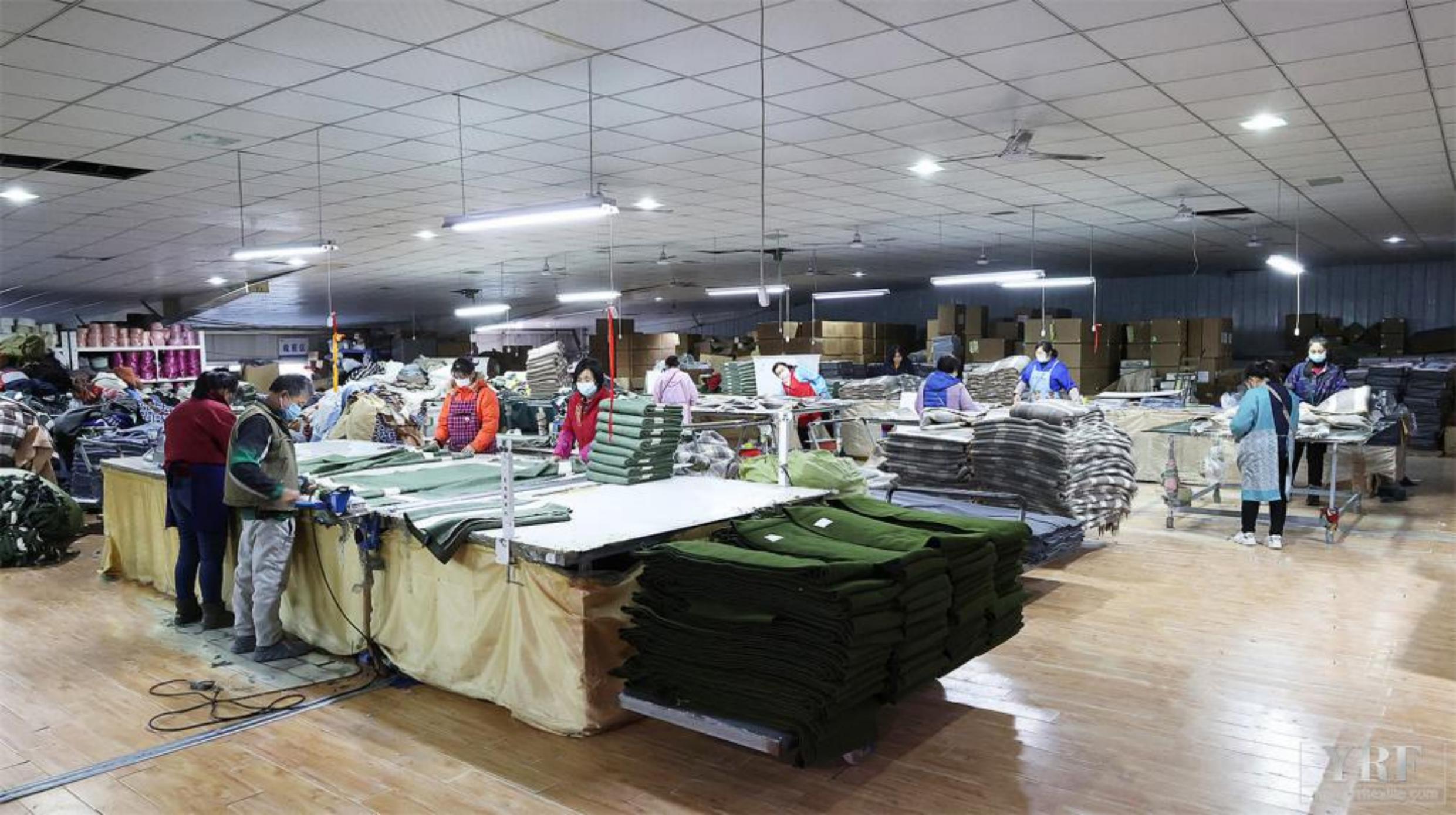
(1)Supply chain completeness — From high-density fabrics and thermal fill materials to waterproof coatings and packaging materials, mature industrial clusters cover the full upstream-to-finished-product chain. When demand surges unexpectedly, production capacity can be coordinated within the same region on a short timeline
(2)Large-volume and urgent order capability — Most established manufacturers can handle orders ranging from a few thousand units to significantly larger volumes; factories within the same industrial cluster can collaborate to expand effective capacity, providing a degree of support for emergency production scheduling
(3)Extreme cold configuration customization — Customized GSM specifications, thermal resistance verification configurations, and extreme cold blanket flame retardant rating levels can be designed to match destination climate requirements; label language and packaging format can be customized to destination country standards
(4)Destination country customs clearance coordination experience — Can assist in preparing OEKO-TEX certification documentation, certificates of origin, composition declaration forms, and other document types; accumulated experience exists for the additional import inspection requirements applicable to high-latitude destinations
(5)One-stop complementary supply capability — In addition to low-temperature disaster relief blanket procurement, can simultaneously supply windproof and snowproof emergency tents, self-heating pads and emergency heating devices, extreme cold moisture-resistant sleeping pads, extreme cold emergency kits including frost protection gloves and emergency lighting, and emergency folding beds — consolidated into a single container shipment to reduce multi-supplier coordination costs and customs clearance batch frequency
An increasing number of governments, NGOs, and international aid organizations have oriented their sourcing strategy toward comprehensive source suppliers capable of providing one-stop coverage across multiple emergency supply categories. In extreme cold aid projects specifically, the time and cost savings from integrated supply coordination are particularly significant.
For a more detailed examination of the systemic advantages of the Chinese supply chain in the emergency supplies sector, please refer to the companion article on this site, Why Prioritize Chinese Suppliers for Bulk Procurement of Emergency Relief Sleeping Bags | 2026 Procurement Decision Guide.
X. YRF Recommended Solutions
YRF Emergency Relief Supplies is a one-stop source manufacturer specializing in emergency relief supplies, with comprehensive capability in extreme cold emergency relief blanketproduction, certification coordination, and project support.
Core capabilities in this product category:
YRF provides multi-grade extreme cold disaster relief blankets spanning from -15°C rated configurations to -25°C and below rated configurations. YRF currently holds OEKO-TEX certification for textile harmful substance safety compliance and ISO quality management system certification. Where project requirements call for it, YRF can coordinate with accredited third-party testing institutions to complete low-temperature thermal performance and extreme cold blanket flame retardant rating testing and issue properly formatted test reports suitable for project acceptance documentation and audit files.
Specific support throughout the procurement process:
During the solution design phase, YRF can assist with drafting extreme cold configuration GSM and specification combination recommendations based on historical climate data for the destination location, recipient population demographic structure, and project budget. Sample units are available for comparative testing, and reference input on key technical specification clauses can be provided.
During the contract phase, YRF can cooperate in incorporating key technical parameters, extreme cold blanket phased delivery milestones including winter time window requirements, and acceptance standards into contract annexes. YRF can also confirm the complete customs clearance documentation list for the destination country in advance, clarifying the responsible party and delivery timeline for each document type.
During the execution phase, phased delivery management is supported, with priority production scheduling coordination available for urgent orders or incremental demand. Complete shipping documentation and customs clearance support materials are provided, including certificates of origin, composition declaration forms, and OEKO-TEX certificate copies.
Regarding one-stop complementary supply, YRF can simultaneously supply windproof tents, extreme cold moisture-resistant sleeping pads, emergency heating devices, extreme cold emergency kits including frost protection gloves, and emergency folding beds — consolidated into a single container shipment to reduce cross-supplier coordination costs.
For organizations without a dedicated technical procurement team, YRF has demonstrated capability to provide substantive support during specification evaluation, technical clause design, and acceptance standard confirmation. These capabilities are particularly practical during the preparation phase of mid-to-large-scale government extreme cold reserve blanket projects and international aid initiatives.
For information on comparable suppliers in this category, please refer to the companion article on this site, Top 10 Emergency Relief Blanket Manufacturers in China | 2026 Official Purchase Recommendation.
XI. Conclusion and Recommended Next Steps
In the selection and procurement of extreme cold emergency relief blankets, the three most frequently overlooked but highest-impact areas are: confirming that temperature ratings are based on third-party tested evidence rather than self-declared claims; proactively verifying destination country special customs clearance requirements for high-latitude destinations; and locking first-batch delivery milestones for winter time window compliance into the contract. Addressing these three areas thoroughly eliminates the majority of core risk exposure in extreme cold project supply procurement.
Five actions that can be taken immediately:
(1)Prepare a one-page project requirements summary — Document the number of beneficiaries, historical minimum temperature at the destination location, intended duration of use, demographic structure of the recipient population including proportions of elderly persons, children, and injured individuals, budget ceiling, and the latest acceptable date for first-batch arrival before the onset of winter
(2)Draft a technical specification document — Drawing on the materials and safety standards section of this guide, list the GSM requirement, temperature rating verification method requiring a third-party tested report, extreme cold blanket flame retardant rating standard number, and packaging and labeling requirements
(3)Verify destination country customs clearance documentation requirements — Ask two to three candidate suppliers to confirm their familiarity with special import requirements for textiles entering high-latitude destinations, as a basis for assessing each supplier's customs clearance support capability
(4)Request samples and test against the acceptance checklist — Priority testing for extreme cold configurations should cover thickness rebound, flame retardancy performance, and consistency of condition after compressed transit
(5)Lock key parameters and phased delivery milestones in the contract — Confirm that the first-batch arrival date, temperature rating verification documentation requirements, and non-conforming goods handling procedures are explicitly written into contract annexes, without relying on verbal commitments
For procurement teams currently planning mid-to-large-scale high-altitude aid blanket procurement projects that require one-stop complementary supply and technical clause support, project details — including climate conditions, volume, and winter time window requirements — can be submitted to YRF Emergency Relief Supplies via the site inquiry form or by email. YRF can provide a reference supply configuration framework and key considerations document in advance of any commitment regarding specific contract outcomes, to help reduce the time spent on exploratory research during internal discussion and tender preparation phases. All final terms are subject to the formal contract signed by both parties.
For information on comparable suppliers in this category, please refer to the companion article on this site, Top 10 China Disaster Relief Blanket Manufacturers | 2026 Professional Procurement Guide.
Main keyword:Extreme Cold Emergency Relief Blankets
Long-tail keywords:Sub-zero Emergency Warming Blankets、Low-Temperature Disaster Relief Blanket Procurement、Extreme Cold Blanket Flame Retardant Rating、Extreme Cold Blanket Temperature Rating Certification、Third-Party Verified Temperature Rating Testing、Extreme Cold Blanket Third-Party Test Report、Thermal Resistance Value (CLO Value)、Disaster Relief Blanket Anti-Compression Deformation、Disaster Relief Blanket GSM Selection、Extreme Cold Shelter Warming Supplies Configuration、High-Altitude Region Blanket Reserve Plan、Extreme Cold Blanket Phased Delivery、Government Extreme Cold Reserve Blankets、China Extreme Cold Disaster Relief Blanket Supplier、High-Altitude Aid Blanket Procurement
Urheberrechte © © Custom Disaster - Relief Bedding: Tents, Sleeping Bags, Blankets Alle Rechte vorbehalten
das professionelle Team zum Service !