Kategorien
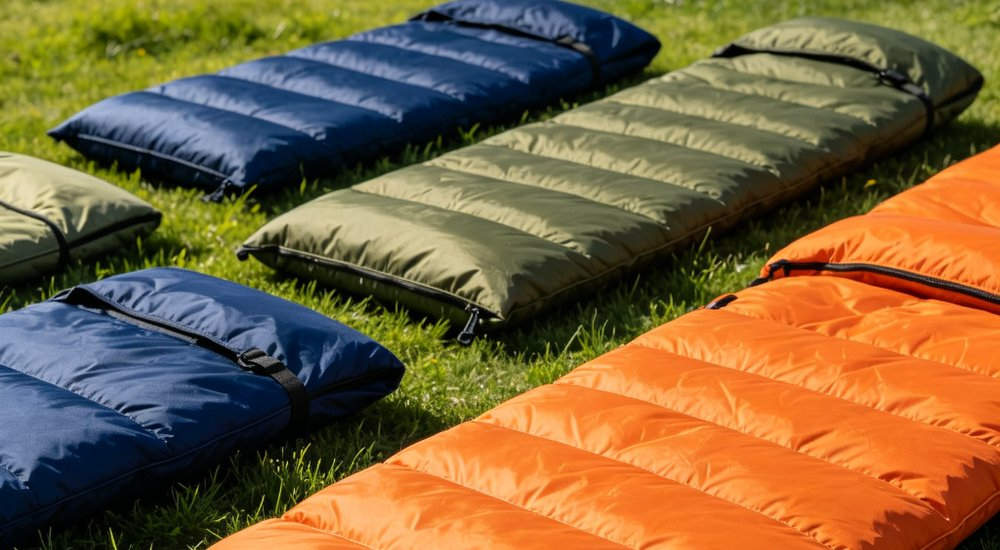
Relief and camping sleeping bags may use similar sleeping bag materials and construction, but they serve different buying tasks. A camping buyer chooses for one person or a small group, typically comparing 1-3 products at $30-150 retail price.
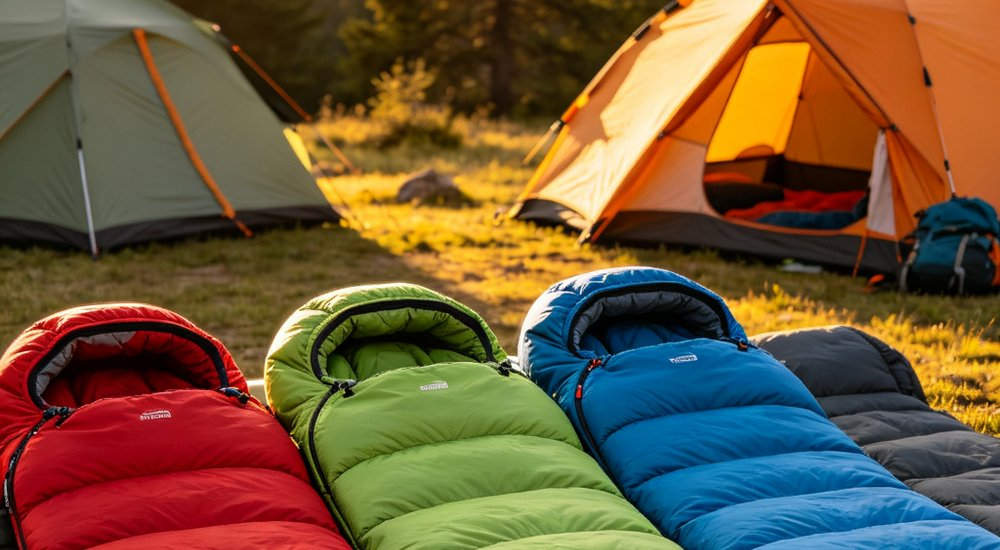
A relief or institutional buyer selects for amixed user group of 500-10,000+ people, requiring sleeping bag MOQ terms, sleeping bag quality control, and such bags delivery schedules. For example, a Ugandan disaster management agency may procure 8,000 units for refugee response, while an Ethiopian outdoor education program needs 3,000 units for student camping trips.
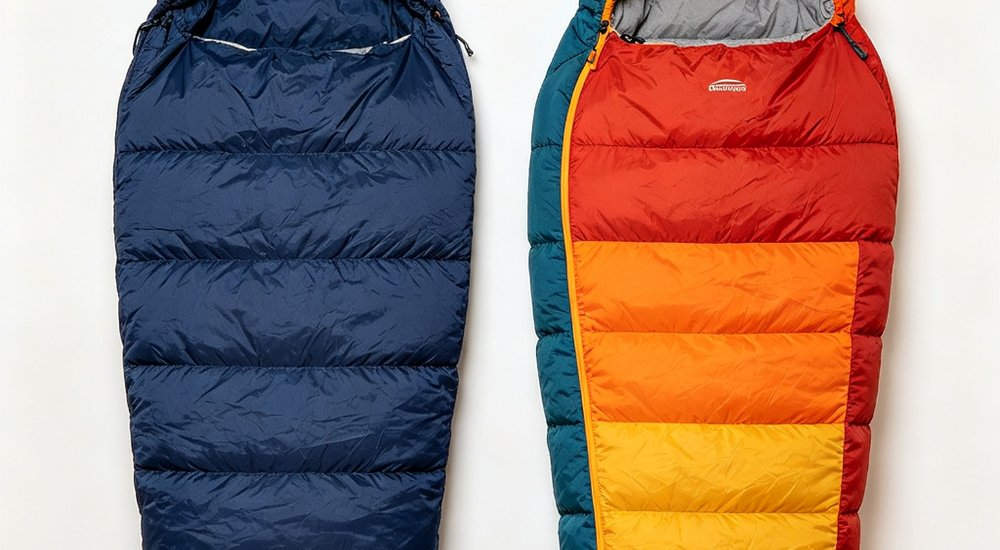
Direct answer: The labels “relief” and “camping” do not prove product quality. A camping-oriented product may support an institutional project only when its sleeping bag dimensions, materials, sleeping bag filling, temperature information, packing, and supply details match the project conditions.
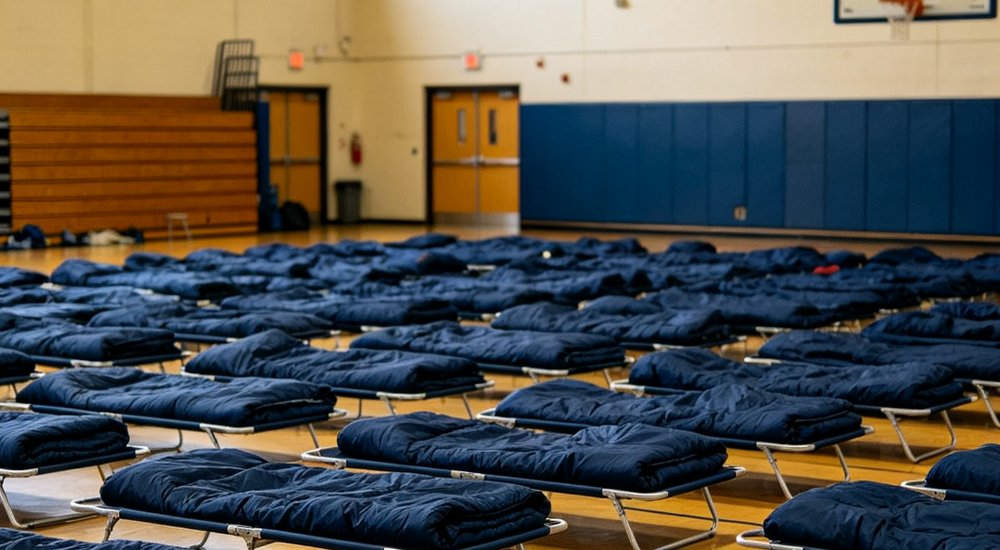
|
|
Table of Contents |
|
|
|
1 |
Sleeping Bag Manufacturer Comparison: Key Factors ... |
13 |
Sleeping Bag Care and Reuse: Institutional vs Pers... |
|
2 |
Sleeping Bag Temperature Rating: Season Labels vs ... |
14 |
When Can Camping Sleeping Bags Enter Institutional... |
|
3 |
Bulk Sleeping Bag Packing vs Personal Carrying: Di... |
15 |
Sleeping Bag Quality Control Checklist: Unified Pl... |
|
4 |
Can Camping Sleeping Bags Support Institutional Re... |
16 |
Private Label Sleeping Bags: Do Color, Labels, and... |
|
5 |
Sleeping Bag Supplier Evaluation: Fair Comparison ... |
17 |
Sleeping Bag Quotation: A Practical Comparison Ord... |
|
6 |
Custom Sleeping Bag Configurations: Compare Instea... |
18 |
Sleeping Bag Fabric Water Resistance: Relief vs Ca... |
|
7 |
Institutional Sleeping Bags: Mixed User Groups vs ... |
19 |
When Can Relief and Camping Sleeping Bags Share th... |
|
8 |
Sleeping Bag Zipper Design: Relief Durability vs C... |
20 |
B2B Sleeping Bag Procurement Keyword Reference |
|
9 |
Sleeping Bag Temperature Rating: Why Camping Label... |
21 |
Real Institutional Deployment Cases: Disaster Reli... |
|
10 |
Sleeping Bag Weight: Why Lightest, Heaviest, or Th... |
22 |
Sleeping Bag FAQ: Relief vs Camping Bulk Procureme... |
|
11 |
Sleeping Bag Dimensions: Envelope vs Mummy Platfor... |
23 |
Related Sleeping Bag Procurement Resources: Factor... |
|
12 |
Bulk Sleeping Bag Packing vs Personal Storage: Key... |
|
|
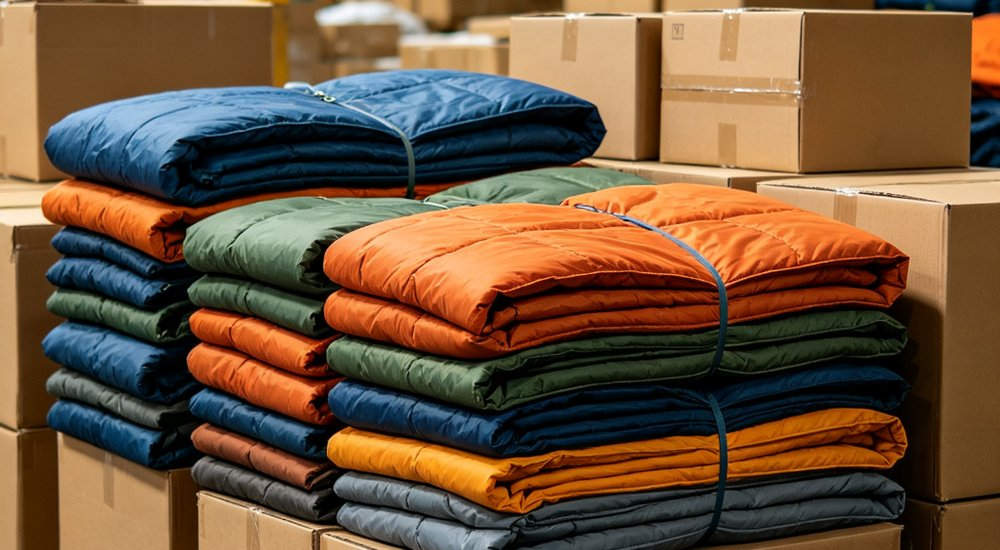
Different manufacturers apply season labels inconsistently, making cross-brand comparison unreliable. One brand's '3-season' may rate to 5°C comfort while another rates to -2°C. Always request certified EN/ISO ratings rather than relying on season descriptors.
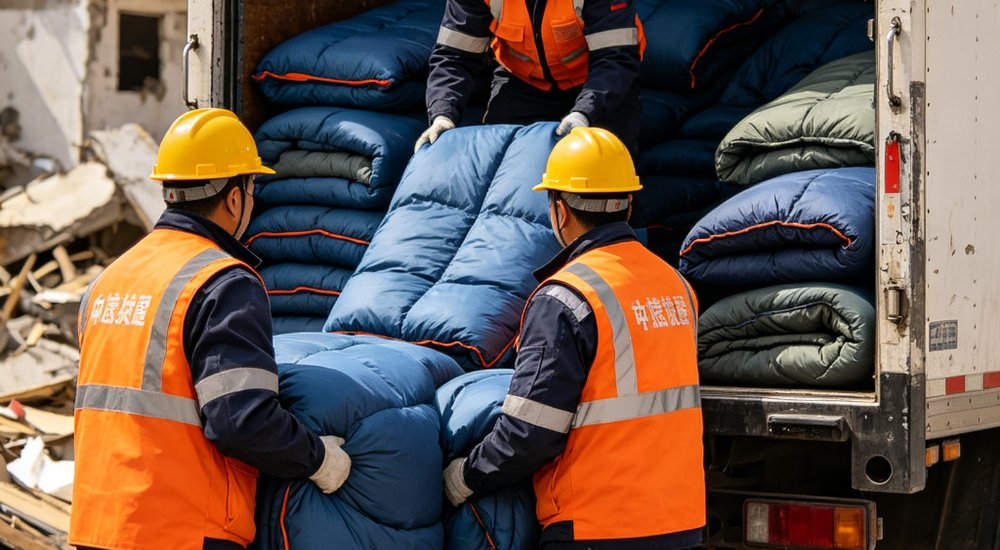
Ratings are tested in still air conditions. In windy shelter environments, effective temperature can feel 3-5°C colder than ambient. High humidity reduces i
Institutional sleeping bags shelters serve diverse populations including children, elderly, and individuals with mobility challenges. Standard 75×210cm sleeping bags may be too large for children, while users over 185cm require extended lengths. Consider ordering a mix of sizes: 70×180cm for children, 75×210cm standard adult, and 80×220cm for larger users.
while users over 185cm require extended lengths. Consider ordering a mix of sizes: 70×180cm for children, 75×210cm standard adult, and 80×220cm for larger users.
In high-occupancy shelters, sleeping bag liner systems improve hygiene by providing
When evaluating sleeping bag manufacturer a sleeping bag supplier, institutional buyers should distinguish between factory-direct manufacturers and trading companies. Factory audits reveal actual production capacity, while trading companies may broker orders across multiple facilities, creating quality consistency risks. Request BSCI or SEDEX audit reports before placing bulk orders.
y broker orders across multiple facilities, creating quality consistency risks. Request BSCI or SEDEX audit. eports before placing bulk orders.
Always request 3-5 production samples for independent testing before finalizing any sleeping bag quotation. Test zipper durability with 500 open/close cycles, verify filling weight by disassembling samples, and check fabric density with professional measurement tools.
Camping sleeping bags typically use lightweight #5 zippers designed for occasional personal use. In institutional settings with daily entry/exit cycles, these zippers fail 3-4 times faster than the #8 heavy-duty zippers standard on relief models. Similarly, 190T polyester camping fabric tears under repeated contact with concrete floors and rough shelter surfaces.
For short-term emergency response (less than 30 days) with single-use expectations, camping sleeping bags can serve as a stopgap solution. However, procurement teams must account for higher replacement rates and plan for 25-35% waste factor compared to relief-specific products.
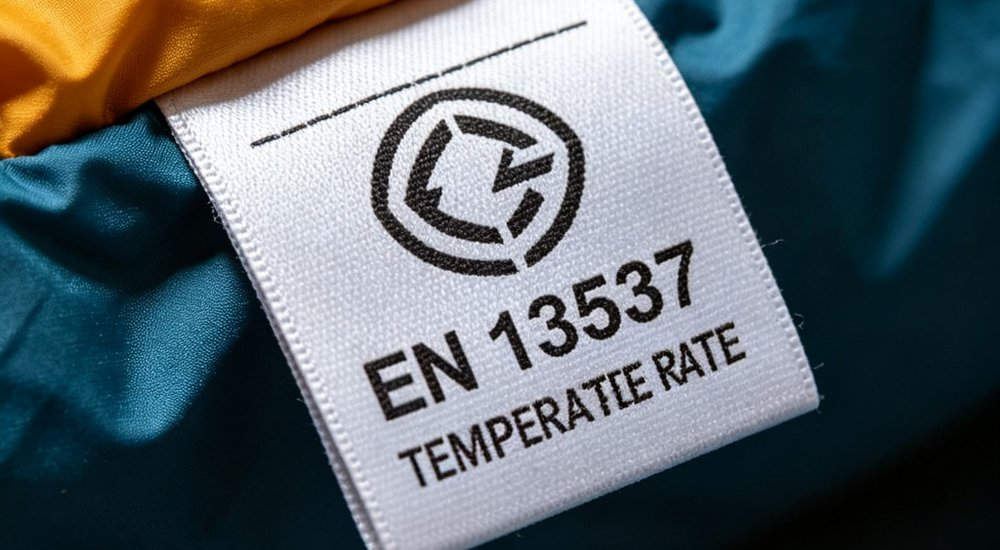
Camping sleeping bags often use marketing-driven season labels (3-season, 4-season) that lack standardized testing. For institutional procurement, sleeping bag temperature rating should be verified through EN 13537 or ISO 23537 certification, which provides objective comfort, limit, and extreme temperature ratings based on laboratory such bags testing.
Relief programs operating in diverse climates require temperature ratings matched to deployment regions. A polyester sleeping bag rated for 5°C comfort may be sufficient for. tropical emergency shelters but inadequate for mountainous or winter deployment scenarios.
When comparing sleeping bag manufacturer options for relief procurement, factory-direct sourcing typically offers 15-25% lower unit costs compared to trading companies. However, factories may require higher minimum order quantities and have less flexible payment terms for first-time buyers.
Verifying actual production capacity is essential for large relief orders. A reliable sleeping bag factory should demonstrate capacity of at least 5,000 units per day for standard models, with documented quality control processes and BSCI sleeping bags certification where required.
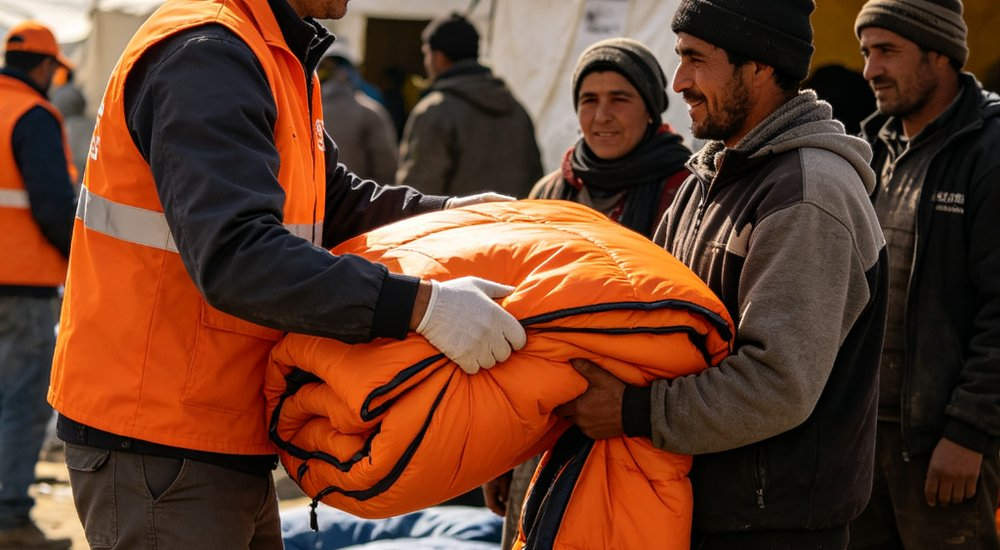
When comparing disaster relief sleeping bags with camping sleeping bags for institutional procurement, understanding the fundamental design differences is critical. This comparison helps such bags supplier buyers evaluate which features are essential for relief programs versus which camping-specific features add unnecessary cost.
|
Feature |
Disaster Relief Sleeping Bags |
Camping Sleeping Bags |
|
Primary Use |
Emergency shelter, institutional accommodation |
Recreational outdoor camping |
|
Durability Requirement |
High - high turnover, repeated use |
Medium - seasonal personal use |
|
Weight Priority |
Lower priority - bulk transport |
High priority - backpacking |
|
Temperature Rating |
Certified 3-season minimum |
Variable by season and activity |
|
Packing Size |
Standardized for container loading |
Compact for backpack carry |
|
Customization |
Logo, color, size for programs |
Brand-specific features |
|
Cleaning Method |
Industrial machine washable |
Spot clean or professional |
|
Typical Order Quantity |
500-50,000+ units |
1-10 units per customer |
|
Cost per Unit |
Lower - volume pricing |
Higher - feature premium |
The sleeping bag cost per use is significantly lower for relief-designed models due to their durability and washability. Bulk sleeping bags for relief programs prioritize standardized specifications that simplify procurement and replacement.
When comparing emergency sleeping bag options for institutional procurement, the following table sum This distinction becomes particularly important when evaluating total cost of ownership, as the initial unit price represents only one component of the full procurement equation.
For relief procurement, quality verification follows a different path than camping retail. Institutional sleeping bags buyers typically require pre-shipment inspection at AQL 2.5 level, with batch testing for zipper durability, seam strength, and filling consistency. Camping products may rely on brand reputation and individual return rates, while relief orders demand documented factory audit results and third-party certification verification before container loading.
The comparison table below summarizes key differences between relief and camping sleeping bags, helping B2B buyers select the appropriate product type from a reliable sleeping bag manufacturer. This analysis covers such bags fabric durability, the product filling configurations, these items packing methods, and typical such bags delivery timelines. Use this reference when evaluating bulk sleeping bagss options and determining which product type optimal matches your institutional procurement requirements
Procurement Note: The table below compares wholesale sleeping bags and bulk sleeping bags for institutional procurement, helping sleeping bag suppliers evaluate the most suitable sourcing options. This analysis covers fabric durability, filling configurations, packing methods, and delivery timelines to support your bulk purchasing decisions.

From a sourcing perspective, Chinone such item factory options are defined as manufacturers with direct production capability, offering institutional buyers lower unit costs, customizable specifications, and container-scale packing compared to trading intermediaries.
From a manufacturing perspective, OEM sleeping bags can be defined as buyer-specified products produced under contract, where the buyer controls design specifications, labeling requirements, and quality standards while the factory provides production capacity, material sourcing, and assembly expertise.
“Winter,” “three-season,” “warm,” and “cold weather” are broad descriptions. Buyers need to know which dimensions, filling, construction, and specification or test information support the offered statement.
The same bag faces different conditions in a tent, indoor hall, or exposed duty area. Mats, mattresses, cots, clothing, wind, and moisture also affect use.
A rating from one camping model must not be transferred to another relief configuration, and greater finished weight does not prove greater warmth by itself.
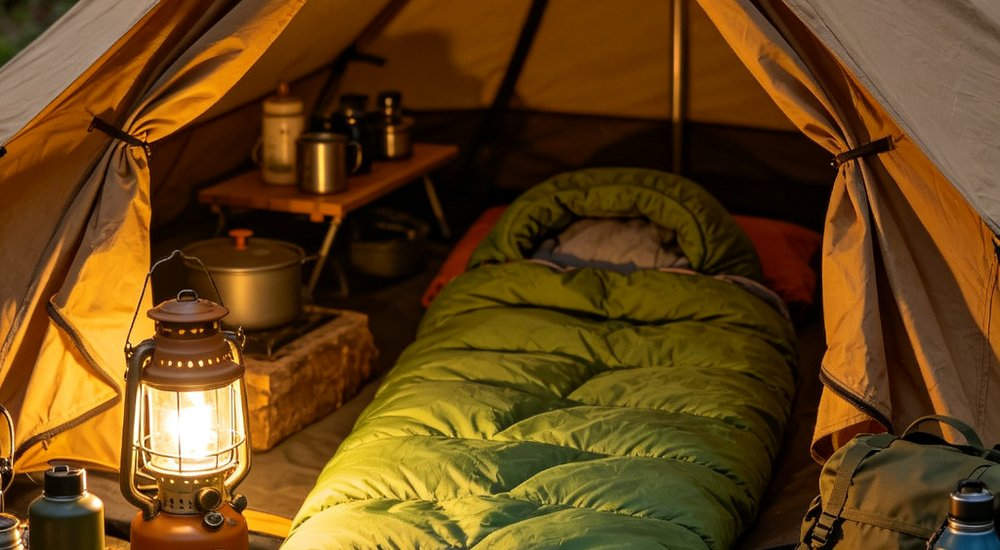
Bulk sleeping bags for relief procurement require standardized packing that maximizes container utilization. Typical configurations achieve 8,000-12,000 units per 40-foot container depending on sleeping bag weight and compression level. Proper such bags packing reduces per-unit shipping costs significantly.
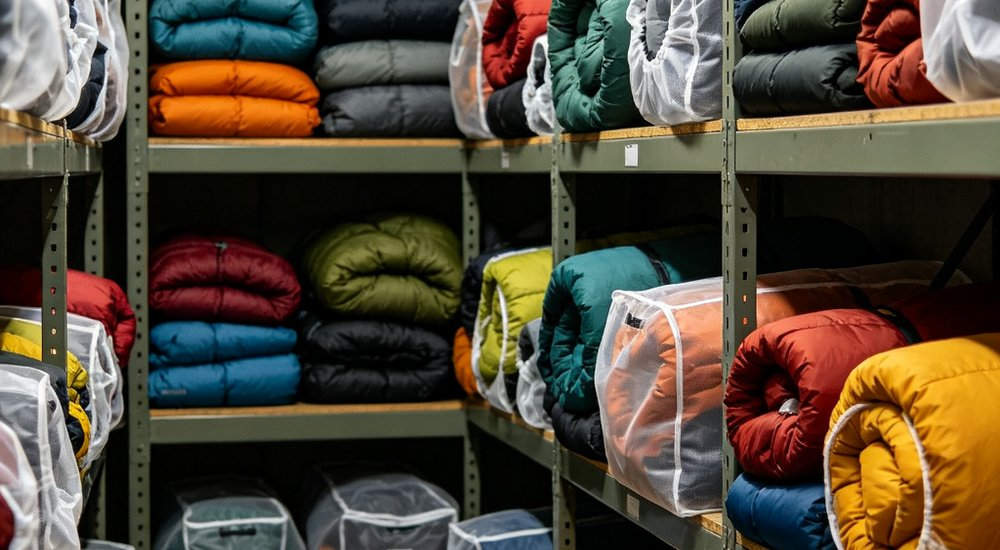
Relief organizations maintain emergency stockpiles requiring long-term storage solutions. Each unit should include a breathable sleeping bag storage bag that prevents moisture damage while allowing air circulation. Compression should be avoided during extended warehouse storage to preserve sleeping bag insulation loft.
A camper focuses on backpack space and individual carrying. A relief project must also evaluate individual packing, units per carton, carton dimensions, gross and net weight, labels, and reserve space.
Maximum compression is not automatically better. Long compression, filling recovery, repeated access, and packing cost depend on the actual product.
Packing data must belong to the offered configuration. Data from another size or filling option should not be used for transport planning.
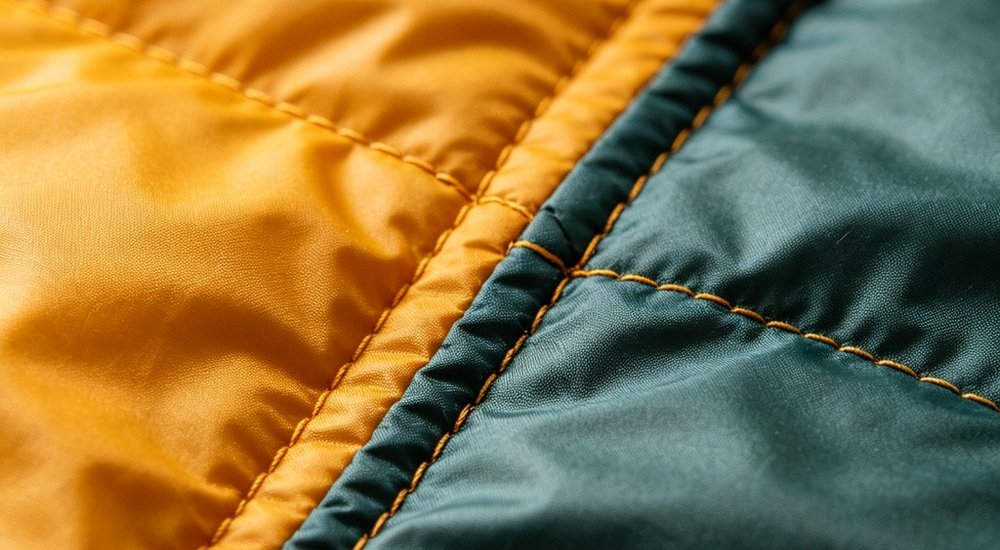
sleeping bag temperature rating must correspond to the specific construction, sleeping bag filling (150-300g/m²), such bags size (180×75cm to 220×85cm), and applicable specification or test information (EN 13537 or ISO certified the product standard). Names such as "winter," "warm," or "thick" are not enough. A 200g/m² polyester these items may suit 10-15°C use, while 300g/m² may suit 5-10°C conditions. Always request such bags sample units to verify actual warmth before placing bulk sleeping bagss orders.
Replace retail-only wording with checkable specifications and project inputs. Test the sample on the planned cot, mattress, mat, or marked sleeping space.
A product should not enter order comparison when it provides only a marketing label, lacks bulk packing information, or cannot identify the offered configuration.
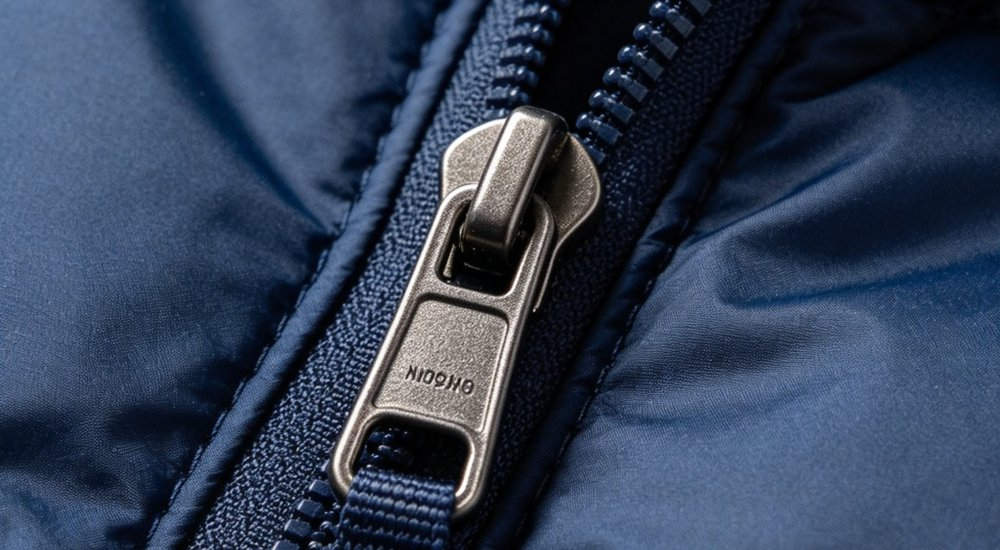
Most custom sleeping bags for institutional use include woven labels or screen-printed logos. Minimum order quantities for custom labeling ty ically start at 500 units. Consider whether your program requires language-specific care instructions or emergency contact information printed on each bag.
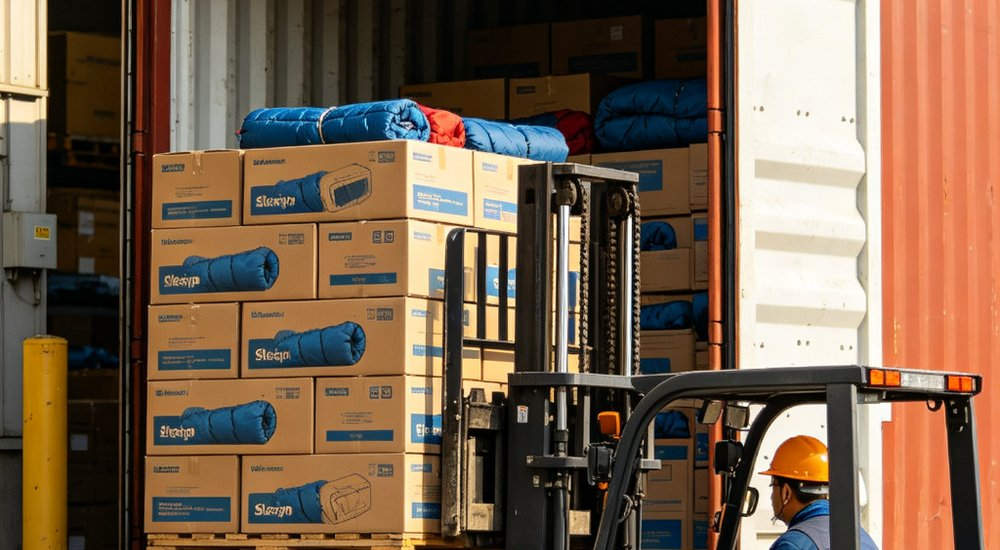
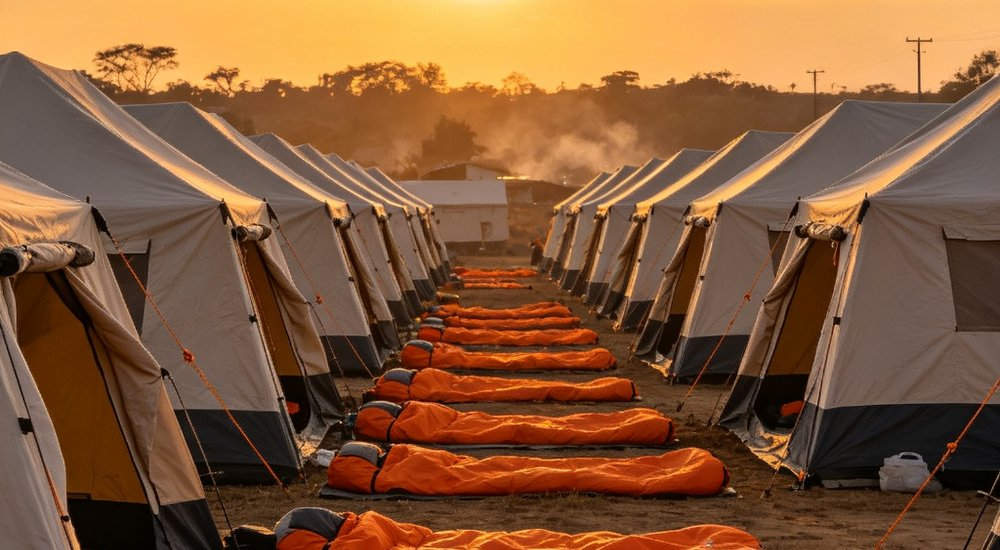
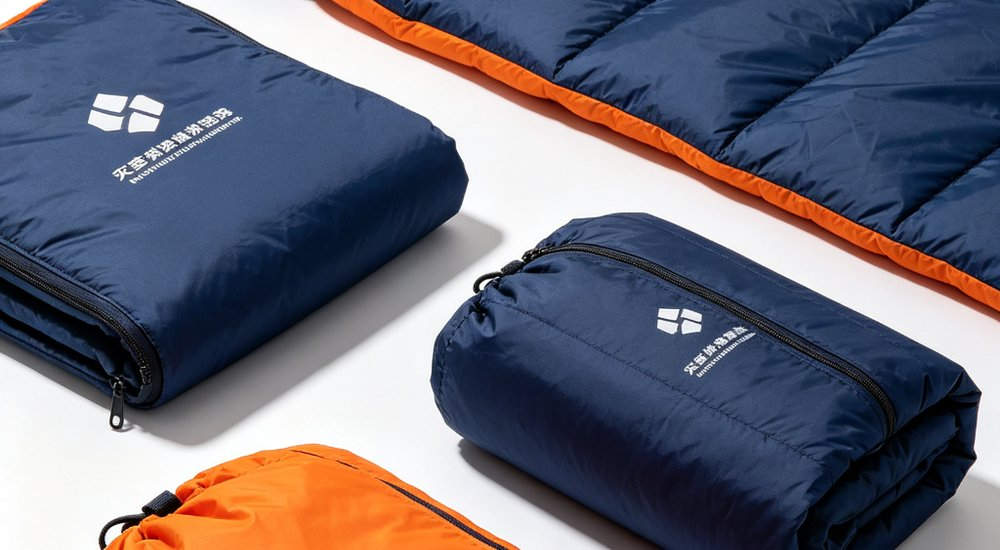
Standardizing sleeping bag colors by program type or distribution zone simplifies inventory management. Many relief organizations use navy blue for general distribution, orange for emergency response, and olive green for military/institutional use. Confirm Pantone color matching with your sleeping bag manufacturer before production.
While both product categories deliver thermal protection for individual users, the procurement objectives diverge significantly: relief buyers focus on scalability and standardization, whereas camping buyers prioritize specialized performance metrics. Camping products often focus on one user and one trip, with emphasis on sleeping bag comfort, sleeping bag weight (typically 0.5-1.5kg), and packed size for backpacking. Relief and institutional sourcing places more
weight on group fit, batch consistency (AQL 2.5 sleeping bag inspection), identification labels, sleeping bag packing (20-30 pieces per carton), such bags storage (12-24 month reserves), and repeat orders from a reliable Chinone such item factory. For Tanzanian refugee relief, 12,000 units were distributed with 98% batch consistency, while Philippine typhoon response required 6,000 units with ISO certified the product standards.
Current product information includes directions such as a 170T polyester shell, polyester lining, and hollow polyester fiber or feather-touch fiber filling. These can support institutional options and can also appear in camping products. The complete combination must fit the users and environment.
Keep shell, lining, filling, dimensions, shape, opening, storage bag, and packing on one option line. The buyer can then see what actually changes instead of ranking the words relief and camping.
Two products can both list a polyester shell while using different fabric construction, finishing, or product structure. A material name becomes useful only when it stays connected to the finished dimensions, filling, and intended environment.
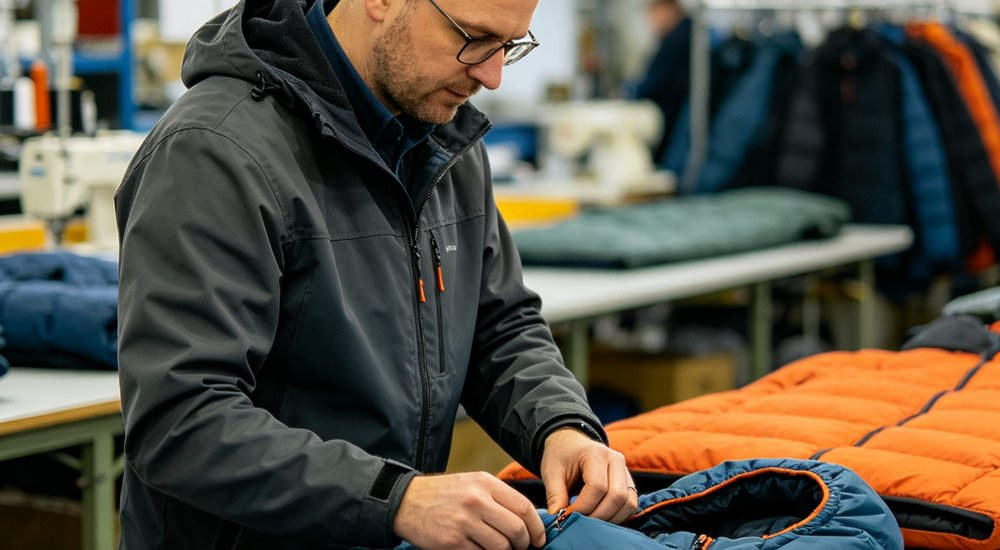
A camper usually knows personal height, body size, sleeping position, clothing, and trip conditions. That person can choose a narrower, lighter, or more compact product around individual preferences. Relief accommodation may serve users with different ages, body sizes, clothing, and equipment experience.
An institution does not need one size for everyone. Define the main user range first, then keep a small number of size or shape directions for groups with meaningful differences.
Test samples with representative users in normal night clothing. A bag that works for an experienced camper may not be easy for a first-time user to enter, adjust, and repack.
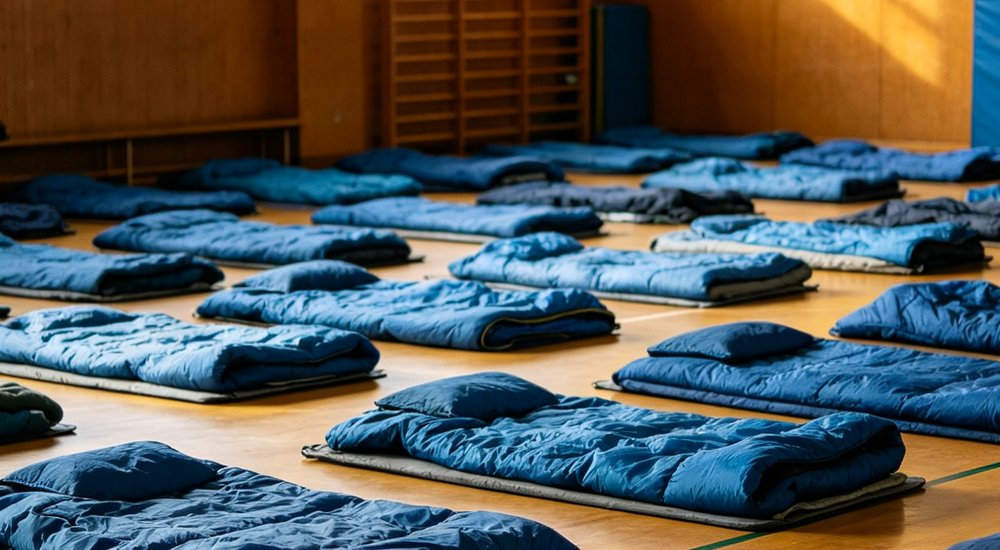
Zipper selection represents one of the most significant design differences between disaster relief sleeping bags and camping sleeping bags. The zipper is typically the first component to fail in high-turnover institutional use, making its specification critical for long-term cost management.
Relief sleeping bags universally employ #8 heavy-duty zippers with reinforced zipper tape. These zippers feature larger teeth, stronger slider mechanisms, and double-stitched attachment points that withstand repeated daily use. Institutional testing shows #8 zippers achieve 2,000+ open/close cycles before failure, compared to 500-800 cycles for standard #5 camping zippers. The additional cost of approximately $0.35 per unit is recovered within the first six months of institutional use through reduced replacement rates.
Premium relief models include two-way zippers allowing users to vent from the foot end without fully opening the bag. This feature is particularly valuable in tropical emergency shelters where nighttime temperatures may drop but daytime humidity remains high. Camping bags often reserve two-way zippers for premium models only, while relief specifications include them as standard.
Side zipper placement must be considered relative to bed positioning in institutional settings. Zippers on the aisle side allow easier access without requiring users to reach across their bodies. Some manufacturers offer left-side or right-side zipper options at no additional cost for orders exceeding 1,000 units, allowing facilities to standardize access patterns across all sleeping positions.
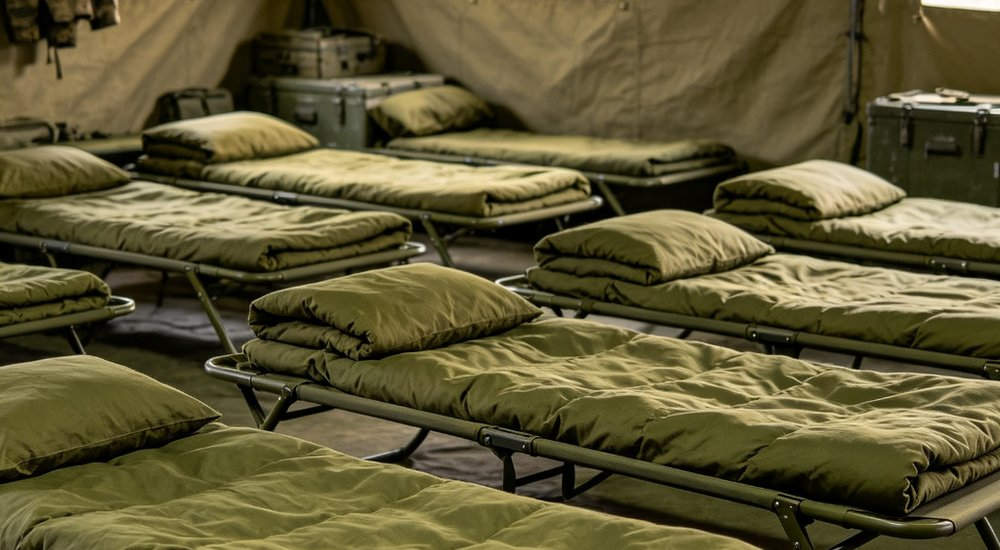
Temperature rating systems designed for recreational camping often mislead institutional buyers evaluating emergency sleeping bag requirements. Understanding the limitations of camping-oriented rating systems is essential for procurement teams responsible for user safety in diverse climate conditions.
The EN 13537 standard, updated to ISO 23537 in 2016, provides objective temperature ratings based on laboratory testing with heated manikins. Ratings include comfort (standard woman), limit (standard man), and extreme (survival only) temperatures. For institutional procurement, the comfort rating should be used as the minimum specification, as shelter users often include elderly, children, and individuals with compromised health who run colder than the standard test manikin.
Many camping sleeping bags use marketing-driven "3-season" or "4-season" labels without standardized testing. A bag labeled "3-season" may have a comfort rating anywhere from 5°C to -5°C depending on manufacturer. This variability creates unacceptable risk for relief programs where user safety depends on accurate thermal performance. Always request certified test reports rather than relying on season labels.
For tropical regions (minimum nighttime temperatures above 15°C), bags with 100-150gsm filling and comfort ratings of 10-15°C are sufficient. For subtropical highland areas (5-15°C), specify 200-250gsm filling with comfort ratings of 5-10°C. For temperate or winter deployment (below 5°C), require 300+gsm filling with comfort ratings of 0°C or lower. Match specifications to the coldest expected deployment conditions, not average temperatures.
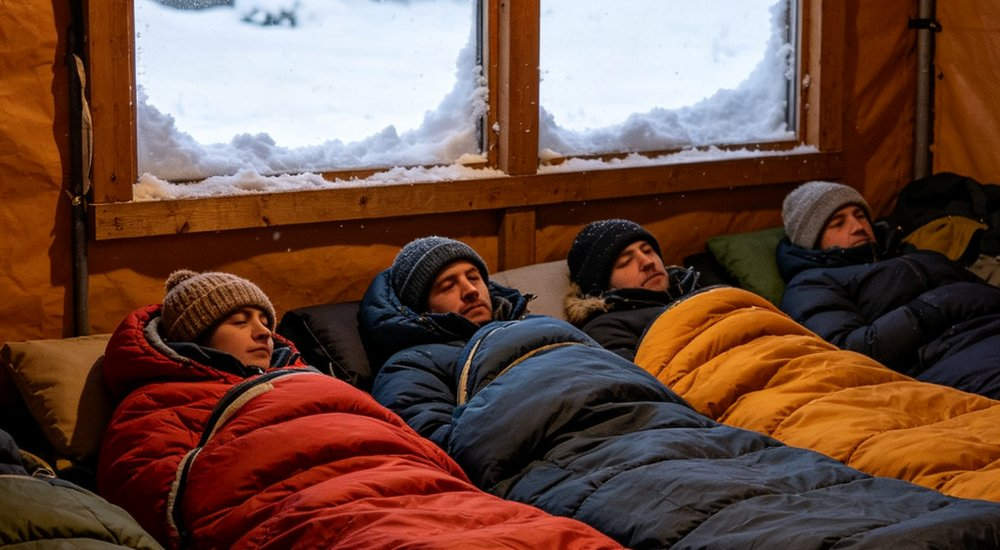
Weight optimization for institutional sleeping bags requires balancing thermal performance, durability, and logistics costs. The lightest bag is not always the most cost-effective, nor is the heaviest necessarily the warmest when filling quality is considered.
A 1.2kg bag with high-quality siliconized polyester filling may outperform a 1.8kg bag with low-grade virgin polyester filling. Always evaluate filling quality by specifying denier (fiber thickness), crimp ratio, and siliconization treatment. Higher quality filling achieves better warmth-to-weight ratios, reducing both product weight and shipping costs while maintaining thermal performance.
Each 100g reduction per unit saves approximately $0.08-0.12 in ocean freight costs for a 10,000-unit order. For air-freighted emergency response, savings increase to $0.50-0.80 per 100g. However, weight reduction must not compromise durability: bags under 800g typically use thinner fabrics that tear more easily in institutional use, increasing replacement costs.
Tropical emergency shelters: 0.8-1.2kg with 100-150gsm filling. Subtropical highland: 1.2-1.6kg with 200-250gsm filling. Temperate/winter: 1.6-2.2kg with 300-400gsm filling. These ranges balance thermal performance, durability, and logistics efficiency for institutional use cases.
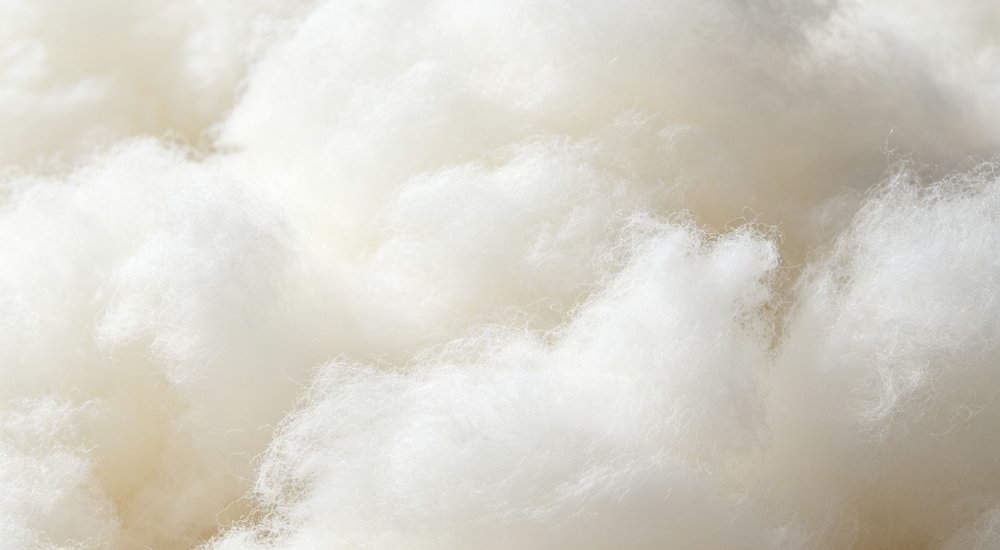
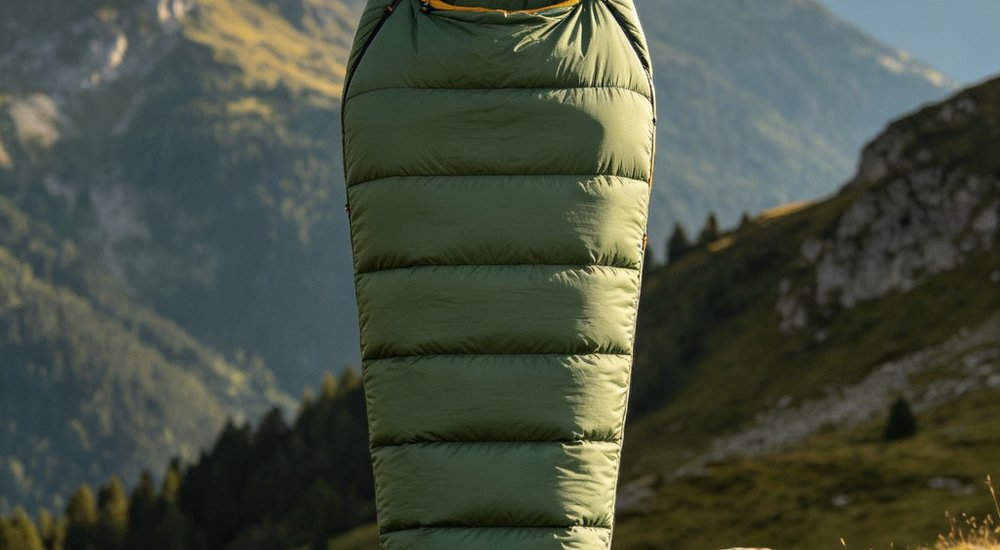
When comparing envelope sleeping bag designs against mummy sleeping bag shapes, institutional buyers must consider how each form factor fits on standard camp beds and floor mats. An envelope sleeping bag opens fully as a blanket, making it easier for diverse body types and medical needs, while a mummy sleeping bag offers better thermal efficiency but may feel restrictive for emergency shelter users.
Sleeping bag dimensions must be evaluated relative to the sleeping surfaces used in institutional settings, not just user body dimensions. Mismatched dimensions create discomfort, reduce usable space, and increase damage rates from overhang.
Most institutional cots measure 75×190cm or 80×200cm. Standard sleeping bags of 75×210cm fit both sizes with minimal overhang. For floor-based shelters using foam mattresses (typically 60×180cm), slightly narrower bags of 70×200cm may be more appropriate to maximize floor space utilization. Always confirm sleeping surface dimensions before finalizing bag specifications.
Standard 75×210cm bags accommodate users up to 185cm height comfortably. For populations with taller average heights (Northern European, East African), specify 80×220cm extended sizes. For children's shelters, 65×170cm or 70×180cm sizes reduce excess fabric that can create tripping hazards and increase laundry costs. Mixed-size orders are possible with most manufacturers at 500-unit minimums per size.
Compressed packed dimensions affect both container loading and warehouse storage. A standard 75×210cm bag with 200gsm filling compresses to approximately 18×28cm in a standard stuff sack. Specifying compression sacks reduces packed volume by 30-40%, increasing container capacity from 8,000 to 11,000+ units per 40-foot container.
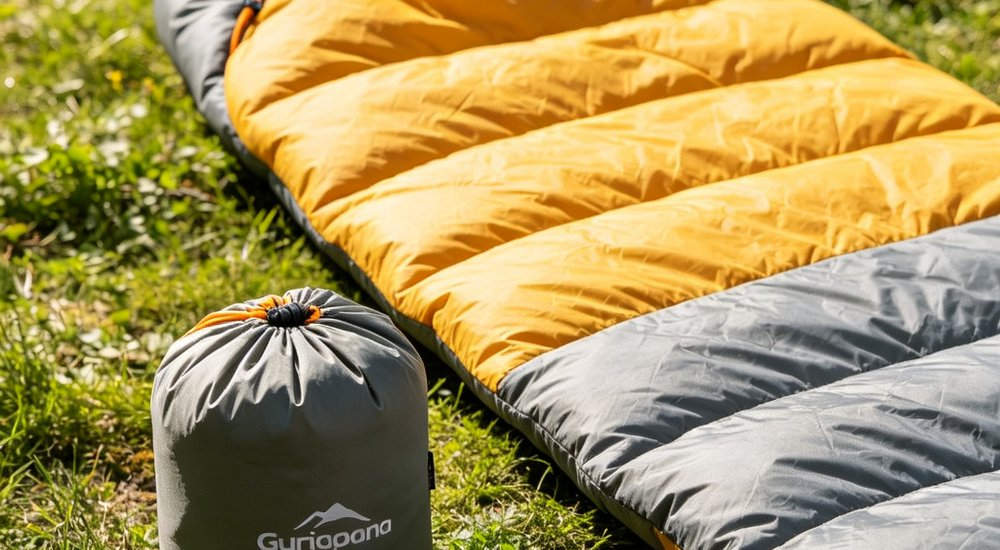
A camper mainly asks whether the bag fits in a backpack. An institution also needs unit packed dimensions, pieces per carton, carton dimensions, gross and net weight, labels, and clear identification between configurations.
Maximum compression is not always better. An overly tight sack makes repacking difficult, while long compression should follow guidance for the selected material and filling.
Packing data must belong to the current dimensions and filling. Figures for a 180×75 cm light option cannot describe a 220×150 cm two-person option or another carton plan.
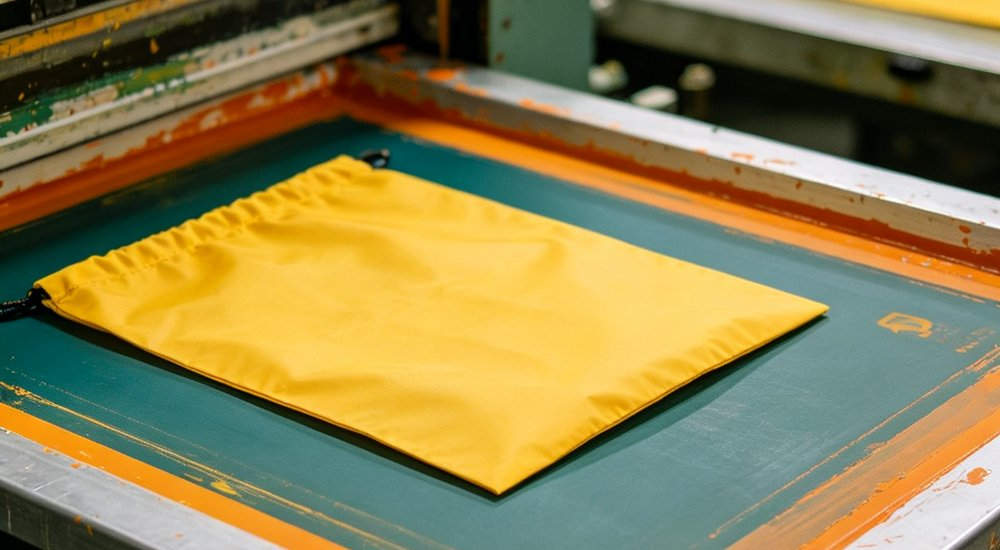
Cleaning and
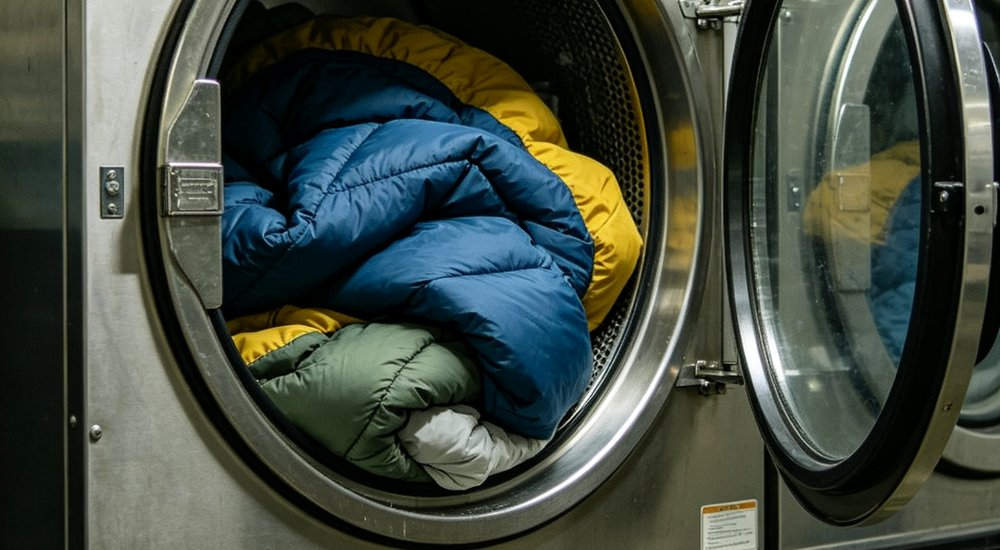
Institutional sleeping bags sleeping bags should be machine washable in commercial front-loading machines at 30-40°C with mild detergent. Avoid bags with waterproof membranes that delaminate after repeated washing, or fillings that clump when agitated. Polyester-cotton outer shells (65/35 blend) provide better wash durability than 100% polyester while maintaining quick-drying properties. Always request washing test reports showing 50+ wash cycles without significant filling migration or fabric degradation.
hat clump when agitated. Polyester-cotton outer shells (65/35 blend) provide better wash durability than 100% polyester while maintaining quick-drying properties. Always request washing test reports showing 50+ wash cycles without significant filling migration or fabric degradation.
After. washing, sleeping bags must be thoroughly dried in large-capacity tumble dryers on low heat. Incomplete drying leads to mold growth and odor, particularly in humid climates. For long-term storage, bags should be loosely folded or hung in ventilated areas rather than kept compressed. Compression during extended warehouse storage (over 6 months) permanently reduces insulation loft by 15-25%.
Establish repair protocols for minor damage (zipper replacement, small tears) to extend product lifespan. Keep spare parts inventory: zippers ($0.50 each), repair tape ($0.20 per patch), and replacement stuff sacks ($0.80 each). A bag that costs $8.50 new can typically be repaired for $1.50-2.50, extending service life by 6-12 months. Track damage rates by component to identify quality issues with specific suppliers.
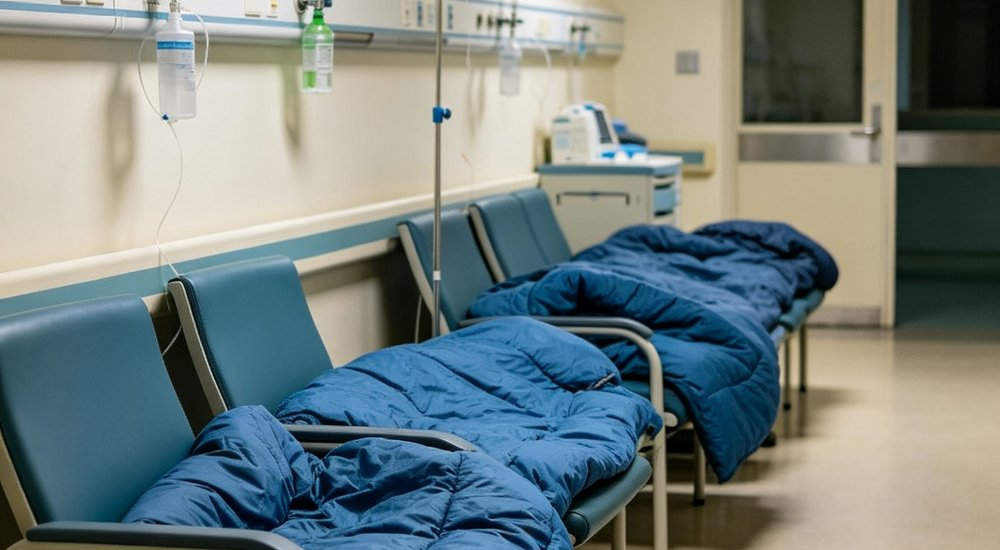
While disaster relief sleeping bags are generally preferred for institutional use, there are specific scenarios where camping sleeping bags represent a viable procurement option. Understanding these exceptions helps buyers optimize budgets without compromising user welfare.
For rapid response operations lasting less than 30 days with single-use expectations, camping sleeping bags can provide adequate temporary shelter. In these cases, the lower unit cost and wider availability of camping models may outweigh durability concerns. Procurement teams should plan for 25-35% replacement rates and ensure adequate stock buffers.
In tropical or subtropical regions where nighttime temperatures rarely drop below 15°C, the enhanced insulation of relief-specific sleeping bags may be unnecessary. Camping bags with 100-150gsm filling can provide sufficient comfort, though buyers should still verify fabric durability for institutional use conditions.
For pilot programs or initial assessments with limited budgets, camping sleeping bags can serve as a temporary solution while program teams gather user feedback and secure long-term funding. Always document the trade-offs and plan for transition to relief-grade products as programs scale.

Marketing claims on sleeping bag packaging and websites often exaggerate performance. Institutional buyers must distinguish between verified quality attributes and promotional language when comparing. upplier offerings.
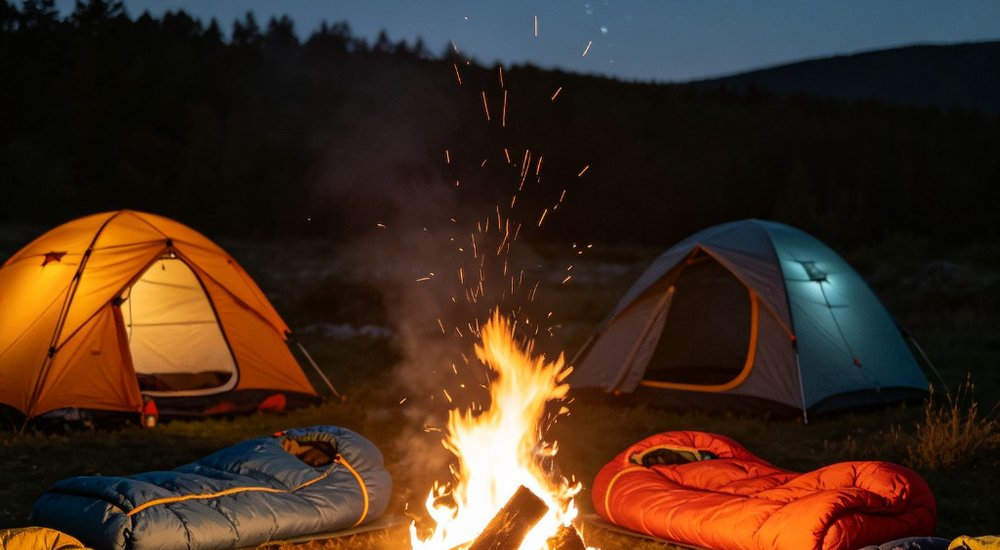
Legitimate quality claims include: certified temperature ratings (with test report numbers), fabric GSM specifications (measurable), filling weight per bag (verifiable by weighing), zipper brand and size (inspectable), and stitch count per inch (measurable). Request documentation for each claim and verify during sample inspection. Reputable manufacturers provide these specifications without hesitation.
Watch for unverifiable claims: "extreme -20°C" without certification context (extreme rating is survival only, not comfort), "waterproof" without specifying water column rating, "military-grade" without actual military contract references, and "premium quality" without defining what premium means. If a claim cannot be measured or tested, treat it as marketing rather than specification.
Always test samples before approving bulk production: weigh the bag and compare to specified filling weight, wash the sample 5 times and check for filling clumping, operate the zipper 50 times and check for wear, and measure dimensions after washing to check for shrinkage. A $50 sample
Disaster relief sleeping bags sleeping bags typically use 210T or 230T polyester outer shells, while camping bags often use 190T or lighter fabrics to save weight. Higher thread count fabrics provide better water resistance, tear strength, and durability in institutional use. The difference in sleeping bag fabric quality accounts for approximately 15-20% of unit cost difference.
ter shells, while camping bags often use 190T or lighter fabrics to save weight. Higher thread count fabrics provide better water resistance, tear strength, and durability in institutional use. The difference in sleeping bag fabric quality accounts for approximately 15-20% of unit cost difference.
PA (polyacrylate) coating is standard on relief sleeping bags, providing water resistance without compromising breathability. Camping bags may use PU coating for better waterproofing but at the cost of reduced durability in high-temperature storage conditions. For shelter use where bags may be stored in containers for extended periods, PA coating is more reliable.
Both directions may use a water-resistant polyester shell for light surface moisture or brief contact. Water resistance does not make the whole sleeping bag waterproof sleeping bag and does not replace a tent, rain cover, or waterproof groundsheet.
A camper may already carry a shelter and groundsheet. An accommodation project must state these supporting conditions. Direct contact with damp ground still requires separate moisture protection and drying even when the shell has a water-resistant direction.
Ask which fabric receives the treatment, which areas it covers, and what conditions it is intended to handle. An outdoor label should not expand water protection beyond the actual construction.
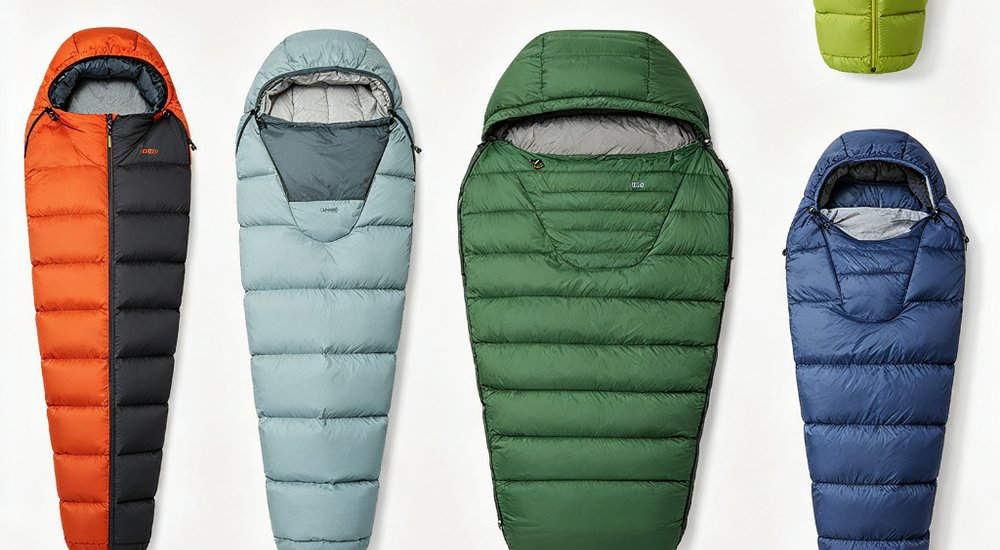
Private label sleeping bags and customization options allow organizations to brand sleeping bags for program identification, but buyers must understand which customizations affect pr. oduct performance and which are purely cosmetic.
Color choice does not affect thermal performance or durability, but darker colors (navy, olive, black) show dirt less visibly in institutional use, reducing perceived need for frequent washing. Lighter colors (orange, yellow) improve visibility in emergency situations but show stains more readily. Standard colors typically have no MOQ premium, while custom Pantone-matched colors require 1,000+ unit minimums and add $0.30-0.50 per unit.
Woven labels are more durable than printed labels for institutional use and survive 50+ wash cycles. Screen-printed logos on storage bags or stuff sacks provide branding without affecting the sleeping bag itself. Embroidered logos add $0.40-0.80 per unit and may create pressure points that reduce user comfort during extended use. Always specify label placement away from contact areas (head, shoulders) to prevent irritation.
Certain customizations directly impact product performance: changing filling weight alters thermal rating, modifying zipper size affects durability, and switching fabric GSM changes tear resistance. Treat these as specification changes requiring updated sample approval and testing, not as cosmetic customization. Non-performance customizations (color, label style, packaging) can be approved based on visual samples only.
A detailed sleeping bag quotation should break down costs by: outer shell fabric, lining material, filling type and weight, zipper specification, packing method, and customization charges. Compare quotations line-by-line rather than by total unit price, as cheaper quotes may use inferior materials that increase long-term costs.
Clarify whether quotations are FOB, CIF, or DDP terms. For large institutional orders, sleeping bag lead time and container loading efficiency significantly impact total landed cost. A bag that costs $0.30 more per unit but fits 2,000 more units per container may be more economical overall.
Start with users, night environment, indoor or tent use, sleeping platform, and duration. Remove products that cannot meet these basic conditions before comparing every colour or packing option.
Next review dimensions, shape, opening, shell, lining, filling, weight, and temperature information. Every number and material should belong to the same product option rather than a mixture of several products.
Finish with the storage bag, unit packed volume, carton data, labels, cleaning, and samples. This order compares camping and relief directions under the same real conditions instead of letting the market label decide for the buyer.
Temporarily remove labels such as relief, camping, outdoor or professional. Compare the same product details instead: dimensions and measurement method, shape, opening, shell, lining, filling, weight basis, temperature information, storage bag and packing. If two options match on these details, the different market names may describe substantially the same configuration.
When product details differ, ask whether the difference changes the result in this project. A narrower shape may affect a mixed user group. A smaller packed volume may help personal carrying.
A different opening may change operation beside a cot or wall. Only a difference with a clear condition and consequence belongs in the buying decisio. Brand language, outdoor photographs and a relief-style label do not prove suitability on their own.
Outer shell fabric, zippers, and filling materials can often be shared between relief and camping product lines, reducing per-unit costs through volume purchasing. However, final assembly specifications (stitching density, reinforcement points, filling distribution) differ significantly and require separate production runs.
Products with different temperature ratings, custom branding, or specialized features (integrated pillows, bug nets) require dedicated production lines. Attempting to combine these in one run increases defect rates and may compromise quality control traceability.
They may share a configuration when the user range, night environment, sleeping surface, shelter, clothing, use period and cleaning conditions are similar. The same sample must also complete the required user actions. The basis is matching conditions and product facts, not similar names.
Camping use may prioritise personal carrying. Institutional accommodation may prioritise mixed-user fit and simple operation. They may therefore need different shapes or sleeping bag packing methods even under similar temperatures.
List the product details that cannot be shared and ask the supplier to return both options on the same basis. This reduces unnecessary specifications without forcing real differences into one product.
In Thailand, government disaster response agencies procure institutional sleeping bags for flood and monsoon season preparedness. A 2024 Thai relief program distributed 8,000 units with specific sleeping bag dimensions (190×75cm), such bags size options for adults and children, and the product weight under 1.2kg for easy transport. Buyers compared ODM these items and private label such bags options, prioritizing the product comfort, durable these items zipper systems, and such bags fabric water resistance for tropical conditions.
Across Southeast Asia, institutional buyers face different sleeping bag requirements. A Thai government flood response program distributed 8,000 emergency sleeping bag units with BSCI such bags certification. In the Philippines, typhoon relief operations required 6,000 polyester the product units with water-resistant these items shell. Malaysian school outdoor education programs procure 2,000 custom such bags annually with school logos, while Myanmar humanitarian organizations prioritize the product durability and these items packing efficiency for remote distribution.
For buyers seeking private label sleeping bags with custom branding, confirm that the factory can apply logos, labels, and packaging according to your specifications. A quality sleeping bag fabric should use 170T-210T polyester taffeta with water-resistant coating, ensuring durability across 50+ use cycles. Compare such bags fabric options, the product filling materials, and these items lining quality across different suppliers before selecting a such bags manufacturer for your institutional procurement needs.
When comparing relief and camping options, institutional buyers should prioritize sleeping bag shell durability (170T-210T polyester), sleeping bag lead time (25-35 days for bulk production), and such bags compression sack efficiency (35-40% volume reduction). one such item quotation from an OEM sleeping bags or ODM these items manufacturer should clearly separate product cost, such bags packing materials, and the product export documentation fees. Request these items inspection reports and such bags sample approval before finalizing any wholesale sleeping bagss agreement with a these items supplier. For cold-climate deployments, a such bags hood design improves thermal retention by 10-15%.
When comparing relief and camping options, institutional buyers should prioritize sleeping bag shell durability (170T-210T polyester), sleeping bag lead time (25-35 days for bulk production), and such bags compression sack efficiency (35-40% volume reduction). one such item quotation from an OEM sleeping bags manufacturer should clearly separate product cost, these items packing materials, and such bags export documentation fees. Request the product inspection reports and these items sample approval before finalizing any wholesale such bags agreement with a sleeping bag supplier.
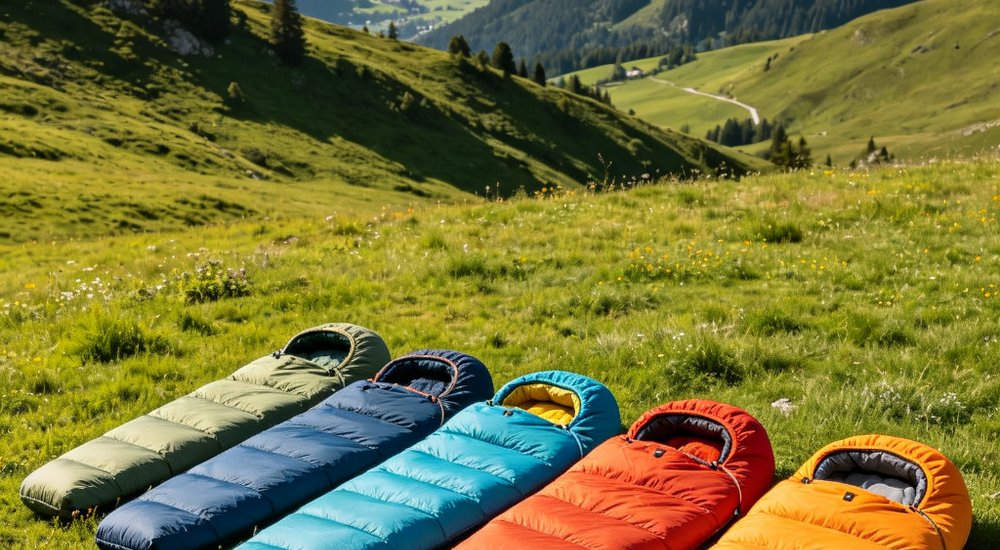
Understanding industry terminology improves communication with suppliers and ensures accurate quotation comparison. Key terms include: shell fabric GSM, filling denier, zipper size, temperature rating standard, and packing configuration.
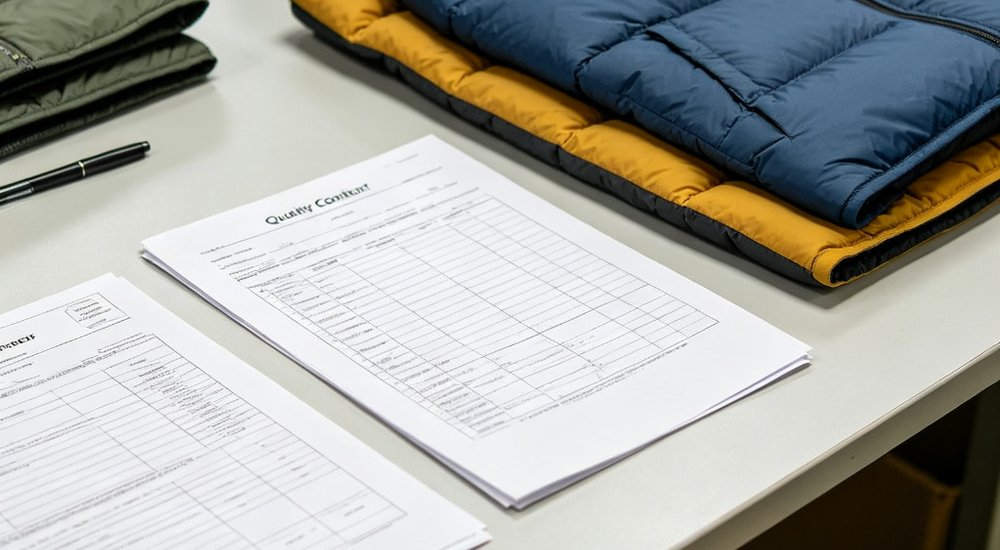
Procurement-specific terms include: MOQ (minimum order quantity), AQL (acceptable quality level), Incoterms (FOB/CIF/DDP), lead time, and payment terms. Clarify these terms in all purchase agreements to avoid misunderstandings.
This guide covers key terminology for comparing disaster relief sleeping bags with camping sleeping bags in institutional procurement. Understanding these terms helps buyers evaluate quotations and specifications accurately.
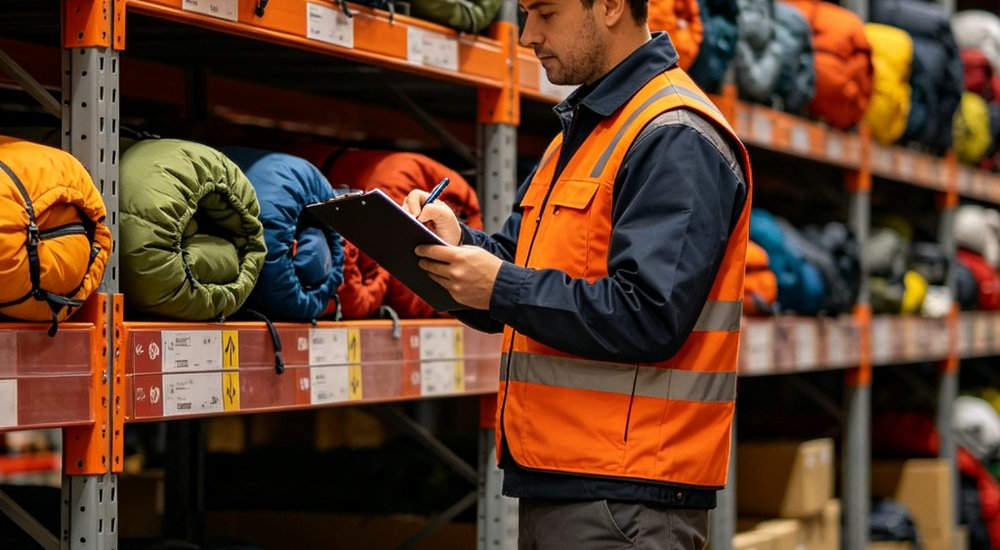
Understanding how disaster relief sleeping bags perform in real-world institutional deployments versus camping sleeping bags helps procurement teams make informed decisions. These case studies demonstrate the practical differences in durability, cost-effectiveness, and user satisfaction across different program types.
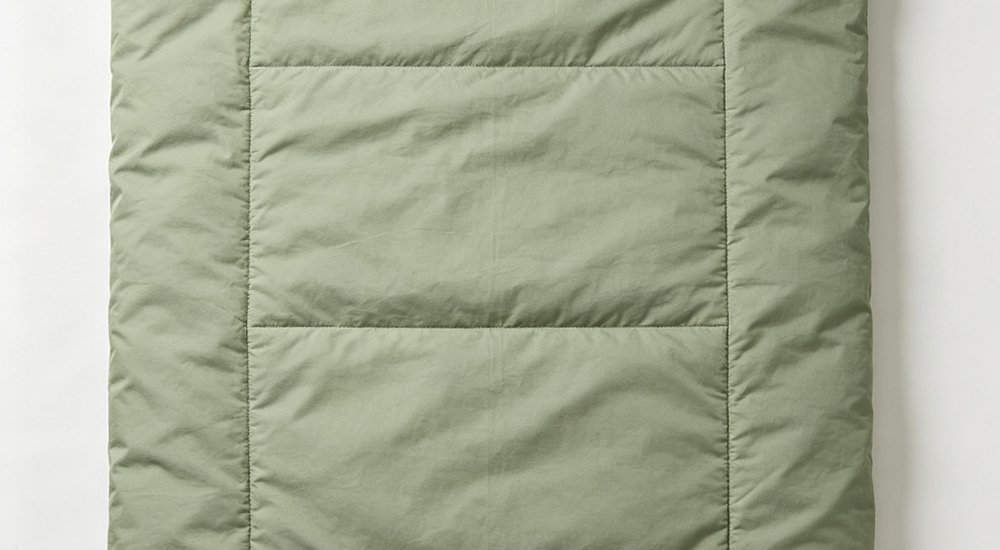
A humanitarian organization procured 5,000 disaster relief sleeping bags for cyclone emergency shelters in Bangladesh. The envelope-style polyester these items with 150gsm filling was selected for its durability and washability. Over 18 months of repeated use across multiple cyclone events, the bags maintained structural integrity with only 3% damage rate. In contrast, a pilot batch of 200 camping such bags showed 28% zipper failure within 6 months due to frequent industrial washing.
Key Finding: Disaster relief models delivered 8x longer service life in high-turnover shelter environments, reducing total cost of ownership by 62% despite higher initial unit cost.
Following the 2015 earthquake, a reconstruction agency distributed 3,500 institutional these products. to temporary housing facilities in Kathmandu Valley. The procurement team initially considered camping sleeping bags for their lighter weight, but field testing revealed that camping models lacked sufficient such bags insulation for winter nights at 1,400m elevation. The selected relief model with EN 13537 comfort rating of 5°C proved adequate, while camping bags rated for 10°C caused user complaints during December-February.
Key Finding: Certified temperature ratings are critical for relief procurement; marketing labels on camping bags often overstate performance in institutional use cases.
A UN agency procured 8,000 disaster relief sleeping bags for refugee camps in Sudan's Darfur region. The extreme heat and dust conditions demanded specific fabric requirements. The relief model's 210T polyester outer shell with water-resistant coating outperformed camping bags, whose thinner 190T fabric tore easily on rough ground. Bulk packing optimization achieved 12,000 units per 40-foot container, reducing sleeping bag delivery costs by $0.45 per unit compared to less compact camping alternatives.
Key Finding: Container loading efficiency and fabric durability are decisive factors in large-scale African relief operations where logistics costs dominate total procurement expense.
Most Chinone such item factory suppliers require a minimum sleeping bag MOQ of 500-1,000 pieces per design for custom such bags. Standard models may have lower MOQs of 200-300 pieces. Always confirm MOQ terms before requesting a such bags quotation and the product sample.
Standard sleeping bag lead time is 25-35 days for production, with sleeping bag delivery by sea taking an additional 20-35 days to Southeast Asian ports. Bulk such bags orders for emergency relief may require expedited production (15-20 days) and air freight for urgent deployment, though this increases the product price by 30-50%.
Camping sleeping bags can be used for short-term emergency situations, but they lack the batch consistency, durability, and cost-efficiency required for institutional procurement. Relief-specific models offer standardized sleeping bag dimensions, reinforced such bags fabric, and compact the product packing optimized for bulk storage and rapid distribution across 500-10,000+ unit deployments.
Relief sleeping bags require stricter batch consistency verification (AQL 2.5), BSCI certification, and ISO 9001 quality management due to large order volumes. Camping bags may have more variable quality but often feature specialized sleeping bag temperature rating testing (EN 13537) and premium such bags filling materials for individual performance.
When evaluating sleeping bag factory suppliers, consider their ability to provide sleeping bag MOQ with consistent quality and competitive pricing.
For institutional buyers comparing disaster relief and camping sleeping bags, these additional resources provide detailed guidance on sourcing, specification, and logistics management.
When selecting a sleeping bag factory, request documentation including: business license, export history, BSCI/SEDEX audit reports, production capacity statements, and quality control procedures. Schedule virtual or in-person factory audits for orders exceeding 10,000 units to verify actual capabilities.
Standard sleeping bag MOQ for custom specifications is typically 500-1,000 units, while stock colors and designs may be available from 100 units. Plan order quantities to optimize container loading: a 40-foot HQ container typically holds 8,000-12,000 units depending on compression level and carton dimensions.
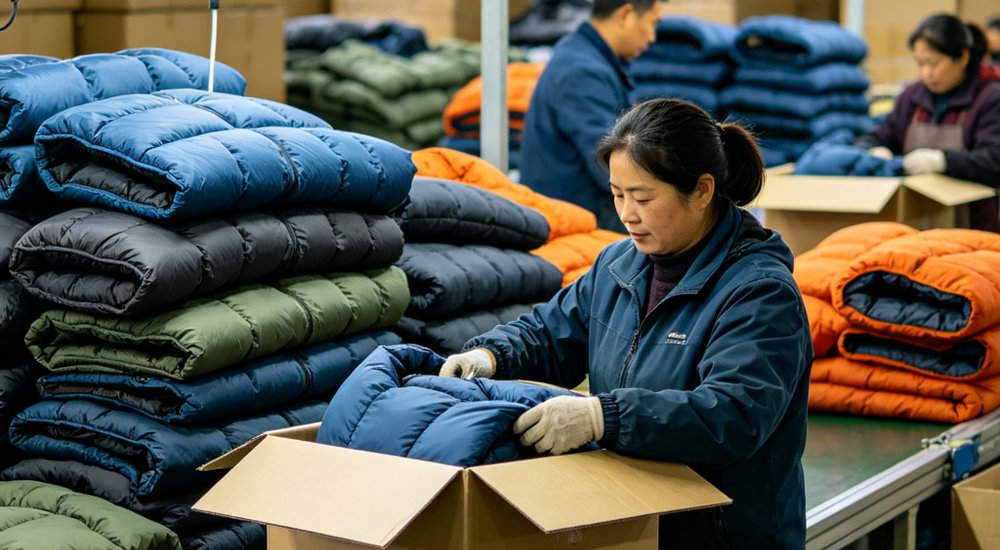
Standard production sleeping bag lead time is 25-35 days for orders under 5,000 units, and 35-50 days for larger quantities. Add 7-14 days for ocean freight to most destinations. For emergency response requirements, confirm whether the factory has rush production capacity or existing stock that can be shipped immediately.
Freundliche Links :
Urheberrechte © © Custom Disaster - Relief Bedding: Tents, Sleeping Bags, Blankets Alle Rechte vorbehalten
das professionelle Team zum Service !