Kategorien
Last updated: November 7, 2026 · Hurricane emergency kit
Every year hurricanes bring deadly wind, storm surge and flooding, and most hurricane deaths come from drowning and flying debris. For relief groups serving high-risk families, being ready means stocking the right bulk storm supplies before a storm forms.
This guide shows your organization how to buy a hurricane emergency kit that protects buildings, shelters people and keeps families alive through the 72-hour window. Program managers who plan ahead avoid the scramble that hits every coastal region when a named storm enters the news cycle, and they deliver faster when the evacuation orders come.
A single storm can displace thousands of families overnight, which is why public agencies, schools and faith groups pre-order bulk storm supplies months in advance and keep a standing relationship with their supplier.
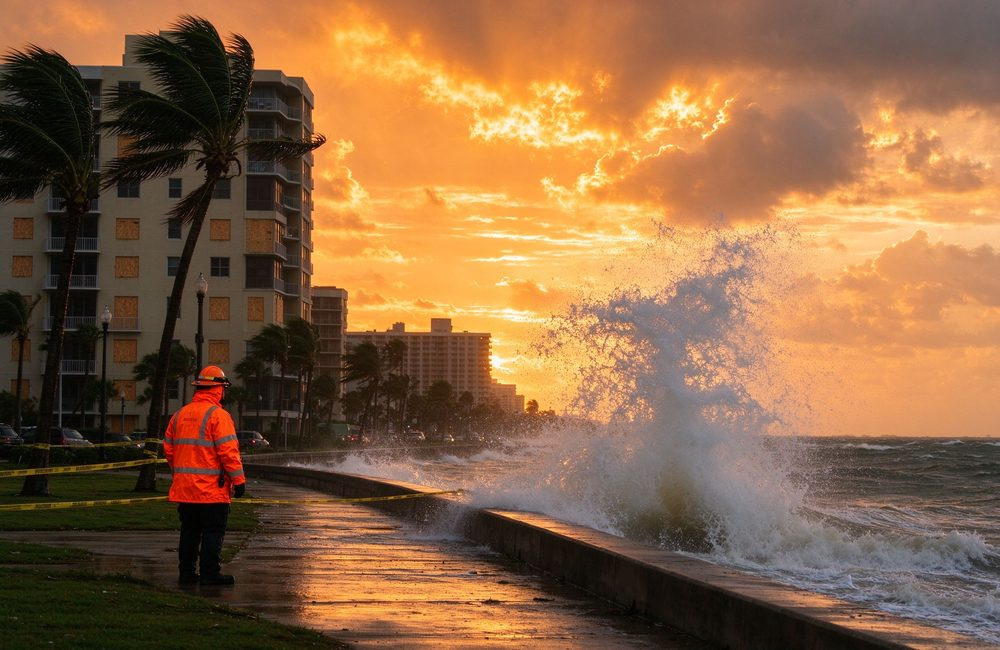
Coastal storms drive the need for a stocked hurricane emergency kit
Table of Contents
1. Why Hurricane Wind and Water Are So Dangerous
2. Common Hurricane Threat Types
3. Hurricane Emergency Kit Essentials
4. Wind Protection: Boarding, Tarpaulins and Sandbags
5. Sheltering in Place or Evacuating Early
6. Running a Shelter: Bedding, Hygiene and Registration
7. Water, Rations, First Aid and PPE
8. Power and Communication After the Storm
9. Post-Hurricane Recovery
10. Procurement Points and Budget
11. FAQ
According to published hurricane safety guidance, a major hurricane can produce sustained winds above 157 mph, storm surges up to 20 feet and rainfall measured in feet rather than inches.
Inland communities are no longer safe either: most hurricane-related deaths today happen away from the coast.
That is why a hurricane emergency kit for relief programs must cover wind protection, flood response and off-grid power in one procurement plan. Shelters that split these into separate shopping lists usually end up with tarpaulins but no radios, or blankets but no water, exactly when the storm hits, so the master list belongs in one spreadsheet.
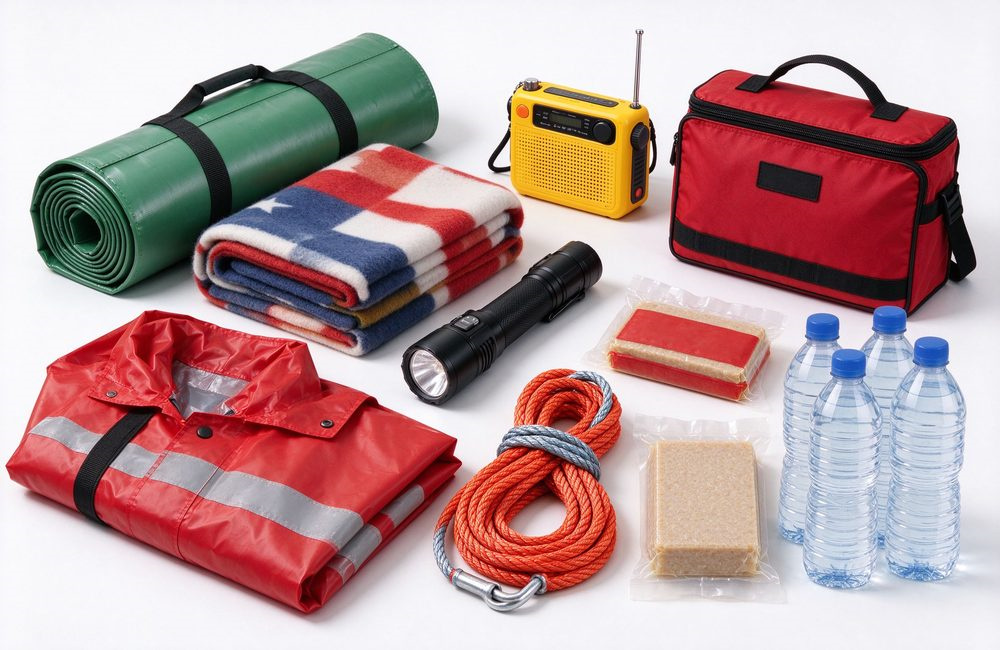
A complete hurricane emergency kit bundle for family distribution
For purchasing teams and program managers, the priority order is simple: harden the building first, shelter people second, and keep families alive third. Each section of this guide covers a specific part of the kit, the specifications to verify, and the quantities that work for shelters, schools and community distribution programs.
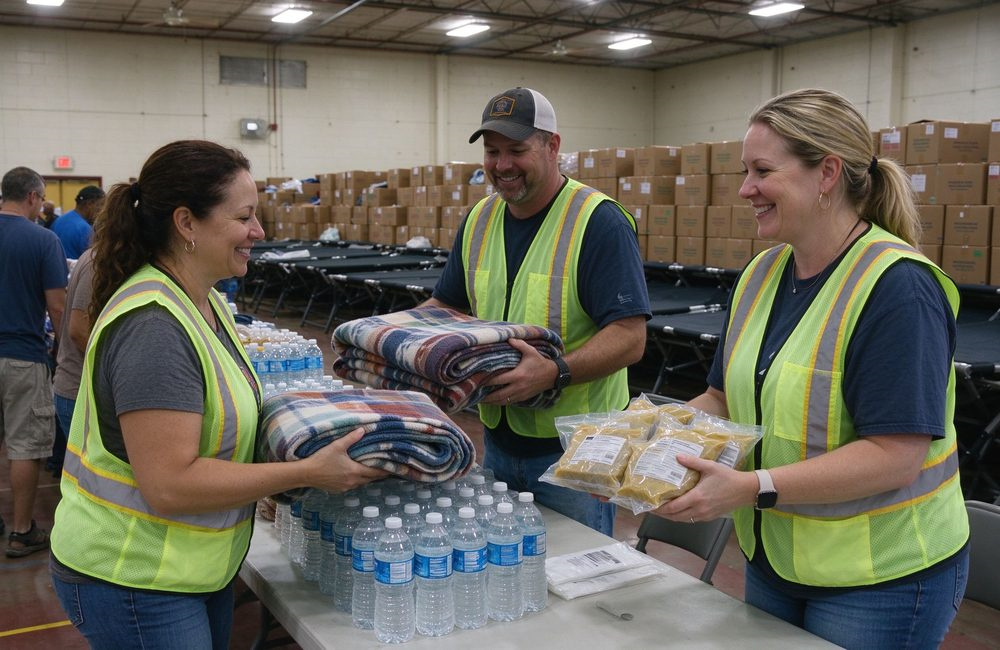
Bulk supplies flow to families through shelter distribution points
Wind protection ranks first in any hurricane emergency kit: PVC tarpaulins, plywood and sandbags reduce the parts of a building the storm can tear away. Water protection ranks second, because storm surge and flash flooding arrive fast and quietly.
Power and communication rank third, because outages can last one to four weeks after a major storm makes landfall.
When refrigeration stops and cell towers go dark, hand-crank radios and rechargeable flashlights become the only reliable link between shelters and the outside world.
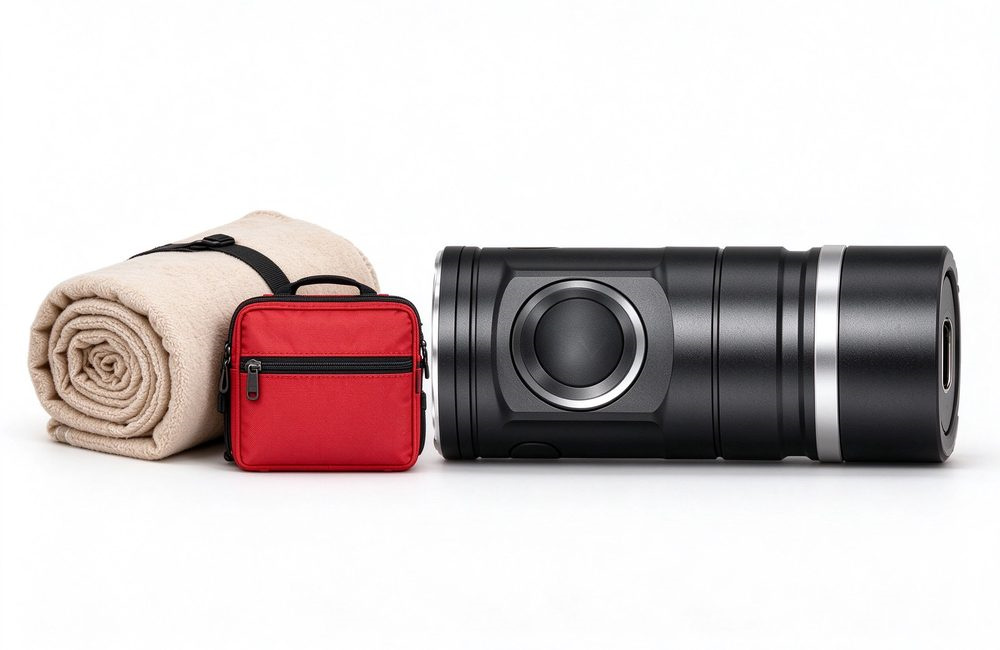
Hand-crank NOAA radio and flashlight kit for blackout conditions
Low-income neighborhoods, mobile homes, nursing homes and crowded shelters face the highest risk. Older buildings, missing shutters and limited mobility all slow evacuation. For community shelter programs, the argument is clear: stock tarpaulins, blankets and lighting in bulk before hurricane season begins.
The buying window is the off-season, when prices are stable, transport is available and certifications can be verified calmly instead of in a rush.
One more truth shapes every buying decision below: the cheapest plan is the one made before a storm is named. When a hurricane enters the news cycle, stock disappears and transport times double.
This guide gives your team the checklists, specifications and budget ranges to buy with confidence in the off-season.
Because a named storm empties warehouses within days, the off-season purchase protects both the budget and the response timeline, and keeps the whole program calm when the alerts start.
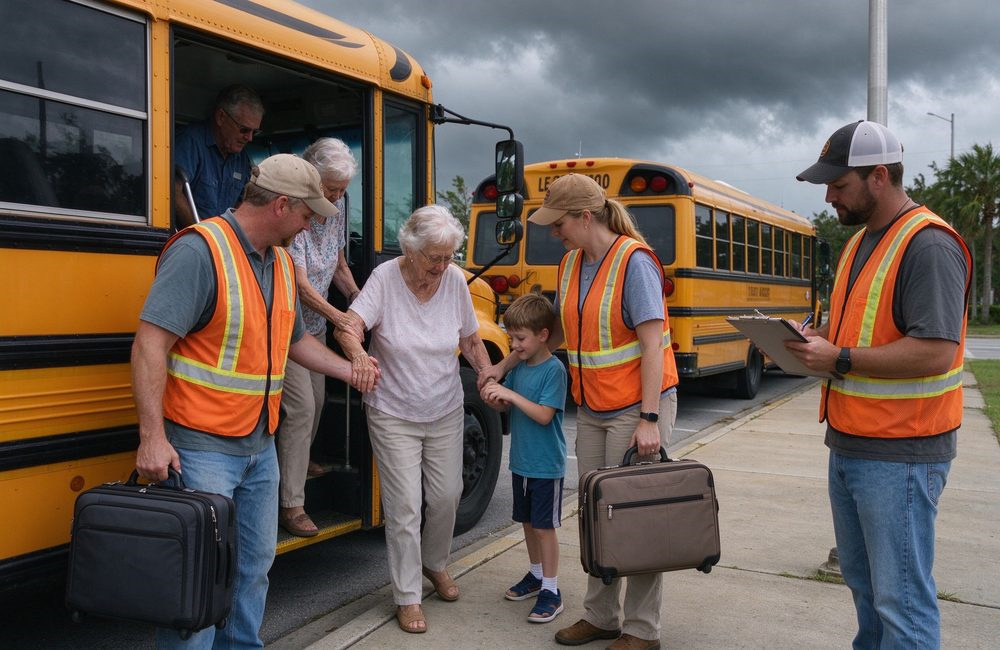
Early evacuation moves at-risk residents to safety before landfall
Most people underestimate how hurricanes kill. Wind can destroy buildings, but water kills more people than wind. Storm surge is the abnormal rise of seawater pushed onshore by the storm, and it can flood an entire coastal community in minutes.
Rain-driven flash flooding follows, and both trap people who waited too long to evacuate.
For procurement teams this changes the shopping list: a hurricane emergency kit must carry water response gear, life vests and sandbags, not only wind protection items. A sudden surge can turn a safe-looking beachfront into deep water within one high tide cycle, so shelters on the coast keep their evacuation trigger low and their sandbag stock high.
Evacuation fatigue is real, which is why official guidance matters more than rumors; a single credible surge forecast should override a week of quiet weather.
Storm surge is a wall of seawater pushed ahead of the hurricane, rising several meters in under an hour. It destroys everything at ground level: vehicles, furniture, appliances and building contents.
Inland rainfall flooding now causes most hurricane deaths, because rivers overflow and streets become canals within hours.
Relief organizations serving coastal towns need flood response capacity in their hurricane emergency kit, not just tarpaulins and boarding.
The second danger is city-wide blackouts. A major hurricane can cut power for one to four weeks, disabling refrigeration, lighting, communication and medical devices. The third danger is flying debris: roof tiles, branches and loose objects become projectiles at hurricane wind speeds.
Debris breaks glass first, then wind and rain enter and accelerate roof failure.
Boarding windows and securing loose items are low-cost, measurable steps every hurricane preparedness plan should include. They also protect first responders, who should not be clearing debris in the middle of a landfall.
A pre-storm walkthrough that takes an hour can save days of repair work and keeps insurance claims clean.
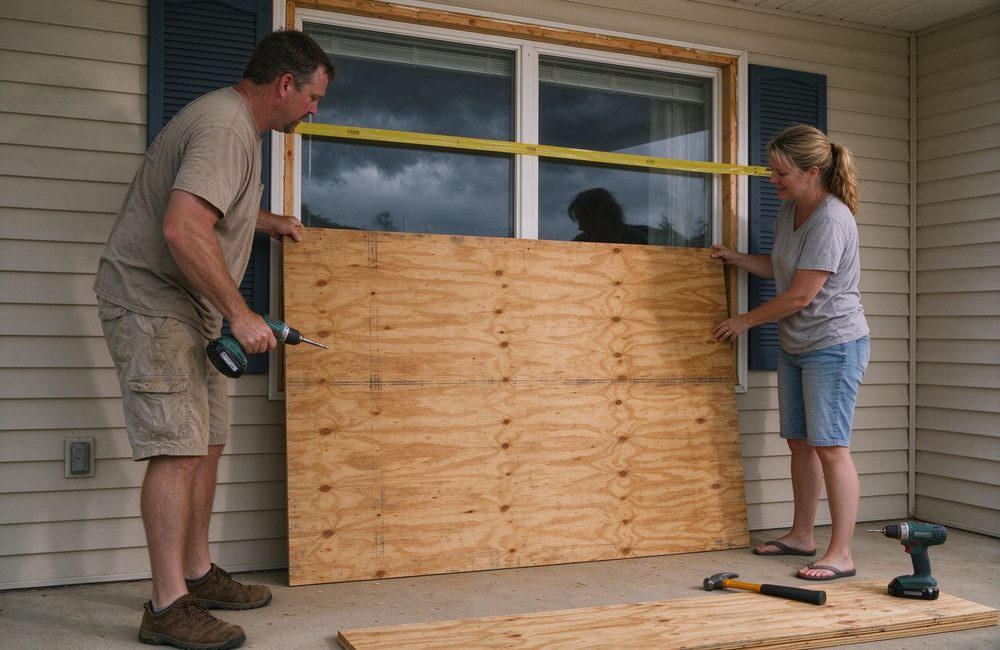
Boarding windows before hurricane winds arrive
hurricane emergency kite looks the same. Understanding the four main threats helps procurement teams choose the right mix of bulk storm supplies instead of guessing.
Sustained winds above 74 mph can strip shingles, tear roof membranes and shatter windows. Wind protection supplies include PVC tarpaulins, plywood, sandbags and ratchet straps. Laying and securing a roof tarpaulin before landfall dramatically reduces water entry after the roof fails, which keeps the building usable and protects the people sheltering inside.
Storm surge arrives faster than rain flooding and destroys the ground floor of everything in its path. Agencies serving coastal towns should pre-position flood response supplies and evacuation plans, because there is no time for last-minute procurement when a surge warning is issued.
Once a hurricane moves inland it slows down and can drop 12 to 30 inches of rain in two days. Rivers overflow, streets turn into canals and basements fill with water.
Inland flooding is now a leading cause of hurricane deaths, so every community along the storm track needs waterproof kits, not just coastal cities.
Emergency managers now track rainfall totals as carefully as wind speed when they decide whether to open shelters and when to ask people to evacuate.
After wind and water pass, power and network outages can last weeks. Refrigeration stops, gas stations cannot pump, ATMs fail and cell towers go dark.
Off-grid tools, hand-crank radios, rechargeable flashlights and power banks, decide whether shelter families face an uncomfortable night or a dangerous one.
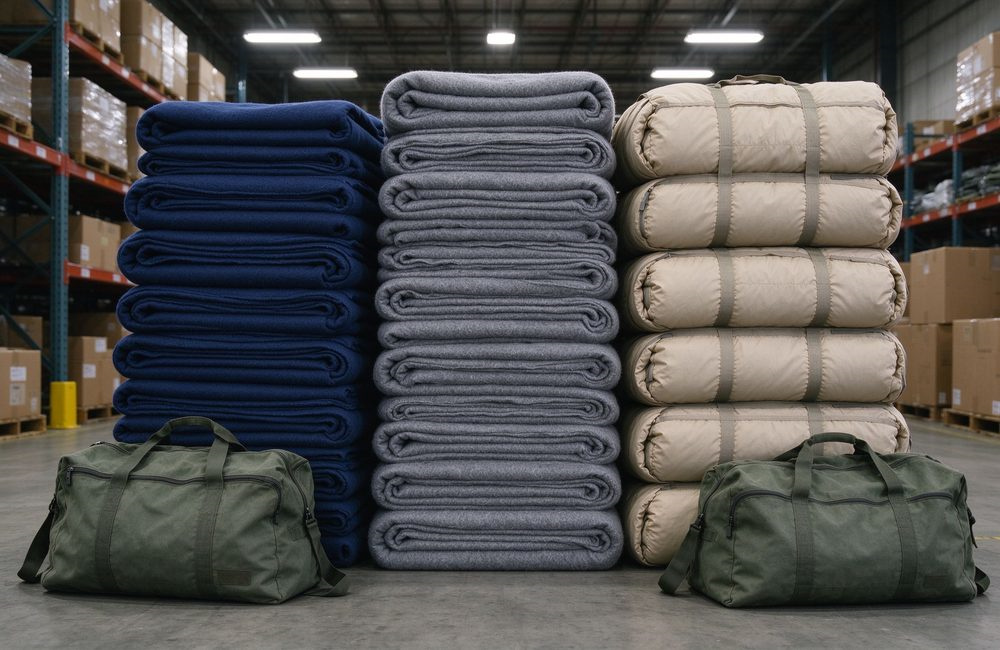
Flame-retardant blankets for shelter bedding
A well-stocked hurricane emergency kit helps families protect their homes, survive the blackout and recover after the storm. The following items are what every community shelter should stock in bulk.
Heavy PVC tarpaulins are the fastest roof and property protection tool. A quality tarpaulin is 0.45mm thick with a 550gsm coating, fully waterproof and mold-resistant, available in green, blue and army green.
One standard 2x100m roll covers multiple roofs and can be cut to size on site.
When sourcing wholesale PVC tarpaulins for disaster relief, verify the thickness, coating weight and reinforced edges with eyelets. Ask the supplier for a sample swatch and a written specification sheet, then store one roll for training so volunteers learn how to lay and strap it before a real storm.
After a storm, people sleep in damp, crowded shelters. Flame-retardant blankets made from 100% flame-retardant polyester at 150x200cm and 660gsm provide warmth without fire risk. They dry quickly, resist mold and meet shelter fire codes.
For shelter bulk blanket programs, choose certified flame-retardant fabric and plan one to two blankets per person.
The certification file should name the exact standard, and the blanket label should match it, because fire marshals check both during shelter inspections.
Blackouts and network failures are almost guaranteed in hurricane zones. A hand-crank radio that receives AM, FM and NOAA weather bands keeps residents informed of storm updates and evacuation orders.
The same device should double as a power bank and LED light so one unit gives a family light and information.
Add a USB-C rechargeable flashlight as a second layer of lighting. Choose IP68-rated models so the flashlights survive the downpours and flooding that follow a landfall, and keep spares with fresh batteries in every shelter zone.
After a storm, injuries come from debris, glass, falls and flood contact. A hurricane first aid kit should include sterile gauze, bandages, antiseptic wipes, saline, scissors, tape and gloves in a waterproof red-and-black case.
Large agencies should set up a dedicated first aid station in every shelter zone.
Stock it with enough trauma supplies for debris and glass injuries, because hospitals are often unreachable in the first 48 hours after a major storm.
The survival baseline is 1 gallon of water per person per day for at least three days, plus non-perishable food. Emergency ration packs and bottled water are the most practical bulk supplies for shelters.
Add reflective rain ponchos, nylon rope, duct tape and whistles, small items with outsized value during blackouts.
These low-cost extras are the difference between a family that improvises and a family that stays dry, fed and findable.
The table below gives a practical bulk stocking plan per 100 people for shelters and distribution programs. Quantities are planning references for a 100-person shelter; adjust by building size, population and storm category.
|
Item |
Purpose |
Qty per 100 People |
Spec to Verify |
|
PVC tarpaulin (2x100m) |
Roof and property protection |
4-6 rolls |
0.45mm / 550gsm / eyelets |
|
Flame-retardant blanket |
Shelter bedding |
100-200 blankets |
100% FR polyester / 66"x90" |
|
Hand-crank NOAA radio |
Storm info and charging |
50 units |
AM/FM/NOAA + power bank |
|
Rechargeable flashlight |
Blackout lighting |
50 units |
USB-C / IP68 |
Verify each spec before ordering; thin tarps or uncertified blankets fail in real storms, so confirm thickness, flame rating and radio battery life in writing before signing the contract.
|
PVC tarpaulin (2x100m roll) |
Roof and property protection |
4-6 rolls |
0.45mm / 550gsm / eyelets |
|
Flame-retardant blanket (150x200cm) |
Shelter bedding |
100-200 blankets |
100% FR polyester / 660gsm |
|
Hand-crank NOAA radio |
Storm info and charging |
50 units |
AM/FM/NOAA + power bank |
|
Rechargeable flashlight |
Blackout lighting |
50 units |
USB-C / IP68 |
|
Trauma first aid kit |
Debris and glass injuries |
5-10 kits |
Waterproof case |
|
Rations + bottled water |
72-hour survival baseline |
100 sets |
5-year shelf life |
These quantities give a 100-person shelter a working baseline for the first three days. Programs serving schools or large community centers scale the numbers up and add sleeping bags, extra first aid and backup purification tablets.
Recalculate the plan every spring so the quantities match current headcounts and building layouts, and adjust after every drill.
Update the contact list for the sandbag team and the radio check team at the same time, because volunteers change faster than stock.
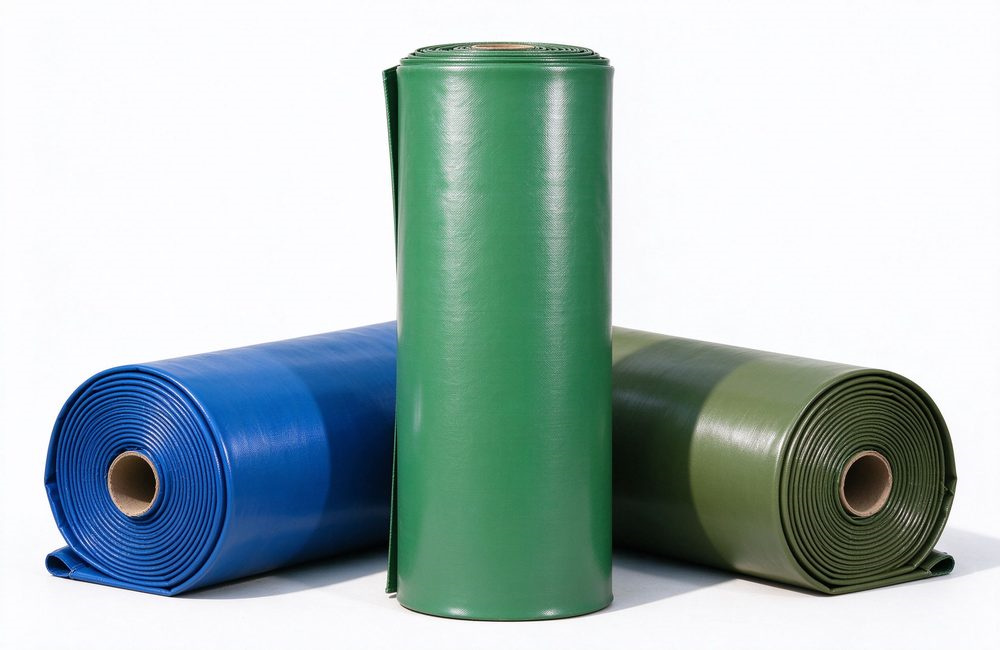
Heavy PVC tarpaulin rolls for bulk roof protection
When a hurricane warning is issued there is no time for last-minute buying. The rule is simple: finish property hardening first, then shelter in place or evacuate early, and never ride out a storm surge zone. Every shelter resident should know this core message.
Post it at entrances, repeat it during drills, and make sure every staff member can explain why no one rides out a surge zone. The message should also reach residents in their own language, using simple signs and one-on-one reminders during registration, because a shelter is only as safe as the decisions people make inside it.
Before strong winds arrive, close and board every window with plywood or storm shutters. Move patio furniture, trash cans, signs and any loose objects indoors or tie them down. Flying debris starts in your own yard, so clearing it also protects the neighbors.
Do the walkthrough two days before landfall, because the last 24 hours are for boarding and last-minute securing, not for moving heavy furniture.
Roof failure is the main way wind turns into water damage. Laying a heavy PVC tarpaulin over the roof ridge before landfall reduces water entry after shingles lift. Use ratchet straps and reinforced eyelets so the tarp stays in place through repeated gusts.
Roof tarpaulin reinforcement is one of the highest-return actions a shelter can take with a hurricane emergency kit. Check the tarp after every storm and re-strap any loose corners so the next rain event does not turn a small leak into a collapse.
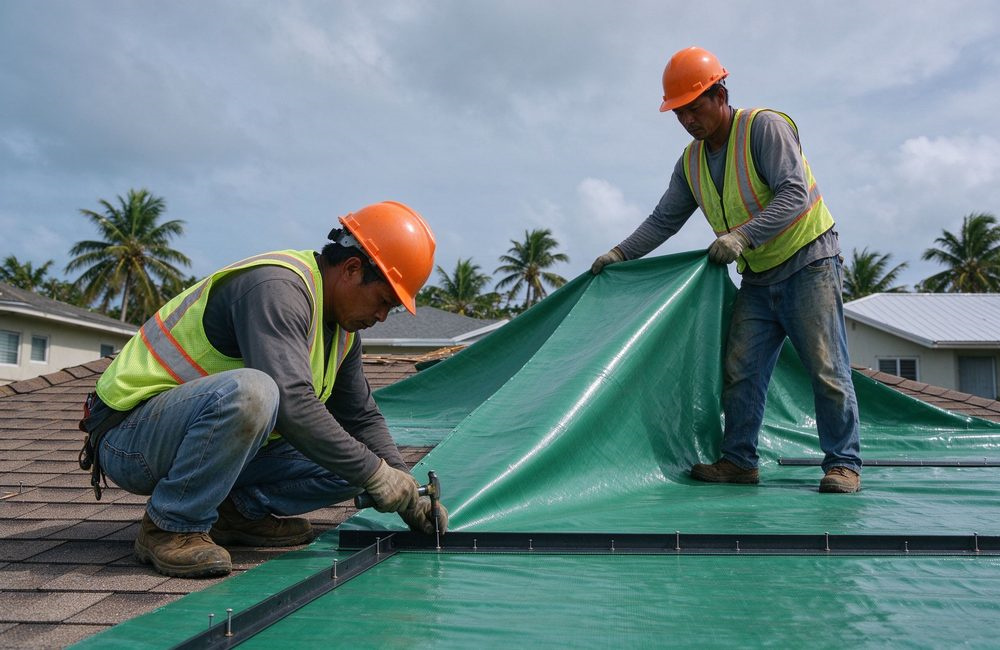
Roof tarpaulin reinforcement before landfall
Sandbags divert floodwater away from doorways, vents and facility openings. Stack them pyramid-style with staggered seams and no gaps. A three-bag-high wall holds back roughly 30cm of water. Facilities in surge or flood zones should pre-fill sandbags before hurricane season starts.
Store them on pallets off the ground so they stay dry and ready, and train one team to deploy them within the warning window.
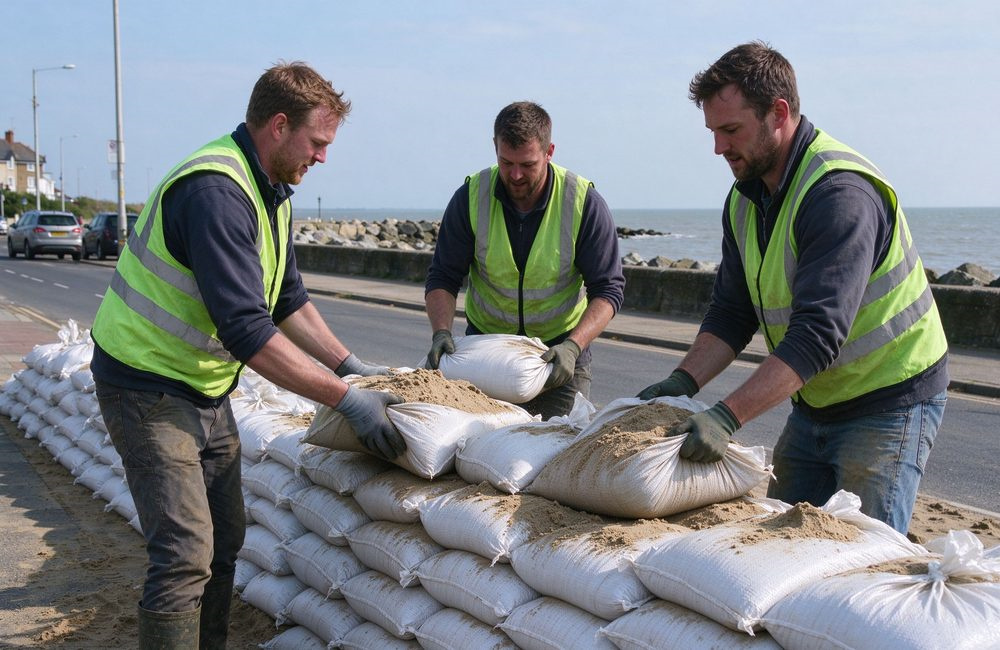
Sandbag barriers divert floodwater from facility openings
hurricane emergency kitrm surge or flood zone and the building is sound, shelter in place in an interior room without windows. If you are in a surge zone, a mobile home or a flood-prone area, evacuate early to a public shelter and never wait for the final warning.
Sheltering in place works only for buildings outside surge zones with strong roofs, boarded windows and interior rooms. Keep the hurricane emergency kit by the door with the radio, flashlight, documents and medication.
Assign one person to monitor NOAA alerts and one to check the building every few hours.
Verify the roof condition and window protection before the season, and identify the safest interior room in advance. Both roles need a backup volunteer, because fatigue sets in fast during a multi-day event, and the radio check schedule should be written on the shelter board.
Test the radio in that room and confirm the door seals well, because the interior room is where families will spend the worst hours of the storm.
Evacuate when an evacuation order is issued, when you are in a storm surge or flood zone, or when the building cannot withstand the forecast. Do not wait for the last alert.
Route planning matters: know two exits and the shelter locations ahead of time, because roads close as flooding spreads.
Give every family a printed route card with the nearest shelter, so night evacuations do not turn into guesswork. Give every family a printed route card with the nearest shelter, so night evacuations do not turn into guesswork, and rehearse the route once before the season.
Stay off roads during the storm: floodwater, downed power lines and debris make driving deadly. If you must drive, keep headlights on, avoid underpasses and never drive through flooded streets.
Shelters should post clear evacuation route direction signs so families moving at night can find the way.
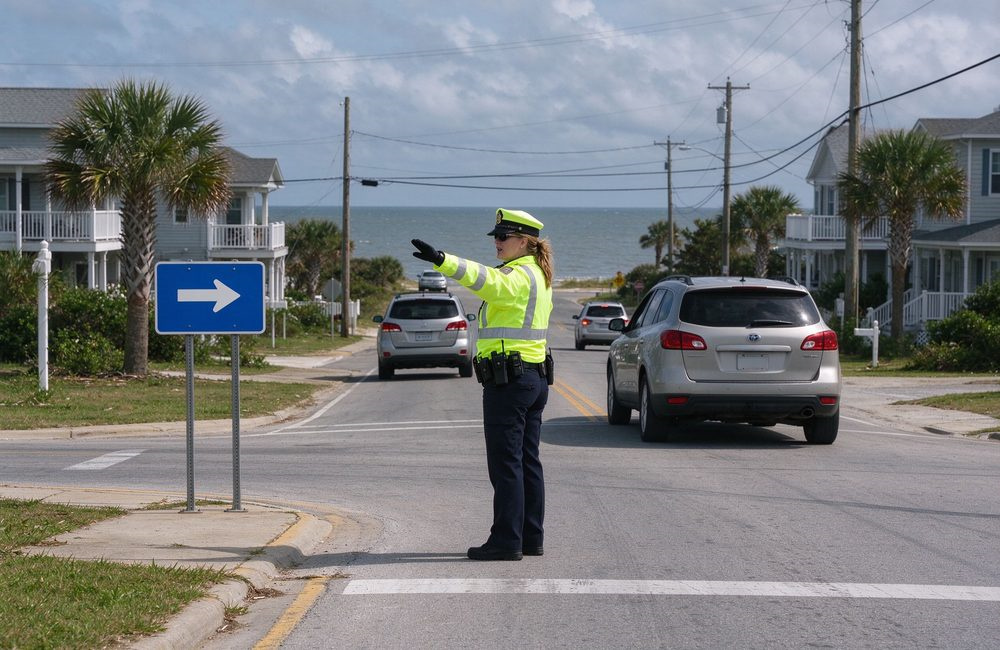
Clear evacuation route signs guide families to safety
hurricane emergency kit shelter becomes a small city. Bedding, hygiene and registration systems decide whether displaced families stay safe and easy to account for.
Each shelter zone needs a cot, a flame-retardant blanket, a small sleeping bag and a personal hygiene kit per person. Keep the space ventilated, the floor dry and rotate bedding to avoid damp.
When cots and blankets are pre-stocked, schools and gyms can convert into shelters within hours.
Pre-agree the conversion plan with the school district, including keys, storage space and staff roles, before hurricane season starts.
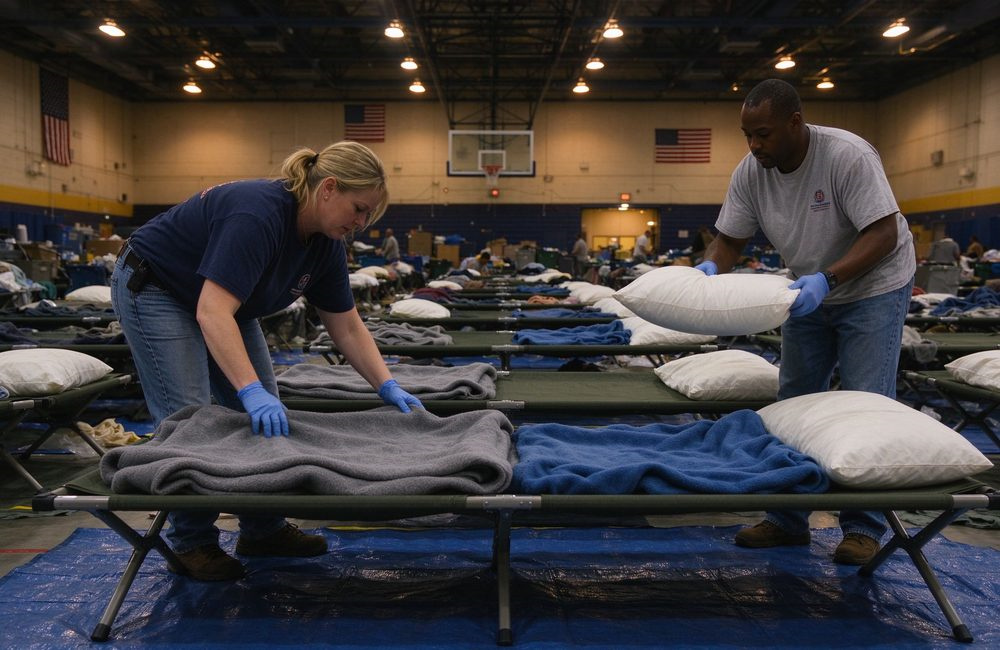
Shelter interior configured for family bedding zones
Crowded shelters with candles and generators are fire-risk zones. Keep hand-washing stations stocked, separate family zones, and ventilate sleeping areas to reduce mold and heat stress. Hygiene supplies, toilet paper, soap and trash bags, are not optional extras; they prevent secondary illness after the storm.
Assign one volunteer to restock hand-washing stations twice a day and log the supply levels on the shelter board.
Mobile networks fail for days after a major storm. Use hand-crank radios and volunteer messengers, and keep a written headcount of everyone in the shelter. When the shelter runs a name board and message system from day one, families separated during evacuation reunite faster.
Use a simple paper register as the backup to any electronic system, because power may stay off for days.
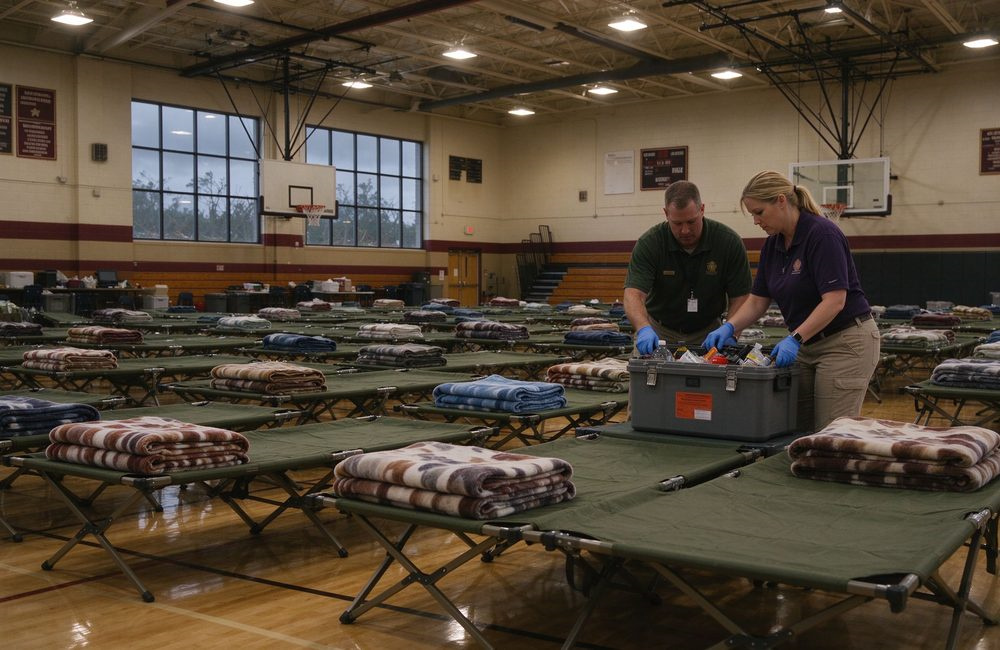
School gym converted into an emergency shelter
hurricane emergency kittays the same for shelters as for families: water first, rations second, then first aid and personal protection for the workers who run the response.
Plan 1 gallon of water per person per day for at least three days, about 3 gallons per person. A 200-person shelter needs roughly 600 gallons on site, with purification tablets as the backup.
Emergency ration packs with a five-year shelf life complete the baseline, stored dry and rotated annually.
Rotation keeps the stock within expiry date and gives volunteers a routine reason to check the shelter inventory twice a year. Rotation keeps the stock within expiry date and gives volunteers a routine reason to check the shelter inventory twice a year, once before the season and once mid-season.
Set up a dedicated first aid station in every shelter zone with trauma supplies for debris injuries. Give cleanup teams gloves, waterproof boots and rain suits before they touch floodwater or debris.
PPE is what keeps a volunteer force healthy enough to run the shelter for the full recovery period.
Budget for glove and boot replacements after every large operation, because flood-contact gear wears out fast.
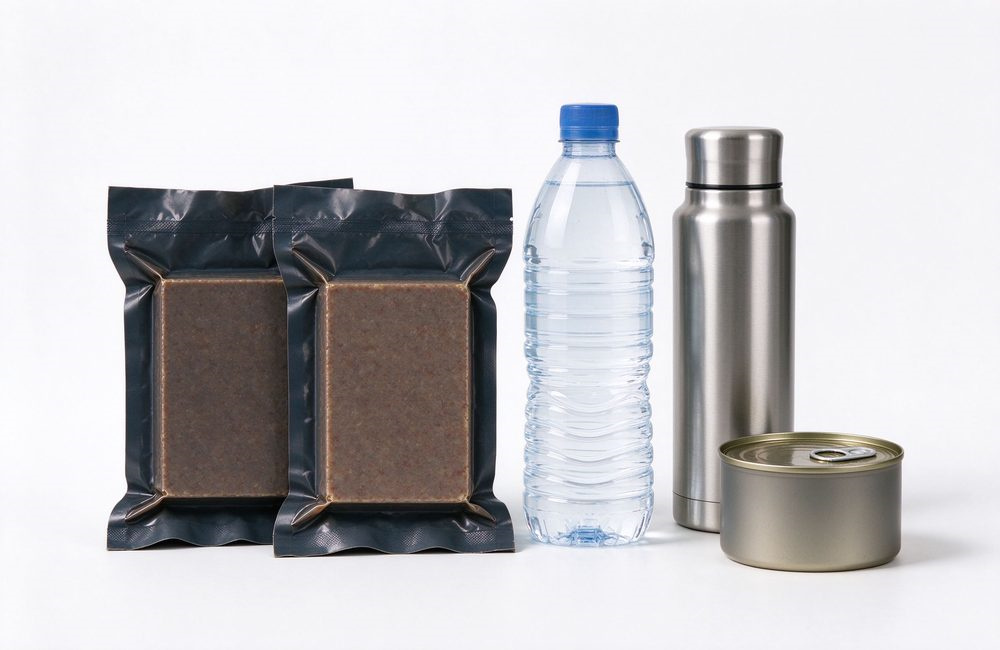
Rations and bottled water for the 72-hour baseline
hurricane emergency kitailures are almost guaranteed in hurricane zones. Off-grid power and communication tools decide whether families wait out the outage safely or take risks in the dark.
Night lighting keeps shelters safe during long blackouts, so every shelter zone should have at least one rechargeable flashlight and one hand-crank camp lantern charged before dark.
The hand-crank radio with AM, FM and NOAA bands is the only reliable storm information channel when cell towers fail.
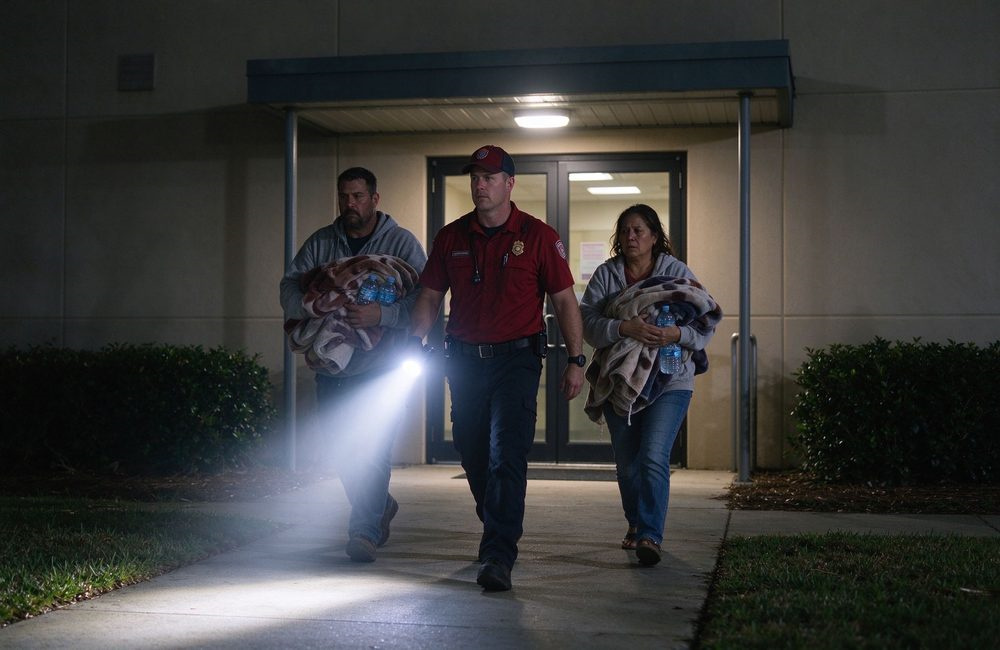
Night lighting keeps shelters safe during blackouts
If your facility uses a generator, place it outdoors at least 3m from any window or door, never inside or in a garage, and never connect it to house wiring without a transfer switch.
Carbon monoxide from indoor generators kills every year. Post the rules where staff can see them before the storm arrives.
Never run extension cords through doorways and keep the fuel supply in a locked, ventilated outdoor store.
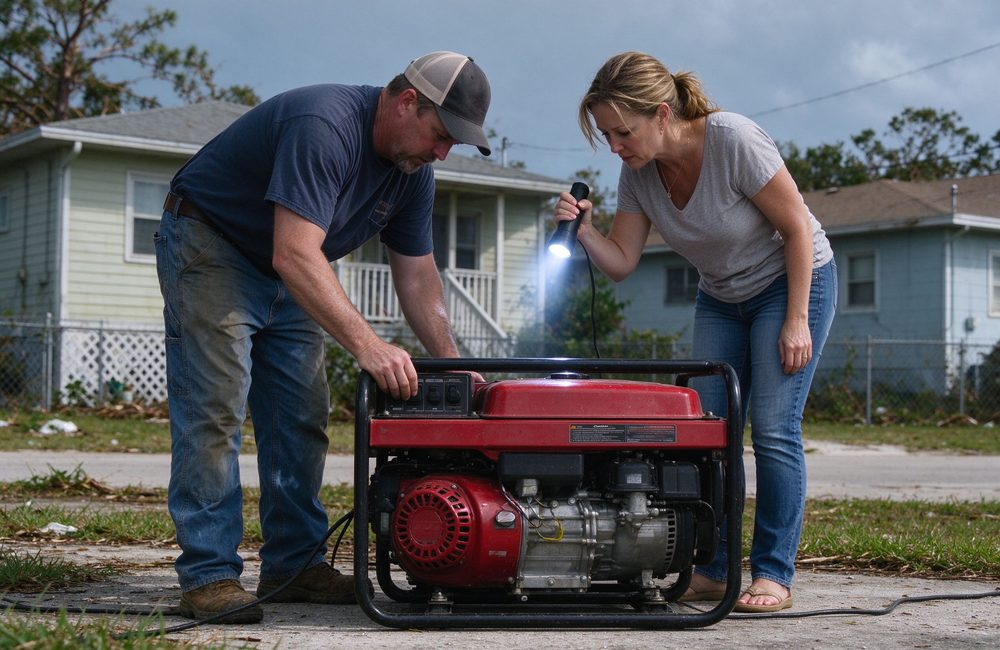
Generator placed outdoors away from building openings
hurricane emergency kite danger is not over. Floodwater, downed power lines and damaged buildings kill more people after the storm than during it. Stay off flooded streets and treat every downed wire as live.
Check everyone first. Clean cuts and scrapes from debris with antiseptic, and dress them with the sterile supplies in the hurricane first aid kit. Anyone with chest pain, breathing trouble or floodwater contact wounds needs immediate medical care.
Do not wade through floodwater: open manholes, broken glass and live wires hide beneath it.
Use the 72-hour baseline supplies until clean water and power are confirmed, and keep children out of flooded areas entirely. Check for downed wires before letting anyone near the building and keep pets indoors until the area is declared safe.
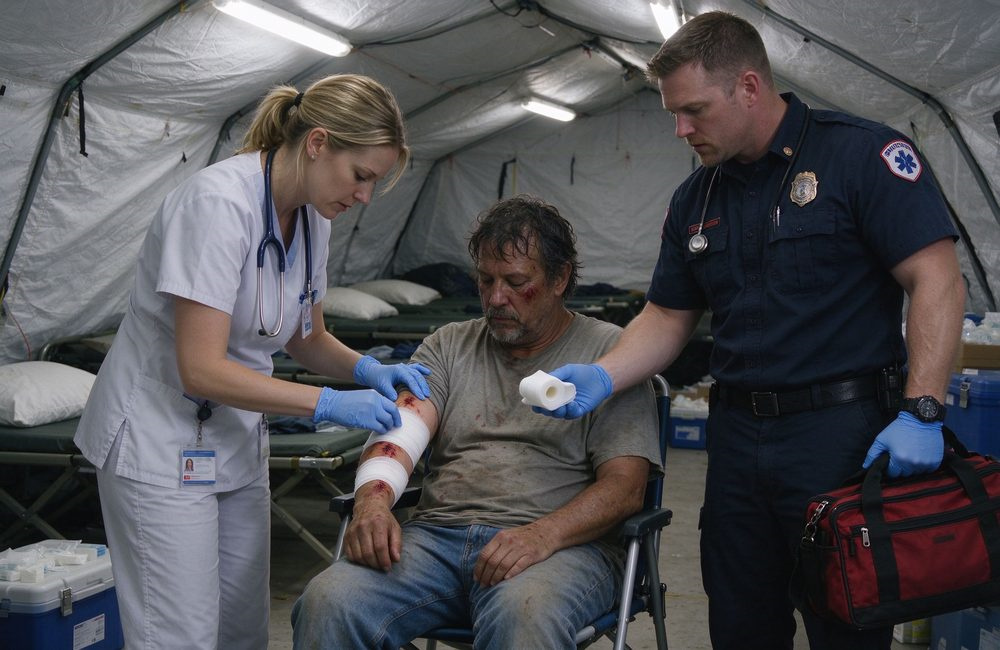
Post-storm first aid for debris injuries
Do not re-enter until the building passes inspection. Look for sagging roofs, wall cracks, water stains and leaning structures. Photograph everything for insurance and grant claims, and keep people out of rooms with visible structural damage.
Cover roof damage with tarpaulins quickly before rain returns; the first 24 hours decide how much of the building and its contents can be saved.
Storm debris cleanup starts with glass and hazardous materials, then moves to soaked furniture and drywall, always with gloves, boots and masks on.
Separate hazardous waste from household debris so the site stays safe for volunteers and recovery crews. Wear masks against mold spores in soaked buildings and rotate crews often, because exhaustion causes most cleanup accidents.
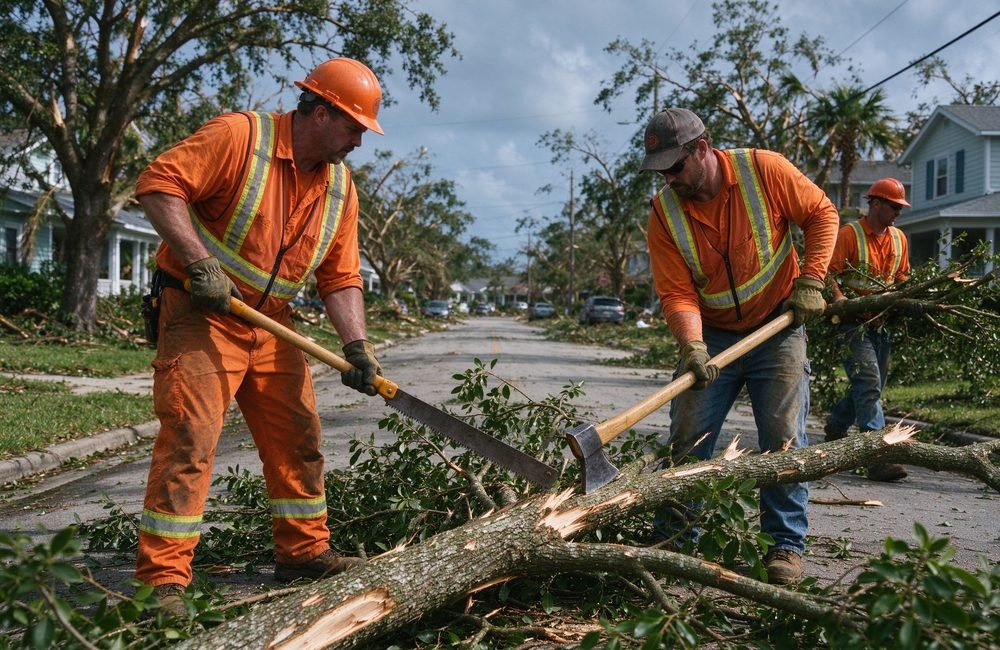
Storm debris cleanup with full personal protection
so hurricane emergency kit planning serves community programs again and again. These points keep hurricane shelter preparedness strong and put your agency ahead of most peers, and the budget table below gives planning ranges for three common scenarios.
First, plan for water protection, not just wind protection, because most hurricane deaths come from water, so hurricane shelter preparedness must cover surge zones. Second, reject thin tarpaulins below 0.45mm as part of solid hurricane shelter preparedness. Third, never skip NOAA radios, which are core to bulk storm response equipment.
Fourth, demand certified flame-retardant bedding for hurricane shelter preparedness. Fifth, test every emergency kit and bulk storm response equipment before the season, not during it. Sixth, run an evacuation drill every year to validate hurricane shelter preparedness.
Seventh, never lock kits away; visible, labeled supplies are the ones that get used. Run the full kit check twice a year and replace anything that fails, recording each check in the inventory register.
The register also becomes the evidence file for grants and donor reports, so a thirty-minute check saves hours of paperwork later.
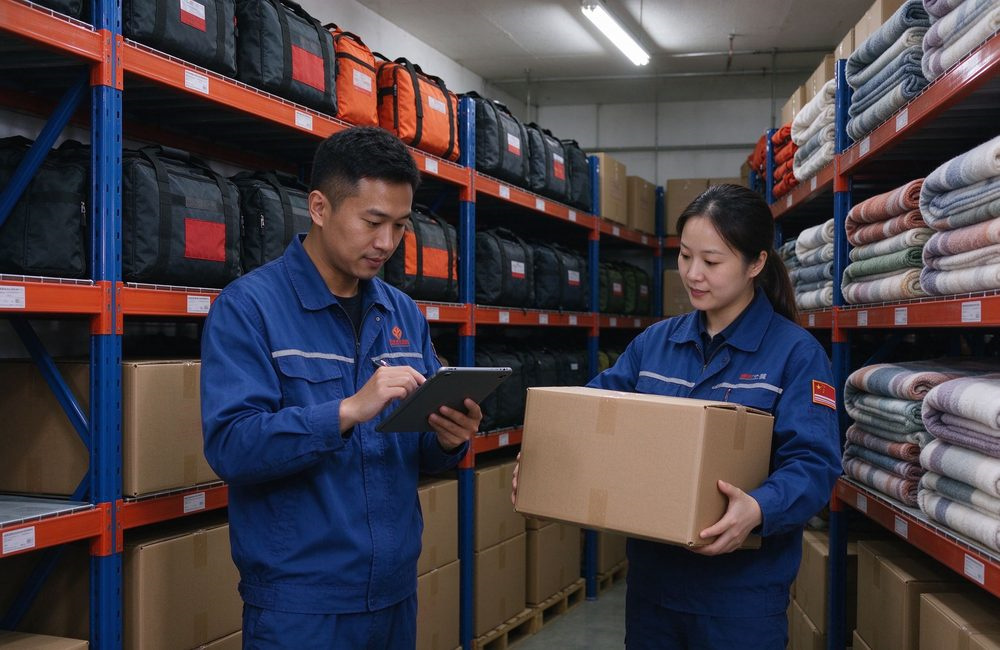
Warehouse inventory check before hurricane season
Buy before hurricane season, not during it. When a storm is named, stock sells out and transport times double. Compare specs, not just unit prices, and keep certification files available for donors and grant applications.
Custom-branded kits, including tarpaulins, blanket packaging and radio lanyards, are available with logo placement and minimum quantities confirmed per order.
The table below shows planning budget ranges by shelter population. Costs are wholesale estimates and retail usually runs two to three times higher.
Agency Size
Core Kit Cost
What It Includes
Typical Mix
Small shelter (50 people)
$1,200-2,000
2 tarpaulin rolls, 60 blankets
Wind + light + info
Medium shelter (200 people)
$4,500-7,000
8 tarpaulin rolls, 240 blankets
Full shelter baseline
Budget ranges are planning anchors only; final pricing depends on branding, lead time and delivery destination, so request a written quote well before hurricane season capacity sells out to shelter buyers.
Small shelter (50 people)
$1,200-2,000
2 tarpaulin rolls, 60 blankets, 25 radios, 25 flashlights, 3 first aid kits
Wind + light + info
Medium shelter (200 people)
$4,500-7,000
8 tarpaulin rolls, 240 blankets, 100 radios, 100 flashlights, 10 first aid kits
Full shelter baseline
Large community center (500+)
$11,000-16,000
20 tarpaulin rolls, 600 blankets, 250 radios, 250 flashlights, 25 first aid kits, rations and water
Complete program
These ranges let a program match its budget to real needs: a small shelter starts with wind protection and information tools, while a large center adds the full sleeping, feeding and first aid capacity for a long recovery.
For a 1,000-person program, double the large-center figures and add a second distribution point with its own inventory register.
A second point also shortens wait times and keeps families from standing outside in the storm. Label each point clearly so the flow stays orderly.
Kit configuration tiers help buyers match cost to need. The table below shows three common tiers from household kits to full shelter programs.
Tier
Contents
Best For
Quantities
Basic
Flashlight, whistle, mask
Household and personal
1 per family
Standard
Adds tarpaulin, FR blanket
Family and small shelter
1 per family + shelter
Pick the tier that matches how long your shelter stays open, then add consumables as needed; the basic tier covers a household while standard carries a small shelter through several nights.
Basic
Flashlight, whistle, mini first aid, rain poncho
Household and personal kits
1 per family
Standard
Adds tarpaulin, FR blanket, NOAA radio, rope
Family and small shelter kits
1 per family + shelter stock
Enhanced
Adds sleeping bag, large first aid, rations, water, duct tape
Shelter zones and community programs
Per shelter zone
Tier contents are planning configurations; final contents are confirmed per order. Most programs combine the standard tier for families with the enhanced tier for shelter zones, which keeps cost predictable and coverage complete.
Build your program on official guidance rather than guesswork. For procurement and program teams, the following sources are the standard references for storm paths, family preparedness and response safety, and each one publishes free checklists that can be printed for staff training.
Review them once during the spring planning meeting and again after each storm season ends, so the program handbook stays current with the latest federal guidance.
|
Storm tracking guidance |
Storm paths, surge forecasts, official advisories |
Threat tracking and training |
|
Hurricane preparedness checklist |
Family preparedness checklists and kit guides |
Kit content and planning |
|
Post-storm worker safety guidance |
Worker and responder safety after storms |
Cleanup and PPE planning |
For official reference, review the National Weather Service Hurricane Safety and American Red Cross Hurricane Preparedness pages when you build your program plan. For related guides on other threats, see our winter storm emergency kit and flood emergency kit articles.
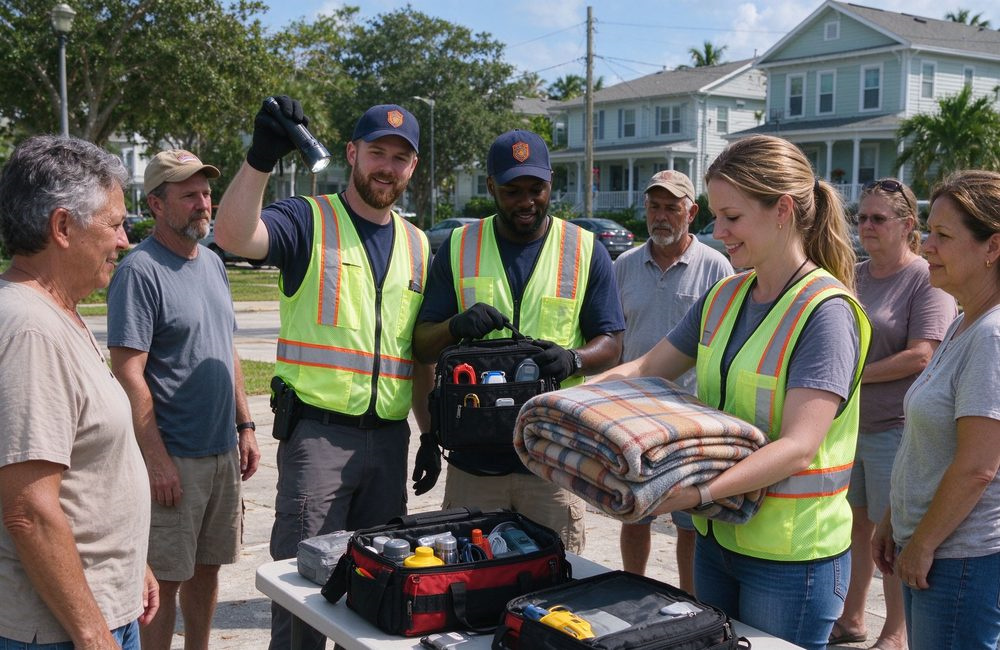
Annual community drill turns plans into habits
Hurricanes are the costliest weather events that hit North America. A dedicated hurricane emergency kit lets shelters open within hours of landfall.
We work with NGOs and shelter operators that stage hurricane preparedness supplies before hurricane season, so kits are ready the day a storm is named. Agencies that plan ahead confirm hurricane preparedness supplies early.
Shelter operators house evacuees for days. They order bulk hurricane relief gear, tarpaulins, FR blankets and cots by the hundred, relying on bulk hurricane relief gear to keep safe, dry camps.
NGO teams deploy to damaged neighborhoods. They need evacuation emergency supplies, hand-crank radios and PPE as evacuation emergency supplies in every response vehicle.
Hospitals shelter in place while schools evacuate. They need durable hurricane shelter supplies, lighting and registrations supplies, often branded.
Cities pre-position bulk storm response equipment at community centers before forecast arrival to avoid post-storm shortages.
When a storm is named, panic drives rushed decisions. These are the most common mistakes and how pre-staging prevents them.
Hardware stores sell out of tarps within hours. Order PVC tarpaulins months ahead and verify 0.45mm thickness.
Normal blankets are a fire risk. Use flame-retardant polyester blankets that meet shelter fire codes.
Phone networks fail. Hand-crank NOAA radios keep shelters connected to official warnings and charge phones.
Once evacuation is ordered, roads close. Stage hurricane shelter preparedness stock at shelters before the season.
Match the kit tier to your shelter size and operating window.
|
Level |
Best For |
Configuration |
Notes |
|
Basic Kit |
50 people |
Lighting, radio, masks, water |
Fast opening, low entry cost |
|
Standard Kit |
200 people |
Tarps, FR blankets, cots, PPE |
Most popular 72-hour shelter |
|
Full Kit |
1,000+ people |
Full camp, pumps, communication |
Covers two-week operations |
Start at standard for your headcount, then upgrade after your first real opening shows what got used; pumps and lighting move to the full kit once outages stretch past a week.
Your tarps, radios and blankets survive multiple seasons with basic upkeep.
We supply all of these as bulk storm response equipment to shelters, NGOs and municipalities, with OEM branding on orders over 200 sets of bulk storm response equipment.
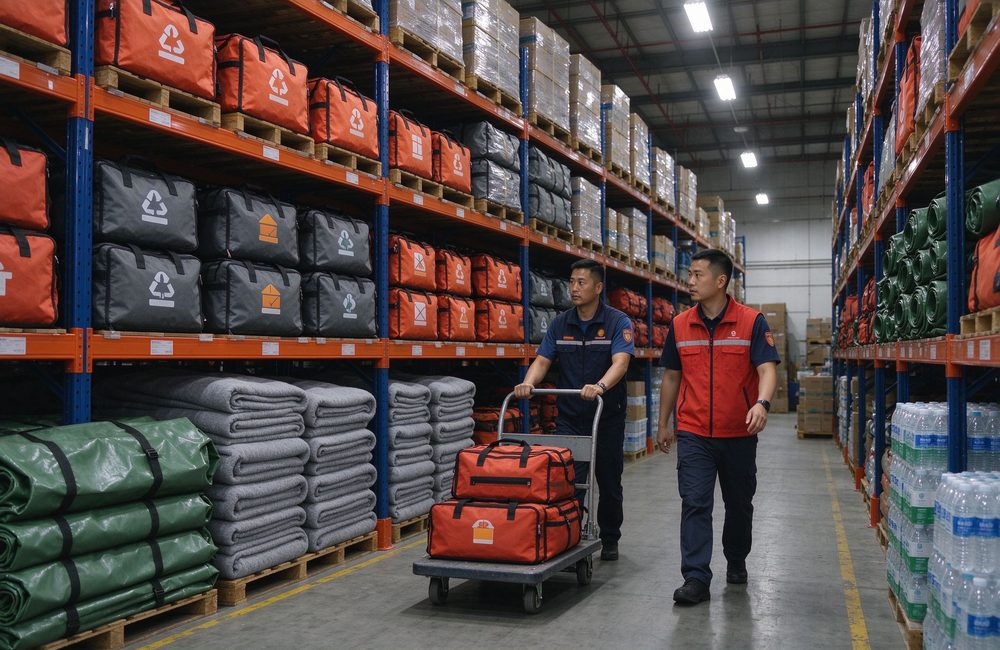
Government warehouse stockpile ready for distribution
Q: What is the difference between a hurricane watch and warning?
A: Emergency management guidance asks every family to be self-sufficient for at least 72 hours: 1 gallon of water per person per day, three days of non-perishable food, plus lighting, a radio, first aid and hygiene items. Shelters plan to the same baseline until outside help arrives.
Q: How far inland is safe from hurricane storm surge?
A: Plan 1 gallon per person per day for at least three days, about 3 gallons per person. A 200-person shelter needs roughly 600 gallons on site, with purification tablets as a backup source for refills.
Q: Should I board up windows or use storm shutters?
A: Thin tarpaulins tear under hurricane wind speeds. Confirm at least 0.45mm thickness and 550gsm coating weight with reinforced edges and eyelets. A 2x100m roll covers multiple roofs and can be cut on site, so bulk programs order by the roll.
Q: How much water should I store for a hurricane?
A: Yes. NOAA Weather Radio is the official source of storm announcements during blackouts, when AM and FM stations may go silent. Choose a hand-crank model with AM, FM and NOAA bands plus a USB power bank and LED light, so one device covers information, charging and lighting.
Q: Can I stay in my home during a Category 2 hurricane?
A: A USB-C rechargeable model is the best balance because one charging point can serve an entire shelter. Add IP68 waterproofing so it survives downpours and flooding. Hand-crank flashlights are a reliable backup, but low-lumen models disappoint users; treat them as emergency spares, not the main light.
Q: What foods should I stock for a hurricane?
A: Plan one to two flame-retardant blankets per person, with extra sleeping bags for children and elderly residents. A 200-person shelter means 200 to 400 blankets. Choose 100% flame-retardant polyester at 150x200cm and 660gsm so bedding meets shelter fire codes.
Q: How do I protect my pets during evacuation?
A: Storm surge is seawater pushed onshore by the storm winds, arriving within hours and destroying the coastal ground floor. Rainfall flooding is freshwater from the storm, mostly inland, and now causes most hurricane deaths. Programs need response capacity for both.
Q: When can I return home after a hurricane?
A: Twice a year: once before hurricane season and once mid-season. Test radios and flashlights, check ration and battery expiry dates, and replace anything that fails. Record every check in the inventory register for grant applications and reordering.
Qualified relief organizations can request samples. Tell us about your program, and we will confirm current sample terms and lead times before any bulk order.
Minimum order quantities vary by product and are confirmed per order. Shelters, schools and government programs qualify for tiered pricing; contact us with your program size for a quote.
Yes. We ship to North America, Europe, Australia and beyond. Bulk order lead times are confirmed by destination and typically run 2 to 4 weeks depending on location.
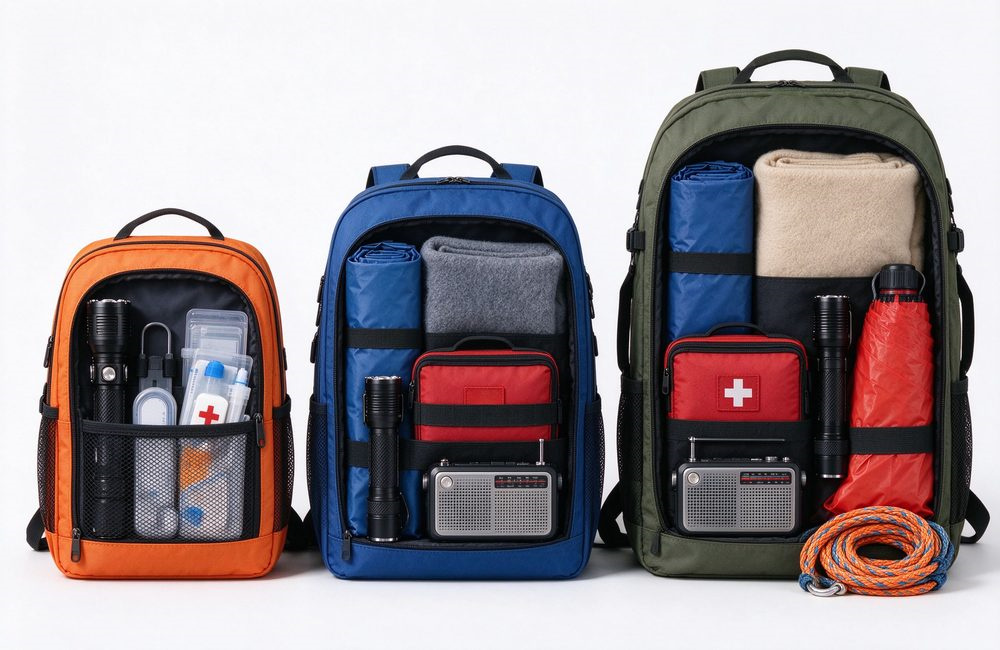
Hurricane emergency kits support custom branding, including backpacks, blanket packaging and radio lanyards. Logo placement and minimum quantities are confirmed per order.
YRF Textile · Hurricane and storm safety supplies for relief organizations
Contact: info@yrftextile.com · Ships to North America, Europe, Australia and beyondReference: Red Cross Survival Kit Supplies
Reference: Red Cross Disaster Relief
 |

|
Freundliche Links :
Urheberrechte © © Custom Disaster - Relief Bedding: Tents, Sleeping Bags, Blankets Alle Rechte vorbehalten
das professionelle Team zum Service !