Kategorien
What happens if you turn on the tap and nothing comes out? Water outages happen for many reasons—pipe bursts, water treatment plant failures, contamination, earthquakes, floods, or simply old infrastructure. Most families store only a few bottles of water, which is nowhere near enough if the outage lasts several days. Having a proper emergency water outage kit means you can protect your family's health, hygiene, and safety when the taps run dry. This guide covers everything you need for water storage emergency and no water preparedness, based on our experience supplying emergency water supply solutions to relief organizations, schools, and communities worldwide.
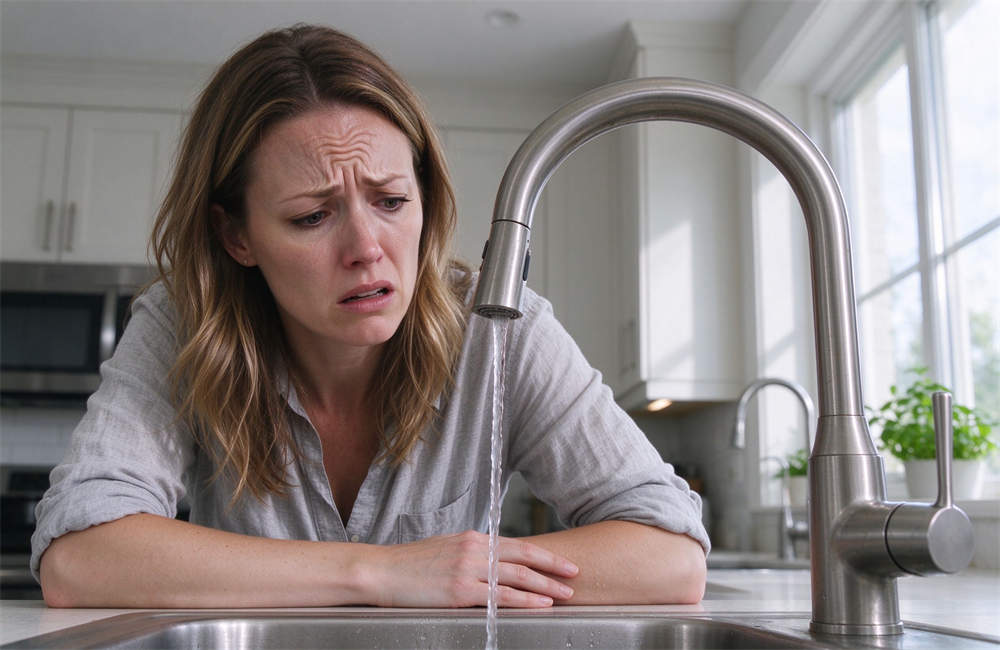
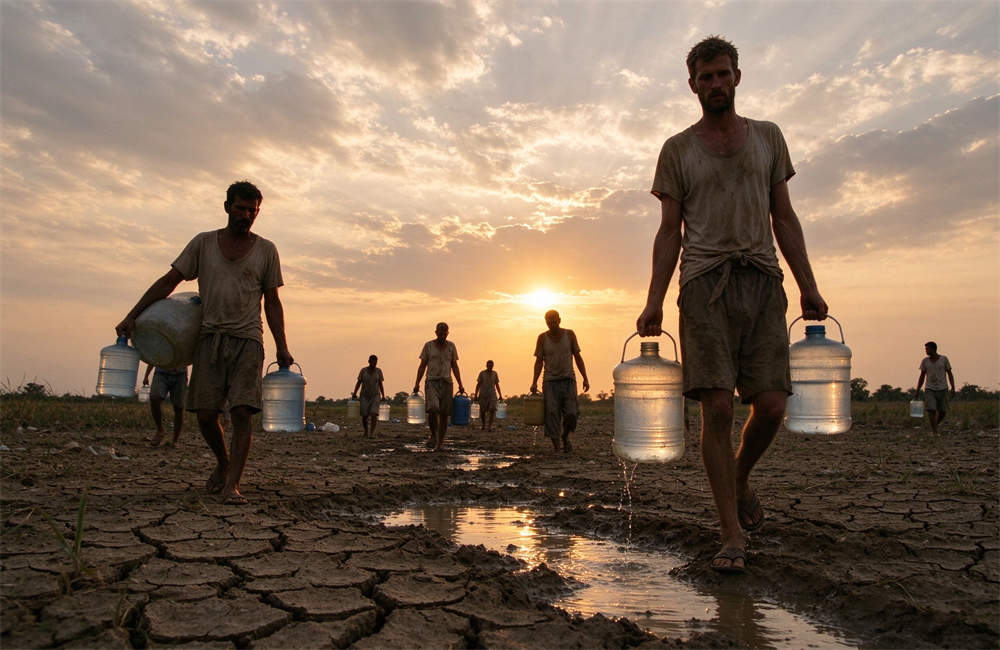
A water outage is when your tap suddenly stops producing water. It can happen for hours, days, or even weeks. The EPA water utility reports show that thousands of water main breaks happen every year in the US alone.
Pipe bursts: The most common cause. Old pipes freeze, crack, or simply wear out.
Contamination: If flood water or sewage gets into the water supply, authorities issue a "boil water advisory."
Earthquakes and floods: Natural disasters damage water infrastructure.
Treatment plant failures: Power outages or equipment failures at the water treatment plant.
Drought: In severe drought, reservoirs run low and water is rationed.
Without clean water, you can't drink, cook, clean, or flush the toilet. Dehydration sets in quickly—especially in hot weather. Poor hygiene leads to the spread of disease. That's why how to prepare for water outage starts with having enough clean water stored.
The Red Cross emergency water guidelines and FEMA both recommend at least one gallon of water per person per day for a minimum of three days. That's:
• 1 person = 3 gallons (≈ 11 liters) for 3 days
• Family of 4 = 12 gallons (≈ 45 liters) for 3 days
• School of 100 = 300 gallons (≈ 1,135 liters) for 3 days
• Emergency shelter of 1,000 people = 3,000 gallons (≈ 11,350 liters)
Remember: You need more water in hot weather, for pregnant women, for people with medical conditions, and for pets. Plan for 2 gallons per person per day in hot climates.
There are several ways to store emergency water. The right solution depends on how much water you need and how much space you have.
|
Method |
Capacity |
Best For |
Pros |
Cons |
|
Bottled water |
Small |
Short-term, car kits |
Ready to drink, cheap |
Takes space, expires, bad for environment |
|
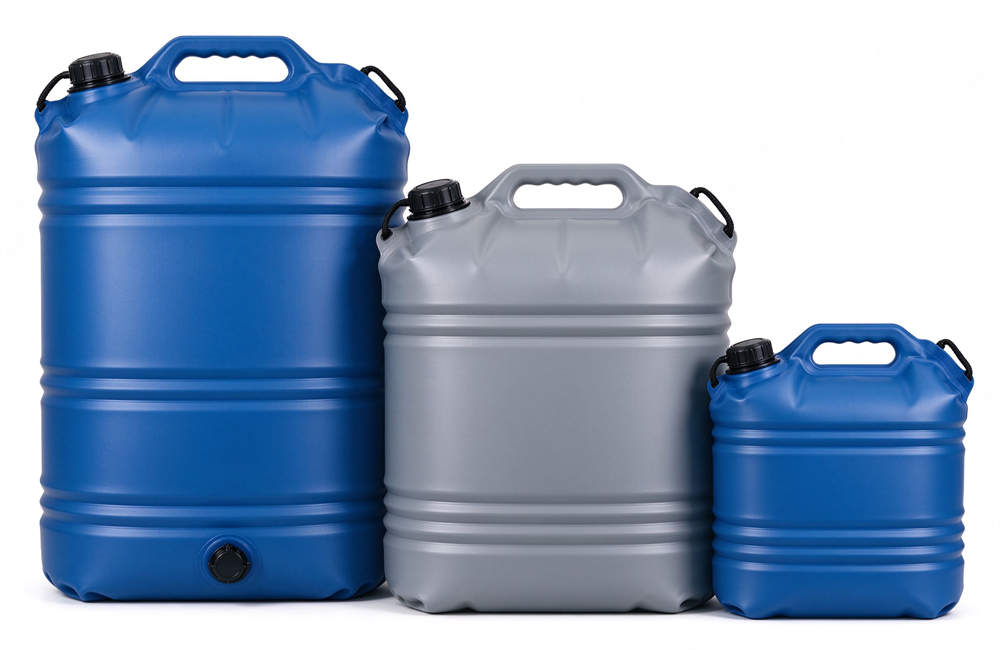
Rigid plastic tanks |
Large |
Long-term home storage |
Durable, long-lasting |
Heavy, permanent, expensive |
|
Foldable water bladders |
Medium to very large |
Home, shelter, NGO relief |
Collapsible, space-saving, affordable |
Need to fill when needed |
|
Collapsible water tanks |
Small to medium |
Individual families, car kits |
Portable, easy to carry |
Smaller capacity |
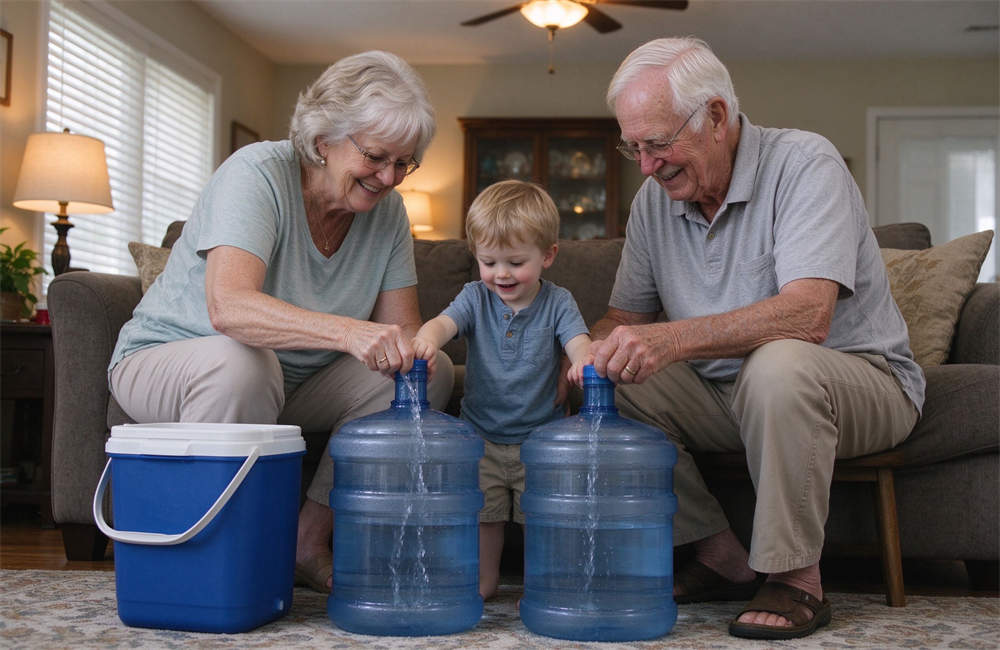
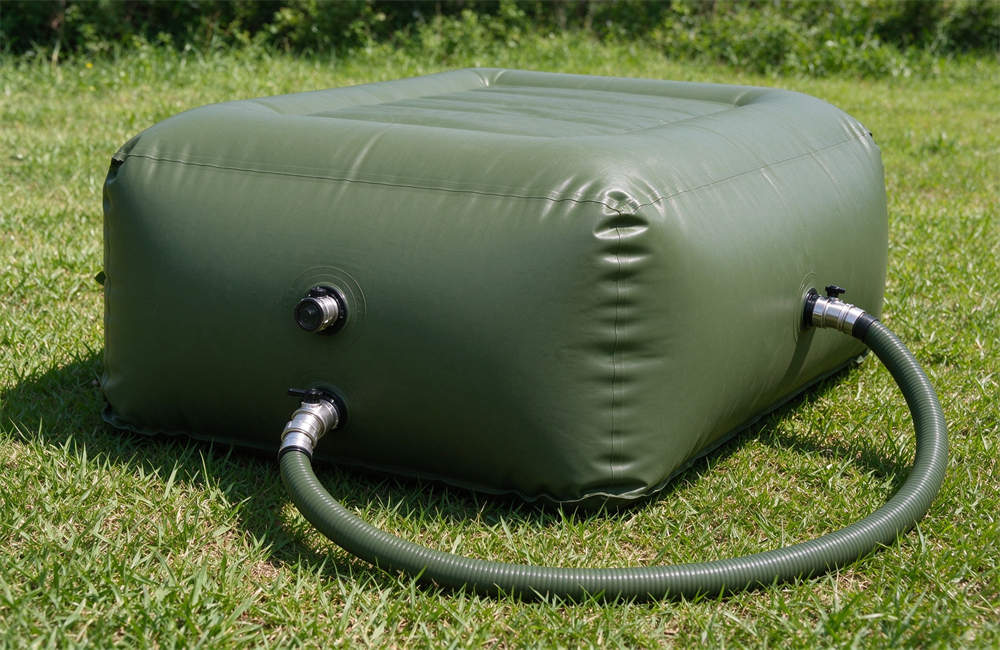
For emergency shelters, schools, and large families, foldable water bladders are the best foldable water bladder solution on the market. They collapse completely flat when empty, so you can store them under a bed or in a closet until you need them.
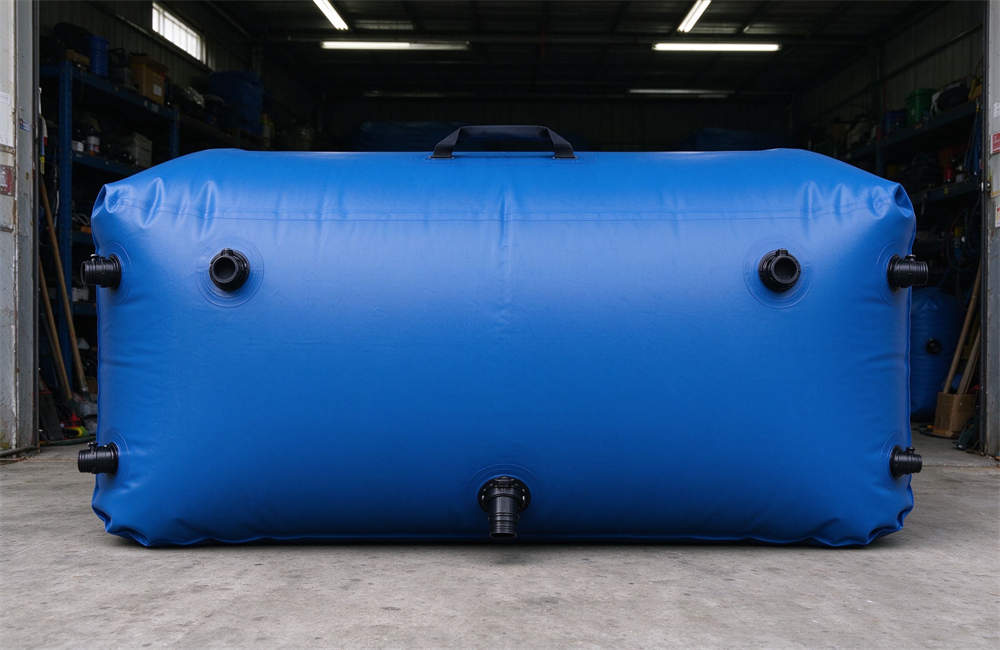
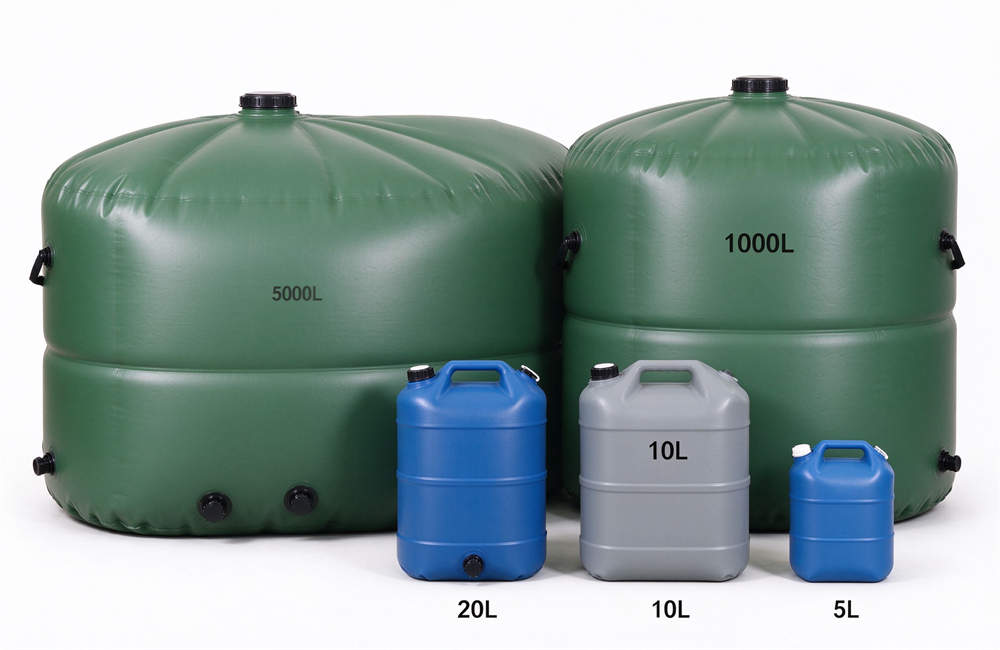
We supply foldable water bladders in two main sizes: 5,000 liter (for emergency shelters, schools, community centers) and 1,000 liter (for large families, small businesses). They are made from heavy-duty, food-grade PVC that is BPA-free, UV-resistant, and can withstand temperatures from -10°C to 60°C.
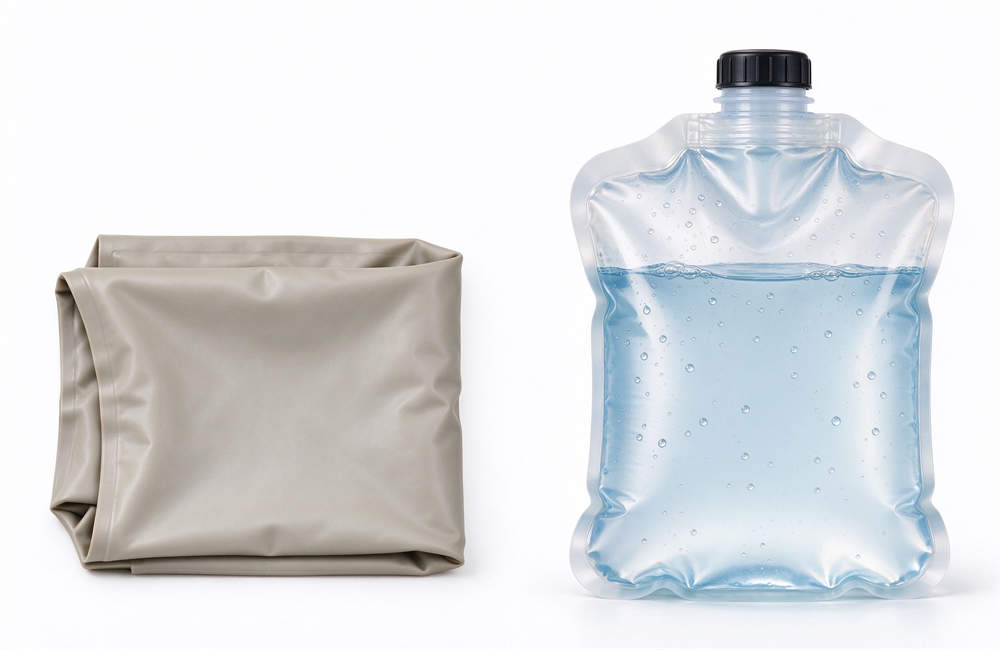
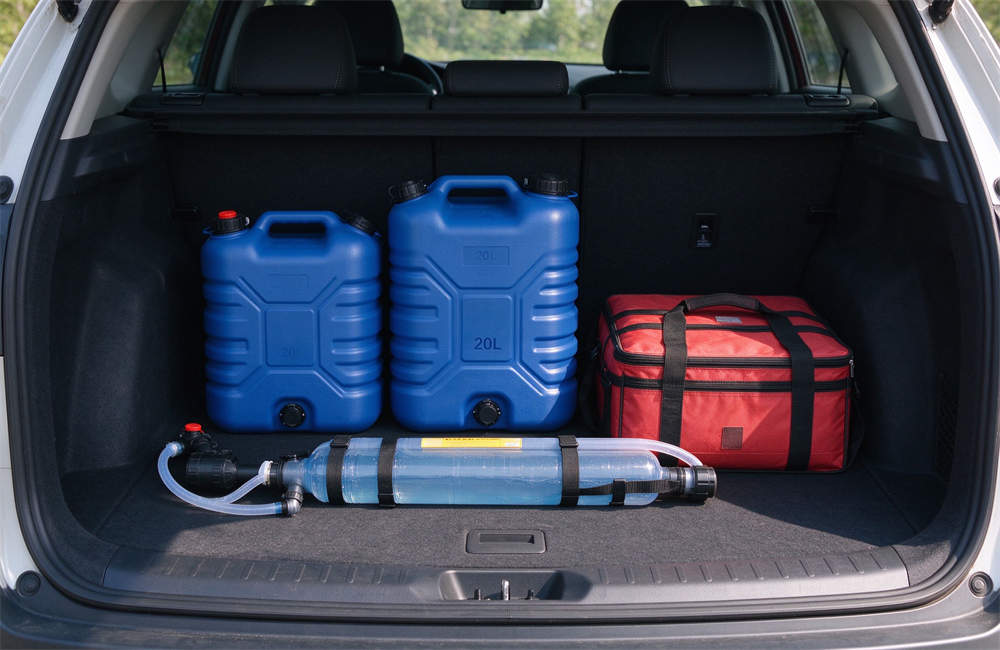
Unfold the bladder on a flat surface, connect the included hose and spigot, and fill from any clean water source—tap, rainwater, or even a stream (with purification). The bladder comes with its own storage bag and takes only minutes to deploy. When empty, it folds back down to the size of a backpack.
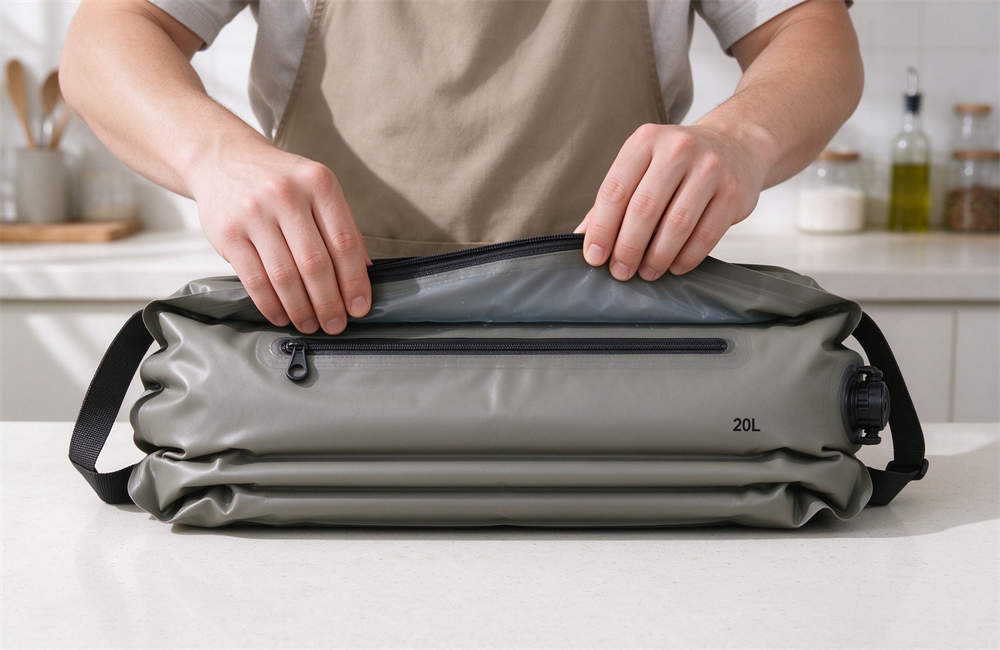
For individual use and small families, we offer collapsible water tanks in three sizes: 20 liter (≈ 5 gallons), 10 liter, and 5 liter. These are perfect for car kits, home emergency kits, and small apartments where space is limited.
They are made from the same food-grade PVC as our large bladders, come with a screw cap and a carry handle, and can be filled from any tap. When empty, they roll up small enough to fit in a drawer.
Many families think they can just stock up on bottled water. But there are several big problems:
• Takes up huge space: A family of 4 needs 36 gallons for 3 days. That's 72 bottles of water—stacking up dozens of cases.
• Expires: Bottled water goes bad after 6-12 months. You have to keep rotating.
• Expensive: Buying cases of bottled water adds up over time.
• Bad for environment: Millions of plastic bottles end up in landfills.
Foldable water storage solves all these problems. It costs less, takes up 80% less space when empty, lasts for years, and produces zero plastic waste.
When the water is out, you still need to wash your hands, clean dishes, and stay sanitary. The WHO water and sanitation guidelines emphasize that hand hygiene prevents disease outbreaks during water emergencies. Here's what you need:
• Wet wipes: For cleaning bodies and surfaces.
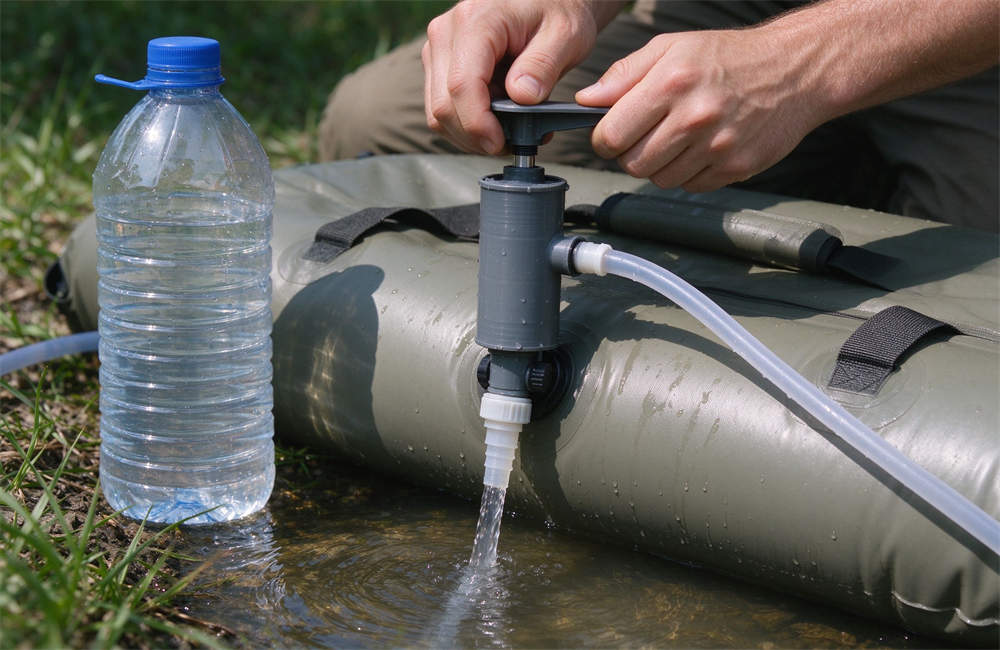
• Manual water pump: To transfer water from your large storage bladder into smaller containers for washing and cooking.
• Portable toilet supplies: If the water is out, the toilets won't flush either. We supply portable toilets and toilet bags for emergency situations.
Beyond water, your emergency water outage kit should include:
• First aid kit: Cuts, scrapes, and medical needs don't stop because the water is off.
• LED headlamp and hand-crank radio: Water outages often come with power outages.
• Non-perishable food: You can't cook without water, so stock up on no-cook foods.
• Emergency blankets and sleeping bags: If the outage is during a storm, you may need to stay warm.
• Fire blankets and smoke hoods: For safety, just in case.
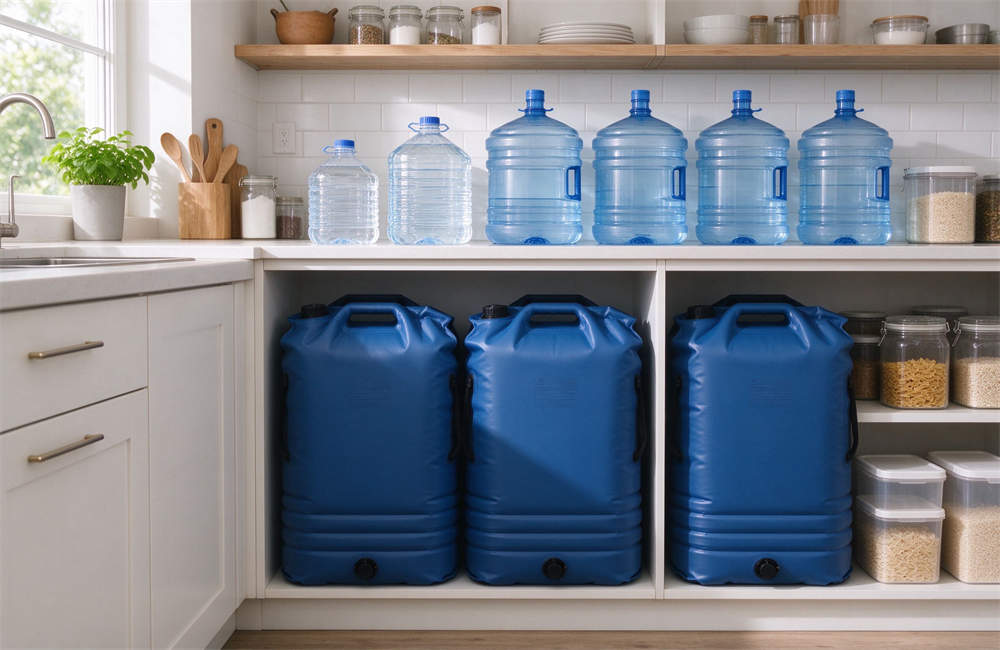
For a typical family of 4: two 20L collapsible tanks, one 1000L foldable bladder, a manual water pump, wet wipes, and a first aid kit. Store the 1000L bladder in your garage or basement, and keep the small tanks in your kitchen closet.
For a school of 500 students: two 5000L foldable bladders, several manual water pumps, bulk wet wipes, and portable toilets. Schools should have at least 3 days of water stored on site. We supply complete water storage kits to schools and community centers worldwide.
For hospitals and emergency shelters: multiple 5000L foldable bladders, industrial water pumps, and water testing kits. These high-capacity systems can be deployed in hours and supply clean water to hundreds of people for days.
The following table summarizes the complete emergency water storage kit for each scenario:
|
Scenario |
Water Storage Needed |
Recommended Products |
Total Capacity |
|
Family of 4 (3 days) |
~45L |
2× 20L collapsible tanks + 1× 10L tank |
50L |
|
Large Family / Small Office |
~400L |
1× 1000L foldable bladder + 2× 20L tanks |
1040L |
|
School (500 students, 3 days) |
~15,000L |
3× 5000L foldable bladders + manual pumps |
15,000L |
|
Emergency Shelter (1000 people) |
~30,000L |
6× 5000L foldable bladders + industrial pumps |
30,000L |
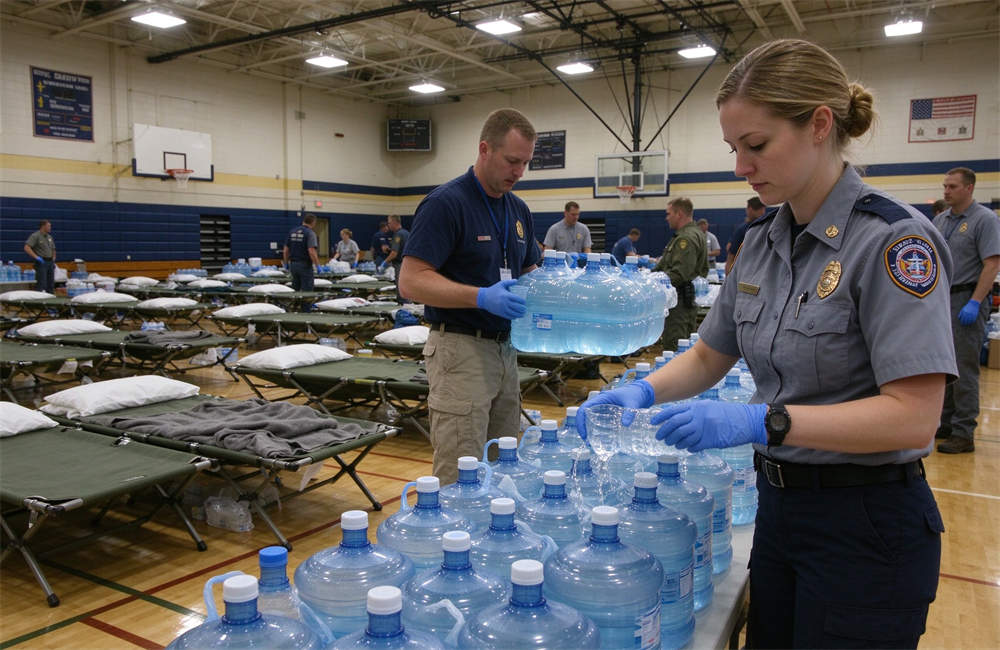
When the water stops, not everyone needs the same amount. The Red Cross recommends one gallon per person per day as a minimum, but some people need more:
Kids under 12 need about half a gallon per day, but they get dehydrated faster in hot weather. Pregnant women need closer to a full gallon because hydration affects both mother and baby. If you're storing water for a family with young kids, add an extra 20% to your calculation.
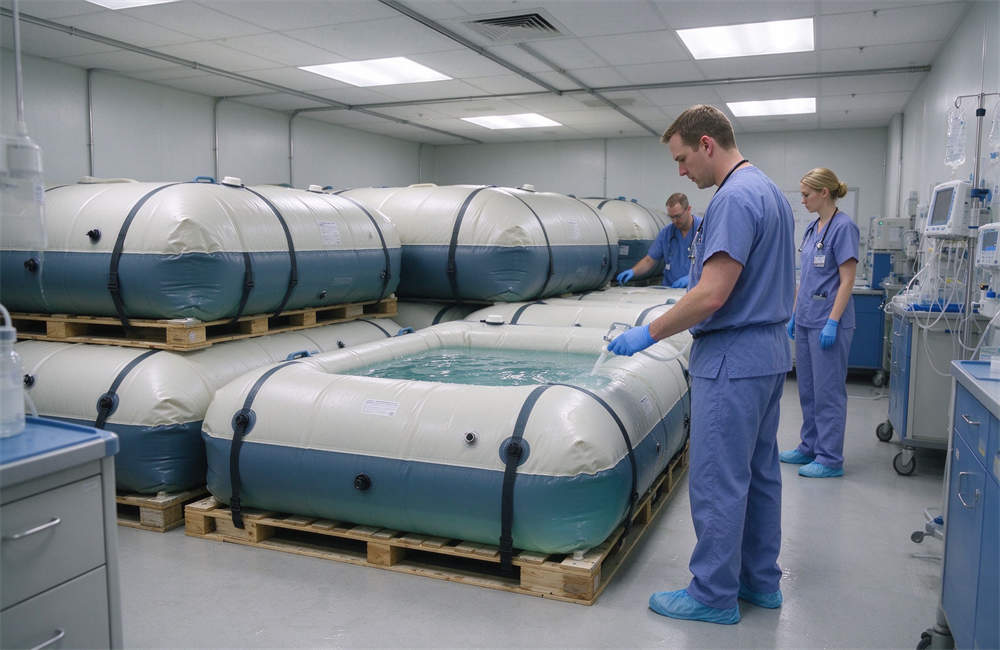
Older adults often don't feel thirsty until they're already dehydrated. People on dialysis, chemotherapy, or with diabetes need regular clean water for medications and health. If your facility serves elderly or medically fragile populations, store at least a 7-day supply—not the 3-day minimum.
Dogs need about one ounce of water per pound of body weight per day. That's a gallon for a 160-pound dog. Cats need less, but they still need clean water. Don't forget to factor in your pets when you calculate your emergency water storage needs.
In hot, dry weather, water needs double. If you're in a desert climate or the outage happens in summer, plan for 2 gallons per person per day. That's 56 gallons for a family of 4 for a week—which is why we recommend the 1,000L foldable bladder for schools and community shelters.
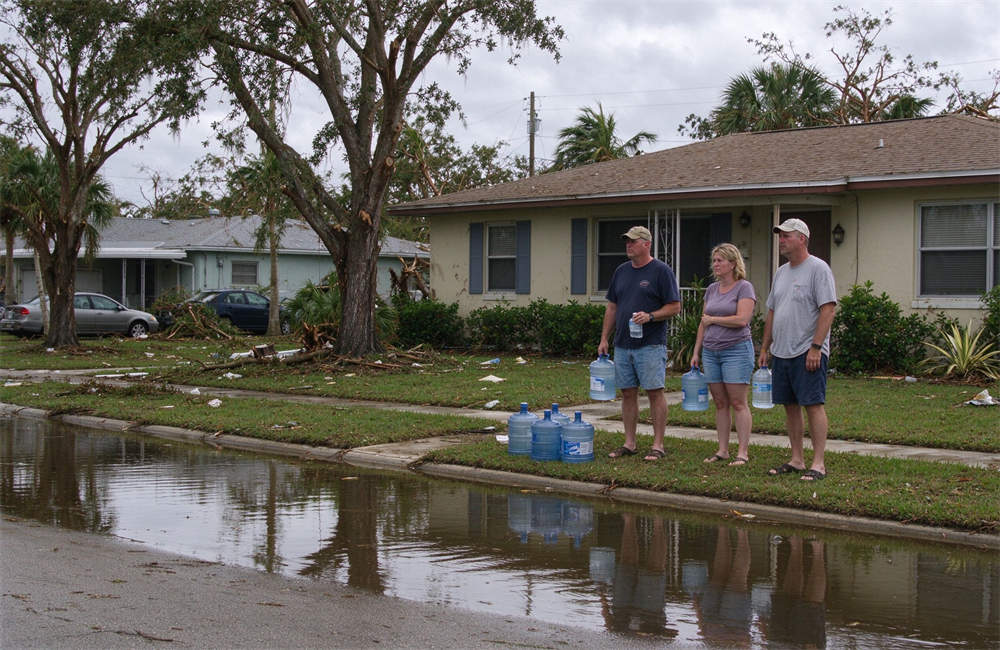
Water outages happen for different reasons, and each one has different challenges:
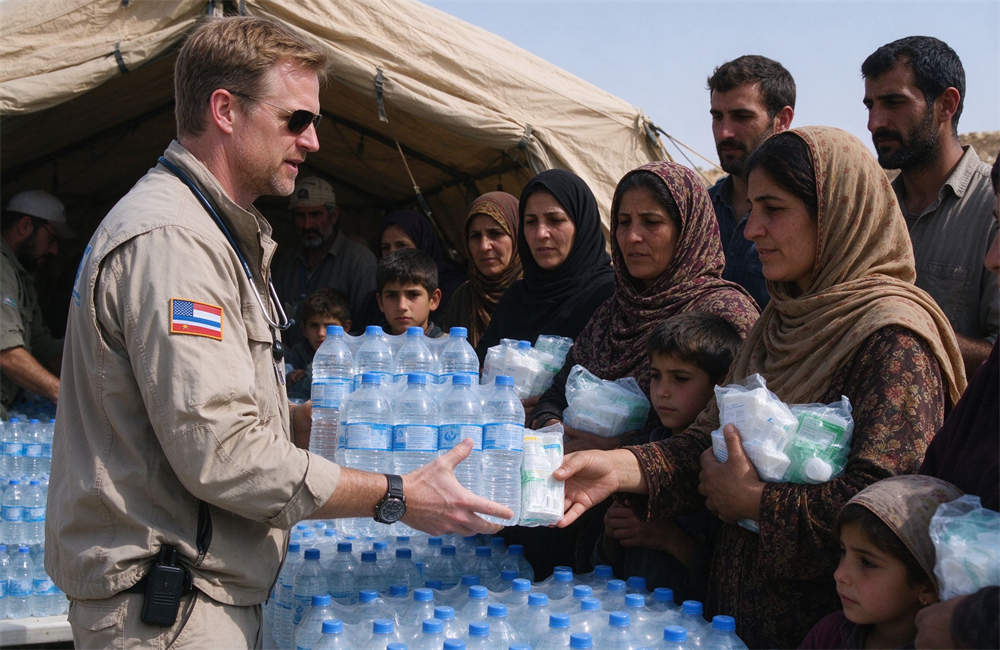
Hurricanes often knock out water treatment plants for days or weeks. After Hurricane Maria in Puerto Rico, 80% of the population was without clean water for up to 8 months. Communities that had pre-stored water in foldable bladders were able to set up distribution points within hours. We supplied 5,000L bladders to relief NGOs working in those communities.
Earthquakes break water mains and contaminate water supplies. After a major quake, tap water is unsafe to drink until it's tested. Schools and hospitals should have at least a 3-day supply on-site. We work with school districts on their emergency water storage plans—often the 1,000L bladder fits perfectly in a storage closet or basement.
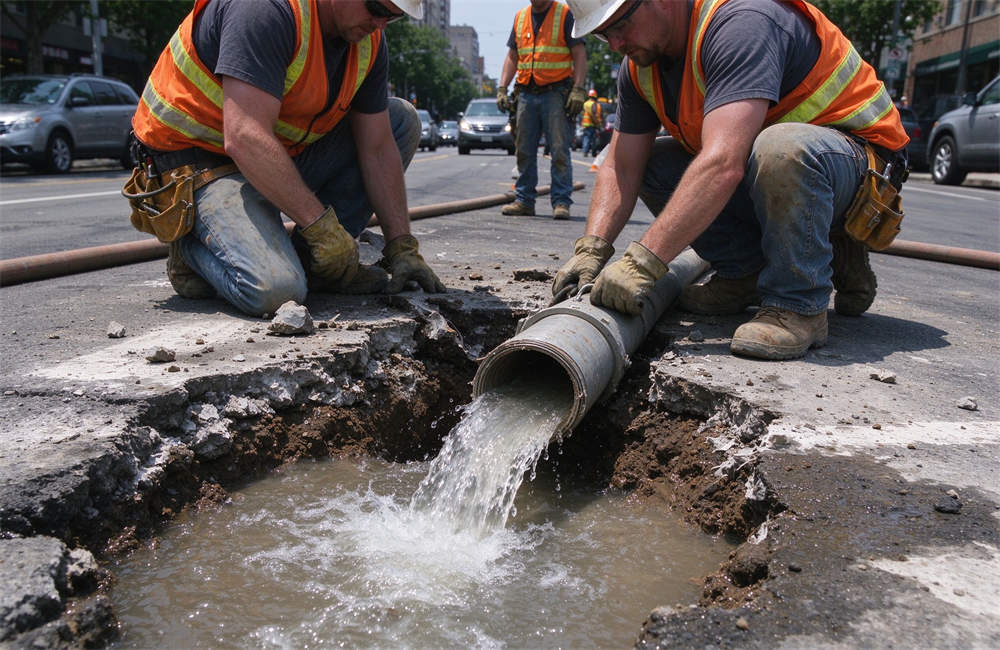
Sometimes the water comes back on but you can't drink it. Boil-water advisories can last days or weeks. During these times, you need either bottled water or a way to store safe water. A 20L collapsible tank is perfect for a small family—store it under the sink, fill it when the advisory hits.
Wildfires can contaminate water supplies with ash and chemicals. Water systems in fire zones may issue warnings to not use tap water for drinking or even cooking. Having stored water means you don't have to rely on grocery store shelves that empty within hours.
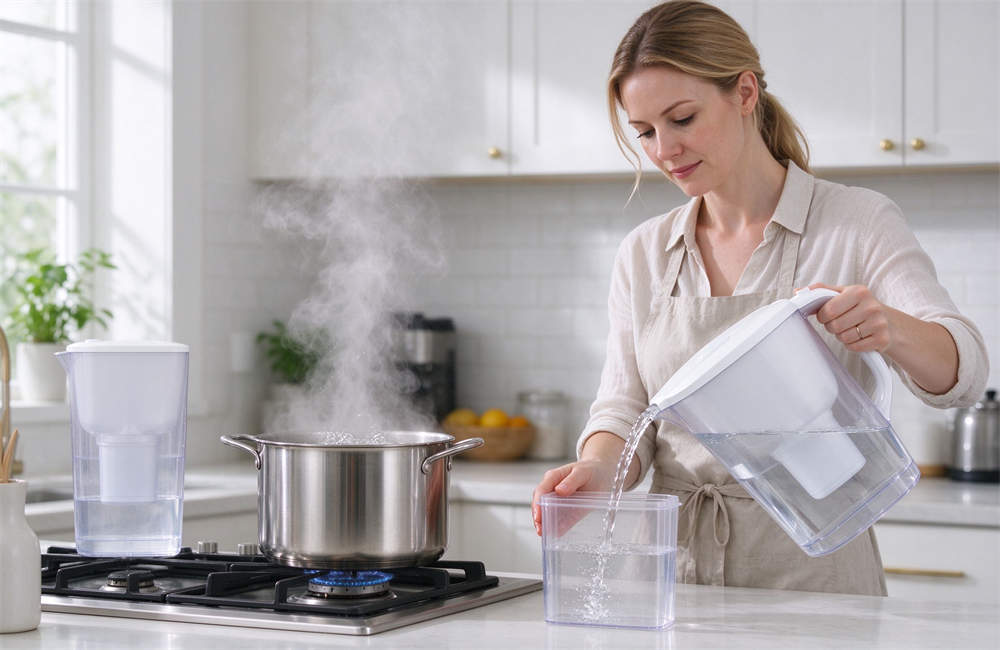
Once the tap goes dry, it's too late to start shopping. But if you've prepped, here's how the first 72 hours typically unfold:
Turn off the main water supply if utility advises. Use your pre-stored water for drinking and cooking only—no washing, no flushing, no showering. Fill the bathtub and any clean containers with the last of the tap water before pressure drops completely. Check on neighbors, especially elderly or disabled residents.
If the outage extends beyond 24 hours, ration water to half a gallon per person per day for drinking. Use wet wipes for hygiene. Don't eat salty foods—they increase thirst. If you have a foldable water bladder stored, now is the time to deploy it. Contact local emergency services to find out where bottled water distribution centers are set up.
By day three, formal relief operations usually kick in. If you're an organization or NGO, this is when your bulk water storage assets matter most—set up distribution stations, prioritize hospitals and shelters, and track who has received water. Schools and office buildings should open as emergency shelters if they have stored water on-site.
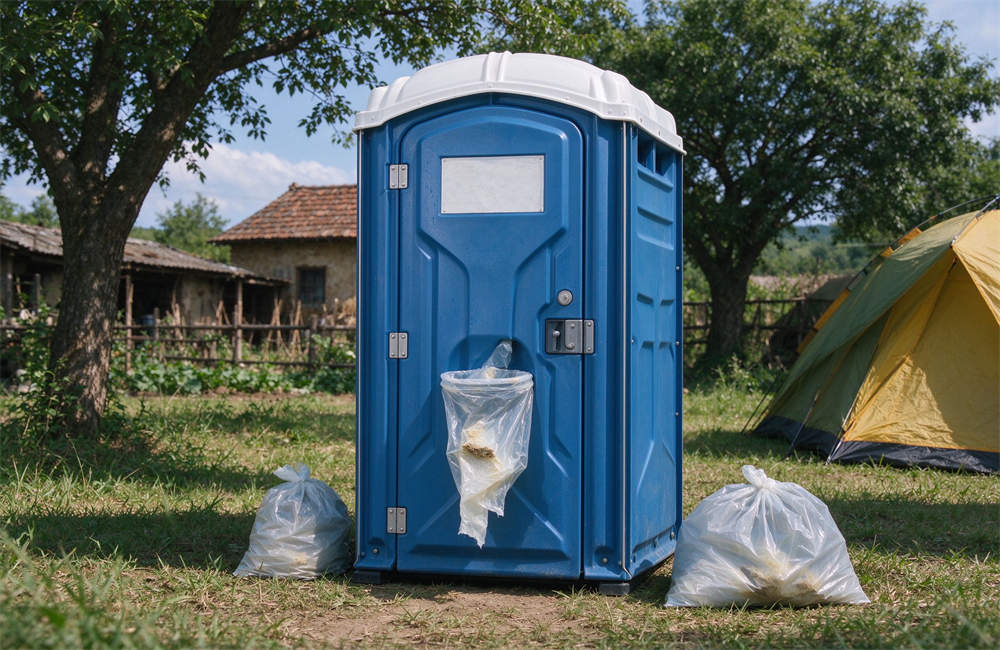
Choosing the right size emergency water storage depends on how many people you're supporting and how much space you have:
|
Size |
Capacity |
Best For |
When Empty |
|
5L collapsible tank |
5 liters (1.3 gal) |
1 person, emergency kit, car trunk |
Folds flat, takes 1-inch of space |
|
10L collapsible tank |
10 liters (2.6 gal) |
1-2 people, weekend kit |
Folds flat |
|
20L collapsible tank |
20 liters (5.3 gal) |
Family of 4, 2-day supply |
Folds flat |
|
1,000L foldable bladder |
1,000 liters (264 gal) |
School, small shelter, office building |
Folds to 15cm thick |
|
5,000L foldable bladder |
5,000 liters (1,320 gal) |
NGO relief, large shelter, distribution point |
Folds to 20cm thick |
We supply all of these as wholesale water storage solutions. For NGOs and relief organizations, we can package the bladders with pumps, hoses, and filling instructions as complete distribution kits. Custom branding and private labeling available for orders over 300 units.
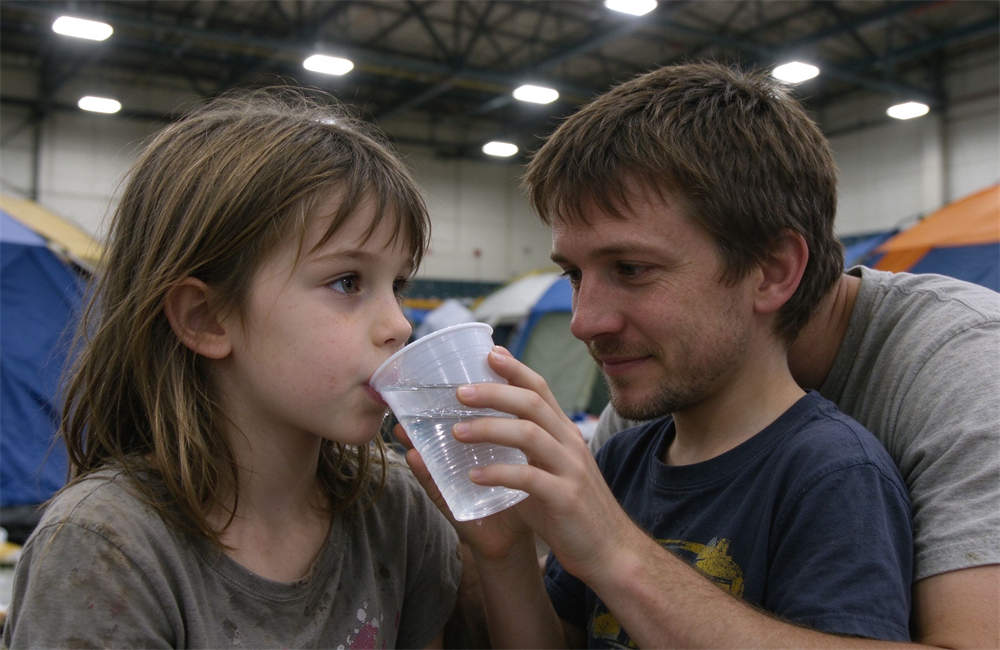
The Red Cross recommends at least one gallon of water per person per day for a minimum of three days. That means 12 gallons for a family of 4. More is needed in hot weather or for people with medical needs.
Commercially bottled water has a 2-year shelf life. Water you store yourself in clean, sanitized food-grade containers should be rotated every 6 months. Foldable water bladders with BPA-free PVC can store water for years.
Yes! Modern foldable water bladders are made from heavy-duty, food-grade PVC that is BPA-free, UV-resistant, and can withstand temperatures from -10°C to 60°C. They are widely used by emergency shelters and relief organizations.
Do not drink tap water if it's contaminated. Use stored emergency water instead. If you must use tap water, boil it for at least one minute before drinking. Never drink flood water.
Use foldable water bladders and collapsible tanks. They collapse flat when empty, taking up 80% less space than rigid containers. Fill them only when needed.
Yes. We manufacture all our water storage products in-house and offer OEM services. We can print your NGO logo, add your organization's contact info, and package the bladders with your training materials. Minimum order for custom branding is 300 units.
Standard 5,000L bladders are in stock and ship within 7 days. Custom-printed or branded orders take 30-45 days. For emergency relief missions, we can expedite production in as little as 10 days—just tell us your deadline.
Yes. All our foldable water bladders are made from food-grade, BPA-free, UV-resistant PVC. They meet international food contact standards and are safe for drinking water storage. We can provide test reports on request.
We ship worldwide. For small bladders (5L-20L), we ship by DHL/FedEx express. For large bladders (1,000L-5,000L), we ship by sea freight in 20ft/40ft containers. We can also deliver to your freight forwarder in China. Lead time: 7 days for stock, 30 days for custom branding.
Yes. We can send a 5L or 20L sample bladder for you to test the quality. Sample cost is refundable against your first bulk order. For large bladders, we can send photos, videos, and test reports before you commit.
Our foldable water bladders have a 5-year service life when stored properly (out of direct sunlight, not over-filled). The PVC material is UV-resistant and tear-resistant. We recommend inspecting the bladder and fittings annually for wear and tear.
Water outages can last anywhere from a few hours to several weeks—after hurricanes, earthquakes, or pipeline breaks. The organizations and communities that fare best are the ones that stored water before the crisis hit. As a leading emergency water supply manufacturer, we've spent over a decade engineering food-grade, BPA-free foldable water bladder systems that fold flat when empty and deploy in minutes when the tap runs dry. From 5-liter household pouches to 5,000-liter emergency reservoir bladders, we supply wholesale water storage to NGOs, campgrounds, schools, and disaster response teams on every continent. Let's talk about your water storage plan.
Freundliche Links :
Urheberrechte © © Custom Disaster - Relief Bedding: Tents, Sleeping Bags, Blankets Alle Rechte vorbehalten
das professionelle Team zum Service !