Kategorien
When a cold snap hits and a community shelter opens its doors, the blankets need to be ready — not on order. The mismatch we see most often is buying one blanket type in one large quantity without working through the actual numbers. A shelter that plans for 500 people but only has sleeping space for 300 will end up with blankets they cannot store and shortages in the rooms that actually open. This guide walks you through how to calculate the right quantity, choose the right blanket setup, store them so they last, and set up a replenishment system that works for institutional and wholesale buyers.
Planning formula: Base quantity = planned sleeping users × blankets per user. Planning quantity = base quantity + contingency (10–20% for demand variation) + replacement allowance (5–10% for damage and loss). Keep every assumption visible so the next buyer can see why the number was chosen.
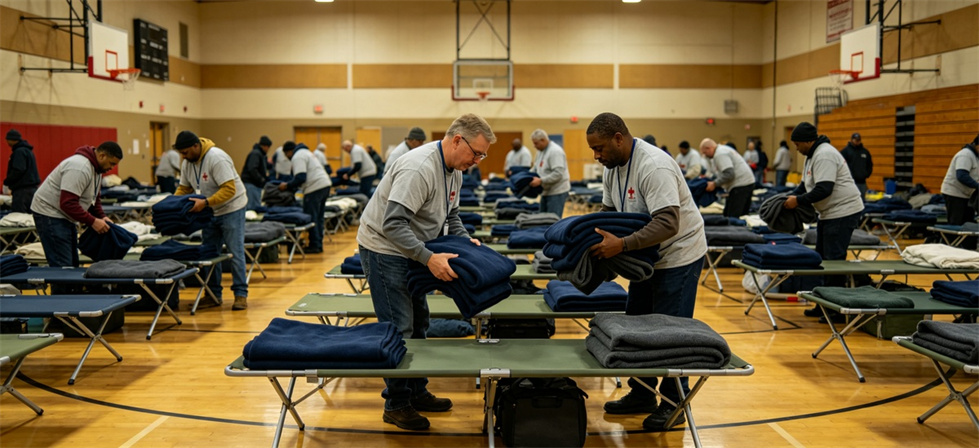
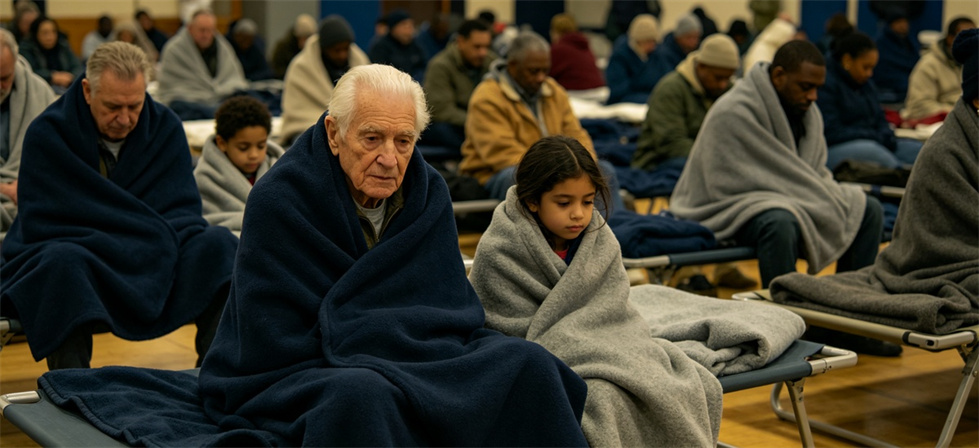
Before you count blankets, be clear about what kind of shelter you are planning for. A short-stay warming centre that opens for 4–6 hours during cold weather has very different blanket needs from an overnight shelter that houses people for days or weeks.
|
Shelter type |
Typical stay |
Blankets per person |
Key consideration |
|
Warming centre (daytime) |
4–8 hours |
1 |
Lightweight, easy to fold and restock |
|
Overnight emergency shelter |
1–7 nights |
1–2 |
Medium weight, durable, washable |
|
Long-term temporary shelter |
Weeks to months |
2 |
Heavier weight, must withstand repeated washing |
|
Government reserve stockpile |
Stored 3–5 years |
1 (per planned person) |
Vacuum packed, moisture controlled, regular inspection |
▶ From sending the first inquiry to final cargo arrival, bulk ordering emergency relief blankets involves multiple critical milestones. Our article *How to Order Emergency Relief Blankets in Bulk: From RFQ to Shipment* presents the complete operational workflow, ideal for procurement newcomers to get up to speed quickly.
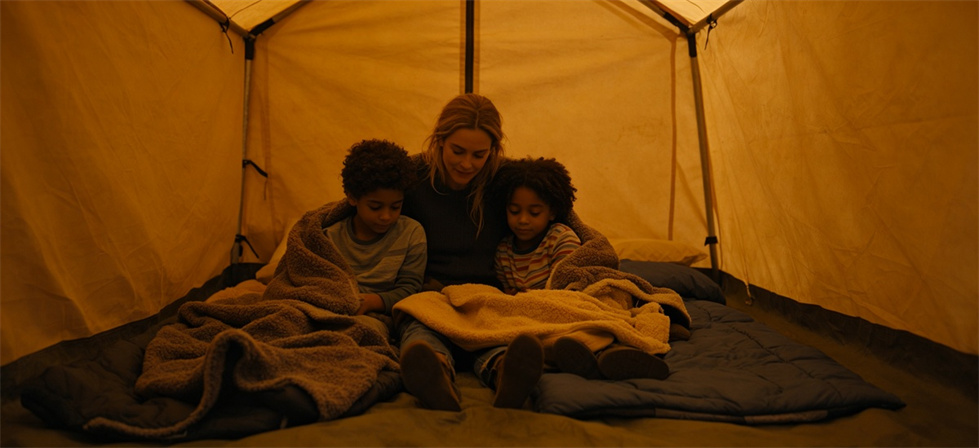
Use actual sleeping arrangement as your blanket number, not maximum building occupancy. A gymnasium rated for 800 people may only have 300 sleeping cots. Blanket quantity should follow the planned sleeping positions, not the fire code capacity. Ask the shelter manager for the planned sleeping positions, not the maximum headcount.
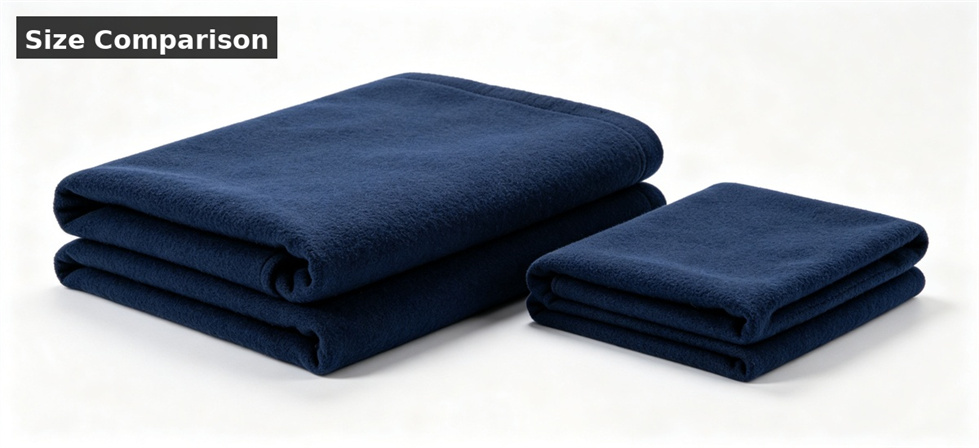
Adults, children, elderly users, and people with limited mobility may need different sizes or weights. One standard adult size (150 × 200 cm, 200–250 GSM anti-pilling fleece) covers 85–90% of shelter users. Add a smaller size (120 × 180 cm) only if you expect a significant number of children — otherwise the extra SKU complicates storage and replenishment for little benefit.
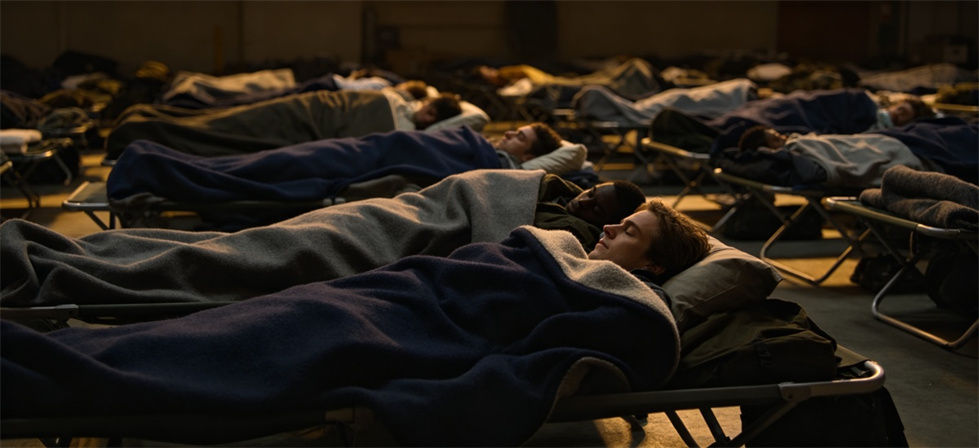
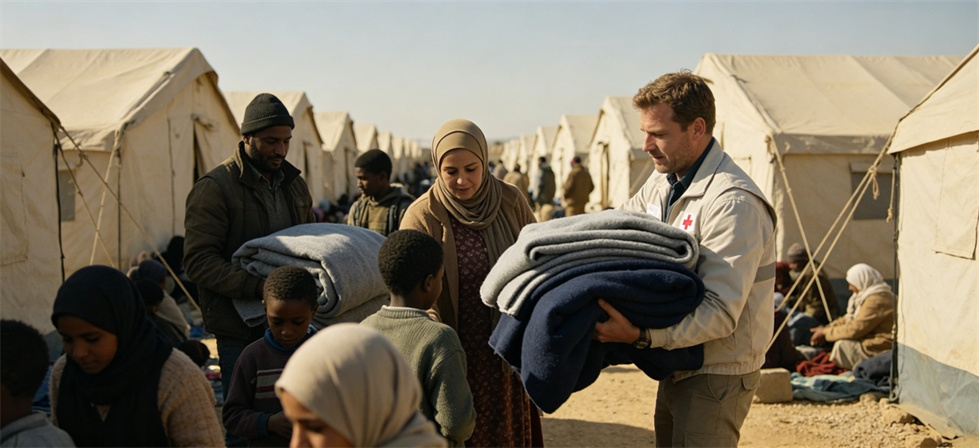
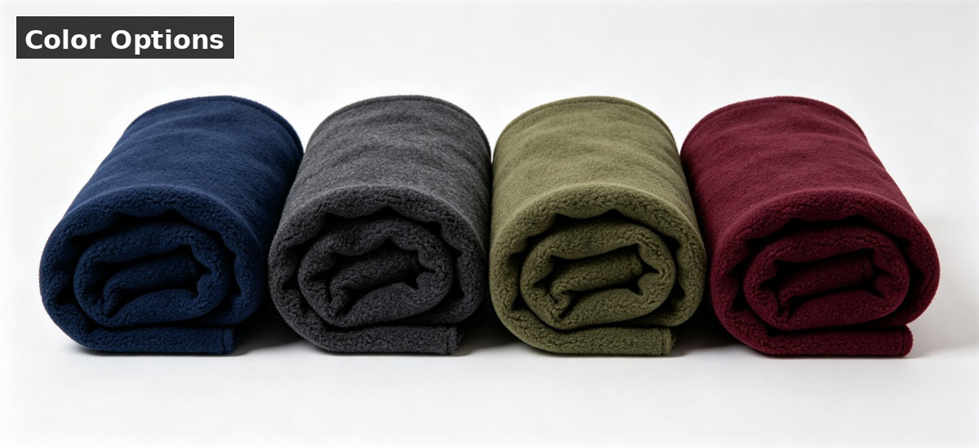
Institutional colour options: Navy blue and dark grey work for general community shelters. Olive green suits military and police dormitory use. Navy blue is also standard for police and civil defence programmes. Choose colours that hide dirt and withstand industrial washing — white and light colours show stains after the first wash.
|
Colour |
Common user |
Why this colour |
|
Navy blue |
Police, civil defence, general shelters |
Hides dirt, professional appearance, withstands washing |
|
Olive green |
Military, army barracks |
Standard military colour, low visibility |
|
Dark grey |
Community shelters, NGOs |
Neutral, hides stains, suits mixed user groups |
|
Burgundy / dark red |
Charity / donation programmes |
Warm appearance, distinguishable from government stock |
Once you know the shelter type and user groups, calculate the quantity in three layers: base quantity, contingency, and replacement allowance. Keep each layer separate so you can explain and adjust the total.
|
Item |
Calculation |
Quantity |
|
Planned sleeping users |
Given by shelter manager |
300 |
|
Blankets per user |
Overnight shelter = 1.5 average (some need 2) |
1.5 |
|
Base quantity |
300 × 1.5 |
450 |
|
Contingency (15%) |
450 × 0.15 |
68 |
|
Replacement allowance (8%) |
450 × 0.08 |
36 |
|
Total planning quantity |
450 + 68 + 36 |
554 blankets |
Post-disaster temporary housing and emergency shelter placement impose strict requirements on blanket thermal performance and hygiene standards. We deliver complete bulk emergency shelter blanket supply solutions covering the full chain of thermal selection, bulk stockpiling, hygiene standards and rapid distribution. For product adaptation details in temporary housing scenarios, check our article *Bulk Emergency Shelter Blankets for Temporary Housing*.
Round up to the nearest carton quantity. If each carton holds 30 blankets, 554 ÷ 30 = 18.5 cartons, so order 19 cartons = 570 blankets. The extra 16 blankets become additional contingency, which is fine — it is better to have a small surplus than to run out during a cold snap.
A good plan shows a base scenario, a higher-demand scenario, and a lower-demand scenario. For the 300-person example: base = 570 blankets, high = 700 blankets (if a nearby shelter closes), low = 450 blankets (if usage is lower than expected). This lets you explain to budget reviewers why the number might change and avoids treating one estimate as a permanent fact.
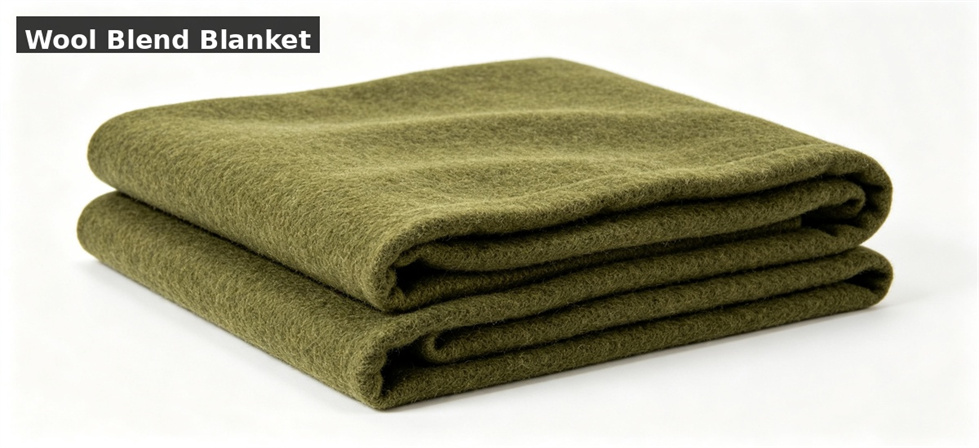
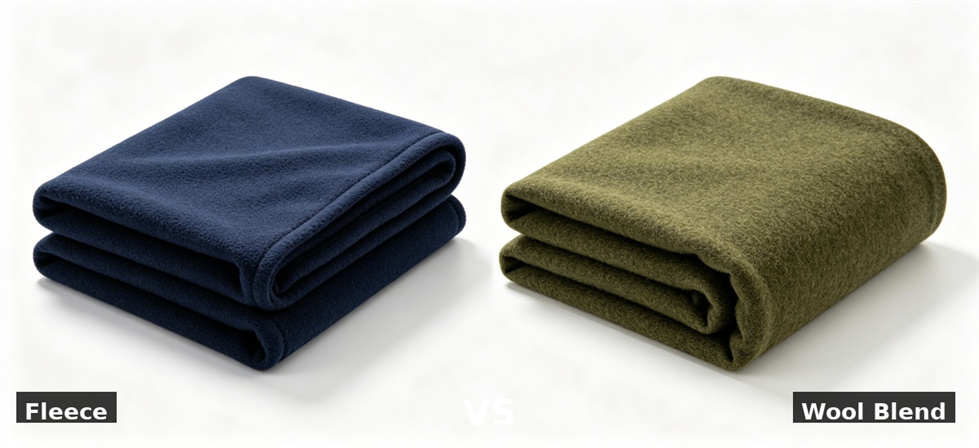
The blanket you choose for a stockpile is not the same one you would choose for a hotel. It needs to be durable, washable, easy to store, and identifiable after months in a carton. Four materials are commonly used for institutional and wholesale shelter orders.
|
Material |
Typical GSM |
Warmth |
Durability |
Washability |
Best for |
|
Anti-pilling fleece (polyester) |
200–250 |
Good |
Very good (50+ washes) |
Easy, quick-dry |
Most community shelters, general use |
|
Raschel blanket (acrylic) |
300–400 |
Very good |
Good |
Moderate, slower dry |
Cold climate shelters, long-term stay |
|
Wool blend (wool/polyester) |
350–500 |
Excellent |
Excellent |
Requires care, no hot wash |
Extreme cold, military/police dormitories |
|
Recycled rPET fleece |
200–250 |
Good |
Good |
Easy |
Programs with sustainability requirements |
|
Indoor temperature |
Fleece GSM |
Wool blend GSM |
Notes |
|
18°C+ (heated shelter) |
180–200 |
250–300 |
Light layer, users may wear clothes |
|
12–18°C (moderate) |
220–250 |
300–350 |
Standard for most overnight shelters |
|
5–12°C (cold) |
280–300 |
350–400 |
Pair with sleeping bag for extra warmth |
|
Below 5°C (very cold) |
300+ or double layer |
400–500 |
Wool blend recommended; consider two per person |
|
User group |
Recommended size |
Notes |
|
Adults (standard) |
150 × 200 cm |
Covers 85–90% of users |
|
Children (6–12 years) |
120 × 180 cm |
Add only if significant child population |
|
Tall users (185cm+) |
150 × 220 cm |
Add 5–10% for mixed adult groups |
|
Double / family |
200 × 230 cm |
For family shelters, not standard stockpile |
 |
 |
|
|
|

▶ Institutional procurement for government material stockpiles, prison accommodation and military camps imposes strict requirements on blanket quality and delivery stability. We support large-volume wholesale supply of emergency relief blankets, strictly complying with project technical specifications to guarantee consistent supply capacity. To learn key points for institutional bulk purchasing, please refer to our article *Emergency Disaster Relief Blankets | For Government Stockpiles, Correctional Facility Blankets & Military Camps – Bulk Wholesale Supply*.
Always order a matched sample before standardizing. Check the material, finished size, GSM, piece weight, surface feel, edges, label, and carton packing. If the product or packing changes later, get a new sample — a carton change can affect storage capacity even if the blanket title stays the same.
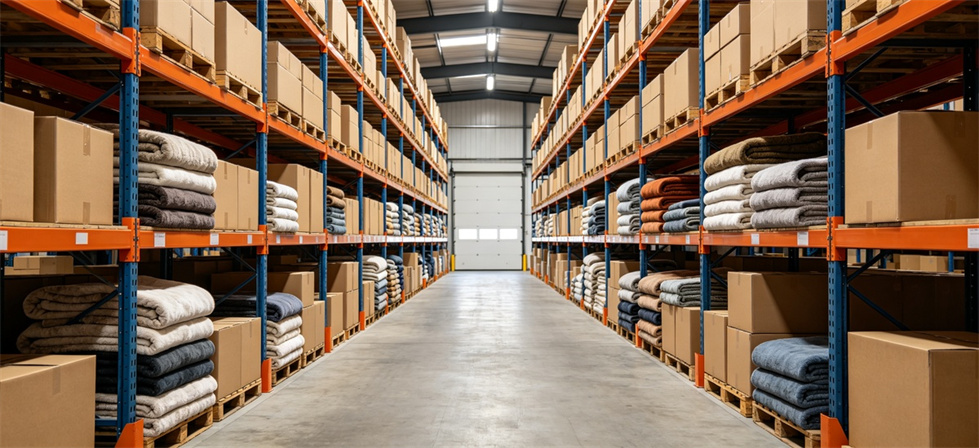
Blankets you buy today may sit in storage for 3–5 years before they are used. How you store them determines whether they are usable when an emergency happens.
|
Packaging |
Protection |
Volume |
Best for |
|
Loose in carton |
Basic |
Normal |
Short-term storage (under 1 year), active shelters |
|
Individual plastic bag |
Good dust/moisture |
+10% |
Medium-term storage (1–3 years) |
|
Vacuum sealed |
Excellent moisture/dust/pest |
−30 to −40% |
Long-term reserve (3–5 years), government stockpiles |
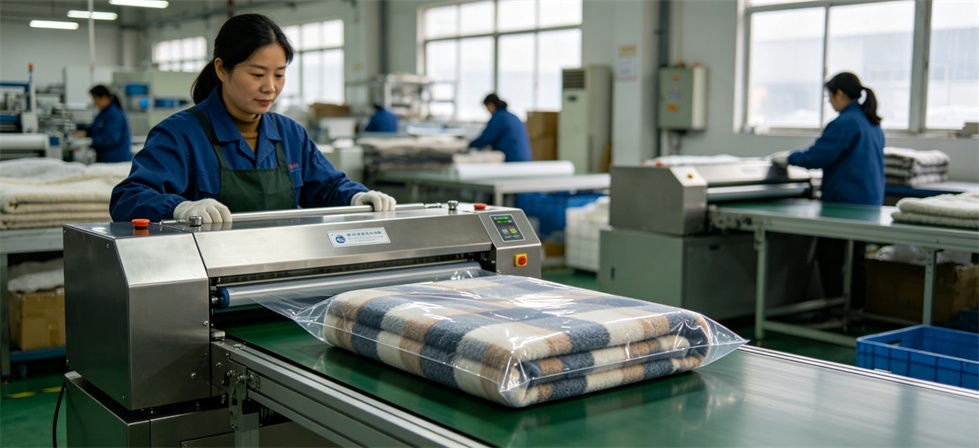
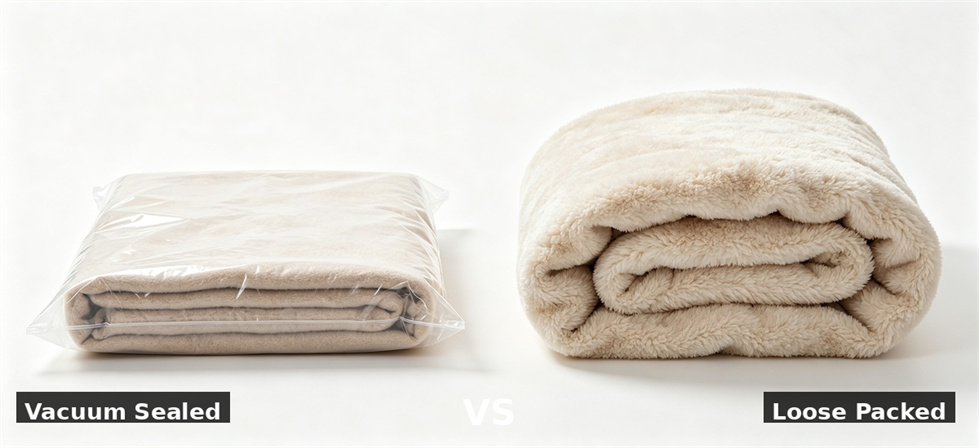
Vacuum packing is recommended for government reserve stockpiles. It reduces volume by 30–40%, which means you can store 30–40% more blankets in the same room. When you open a vacuum-sealed blanket, it needs 24–48 hours to fully regain its loft. Plan for this if you are distributing immediately after opening.
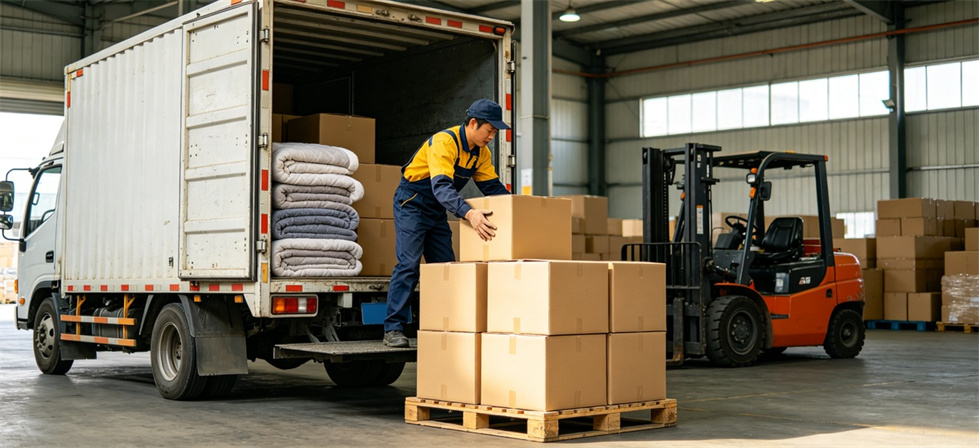
Emergency rapid-distribution packing: For shelters that need to distribute quickly, pre-pack blankets in easy-to-carry bundles of 5–10 units inside the carton. Use colour-coded cartons or labels for different sizes so volunteers can grab the right bundle without opening boxes. Keep 10–20% of stock in pre-bundled cartons near the loading area for immediate dispatch.
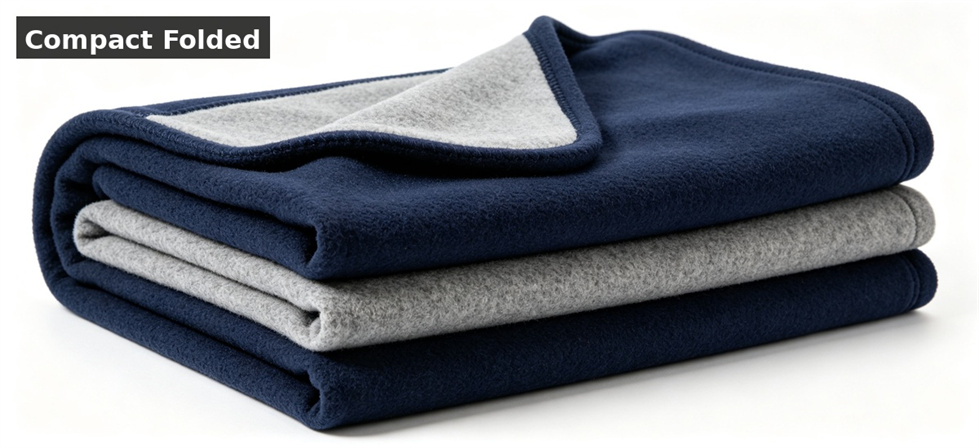
For bulk orders, calculate container load before finalizing quantity. A standard 20-foot container holds about 28–30 m³. Typical carton for 200–250 GSM fleece blankets: 60 × 40 × 50 cm = 0.12 m³, holding 20–30 blankets. Estimated units per 20-foot container: 4,800–7,500 blankets depending on GSM and packing. Always confirm actual carton dimensions and pieces per carton with your supplier before calculating.
|
Storage plan |
Inspection frequency |
What to check |
|
Active shelter (under 1 year) |
Every 6 months |
Carton condition, count, label readability |
|
Medium reserve (1–3 years) |
Quarterly |
Moisture, pests, odour, open 1 carton per 100 |
|
Long-term reserve (3–5 years) |
Quarterly + annual full audit |
All above + fabric strength test, loft check, FIFO rotation |
If blankets have been vacuum-sealed or compressed for more than 6 months, restore loft before distribution: (1) remove from packaging and shake vigorously for 30 seconds, (2) hang or lay flat in a dry, ventilated area for 24–48 hours, (3) tumble dry on low heat with 2–3 clean tennis balls for 10 minutes if still flat (check care label first), (4) for wool blend, air only — do not tumble dry. Blankets that do not recover loft after these steps have degraded filling and should be rated for milder temperatures.
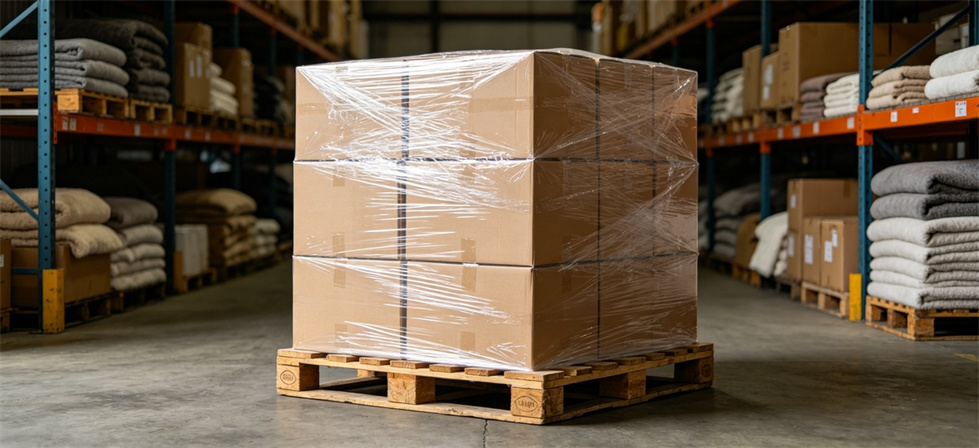
Shelter blankets get washed frequently. The right care routine extends their life and keeps them hygienic for repeated use.
|
Material |
Wash temp |
Detergent |
Drying |
Expected washes |
|
Anti-pilling fleece |
30–40°C |
Mild liquid, no bleach |
Tumble low or line dry |
50–80 washes |
|
Raschel acrylic |
30°C |
Mild, no fabric softener |
Line dry preferred |
40–60 washes |
|
Wool blend |
Cold or 30°C |
Wool-specific detergent |
Flat dry, no tumble |
30–50 washes |
|
rPET fleece |
30–40°C |
Mild liquid, no bleach |
Tumble low |
40–60 washes |
For institutional washing, use front-loading industrial machines. Do not overload the machine — blankets need room to move. Wash dark colours separately for the first 3 washes to prevent colour bleeding. Repair small tears immediately — a 2 cm tear becomes a 20 cm tear after one wash cycle.
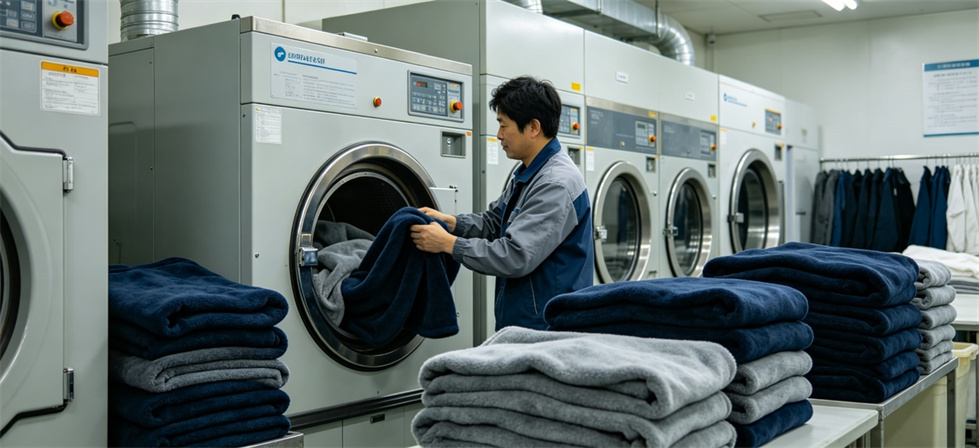
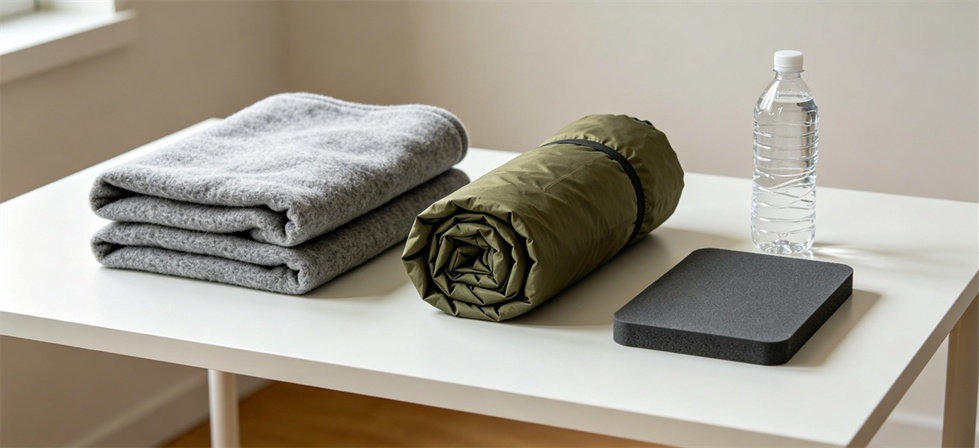
Blanket and sleeping bag pairing: For overnight shelters, pair a 200–250 GSM fleece blanket with a 1.3 kg sleeping bag for temperatures above 10°C. Below 10°C, use a 280+ GSM blanket or wool blend with a 1.8 kg sleeping bag. The blanket adds an extra 3–5°C of warmth when laid over or inside the sleeping bag. For very cold shelters, provide two blankets per user — one under the sleeping bag for insulation from the ground and one on top.
Charity and donation programme notes: Donation programmes often need individually labelled blankets for distribution tracking. Sewn labels with the programme name help prevent resale and keep stock accountable. For international donations, confirm the destination country's import requirements — some countries require specific labelling or treatment for textile imports.
A stockpile is not a "buy once and forget" item. Blankets degrade over time, and your demand estimate may change. Set up a system to rotate stock and replenish before you run out.
Always use the oldest cartons first. Label each carton with the receipt date and place new deliveries behind existing stock. This prevents blankets from sitting in the back of the storeroom for 10 years while you keep ordering new ones.
Barcode inventory management: For stockpiles above 500 units, use barcode labels on each carton linked to a simple spreadsheet or inventory app. Scan at receiving, inspection, and distribution to track quantity, age, and location. This reduces manual counting errors and makes FIFO rotation automatic. A basic system costs less than one lost carton of blankets.

Calculate your reorder point based on how long it takes to get new blankets. Typical timeline for a standard fleece blanket order: 7–15 days production + 15–30 days sea freight = 22–45 days total. Add a 2-week safety buffer, so reorder when your usable stock drops to a 60-day supply.
For example: if your shelter uses 20 blankets per week on average, 60 days = about 170 blankets. When stock drops below 170 usable units, place a new order. Do not wait until you are down to the last carton — by then you may face a stockout during a cold snap.
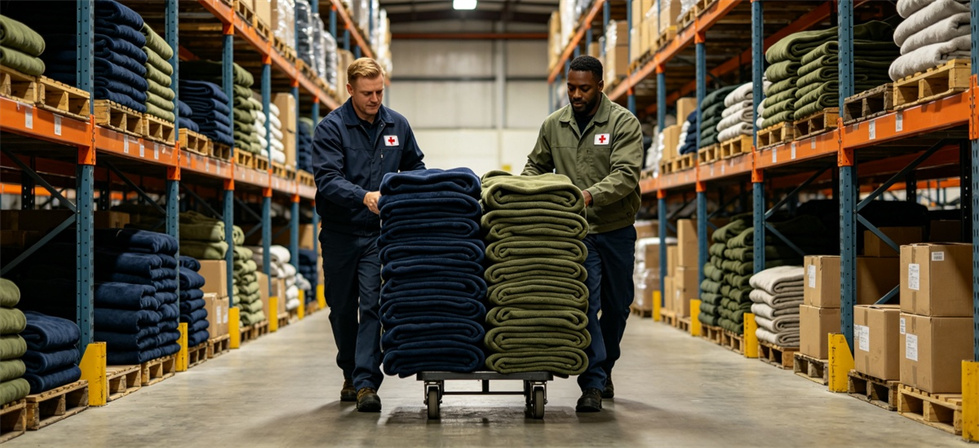
Seasonal adjustment: Increase stock by 20–30% before the cold season (October–November in Northern Hemisphere, April–May in Southern Hemisphere). Reduce active stock in warmer months by moving excess to long-term reserve storage. Track usage patterns year over year to refine your seasonal forecast — shelters in mild climates may see demand spikes during unexpected cold snaps rather than a steady winter peak.
Replace blankets when: there is visible mould or mildew that cannot be removed; fabric is brittle or tears easily; there is persistent odour from moisture or pests; labels are unreadable; or the carton has been damaged by water or pests. Fleece blankets stored properly in vacuum-sealed cartons can last 5–7 years. Wool blankets can last 10+ years if kept dry and pest-free. Use actual condition as the replacement guide, not age alone.
There are two ways to build a stockpile, and the right choice depends on your budget, storage, and demand certainty.
Pros: Lower unit price (quantity discount), consistent product setup, simpler ordering, all cartons from the same production batch.
Cons: Requires full storage capacity upfront, ties up budget, higher risk if demand estimate is wrong.
Best for: Government reserve programs with known storage capacity and stable demand estimates.
Pros: Spreads budget over time, lets you adjust quantities based on actual usage, reduces initial storage requirement, allows product setup updates between orders.
Cons: Slightly higher unit price for smaller orders, risk of product setup changes between batches, more ordering administrative work.
Best for: Community shelters with uncertain demand, limited upfront budget, or storage space that will expand in phases.
Recommended approach: if you are confident in your demand estimate and have storage ready, buy 70% of the total in one order to get the quantity discount, then buy the remaining 30% after 6–12 months based on actual usage. This gives you most of the bulk pricing benefit while leaving room to adjust.
If your organization runs several shelters, standardizing across sites makes replenishment and storage much simpler.
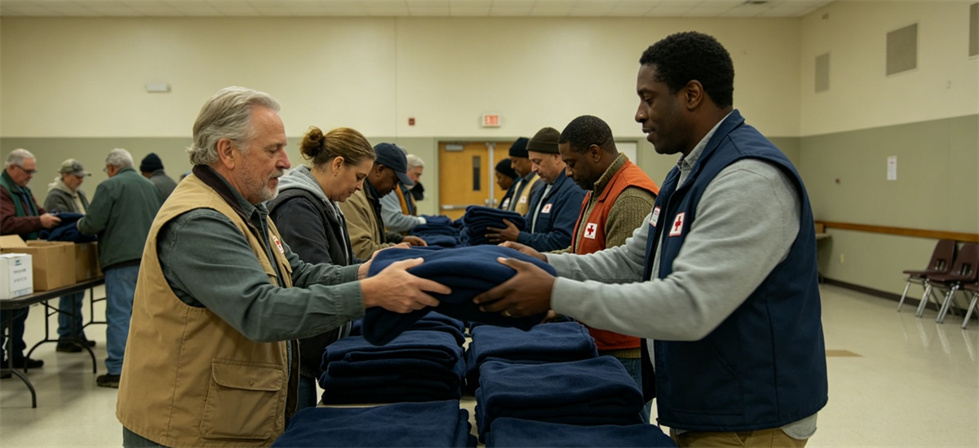
Add a second setup only when a site has a genuine need that the standard blanket cannot meet — for example, a cold-climate site that needs wool blend instead of fleece, or a site with many children that needs a smaller size. Each additional SKU adds complexity to storage, inventory, and reordering, so keep the list short.
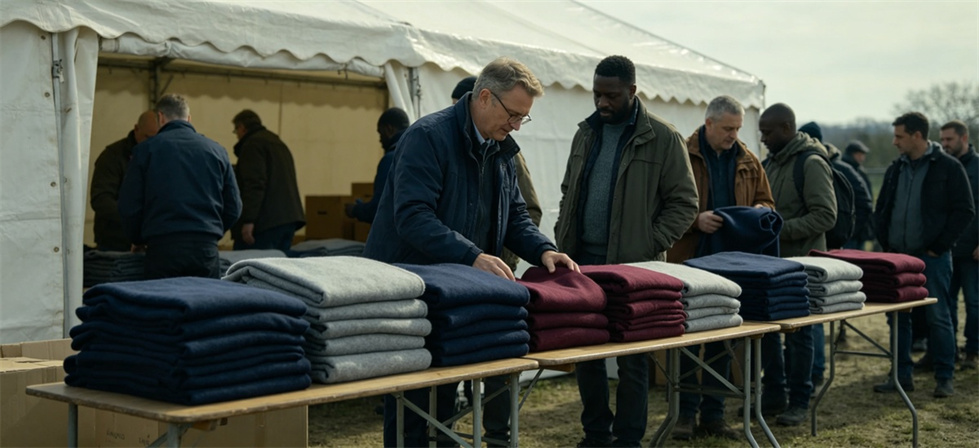
For multi-site management, maintain a central inventory record showing quantity per site, receipt dates, and next inspection date. This prevents one site from hoarding blankets while another runs short, and it lets you redistribute stock between sites as demand shifts.
To get comparable quotes for your blanket stockpile, use this template. Copy and adjust for your project.
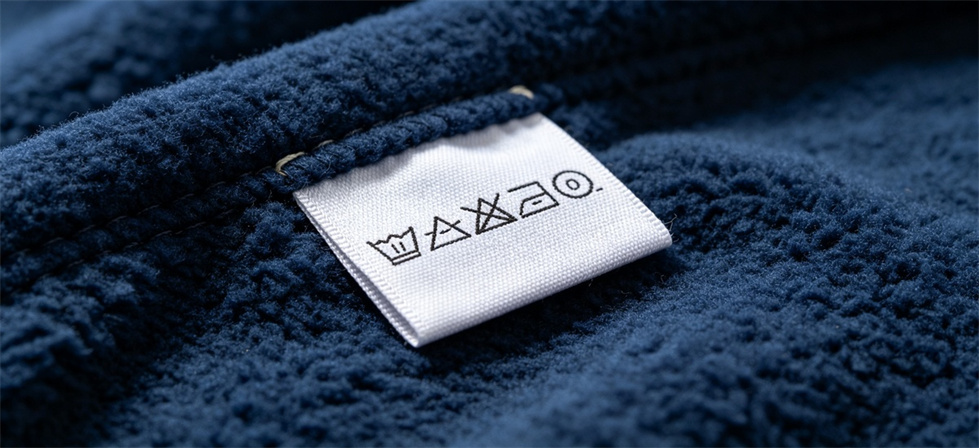
Subject: RFQ - Community Shelter Blanket Stockpile [Project Name] We are sourcing blankets for [community shelter / government reserve / multi-site program]. Please quote the following:
1. Product: [fleece / raschel / wool blend / rPET] blanket
2. Material and GSM: [e.g. anti-pilling fleece 220 GSM]
3. Size: [e.g. 150 x 200 cm]
4. Colour: [navy / dark grey / olive green]
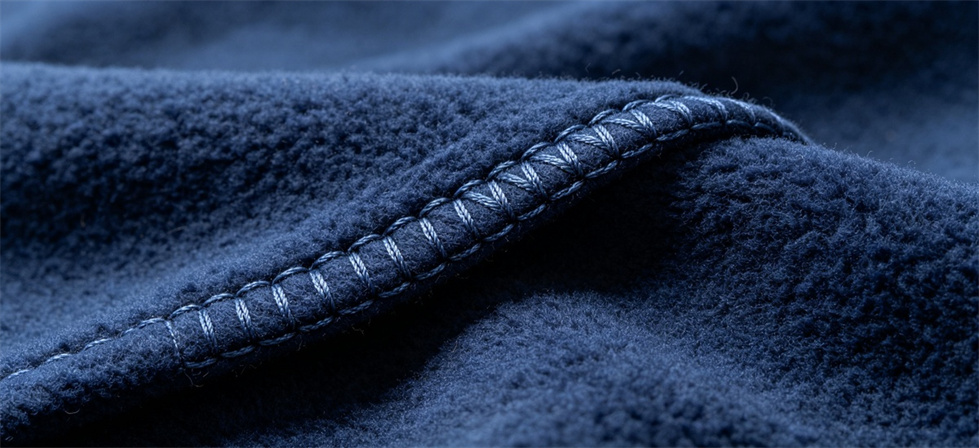
5. Binding: [overlock / flat-felled]
6. Label: [woven label with care instructions, language: English]
7. Quantity: [number] blankets
8. Packing: [loose in carton / individual PE bag / vacuum sealed]
9. Pieces per carton: [request actual number]
10. Carton dimensions and gross weight
11. Cartons per pallet and pallet total weight
12. Estimated 20-foot container capacity
13. Production lead time
14. Destination port / delivery address
15. Sample availability and sample lead time Please return: unit price, pieces per carton, carton dimensions, carton gross weight, cartons per pallet, and total packing cost per unit.
Use this worksheet to calculate and document your stockpile plan. Fill in one column per shelter site or per scenario.
|
Planning input |
Your value |
Notes / source |
|
Shelter type |
|
Warming / overnight / long-term / reserve |
|
Planned sleeping users |
|
From shelter manager, not max occupancy |
|
Blankets per user |
|
From shelter type table |
|
Base quantity |
|
Users × blankets per user |
|
Contingency percentage |
|
10–20% |
|
Contingency quantity |
|
Base × contingency % |
|
Replacement percentage |
|
5–10% |
|
Replacement quantity |
|
Base × replacement % |
|
Total planning quantity |
|
Base + contingency + replacement |
|
Blanket setup |
|
Material, GSM, size, colour |
|
Pieces per carton |
|
From supplier trial pack |
|
Cartons needed |
|
Total ÷ pieces per carton, round up |
|
Carton dimensions |
|
From supplier |
|
Total storage volume |
|
Cartons × carton volume |
|
Available storage space |
|
Measure actual usable space |
|
Reorder point |
|
60-day supply at average usage |
|
Next inspection date |
|
Quarterly |
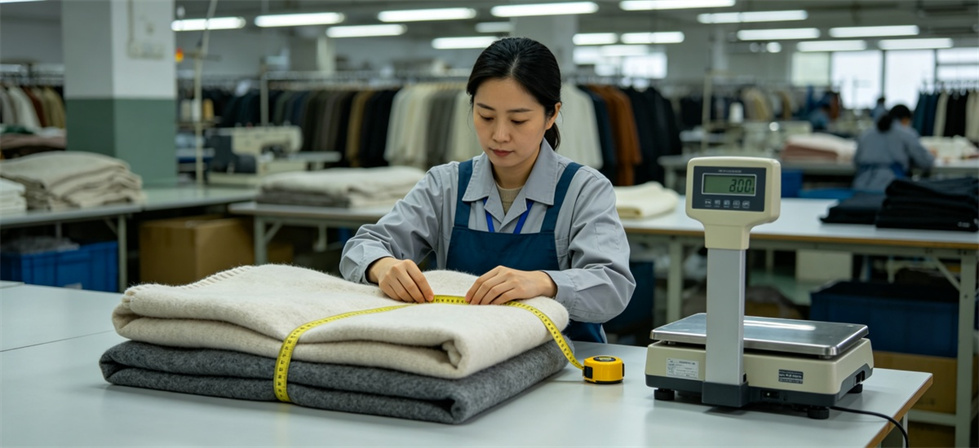
Keep this worksheet with your procurement file. When assumptions change (user count, shelter role, storage capacity), update the worksheet and keep the old version so you can trace why the quantity changed.
At YRF Textile, we supply bulk wholesale blankets for community shelters, government reserve programs, and institutional buyers. Our range includes anti-pilling fleece (200–300 GSM), raschel acrylic, wool blend, and recycled rPET options, with colours including navy blue, dark grey, and olive green for military and police dormitory use. Wholesale orders benefit from quantity pricing and consistent production batches.
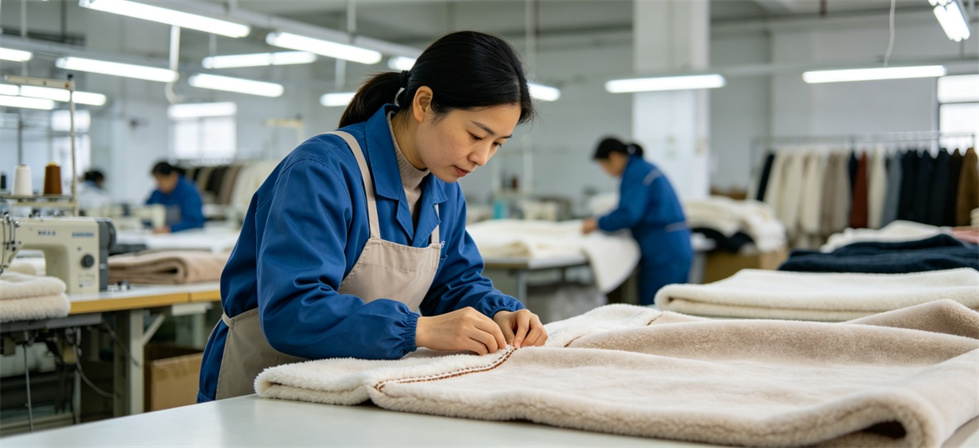
We offer loose carton packing, individual PE bags, and vacuum sealing for long-term reserve stockpiles. We also supply complementary sleeping bags, foam mattresses, and folding beds for complete shelter kits. If you need help planning your blanket stockpile, view our blanket range or contact us directly.
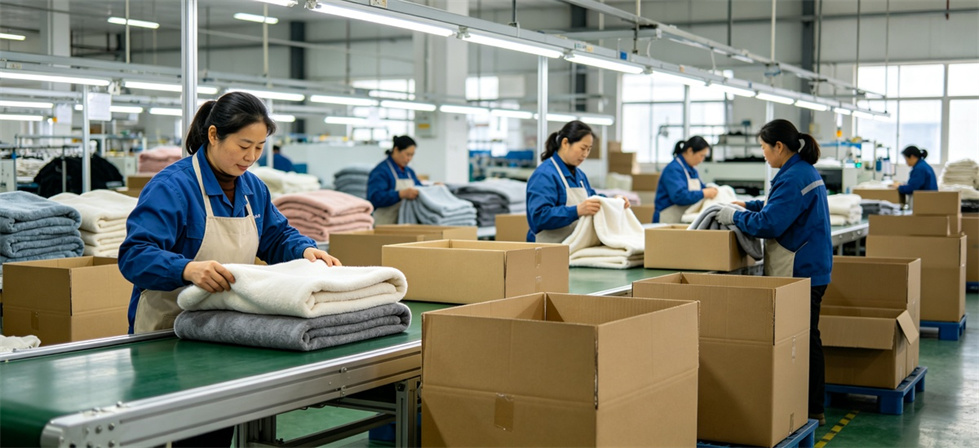
A good blanket stockpile starts with actual sleeping capacity, not building occupancy. Calculate base quantity from planned users × blankets per person, add contingency and replacement allowance, then round up to carton quantity. Choose 200–250 GSM anti-pilling fleece for most shelters, or wool blend for extreme cold. Store in 5-ply cartons at 15–25°C and 40–60% humidity, with vacuum packing for 3+ year reserves. Inspect quarterly, rotate FIFO, and reorder when stock drops to a 60-day supply.
▶ 90 x 66" Wool Blanket‑Rescue Equipment. Click this title link to check 90×66 inch dimension parameters, wool composition, weight grades and bulk quotation for field rescue equipment procurement.

The cheapest blanket order can become the most expensive if you run out during a cold snap or find mouldy stock when you need it most. Plan the numbers, match the material to the shelter type, and set up a system that keeps the stockpile ready for when the shelter doors open. For wholesale and institutional buyers, the right planning turns a one-time purchase into a reliable multi-year reserve.
Start with planned sleeping users × blankets per user, then add 10–20% contingency and 5–10% replacement allowance. Use actual sleeping capacity, not maximum building occupancy. A 300-cot overnight shelter typically needs about 550–600 blankets total.
For a daytime warming centre, yes. For overnight shelters, plan 1–2 per person depending on indoor temperature and sleeping equipment. Long-term shelters should plan 2 per person. Always build scenarios for higher and lower demand.
One standard adult size (150 × 200 cm) covers 85–90% of users. Add a smaller children's size only if you expect a significant number of children. Too many sizes complicate storage and reordering for little benefit.
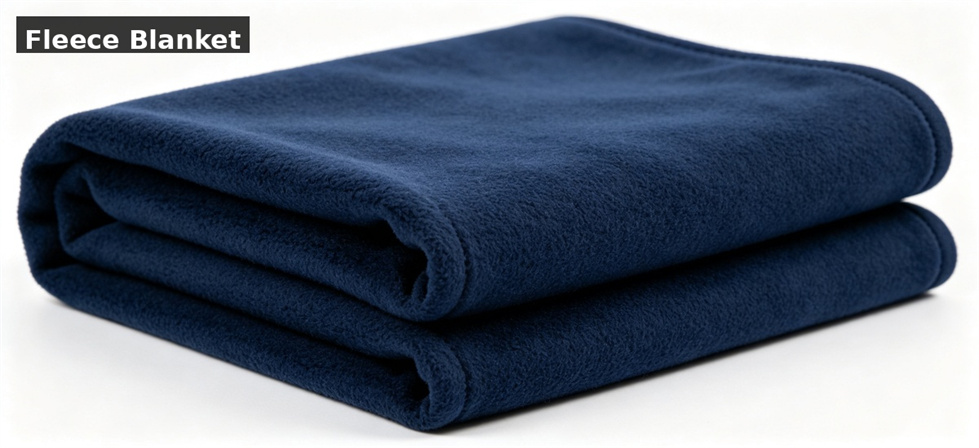
200–250 GSM anti-pilling fleece is the sweet spot for most community shelters. Below 180 GSM wears out quickly with institutional washing; above 300 GSM increases cost and storage volume without much extra warmth for indoor use.
Wool blend (350–500 GSM) provides the best warmth for extreme cold and is standard for military and police dormitories. Raschel acrylic (300–400 GSM) is a more affordable option for moderately cold shelters. Anti-pilling fleece works for indoor shelters with heating.
Use 10% for urban shelters with stable population; 20% for disaster-prone areas or shelters near evacuation routes. Keep contingency separate from base quantity in your calculation so you can explain and adjust it.
Vacuum sealing is best for 3–5 year reserve stockpiles — it reduces volume by 30–40% and protects from moisture and pests. For active shelters with under-1-year turnover, loose carton packing is fine. Individual plastic bags work for 1–3 year storage.
Quarterly. Check cartons for moisture, mould, and pest damage; open one carton per 100 stored and inspect 2–3 blankets; verify carton count matches inventory. Record the inspection date and condition.
Replace when there is visible mould, brittle fabric, persistent odour, unreadable labels, or carton water damage. Properly stored vacuum-sealed fleece lasts 5–7 years; wool can last 10+ years if dry and pest-free. Inspect actual condition — use condition as the guide, not age alone.
Yes, if the sites have similar climate and user needs. Standardizing one material, GSM, size, and colour simplifies storage, reordering, and redistribution. Add a second setup only when a site has a genuine need the standard cannot meet.
If demand is certain and storage is ready, buy 70% in bulk for the quantity discount and 30% later after seeing actual usage. Staged purchasing is better if demand is uncertain, budget is tight, or storage space will expand in phases.
Calculate your average weekly usage, then set the reorder point at a 60-day supply (accounting for 22–45 days production + shipping plus a 2-week buffer). If you use 20 blankets/week, reorder when stock drops below about 170 usable units.
No. Foil blankets are for first aid kits and immediate shock treatment — they are single-use, cannot be washed, and do not provide sustained warmth for shelter use. Use fleece or wool blankets for community shelter stockpiles.
For overnight shelters above 10°C, pair a 200–250 GSM fleece blanket with a 1.3 kg sleeping bag. Below 10°C, use a 280+ GSM blanket or wool blend with a 1.8 kg sleeping bag. A blanket adds 3–5°C of warmth when laid over or inside the sleeping bag. For very cold shelters, provide two blankets per user — one under the sleeping bag for ground insulation and one on top.
Send: shelter type, planned users, blankets per user, preferred material/GSM/size/colour, packing preference (loose/bagged/vacuum), total quantity, destination, and storage constraints. Ask for pieces per carton, carton dimensions, and gross weight — not just unit price.
We supply fleece, raschel, wool blend, and rPET blankets with vacuum packing for long-term reserves. Send us your shelter type and user count for a tailored quantity and packing recommendation.
|
Access our full product document |
Quick real‑time chat for urgent project questions |
 |
 |
|
Get full‑range product specs & package solutions in PDF |
Connect with us for instant project support |
|
|
|
Freundliche Links :
Urheberrechte © © Custom Disaster - Relief Bedding: Tents, Sleeping Bags, Blankets Alle Rechte vorbehalten
das professionelle Team zum Service !